What Does Non-Comedogenic Mean? A Useful Filter, Not a Promise
Non-comedogenic means a product is intended not to clog pores. It is a useful shopping filter for acne-prone skin, but it is not a promise that you can never break out while using the product, and it is not an acne treatment claim.
The AAD recommends looking for non-comedogenic or similar wording when choosing products around acne. Its moisturizer guidance describes such products as unlikely to cause acne—a more useful expectation than imagining a guarantee for every person.
Separate four claims that often appear together
| Wording | The question it addresses | A different question still to ask |
|---|---|---|
| Non-comedogenic | Is the formula intended to avoid clogging pores? | Does this whole product suit my routine? |
| Oil-free | How the brand describes the formula's oil content | Is it comfortable and suitable for me? |
| Fragrance-free | Whether added fragrance is part of the claim | Does it contain another ingredient I must avoid? |
| Acne treatment | A treatment purpose with relevant directions | How does it fit my treatment plan? |
Do not replace one question with another. A moisturizer can be marketed for acne-prone skin without being the product that treats acne. A lightweight texture is also not proof that a formula will work for every face.
Apply the filter across the routine
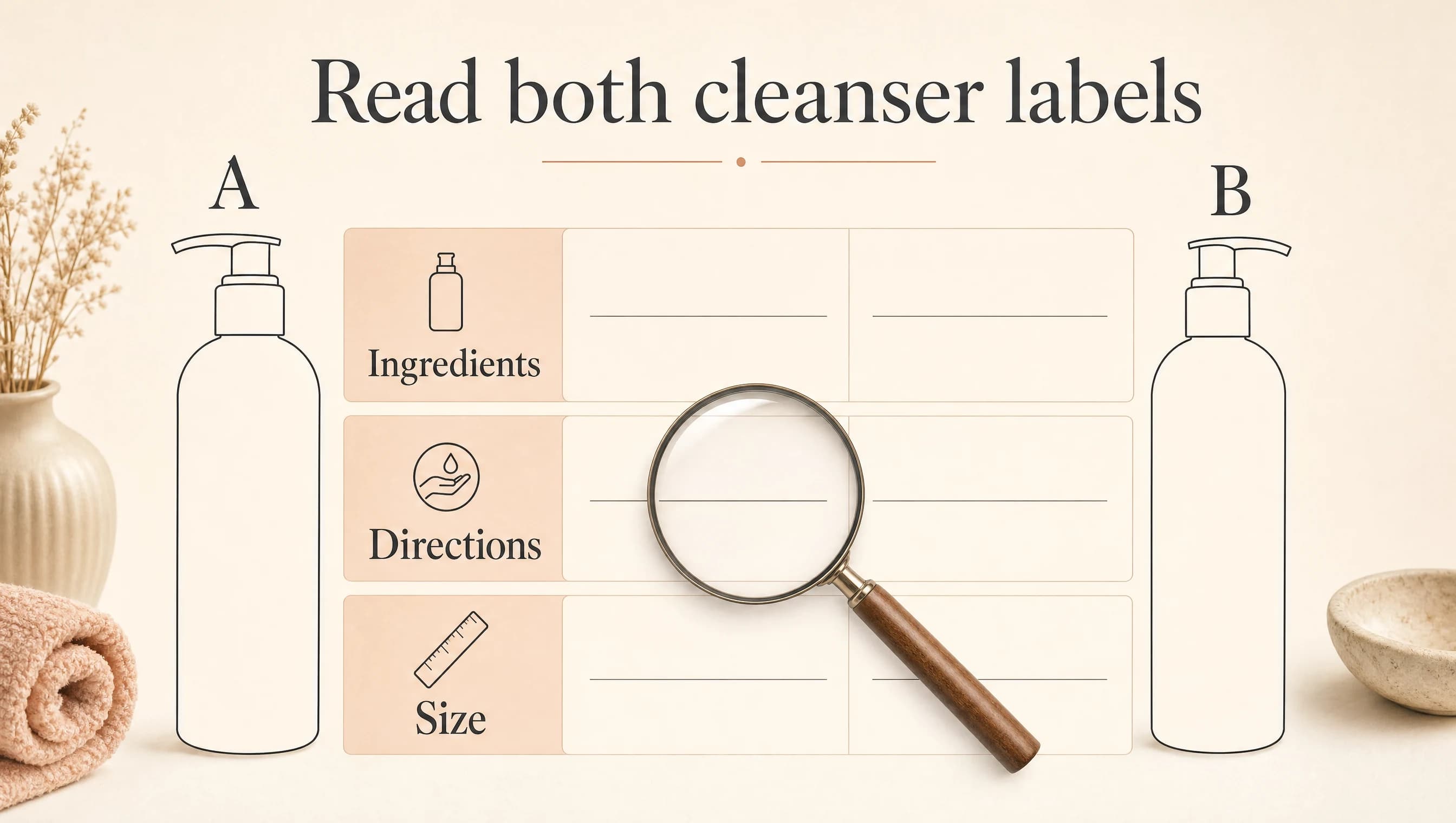
The moisturizer is only one part of what touches your skin. Include sunscreen, makeup and relevant hair products when reviewing the routine. The AAD's acne-care guidance discusses these categories together rather than treating a single cream as the whole explanation for breakouts.
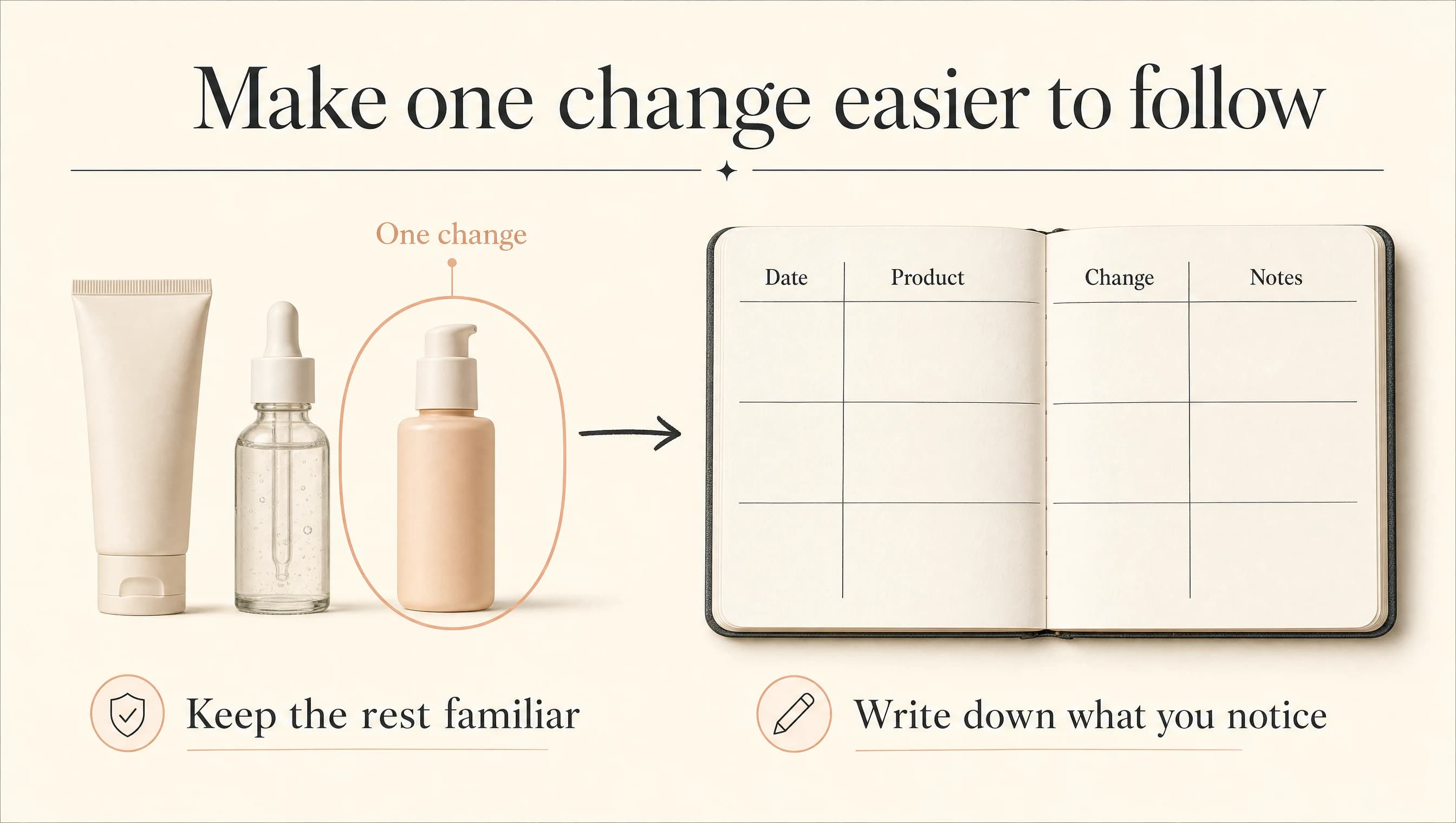
A completed inventory might read: “Cleanser and moisturizer unchanged. Foundation replaced last week. New breakout noticed afterward.” That timing does not prove the foundation caused it, but it identifies a recent change worth describing. Replacing the unchanged moisturizer repeatedly would erase that useful context.
If the ingredient panel itself is confusing, use our guide to reading skincare ingredients. For the role of moisturizing on an oily face, read whether oily skin needs moisturizer. A product-selection label should help you choose appropriate support, not make you afraid of every moisturizing step.
Do not turn an ingredient list into a verdict
A list can show whether an ingredient is present, but it does not provide a complete account of how a finished product will behave on you. Avoid deciding that a whole formula is certain to clog pores because one ingredient appears on a social-media blacklist.
For example, two lotions can both say non-comedogenic while differing in finish and comfort. Choose between them on the practical differences you can evaluate rather than inventing a definitive winner from the ingredient count.
Evaluate a change without creating more confusion
Introduce cosmetic changes in a way that keeps the timeline understandable. Changing foundation, sunscreen and moisturizer on the same day leaves you with several possible explanations if something changes afterward. Keep prescribed treatment changes under your clinician's guidance.
Record observations rather than diagnosing the cause of every new spot. “This appeared after I started several products” is honest. “This ingredient always clogs my pores” may go beyond what the experience can establish.
The AAD also cautions that sharing makeup can contribute to blemishes even when products are non-comedogenic. Product labels do not replace ordinary hygiene or appropriate acne care.
For the moisturizer decision, use our moisturizer guide for oily, acne-prone skin. Our oily-skin and acne routine guide considers the surrounding steps, while the sensitive-skin product guide helps when ingredient restrictions also matter.
Persistent or troublesome acne needs an appropriate treatment discussion, not simply a different marketing label.
Frequently asked questions
Can a non-comedogenic product still coincide with breakouts?
Yes. The claim does not rule out every individual response or every other cause of acne. Keep a clear timeline and avoid assuming the label proves or disproves the cause.
Does non-comedogenic mean oil-free?
They are different descriptions. Do not infer the full ingredient composition from a pore-clogging claim; inspect the actual product information.
Should I skip moisturizer if I have acne?
Not automatically. The AAD explains that moisturizer can support skin that becomes dry during acne treatment. Choose around your needs and treatment guidance rather than assuming every cream must be avoided.
Sources
AAD: Moisturizer and acne (aad.org) — https://www.aad.org/public/diseases/acne/skin-care/moisturizer
AAD: Habits that can worsen acne (aad.org) — https://www.aad.org/public/diseases/acne/skin-care/habits-stop
AAD: How to control oily skin (aad.org) — https://www.aad.org/public/everyday-care/skin-care-basics/dry/oily-skin
Clear guidance, checked before publication.
Solvi articles are structured by our editorial team and reviewed for clarity, consistency, and responsible health language. We update pages when guidance or product information changes.