Do you need sunscreen indoors? Start with actual daylight

You do not need to treat every indoor day as an outdoor exposure. Consider direct sunlight through a window, time spent outside and any individual medical advice. A day well away from daylight is different from hours beside a sunny window. There is no useful universal rule that every person indoors must restart a sunscreen timer throughout the day.
Describe your real day before choosing a rule

“Indoors” can mean a desk in the center of an office, a sunlit conservatory or a job that repeatedly takes you outside. Those settings should not be collapsed into one category.
Cancer Council Australia describes ordinary indoor exposure as low risk and notes that prolonged time beside a window in direct sunlight may call for protection. Its advice also separates that situation from heading outdoors. That distinction gives you a practical starting point without making an ordinary room sound inherently dangerous.
| Your setting | What to assess | Practical next decision |
|---|---|---|
| Away from direct daylight | Whether you will go outside later | Plan protection for the outdoor part |
| Beside a sunny window | Duration and the position of sunlight | Consider moving, blinds or clothing |
| Repeated outdoor breaks | Your actual exposure, not the indoor job title | Make sunscreen accessible |
| Specific medical sensitivity advice | Your clinician's recommendations | Follow the individualized plan |
Why window advice can sound contradictory
Glass and exposure conditions differ. It is too broad to say that every window blocks all relevant radiation, and also too broad to imply that every indoor seat receives the same exposure.
The Skin Cancer Foundation's expert discussion takes a more cautious approach to sunscreen indoors, especially near windows. Cancer Council Australia's public advice emphasizes the generally low risk of ordinary indoor exposure. Rather than hiding this difference, use it to ask the more specific question: what sunlight reaches your skin during your day?
Build protection around the exposure you can change
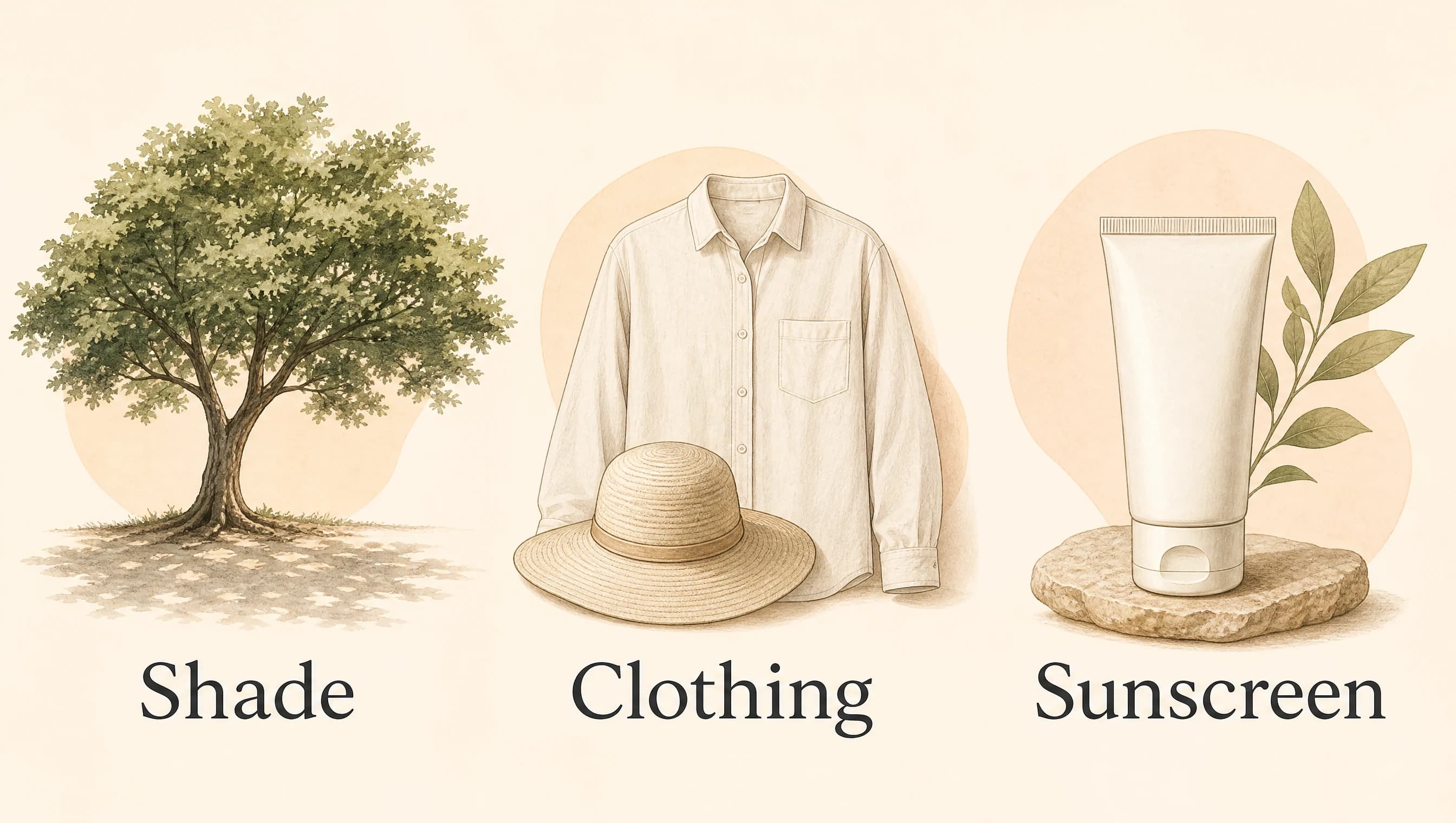
If direct sun falls across your desk for hours, changing where you sit or using appropriate shade may be simpler than treating sunscreen as the only available response. If you leave for lunch, prepare for that outing even when the rest of the workday is indoors.
A filled planning note could read: “Desk away from direct sun; outdoor lunch; drive home.” A second could read: “Desk in direct window sun; no planned walk.” Write your actual day, then use the relevant product directions and local guidance for those exposures. The word indoors alone does not describe either plan.
- Notice whether direct sunlight reaches your usual seat.
- Identify planned outdoor trips and activities.
- Consider clothing and shade as part of the plan.
- Keep the sunscreen's own directions relevant when you use it.
Do not invent an indoor reapplication schedule
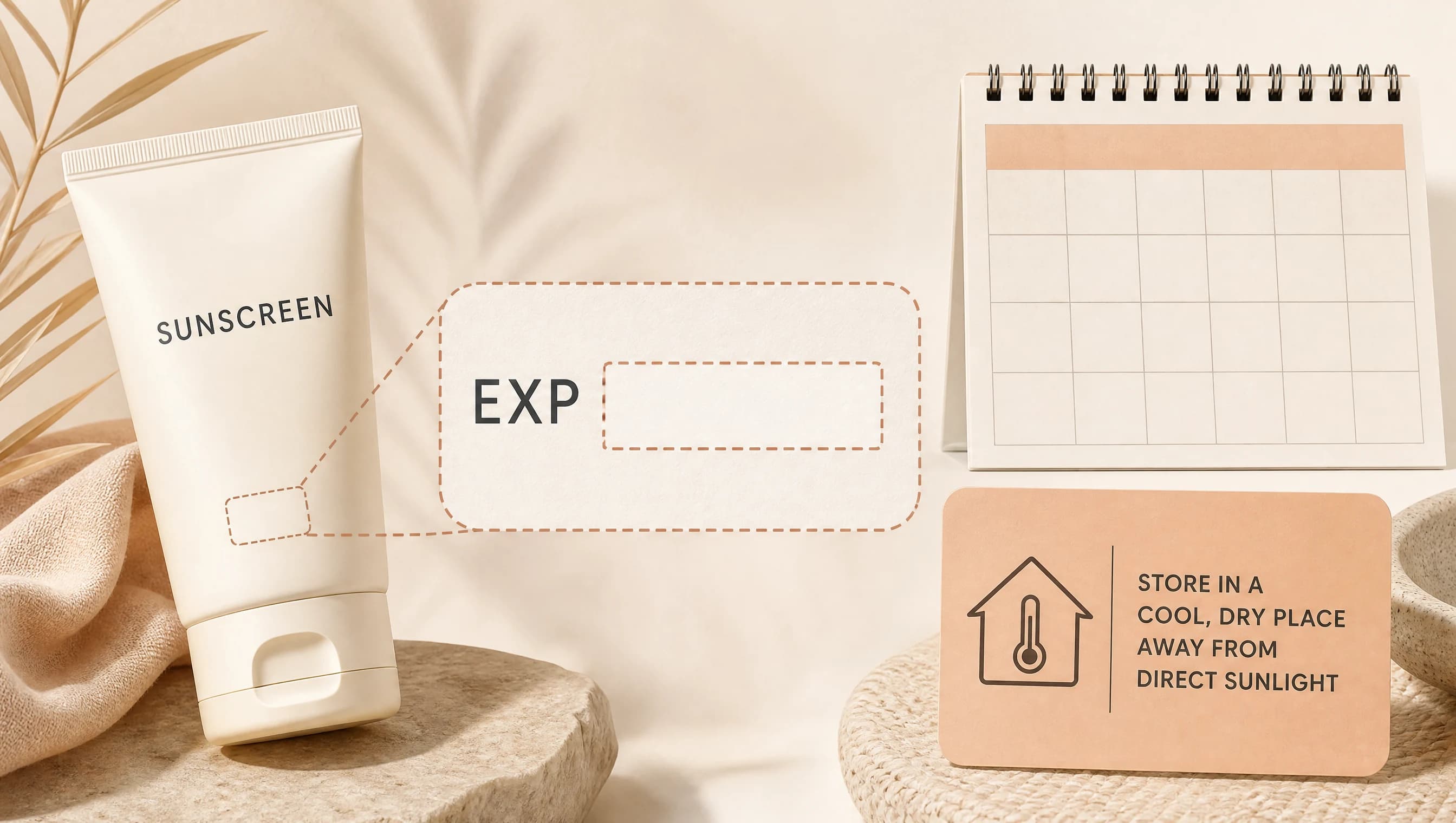
A product label is a more concrete reference than a universal timer copied from a social post. For example, CeraVe's US AM SPF 50 page gives its own reapplication instructions when the product is used for sunscreen protection. Those directions should not be silently rewritten into a different schedule.
At the same time, an instruction aimed at maintaining sunscreen protection does not establish that every indoor person has identical exposure. If you need a tailored recommendation because of a medical condition or treatment, a general article cannot replace it.
Consider two home workers: one is away from the window all day; the other sits in a sunlit area and takes several outdoor breaks. Calling both routines “working from home” misses the decisions that matter.
Frequently asked questions
Does an office window eliminate the need for all protection?
That conclusion is too broad. The type of glass, direct light, time spent near it and outdoor trips all matter. Assess the setting instead of treating the word window as a guarantee.
Must I wear sunscreen in a room with no direct daylight?
The case is different from a sunny window or an outdoor day. Cancer Council considers ordinary indoor exposure low risk. Remember to plan for any outdoor activity later.
Does working indoors mean my morning sunscreen lasts longer?
Do not infer a new labeled duration from your location. Distinguish the need for protection in your circumstances from the instructions for the product you choose to use.
Related decisions
- Best Sunscreen for Combination Skin: Find the Finish That Works on Every Zone
- How to Stop Sunscreen From Pilling: A Layering Troubleshooting Guide
- Best Sunscreen for Melasma: Why Tinted SPF Is the Smartest Daily Buy
- Spf 30 vs 50 — Choose a labeled SPF level separately from deciding when protection is relevant indoors.
- Tinted vs untinted sunscreen — Consider the separate tinted-versus-untinted product decision without promising universal visible-light protection.
Sources
Cancer Council Australia: Sunscreen indoors (cancer.org.au) — https://www.cancer.org.au/iheard/should-i-wear-sunscreen-when-indoors
Skin Cancer Foundation: Indoor sunscreen advice (skincancer.org) — https://www.skincancer.org/blog/ask-the-expert-how-often-do-i-need-to-reapply-sunscreen-if-im-indoors-all-day/
CeraVe: US AM Facial Moisturizing Lotion SPF 50 (cerave.com) — https://www.cerave.com/skincare/moisturizers/facial-moisturizers/am-facial-moisturizing-lotion-spf-50
Clear guidance, checked before publication.
Solvi articles are structured by our editorial team and reviewed for clarity, consistency, and responsible health language. We update pages when guidance or product information changes.