Can you mix sunscreen with moisturizer? Keep the formula intact
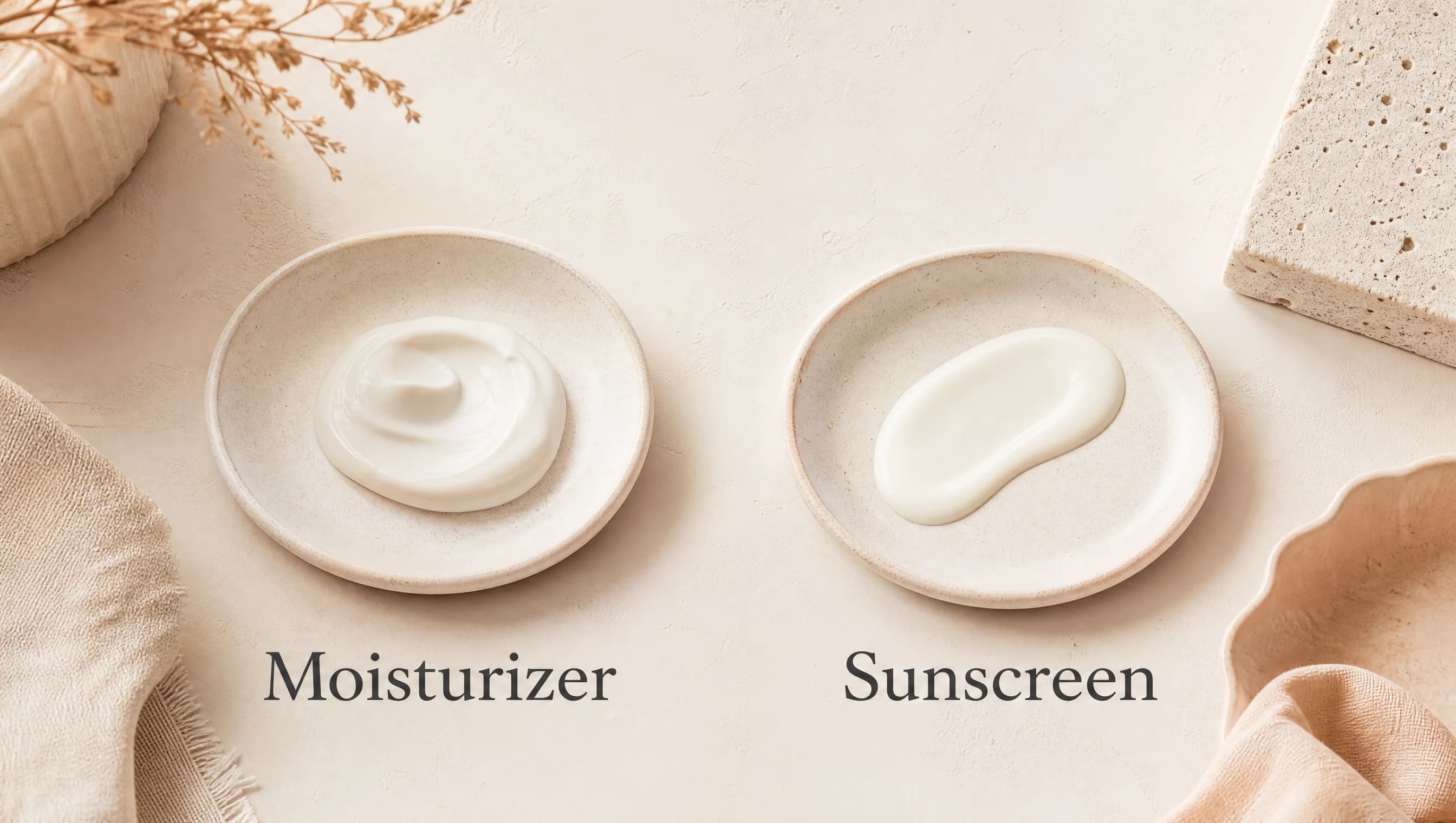
Do not hand-mix sunscreen with moisturizer to make it lighter or quicker to apply. Use the products separately according to their directions, or choose a finished moisturizer with SPF. A commercially formulated SPF moisturizer and a mixture made in your palm are different situations.
Mixing changes what you are applying
Your sunscreen's instructions concern the finished product in the container. Adding another product creates a mixture whose labeled protection has not been established by that bottle's instructions. You cannot calculate its SPF by averaging two printed numbers or dividing by the proportion of moisturizer.
CeraVe's layering guidance explicitly advises separate application and suggests a formulated SPF moisturizer for people who want one combined step. This gives a practical alternative without pretending that every mixed product becomes completely ineffective.
| What you are doing | Better decision |
|---|---|
| Mixing plain cream into sunscreen | Keep them as separate steps |
| Mixing two SPFs to reach a new number | Do not calculate protection by arithmetic |
| Wanting fewer morning steps | Consider a finished SPF moisturizer |
| Wanting a lighter finish | Compare a different sunscreen texture |
Separate a texture problem from a time problem
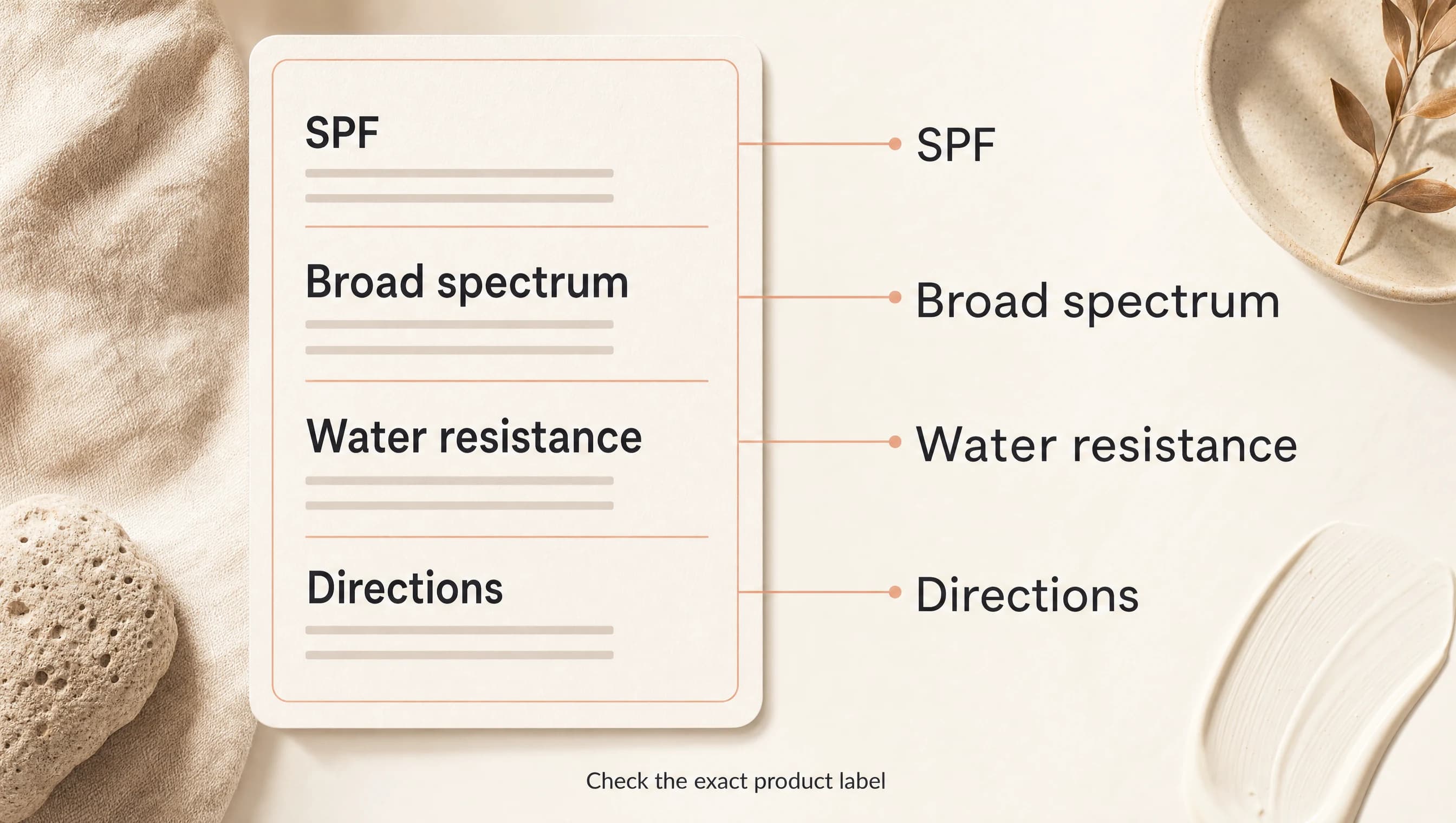
If the product is too heavy, ask whether you need all the layers underneath. A rich cream, serum and sunscreen can feel different from the sunscreen alone. You can simplify optional skincare without altering the sunscreen formula.
If the problem is time, reorganize the sequence instead. Keep the products in the order you use them, or choose a combined formula whose directions suit your routine. Mixing them together is not the only way to reduce morning effort.
A combined SPF moisturizer is a finished product
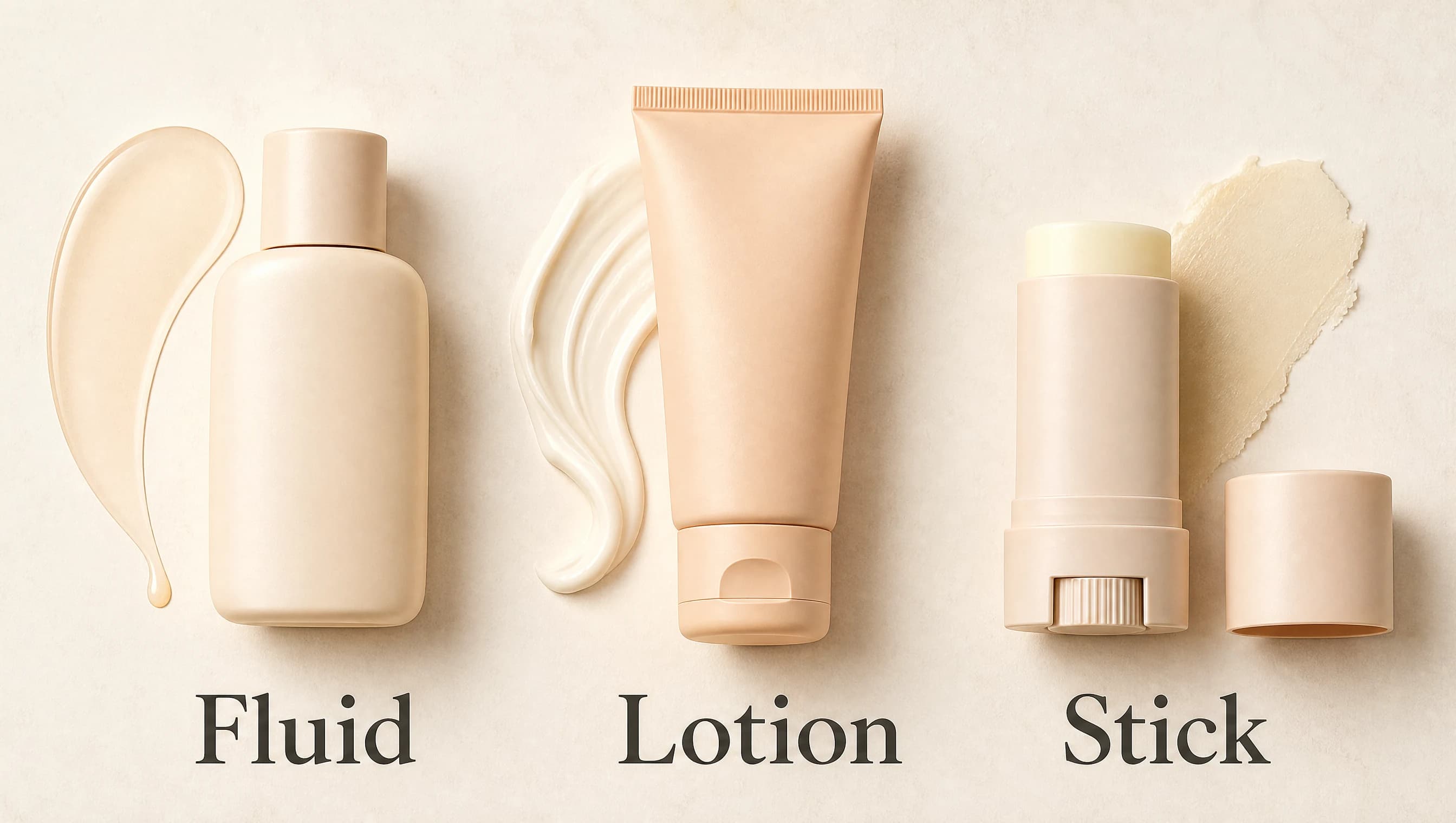
The distinction is formulation and directions, not the word moisturizer. A product sold as an SPF moisturizer has its own sunscreen instructions. Apply it that way rather than assuming a usual small moisturizer application is sufficient.
CeraVe AM Facial Moisturizing Lotion SPF 50 is one example of a finished combined product: its directions place it at the end of daytime skincare, before makeup. Its instructions apply to that finished formula.
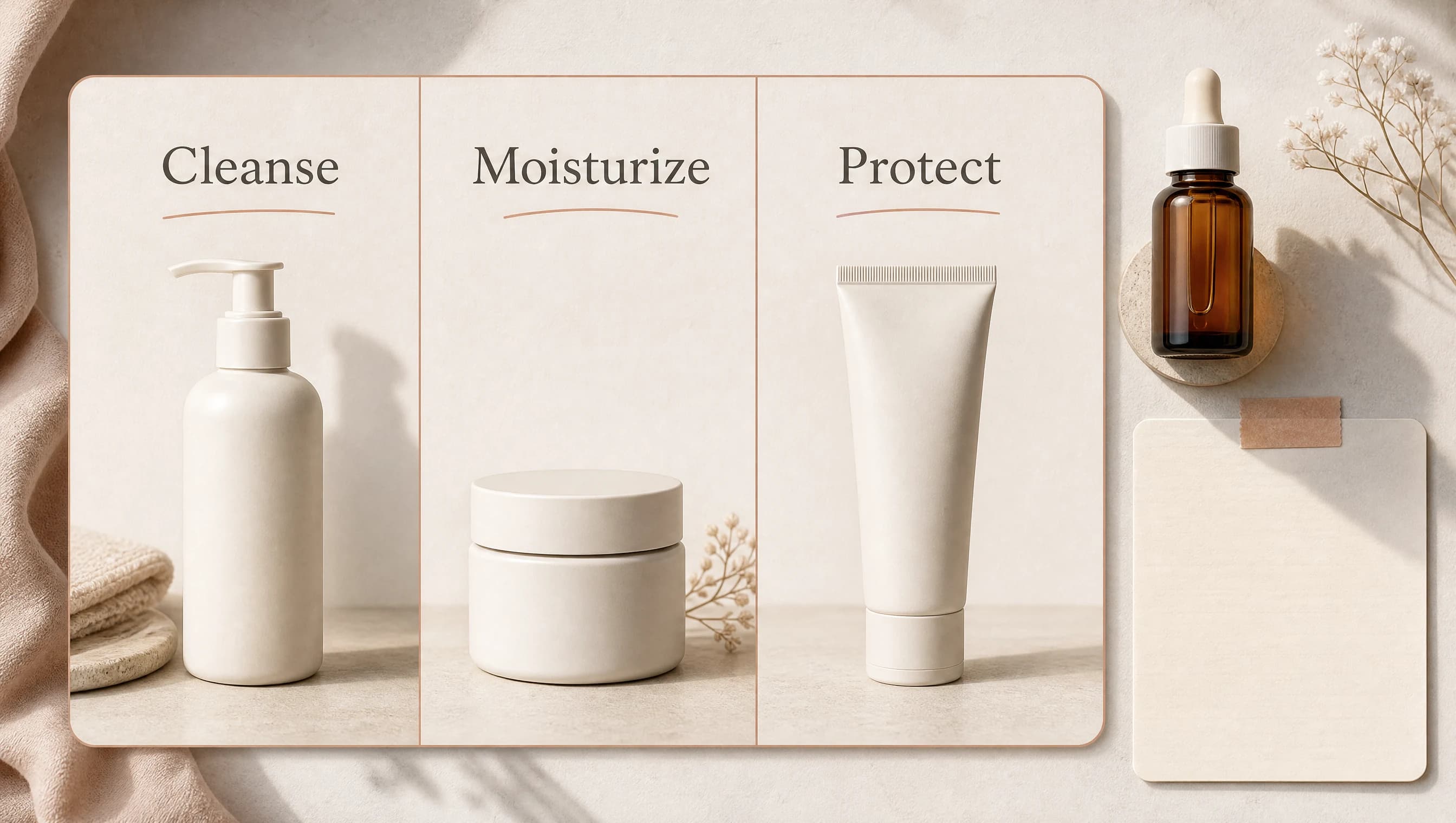
Two workable arrangements illustrate the choice. With separate products: apply the plain moisturizer, then the sunscreen according to its own directions. With a suitable combined SPF moisturizer: use that finished product as the sunscreen step, including its application and reapplication instructions. Choose the arrangement you can use comfortably without combining separate formulas in your palm.
Avoid changing several things at once
For a useful texture comparison, keep your other steps simple. Try the sunscreen with fewer optional products before deciding which item needs replacement. Write down the difficulty: pilling, excessive shine, a heavy feel or incompatibility with makeup.
- Identify the specific cosmetic problem.
- Check the product directions.
- Simplify optional layers if appropriate.
- Choose another finished formula when needed.
Do not use a home experiment to assign a new SPF. Observing a smoother finish is different from establishing sun protection. The American Cancer Society's guidance emphasizes following the label for both application and reapplication; a custom mixture has no equivalent set of verified instructions.
Frequently asked questions
Can I mix sunscreen with foundation instead?
The same uncertainty applies. Use the sunscreen as directed and apply cosmetics separately. Do not treat a smoother-looking mixture as proof of equivalent protection.
Is layering two products the same as mixing them?
No. Layering means applying each finished product separately. Still follow their directions and avoid assuming that layering adds the SPF numbers together.
Can I mix different sunscreens to avoid wasting them?
Do not create a new mixture or transfer its assumed SPF to your routine. Use an appropriate, current product according to its own instructions and keep its identity clear.
Related decisions
- Best Sunscreen for Combination Skin: Find the Finish That Works on Every Zone
- How to Stop Sunscreen From Pilling: A Layering Troubleshooting Guide
- Best Sunscreen for Melasma: Why Tinted SPF Is the Smartest Daily Buy
- Sunscreen before or after moisturizer — Use a layering sequence instead of inventing a combined sunscreen-moisturizer formula.
- How much sunscreen to use on face — Understand why using enough sunscreen is a separate decision from adding moisturizer.
Sources
CeraVe: Layering sunscreen and moisturizer (cerave.com) — https://www.cerave.com/skin-smarts/skincare-tips-advice/sunscreen-or-moisturizer-first
CeraVe: US AM Facial Moisturizing Lotion SPF 50 (cerave.com) — https://www.cerave.com/skincare/moisturizers/facial-moisturizers/am-facial-moisturizing-lotion-spf-50
American Cancer Society: How to use sunscreen (cancer.org) — https://www.cancer.org/cancer/risk-prevention/sun-and-uv/how-to-use-sunscreen.html
Clear guidance, checked before publication.
Solvi articles are structured by our editorial team and reviewed for clarity, consistency, and responsible health language. We update pages when guidance or product information changes.