Does Oily Skin Need Moisturizer? Keep, Adjust or Skip
Oily skin can benefit from moisturizer, but that does not mean everyone needs a separate moisturizer under an already moisturizing sunscreen. Consider comfort, the amount of layering and the formula you enjoy using. Shine alone is not a reliable instruction to add or remove a product.
The practical decision is to keep a useful step, adjust an uncomfortable one, or reconsider an extra layer whose job is already covered.
Why the answer is more specific than yes or no
The AAD's oily-skin guidance recommends moisturizing and suggests a moisturizer with broad-spectrum SPF 30 or higher as a combined option. Its moisturizer-selection guidance also discusses lighter gels and individual situations in which less moisturizer is appropriate.
Those points support a tailored routine rather than a rule that oily skin always needs two moisturizing layers or none. A moisturizing role can be useful while a particular extra product is unnecessary.
| What you notice | Decision worth reviewing |
|---|---|
| Current moisturizer is comfortable and useful | Keep it rather than changing because of oiliness alone |
| The layer feels heavier than you enjoy | Compare amount, format and the whole product stack |
| Your sunscreen already provides comfortable moisturizing use | Reconsider whether a separate morning layer adds something |
| Tightness, stinging or persistent discomfort | Review the routine; do not treat shine as proof everything is fine |
Separate visible shine from how skin feels
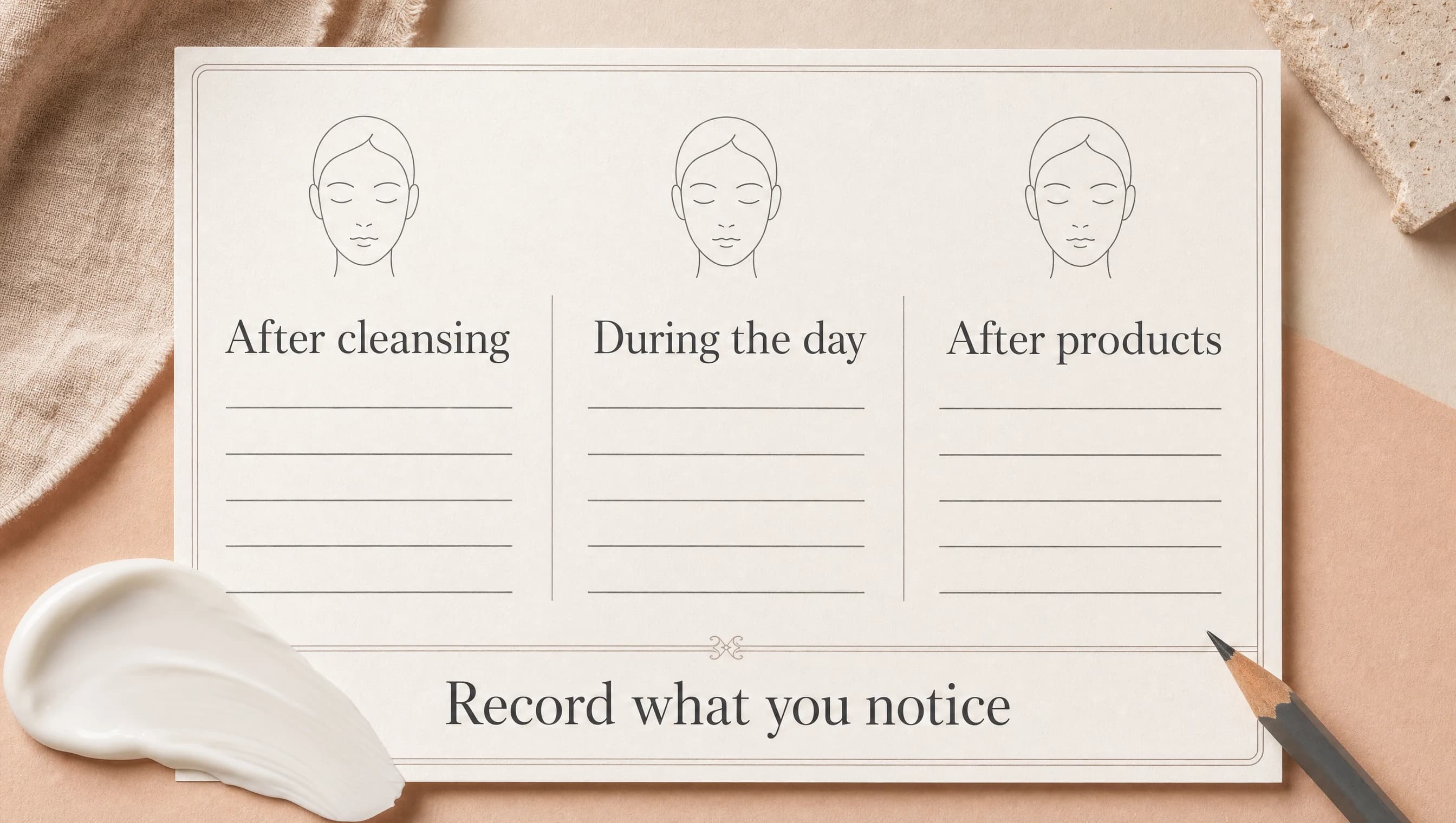
Record the time and area of an observation. A shiny forehead after lunch, tight cheeks after washing and an unpleasantly coated feeling immediately after several layers are different situations. Calling all three oily skin hides useful information.
You do not need a diagnostic label to describe those differences. A simple note about location, timing and products is enough to make a shopping decision more concrete. Our guide to moisturizing dehydrated-feeling skin can help when tightness and shine appear together, while our skin-barrier concern checklist helps organize persistent discomfort.
Review the morning stack before buying a lighter product
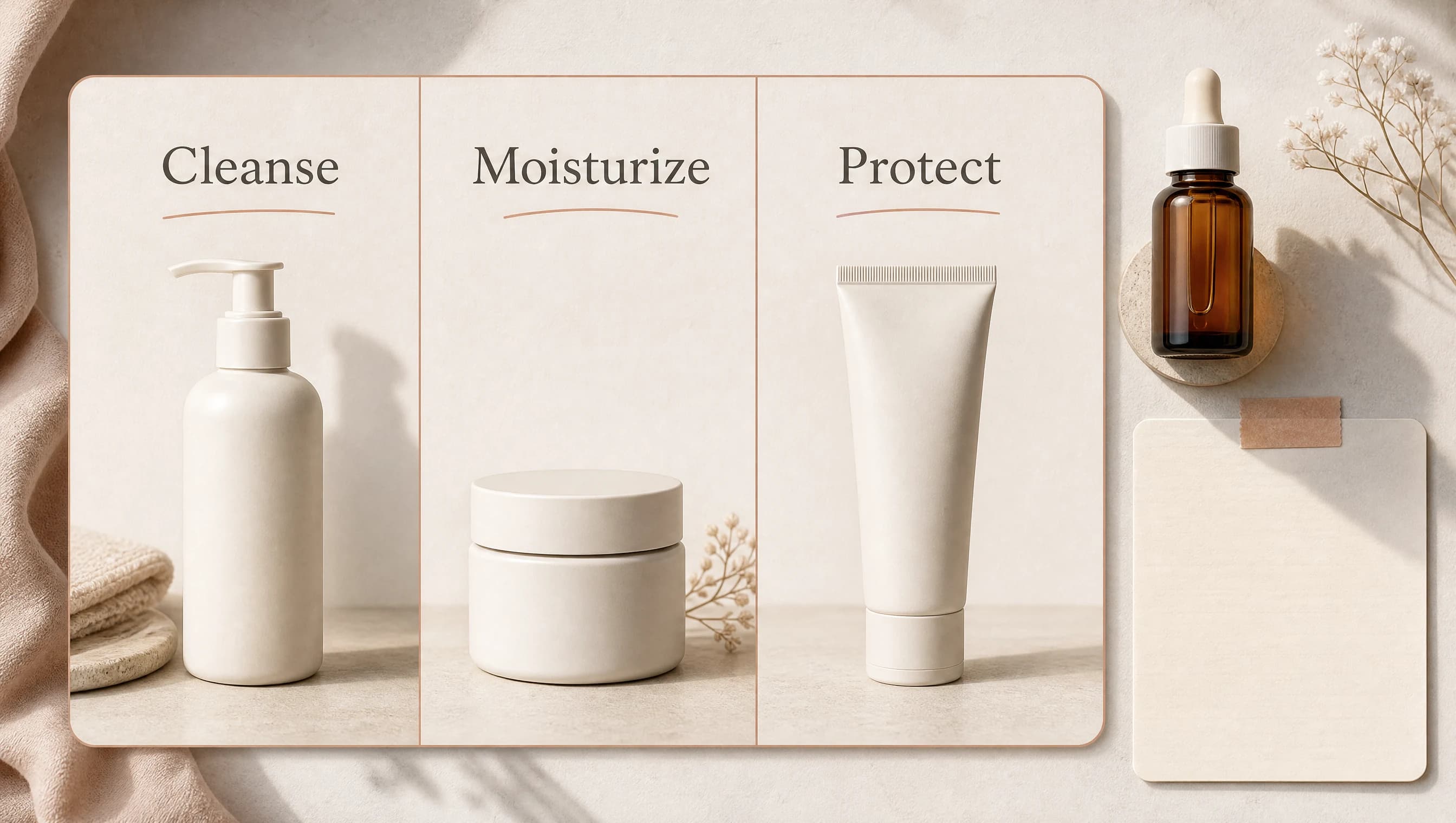
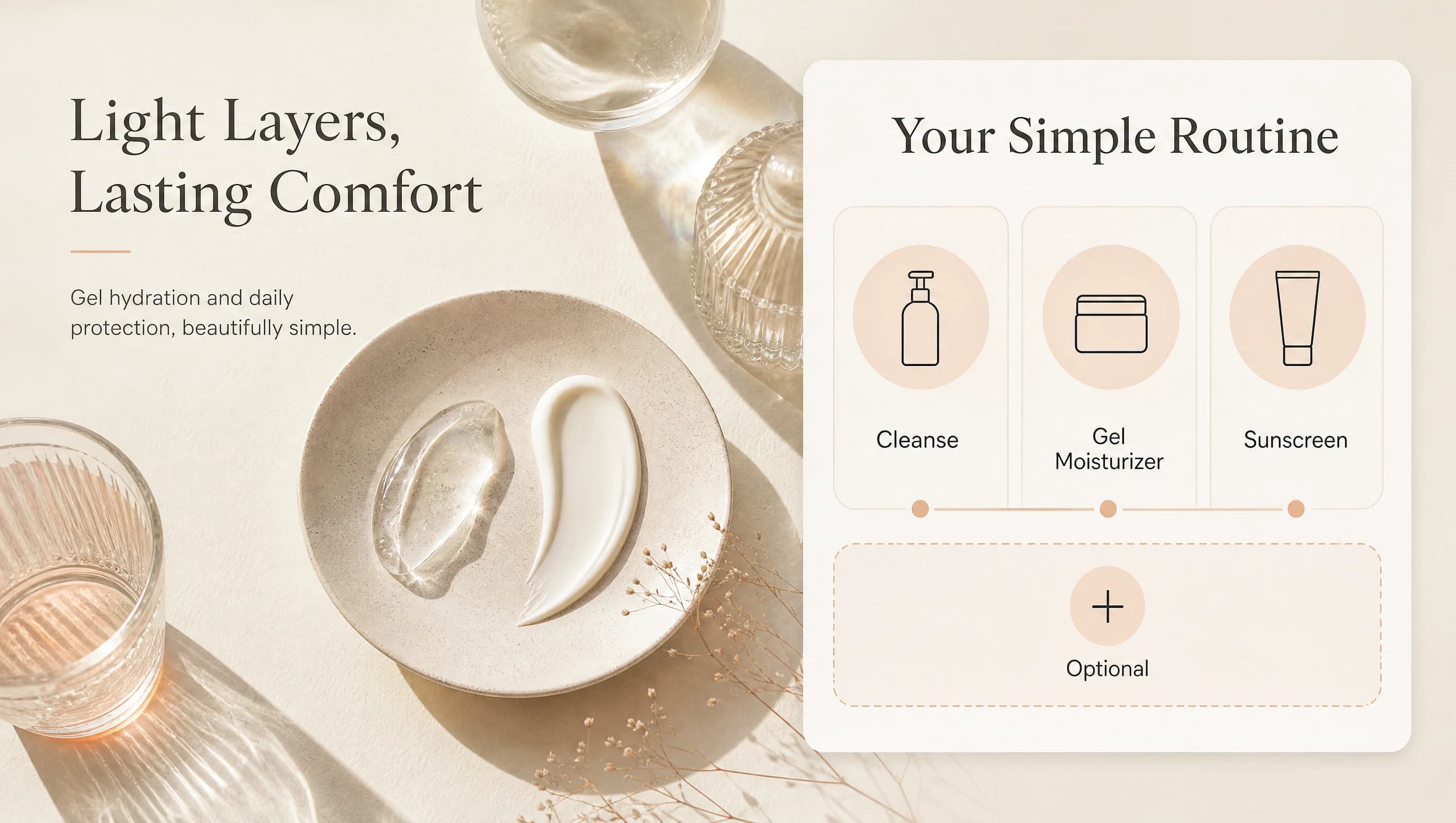
List every morning leave-on product and its purpose. If you use a hydrating serum, moisturizer and moisturizing sunscreen, ask which layers you actually value. This is a routine audit, not a reason to reduce sunscreen below its labeled application.
The AAD's budget guidance supports a simpler routine and avoiding unnecessary product accumulation. A combined moisturizing sunscreen can reduce the number of steps when it suits your use. Follow its protection directions rather than treating it like an optional dab of face cream.
You can also prefer a separate evening moisturizer while using fewer morning layers. There is no need for the two routines to contain an identical number of products merely for symmetry.
Choose texture and labels without expecting guarantees
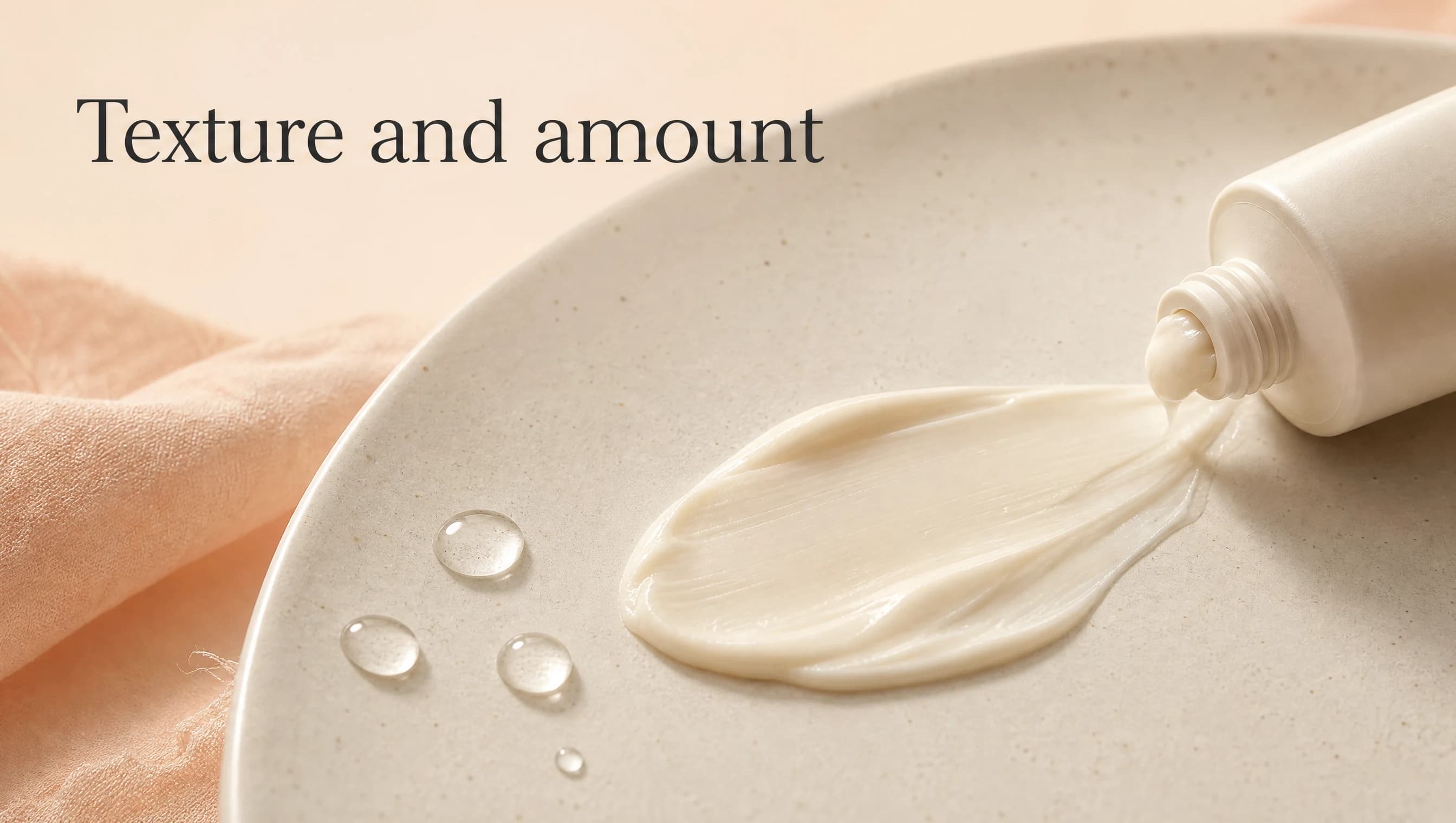
A lighter gel may be appealing if a rich finish bothers you. A lotion may be equally workable. Compare complete formulas and known ingredient exclusions rather than treating the word gel as a guarantee against breakouts.
Our gel-versus-cream moisturizer guide covers texture selection. The separate explanation of non-comedogenic labeling helps interpret a term often used on products for oily skin. Neither label can predict every individual's response.
If a product causes a reaction, stop using it rather than assuming your skin must adapt to discomfort. If the issue is dry, flaky areas alongside shine, consult our dry, flaky skin moisturizer guide instead of treating the entire face as one uniform surface.
Make one useful change and record it
Use three outcomes for the morning review. Keep the setup if your skin feels comfortable and sunscreen is applied as directed. Adjust an optional layer if the stack feels heavy or awkward. If discomfort persists or a product causes a reaction, stop treating it as a texture-shopping exercise and seek appropriate advice. Record which outcome describes your actual day.
Avoid changing cleanser, moisturizer and sunscreen simultaneously if your aim is to understand which step you prefer. You do not need to turn ordinary skincare into a formal experiment; simply keep enough context to avoid guessing afterward.
Frequently asked questions
Does shine prove that skin has enough hydration?
No. Shine is an observation about appearance. It does not by itself settle comfort, dryness or the usefulness of a moisturizing step.
Must I put moisturizer under every sunscreen?
Not automatically. Consider whether the sunscreen already provides comfortable moisturizing use and follow its own application instructions.
Should I remove moisturizer if I get breakouts?
Review the specific formula and the wider routine rather than declaring all moisturizers unsuitable. Persistent acne or a suspected reaction deserves individualized professional advice.
Sources
American Academy of Dermatology: Oily skin care (aad.org) — https://www.aad.org/public/everyday-care/skin-care-basics/dry/oily-skin
American Academy of Dermatology: Choosing moisturizer (aad.org) — https://www.aad.org/public/everyday-care/skin-care-basics/dry/pick-moisturizer
American Academy of Dermatology: Skin care on a budget (aad.org) — https://www.aad.org/public/everyday-care/skin-care-basics/care/skin-care-budget
Clear guidance, checked before publication.
Solvi articles are structured by our editorial team and reviewed for clarity, consistency, and responsible health language. We update pages when guidance or product information changes.