What Does Hypoallergenic Mean in Skincare? Use It as a Question
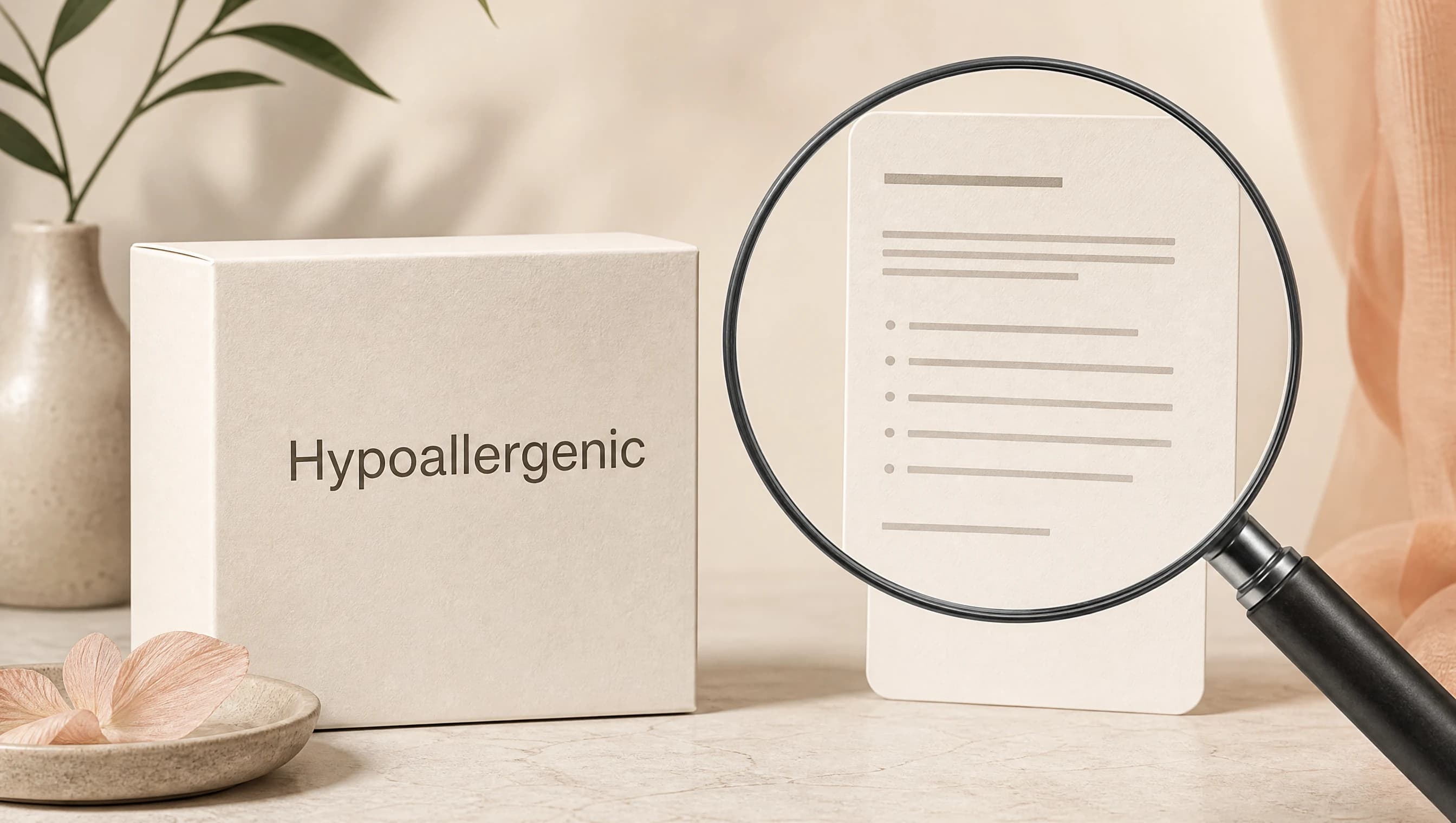
On a US cosmetic, hypoallergenic is a manufacturer's claim that the product causes fewer allergic reactions. It does not mean allergy-free, guarantee individual tolerance, or establish that a regulator has approved the formula for your particular allergy.
The useful next question is: what does this company mean by the claim, and does the actual formula match my needs? Treat the word as a reason to investigate, not as a substitute for reading the package.
What the US claim does and does not establish
The FDA states that there is no federal standard or definition governing “hypoallergenic.” Manufacturers do not have to submit substantiation of that specific claim to the FDA. That is a limitation of what the label communicates; it does not prove that every product using the term is poorly formulated.
| Label or information | What it can contribute | What it cannot settle |
|---|---|---|
| Hypoallergenic | A manufacturer's positioning claim | Your individual allergy risk |
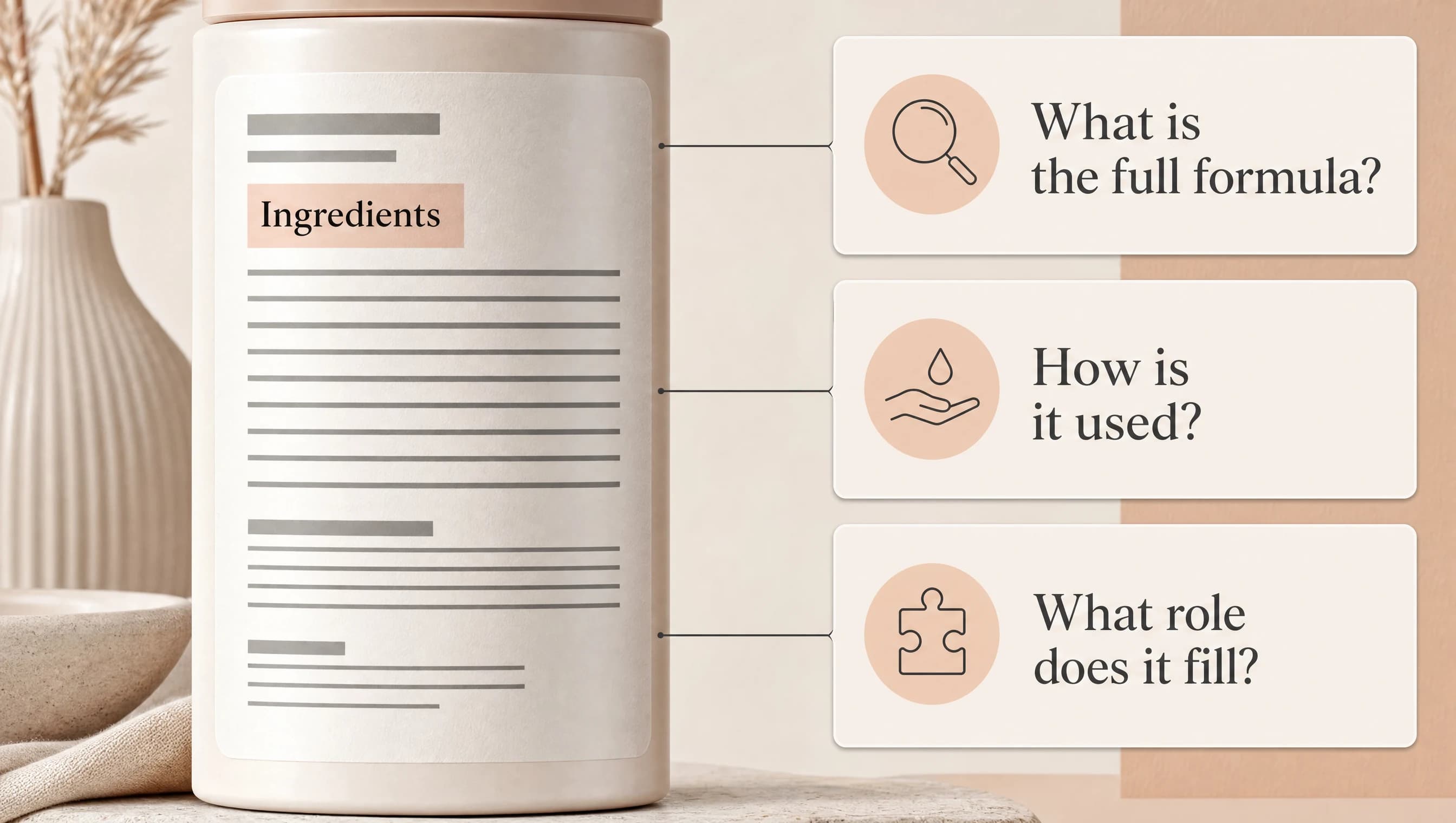
| Full ingredient list | Information to compare with known restrictions | Every possible reason for a reaction |
| Manufacturer's testing explanation | Details about the test they actually performed | A promise covering every future user |
| Your clinician's avoidance advice | A personal framework for a diagnosed allergy | Whether a different product name has the same formula |
This article concerns US cosmetic wording. Do not assume the regulatory treatment of a term is identical in every market.
Ask for useful evidence rather than another slogan
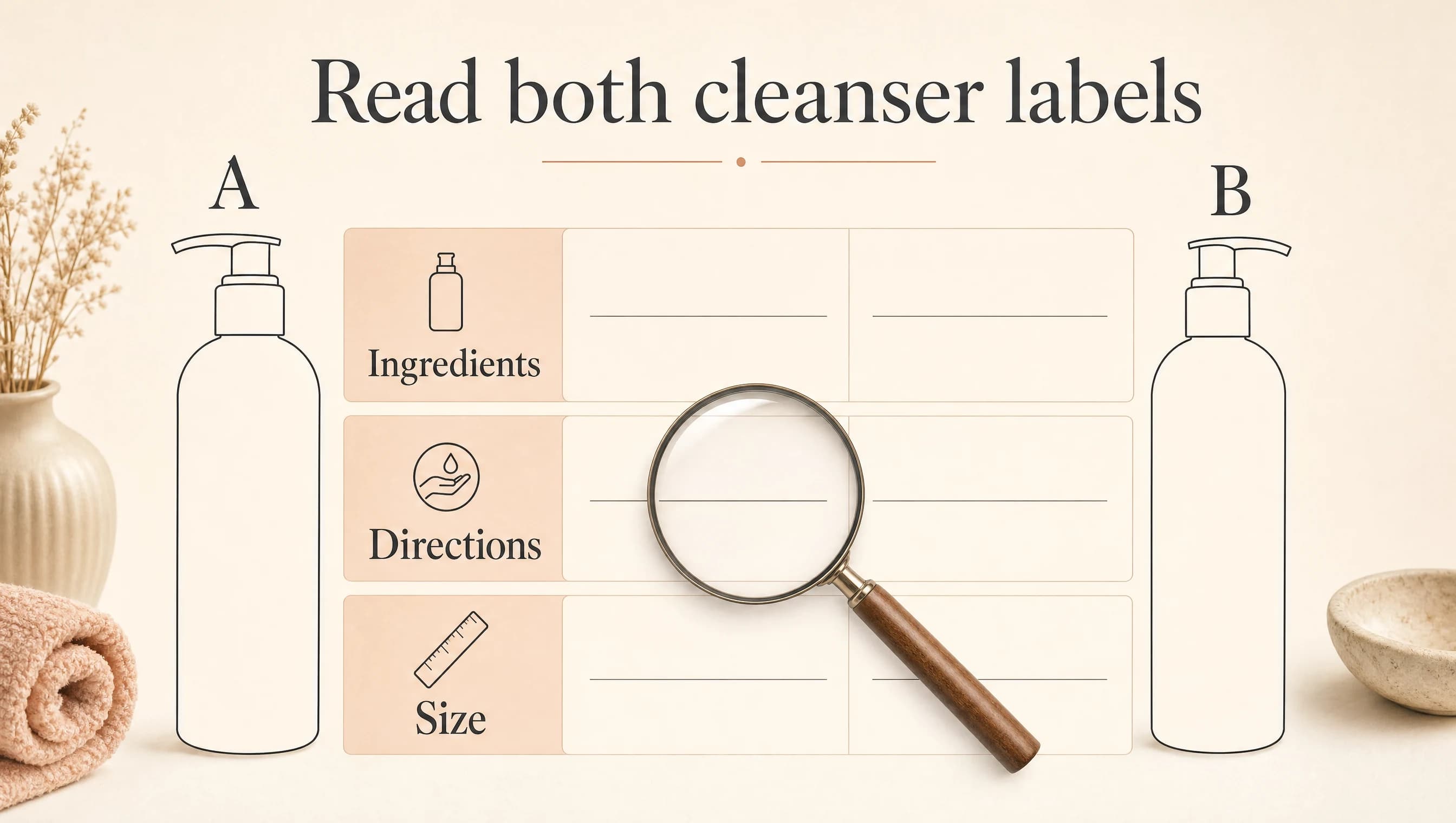
If the claim matters to your purchase, look for a plain description of the testing: what was evaluated, on whom, and what outcome was measured. A statement such as “tested” without those details is difficult for a shopper to interpret.
You do not need to become a cosmetic scientist before buying moisturizer. The practical goal is narrower: determine whether the available information answers your actual concern. If it does not, record the uncertainty rather than converting an attractive claim into reassurance it cannot provide.
For example, a person avoiding a diagnosed fragrance allergen needs relevant ingredient information. A person who dislikes heavy textures needs to compare product format. The same hypoallergenic badge answers neither question completely.
Use your own history without overgeneralizing
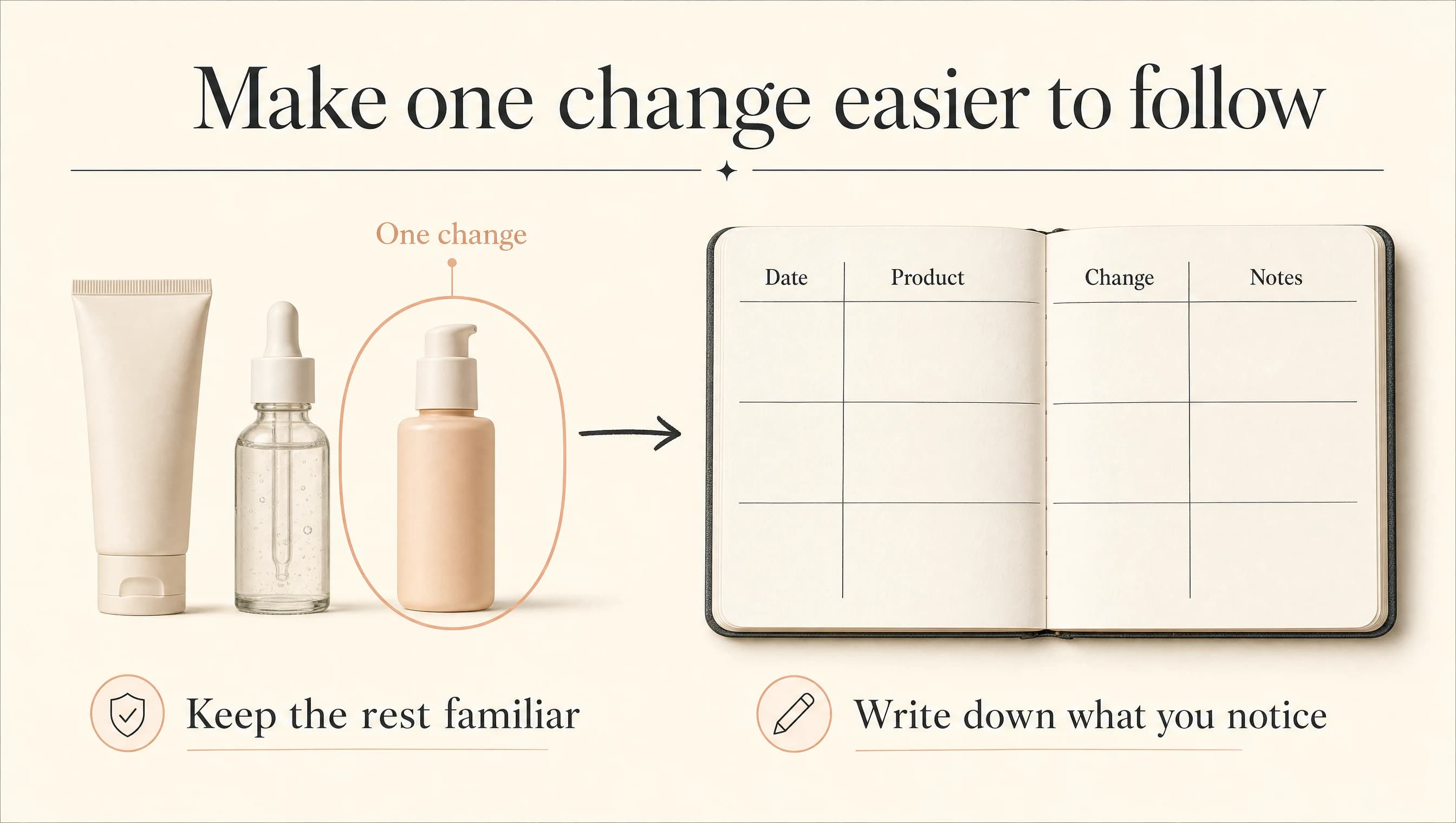
Keep a list of products that felt comfortable and products that caused problems, including exact names and ingredient photographs. Do not conclude that every product from one brand will behave the same way, or that a reaction to one moisturizer proves all moisturizers are unsuitable.
When a known allergy is involved, use the names and avoidance guidance supplied by your clinician. The FDA's allergen guidance emphasizes that reading ingredients matters more than relying only on front-label terms.
For a related claim with a different meaning, read fragrance-free versus unscented. For the limits of a preliminary cosmetic trial, see how to patch test skincare at home. Neither guide replaces the identification of an allergen when recurrent reactions need medical investigation.
Turn the label into a shopping checklist
Resolve the reason you wanted the badge before shopping further:
- Known ingredient to avoid: compare the exact regional list and ask the specific manufacturer question above when needed.
- Texture preference: compare the format and intended use; hypoallergenic does not tell you the finish.
- Too many optional products: identify the role the candidate would replace before adding it.
For the first two questions, the sensitive-skin product guide helps organize a smaller shortlist. If the issue is the number of steps, start with the beginner routine guide.
If ongoing irritation is the immediate issue, use skin-barrier observation checklist to describe the pattern and seek appropriate care.
Frequently asked questions
Does hypoallergenic mean fragrance-free?
No. The claims concern different things. Inspect fragrance information separately, and remember that neither term proves tolerance of the entire product.
Is a hypoallergenic product guaranteed not to cause a rash?
No. A front-label claim cannot guarantee that outcome for every person. Stop using a product that causes a concerning reaction and seek advice when needed.
Is hypoallergenic the same as clinical patch testing?
No. Clinical patch testing is a medical investigation of potential contact allergens. A cosmetic's marketing claim does not tell you that you personally have undergone that assessment.
Sources
FDA: Hypoallergenic cosmetics (fda.gov) — https://www.fda.gov/cosmetics/cosmetics-labeling-claims/hypoallergenic-cosmetics
FDA: Allergens in cosmetics (fda.gov) — https://www.fda.gov/cosmetics/cosmetic-ingredients/allergens-cosmetics
AAD: Clinical patch testing (aad.org) — https://www.aad.org/public/diseases/eczema/types/contact-dermatitis/patch-testing-rash
Clear guidance, checked before publication.
Solvi articles are structured by our editorial team and reviewed for clarity, consistency, and responsible health language. We update pages when guidance or product information changes.