Signs of a Damaged Skin Barrier: The 2-Week Checklist That Clarifies What Your Skin Needs



If your skin is persistently dry or flaky and suddenly feels tight, stingy, red, or reactive, those are common signs of a damaged skin barrier. A single dry patch after cold weather may be temporary; a cluster of symptoms that lasts more than two weeks despite regular moisturizer is a stronger reason to simplify your routine and consider professional guidance.
The skin barrier is the outermost protective layer of skin. When it is under strain, more water can escape through the skin—a process measured clinically as transepidermal water loss (TEWL)—while everyday products and environmental exposures may feel more irritating than usual. Think less about finding one magic “barrier repair” product and more about removing friction: fewer potential irritants, gentler cleansing, and a moisturizer texture that you can use consistently.
The quick read: is it dry skin or a damaged barrier?
Dryness is a feeling and a visible condition: skin can look dull, feel rough, or develop flakes when it lacks enough water and oil at the surface. Barrier dysfunction is more of a pattern. It often includes dryness, but adds discomfort and reactivity—the sense that a previously familiar cleanser, serum, or even plain water has become too much.
Use this as a consumer-facing screen, not a diagnosis. Acne, eczema, rosacea, allergic reactions, and infections can overlap with some of these signs, which is why severity, timing, and persistence matter.
| What you notice | More consistent with temporary dryness | More suggestive of barrier strain |
|---|---|---|
| Sensation | Rough or slightly tight, usually comfortable after moisturizer | Tight, stinging, itchy, or burning sensations that recur |
| Appearance | A few flakes or seasonal dullness | Dryness with persistent redness, irritation, or patchiness |
| Product tolerance | Regular basics still feel comfortable | Products you once tolerated seem to provoke sensitivity |
| Timeline | Improves as weather or routine normalizes | Persists beyond two weeks despite gentle moisturizing |
| Pattern | One localized dry area | Several symptoms happening together, sometimes with recurrent acne or eczema flares |
The signs worth taking seriously
A compromised barrier does not have one signature look. The most useful clue is a cluster, especially after a change in products or habits.
- Persistent dryness, scaling, or flaking that returns quickly after moisturizing
- Tightness that is most noticeable after cleansing or showering
- Stinging, itching, or a hot, uncomfortable sensation when applying products
- Increased redness or visible irritation
- New sensitivity or frequent reactions to products that were previously uneventful
- A dehydrated, less supple feel linked to increased water loss through skin
- Recurring flares of acne or eczema alongside irritation
Ask what changed
The timing can be as revealing as the symptom. A new exfoliating acid, a retinoid used more often than usual, a foaming cleanser, long hot showers, or vigorous scrubbing can all coincide with a period of irritation. That does not prove one product is responsible, but it gives you a sensible starting point for simplification.
Look back over the previous two to four weeks and note whether symptoms followed any of these shifts:
- Starting a new leave-on treatment, mask, cleanser, or fragranced product
- Increasing the frequency or strength of exfoliating products or other active treatments
- Washing with hot water, cleansing repeatedly, or using a harsh-feeling surfactant cleanser
- Layering several new products at once, making the trigger impossible to identify
- Experiencing a change in climate, indoor heating, travel, or friction from face coverings
If you are uncertain, TEWL testing and professional skin assessment can offer a more objective perspective. At home, however, the goal is not to measure your skin perfectly; it is to notice whether a low-irritation routine makes the pattern calmer over time.
Why the signs cluster
A healthy barrier helps regulate water movement and provides a protective interface between skin and the outside world. When that function is disrupted, the result can be a feedback loop: water escapes more readily, skin feels dry and tight, and products or exposures that were once tolerable may feel sharp or uncomfortable.
This explains why chasing flakes with more exfoliation can backfire. Flaking can look like a cue to scrub, peel, or polish, but if the accompanying sensation is stinging or redness, adding more intensity may worsen the discomfort rather than solve it.
The texture test
Your face can feel both oily and barrier-stressed. Surface shine does not rule out dehydration or sensitivity, particularly when skin feels taut underneath, makeup catches on rough areas, or cleansing leaves a squeaky-clean finish. In this situation, choose by comfort and tolerance rather than trying to strip away every trace of oil.
What not to mistake for a reset
A barrier reset should be boring in the best way: repeatable, low-friction, and easy to interpret. It is not the moment to introduce three soothing serums, switch cleansers every other day, or test a new high-strength treatment because the packaging says “renewing.”
Consider putting these on pause while skin is actively uncomfortable:
- Exfoliating acids, scrubs, peeling pads, and at-home peel treatments
- Any active product that reliably stings, even if it is normally part of your routine
- Strongly fragranced products or formulas with a long history of making your skin feel warm or itchy
- Very hot water, washcloth scrubbing, cleansing brushes, and repeated face washing
This is a temporary edit, not a declaration that all active ingredients are bad. Once skin is comfortable and stable, introduce only one product change at a time and pay attention to how it feels over several uses.
A reset routine that does less
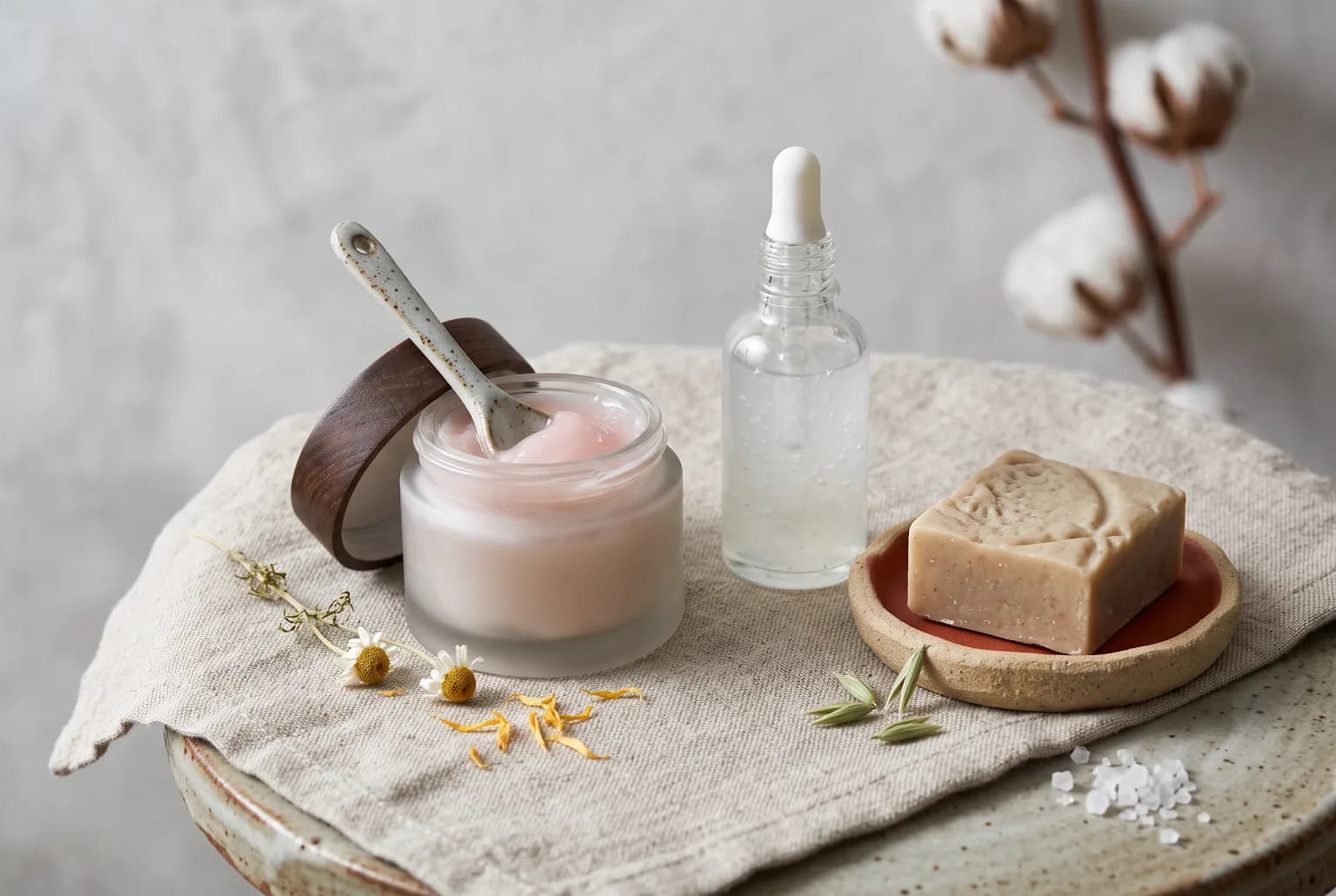
For a stressed-looking routine, the best approach is usually a short one. Gentle cleansing, a barrier-supportive moisturizer, and sun protection in the morning create a clearer baseline than an elaborate recovery shelf.
Morning
- Rinse with lukewarm water, or use a gentle cleanser if you need one to remove overnight product or oil. Avoid the sensation of aggressively “degreasing” the skin.
- Apply a fragrance-free moisturizer to slightly damp skin. A lotion may be sufficient for mild dryness; a cream generally offers a richer, more cushioning finish.
- Finish with a sunscreen you already know your skin tolerates. If sunscreen is stinging during an irritated period, do not force yourself through escalating discomfort—consider a dermatologist's advice, especially if sensitivity persists.
Evening
- Cleanse once with lukewarm water and a gentle syndet cleanser, which uses synthetic detergent surfactants and is often formulated to be milder than traditional soap. If you wear long-wear makeup or water-resistant sunscreen, remove it without scrubbing, then keep the second cleanse gentle and brief.
- Apply your moisturizer while skin is still a little damp. Press it over the face rather than rubbing repeatedly over tender areas.
- If dryness feels severe, apply a thin layer of petrolatum over moisturizer on the driest spots to add an occlusive layer that can reduce water loss. Keep the application targeted if you dislike a glossy, coated finish.
Give the routine time to speak
Keep the core routine steady for roughly two weeks unless symptoms worsen. Improvement does not need to mean flawless skin; look for less sting on application, less post-cleanse tightness, fewer new flaky areas, and a more comfortable feel through the day.
If symptoms are unchanged after that window, or the discomfort is significant, the answer may not be another moisturizer. It is reasonable to seek an evaluation rather than continuing to cycle through repair products.
How to choose a barrier-repair moisturizer
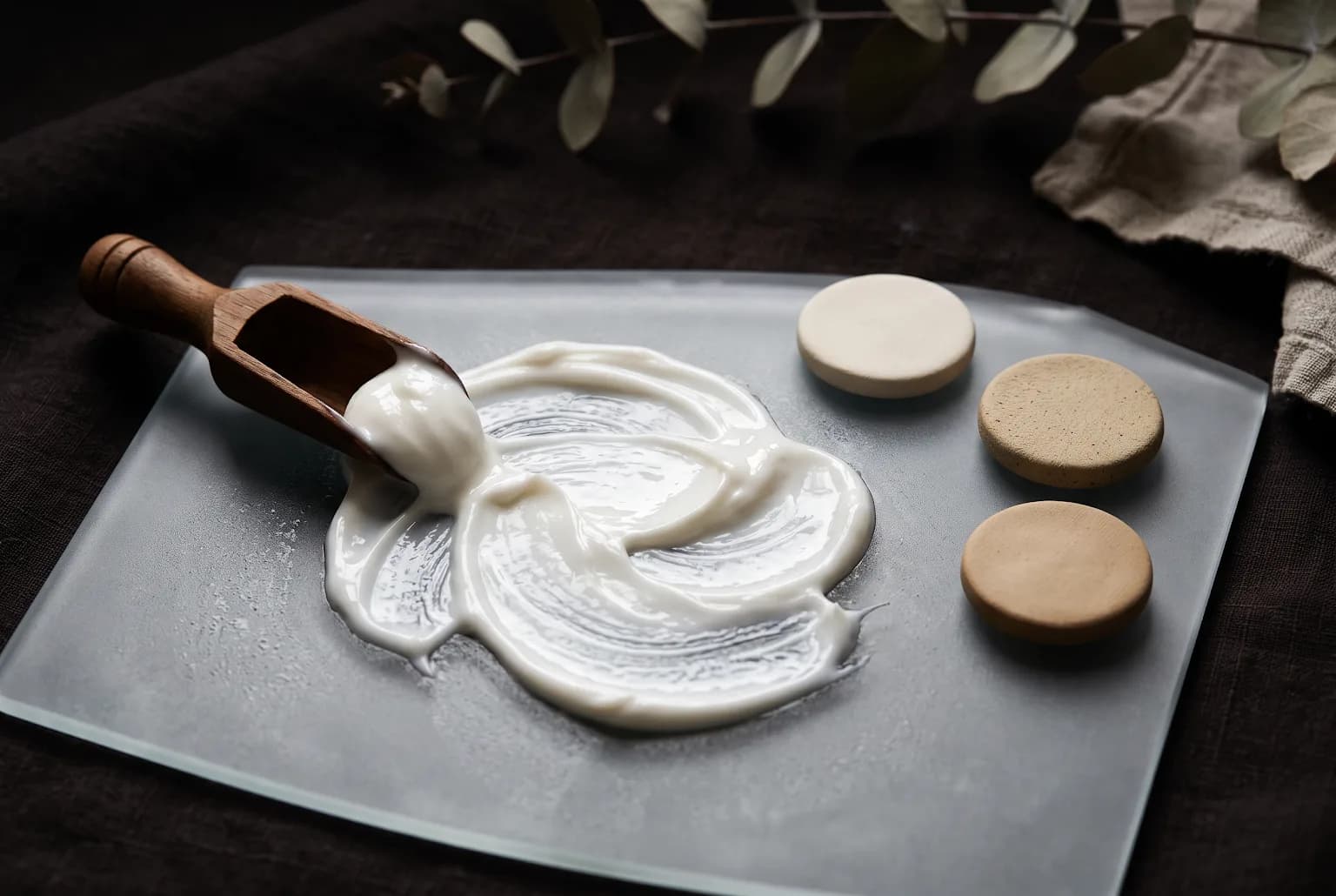
The most useful formula is often less glamorous than the trendiest one. Look for a fragrance-free moisturizer with a format that suits your skin’s current level of dryness and your tolerance for richness; then use it often enough to judge it.
Choose the format, then the formula
| Format | Texture and layering | May suit | Tradeoff to consider |
|---|---|---|---|
| Lotion | Fluid, quick-spreading, easy beneath sunscreen | Mild dryness, combination skin, or anyone who dislikes residue | May not feel sufficient when flaking and tightness are pronounced |
| Cream | Denser and more cushioning, usually comfortable at night | Persistent dryness, tightness, or cold-weather discomfort | Can feel rich under makeup or in humid weather |
| Ointment or petrolatum layer | Glossy, protective, and highly occlusive | Very dry, chapped-feeling spots and nighttime use | May feel heavy; best used sparingly and strategically if you dislike the finish |
A smart label checklist
You do not need to find every desirable ingredient in one formula. The decision is more practical: can you apply it without stinging, can you use it twice daily if needed, and is the texture right for the place it has in your routine?
- Favor fragrance-free options, particularly during a period of active sensitivity
- Consider moisturizers that include ceramides, cholesterol, and fatty acids
- Choose a gentle syndet cleanser rather than a cleanser that leaves skin feeling stripped
- Patch-test a new product, particularly if your skin has been reactive or you have had product reactions before
- Keep new additions to one at a time so you can tell what is helping or hurting
“Fragrance-free” is a useful screen, not a universal guarantee of compatibility. Ingredient lists, individual sensitivities, amount used, and the condition of your skin all affect how a formula feels. Stop using a product that seems to provoke a reaction rather than trying to push through it.
When to get help instead of troubleshooting alone
A stripped-back routine is appropriate for mild, familiar discomfort, but it should not become a reason to wait out symptoms that are intense or escalating. Dermatology care is especially useful when the cause is unclear, when you may need a diagnosis, or when over-the-counter experimentation is creating more irritation.
Make an appointment if
- Symptoms remain persistent after more than two weeks of a gentle moisturizer-focused routine
- Redness, itching, burning, cracking, or swelling is severe or worsening
- You notice signs that could suggest a secondary infection, such as increasing pain, warmth, pus, or crusting
- You are having recurrent eczema or acne flares alongside marked irritation
- You cannot identify a tolerable basic cleanser and moisturizer, or you suspect an allergic reaction
Bring a simple timeline: when symptoms began, every new product, how often you used it, and what made your skin better or worse. Photos taken in consistent light can help document changes, but a professional assessment is more useful than attempting to self-diagnose from photos alone.
Related reading
- Best Face Wash for Sensitive Skin: Gentle Guide
- Moisturizer for Dry, Sensitive, Acne-Prone Skin
- Hyaluronic Acid Serum for Sensitive Skin
Frequently asked questions
Can a damaged skin barrier cause acne?
Barrier disruption and recurrent acne flares can occur together, but acne has multiple possible drivers. Avoid treating new breakouts by abruptly adding more exfoliants when skin is also stinging, tight, or red; a clinician can help sort out an approach that addresses both concerns.
How long does a damaged skin barrier take to heal?
There is no universal timeline. If a gentle routine is not producing any meaningful improvement after about two weeks, or symptoms are severe at any point, seek dermatology guidance rather than continuing to experiment.
Should I stop all active ingredients?
During active stinging, redness, or sensitivity, pausing suspected irritants and reducing exfoliation is a prudent starting point. Once skin is comfortable, reintroduce products gradually, one at a time, instead of restarting a full active routine at once.
Is petrolatum good for a compromised barrier?
Petrolatum is an occlusive option that can help limit water loss, especially over moisturizer on very dry areas. Its heavy, shiny finish is not for everyone, so spot application at night is a practical way to decide whether it fits your routine.
Sources
- Cleveland Clinic — Skin Barrier patient guide
- American Academy of Dermatology — consumer skin care guidance
- National Center for Biotechnology Information — clinical literature on skin barrier repair and transepidermal water loss
Clear guidance, checked before publication.
Solvi articles are structured by our editorial team and reviewed for clarity, consistency, and responsible health language. We update pages when guidance or product information changes.

Zoe Mitchell
Beauty Trends Editor. Zoe keeps a close eye on viral routines, new launches, and the skincare conversations moving fastest online. She asks which trends are useful, which need context, and which can be skipped.