How to start a skincare routine for beginners (a simple, sustainable plan)


Start here: the quickest answer to "how to start a skincare routine for beginners" is this — use three repeatable products morning and night: a gentle cleanser, a moisturizer that focuses on barrier repair, and a broad‐spectrum SPF every morning. Those three steps build a foundation you can stick to; add targeted actives one at a time after 4–8 weeks to see how your skin responds. Keep textures compatible (avoid heavy creams under lightweight gels unless your skin tolerates layering) and prioritize ingredients that support the skin barrier like ceramides and glycerin.
Start with the core three steps
A minimalist routine for beginners is powerful because it reduces friction. Morning: cleanse if you need to remove oil or sweat, apply a moisturizing layer, then a broad‐spectrum SPF. Evening: cleanse to remove sunscreen and pollutants, apply moisturizer. That’s it for the first 6–8 weeks. The goal is consistency, not complexity — repeating these steps daily protects your skin and creates a reliable baseline for future additions.
Decision checklist when you’re shopping:
| Priority need | What to look for | Texture example |
|---|---|---|
| Clean removal without stripping | Mild surfactants, no harsh foaming agents | Cream or lotion cleansers |
| Barrier support | Ceramides, glycerin, fatty acids | Rich creams or light gels with humectants |
| UV protection | Mineral or chemical broad‐spectrum SPF (SPF 30+) | Lotion or fluid that blends transparently |
Choose the right cleanser for your skin type

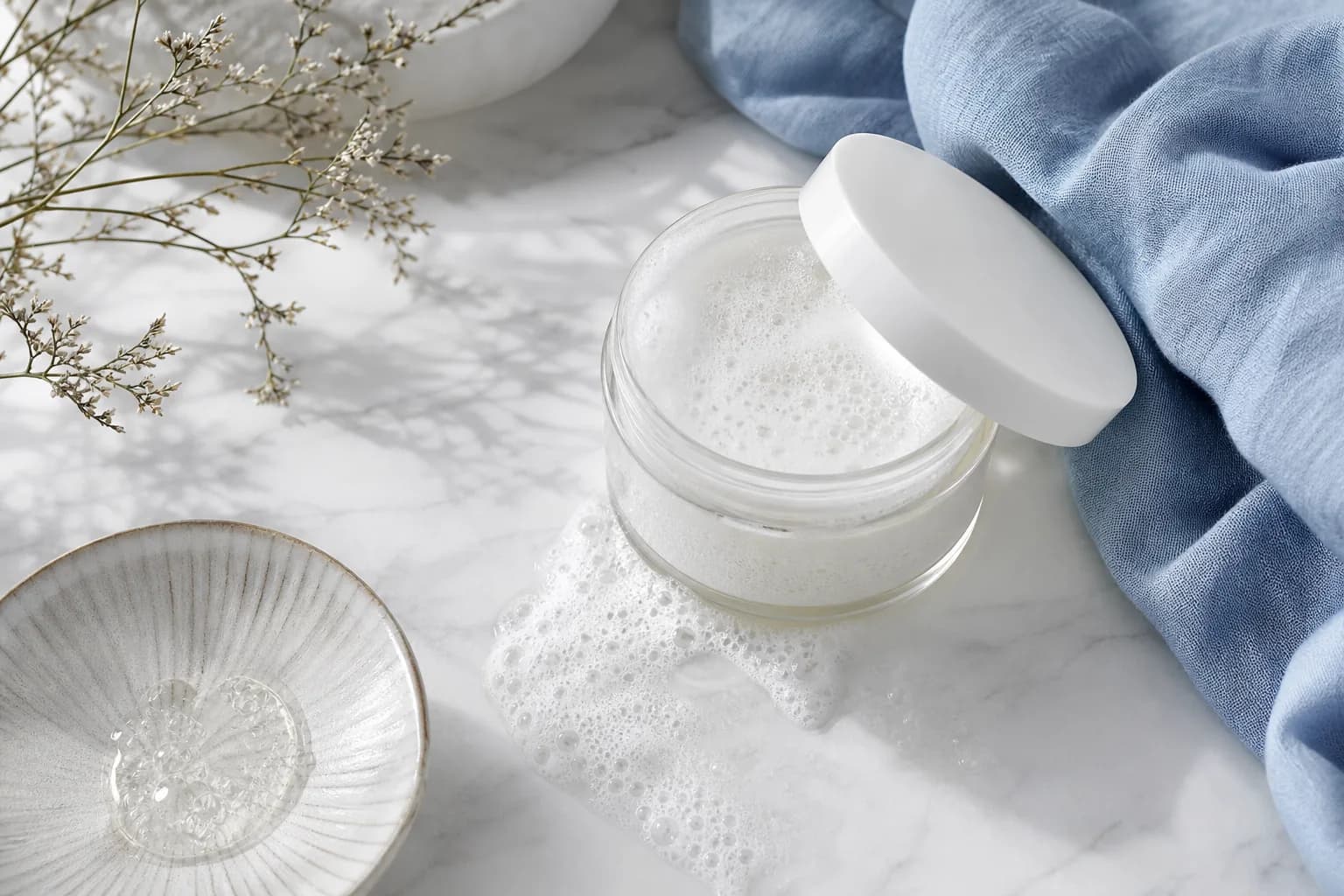
Choosing a cleanser is more about texture and tolerance than trendy ingredients. Oily and acne‐prone skin often prefers a gel or foaming cleanser that dissolves excess sebum; dry skin tends to do better with a creamy, non‐stripping cleanser that leaves some moisture behind. Sensitive skin benefits from fragrance‐free, low‐surfactant formulas and shorter lather times.
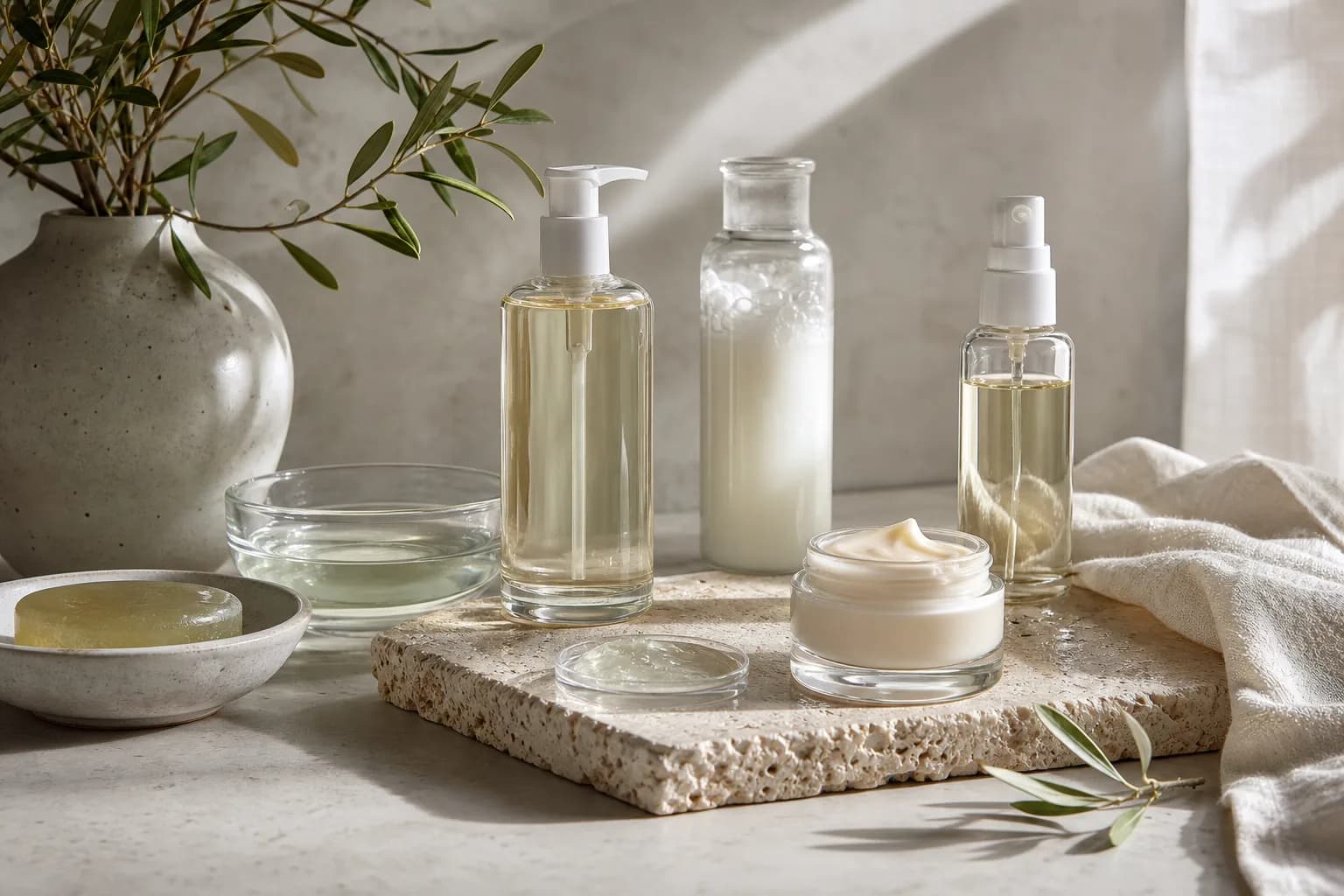
Texture tradeoffs: gels rinse clean and feel light but can dry if they contain strong detergents. Creams and milks cleanse without squeaky tightness but can feel heavy in humid weather. Micellar waters are useful for gentle morning refreshes or for removing makeup without water but usually don’t replace a rinse cleanser at night.
Pick a moisturizer that rebuilds your barrier
When you’re starting, favor a moisturizer that emphasizes barrier repair over active brightening. Ingredients to prioritize are ceramides, glycerin, and fatty acids; these support hydration and reduce sensitivity. For dry skin choose thicker creams; for combination or oily skin try gel‐creams that hydrate without leaving a film. If you’re unsure, opt for a ceramide‐rich formula in a midweight texture.
Layering and timing: apply moisturizer to damp skin to trap water. If you use a lightweight serum such as niacinamide later, apply it before your cream; always finish with sunscreen in the morning. Consider texture-match: a heavy balm under occlusive sunscreen can pill, while a light lotion under a chemical SPF fluid usually blends smoothly.
Make sunscreen non-negotiable
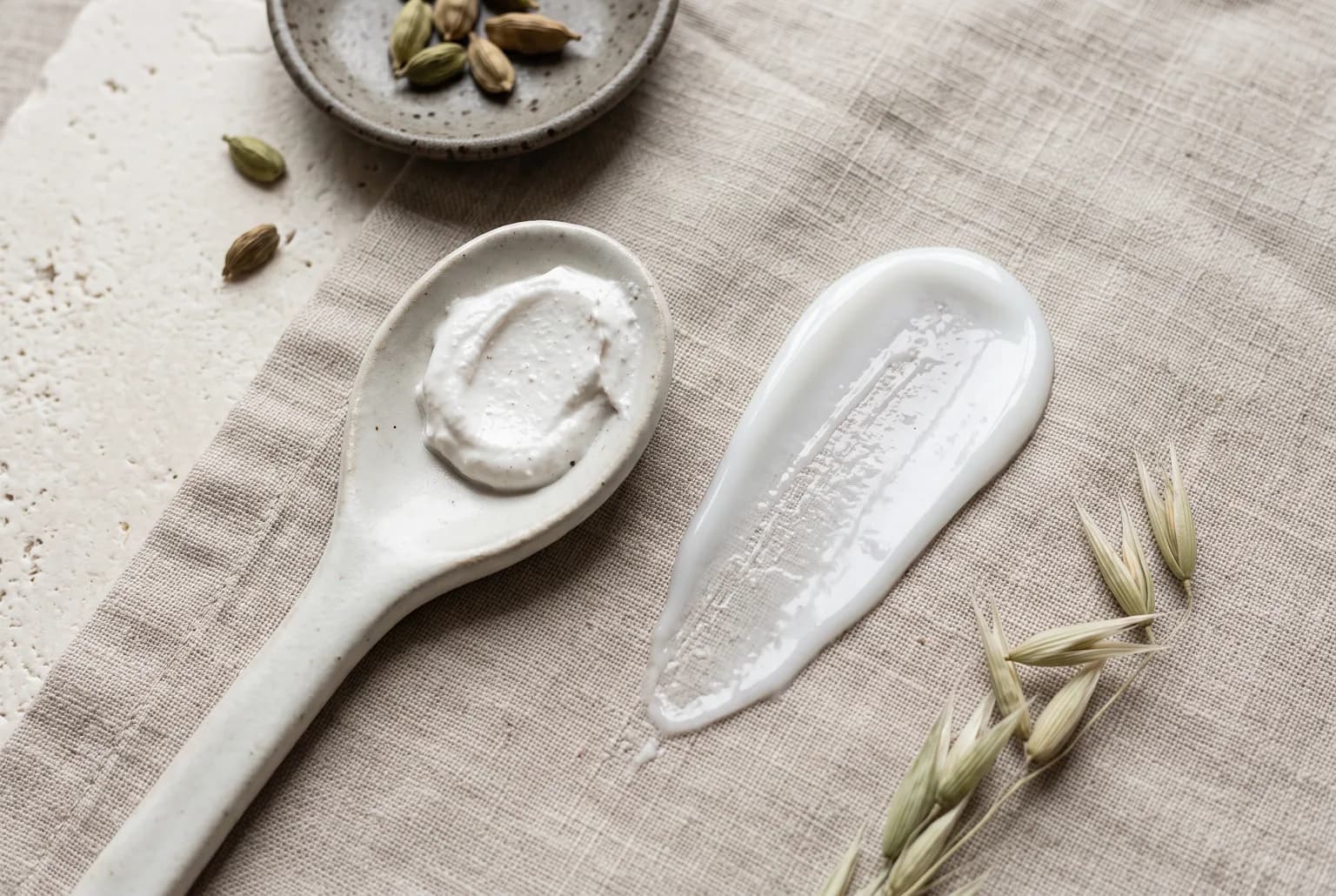
Sunscreen is the non‐optional step from day one. Whether you choose a mineral (zinc/titanium) or chemical filter, the key is wearing a broad‐spectrum SPF of at least 30 every morning and reapplying when exposed. Texture matters: mineral formulas can leave a white cast on deeper skin tones, though modern micronized or tinted mineral options reduce that effect. Chemical SPFs often feel lighter and sit invisibly, which helps with consistent use.
Practical tradeoffs: mineral sunscreens offer visible physical protection and are often less irritating for sensitive skin, but they can be thicker. Chemical sunscreens are cosmetically elegant but some people react to specific filters. Choose a texture you’ll use daily — that’s more important than theoretical superiority.
When and how to add actives
After you’ve used the core three consistently for 4–8 weeks, introduce one active at a time. Start with niacinamide (a low‐irritation serum that can help tone and oil control), then consider a gentle chemical exfoliant (AHA or BHA) once weekly, building to 1–2×/week if tolerated. Retinoids should be introduced last at low frequency—try every other night and monitor for dryness or irritation.
Pacing rules from the brief: patch‐test every new active, wait 4–8 weeks to judge its effect before adding another, and never layer multiple strong actives at once. If irritation appears, stop the active and return to the core three while your skin recovers. For more on the order of application and nighttime layering, our step-by-step guide explains the essential steps in a routine and why order matters — see Step-by-step skincare: the essential steps in a routine ().
Weekly and seasonal extras that matter
Once the basics are reliable, add occasional treatments that address specific needs. A gentle AHA/BHA chemical exfoliant 1–2×/week can smooth texture and unclog pores, but only after tolerance is established. A treatment mask for hydration or clay masks for oil control can be a weekly swap depending on season and skin behavior. The winter months often demand richer moisturizers or a hydrating balm; in summer, switch to lighter gels and consider oil‐control serums if you become more sebaceous.
Practical weekly calendar example:
- Monday: core PM routine
- Wednesday: PM with gentle AHA liquid (patch tested)
- Friday: PM core routine with hydrating mask as needed
- Sunday: rest day or spot tretinoin/retinoid treatment if tolerated
How to build a routine you’ll actually keep
Consistency beats experimentation. Decide on a two‐minute morning and a three‐minute evening routine you can realistically do every day. Pay attention to textures: if a product pills when layered, swap a step rather than doubling down. Match products to your lifestyle — tinted mineral SPF can replace moisturizer plus coverage for busy mornings, while an evening oil can replace a separate night cream for dehydrated skin.
Concrete decision examples:
- You have oily, acne‐prone skin and hate heavy creams: pick a gel cleanser, a lightweight gel‐cream moisturizer with ceramides, and a chemical or fluid SPF.
- You have dry, reactive skin: pick a cream cleanser or balm, a rich ceramide moisturizer, and a tinted mineral SPF to avoid white cast and add hydration.
- You’re time‐pressed: a two‐product morning (spritz or splash cleanse + SPF) and a focused night (cleanse + moisturizer) is acceptable for several months before adding actives.
For a short audit and an AM/PM plan that fits a busy life, see Create a skincare routine you’ll actually follow: a short audit and simple AM/PM plan ().
Frequently asked questions
How long should I use a product before judging if it works?
Give each new product or active 4–8 weeks before deciding whether it’s effective or irritating. Skin cycles and tolerance build slowly; using an introduced product for only a few days won’t reveal its true effect. If irritation occurs, stop the product and return to your core three to rebuild barrier health.
Do I need different products for morning and night?
Not necessarily. The core differences are sunscreen in the morning and targeted actives like retinoids at night. Many people use the same gentle cleanser and moisturizer both AM and PM. Prioritize SPF for day and reserve potentially photosensitizing actives (AHA, retinoid) for evening use.
What order should I apply skincare in?
Apply products from thinnest to thickest: light serums and water‐based treatments first, then creams and oils, finishing with sunscreen in the morning. If you use tretinoin or prescription retinoids, apply them to a clean, dry face in the evening before heavier creams or occlusives.
How do I choose products for my skin type?
Match texture to skin behavior: gels for oilier skin, creams for dry skin, fragrance‐free low‐surfactant options for sensitive skin. Look for barrier‐supporting ingredients like ceramides and glycerin, and avoid introducing active actives until the core routine is stable. For dryness-specific guidance, see The best dry skin guide: moisturizers, routines, and what to buy ().
Related Reading
- Create a skincare routine you’ll actually follow: a short audit and simple AM/PM plan
- The best skincare routine for acne: a simple, two-step daily approach
- The best skincare routine for men: simple, repeatable, effective
Sources
- NBC News / dermatologist‐backed step‐by‐step routine (https://www.nbcnews.com/select/shopping/best-skin-care-routine-rcna105133)
- Cleveland Clinic — How to build a simple skin care routine (https://health.clevelandclinic.org/what-products-do-i-actually-need-for-a-simple-everyday-skin-care-routine)
- Ulta Beauty — Beginner routines and pacing for additions (https://www.ulta.com/discover/beauty-education/skin-care-routine-for-beginners)
Clear guidance, checked before publication.
Solvi articles are structured by our editorial team and reviewed for clarity, consistency, and responsible health language. We update pages when guidance or product information changes.

Naomi Chen
Skincare Ingredients Writer. Naomi reads ingredient lists for fun and loves translating formulation language into advice that makes sense at the bathroom mirror. Hydration, barrier care, and sensitive-skin formulas are her favorite rabbit holes.