How to Patch Test Skincare at Home: What a Small-Area Trial Can Tell You
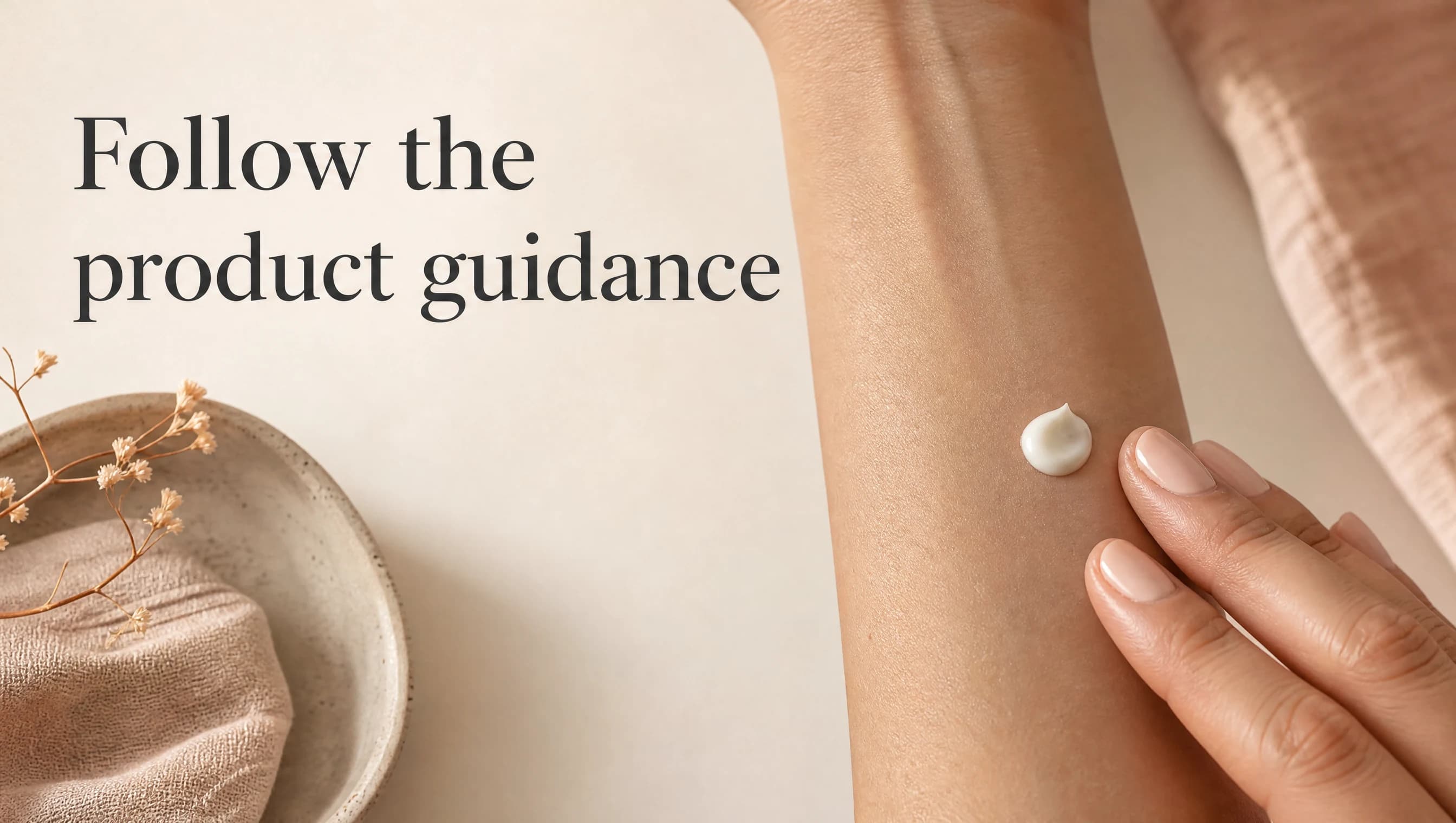
A home skincare “patch test” is better understood as a small-area product trial. It can help you notice an unwanted reaction before applying a new cosmetic more widely. It cannot identify every allergy, prove that a product will never cause problems, or replace diagnostic patch testing performed by a clinician.
Start by reading the product's directions and warnings. A cosmetic trial is not permission to use a known allergen, apply a product to damaged skin, or ignore a restriction on how often or where it may be used.
The AAD method, with the rinse-off exception
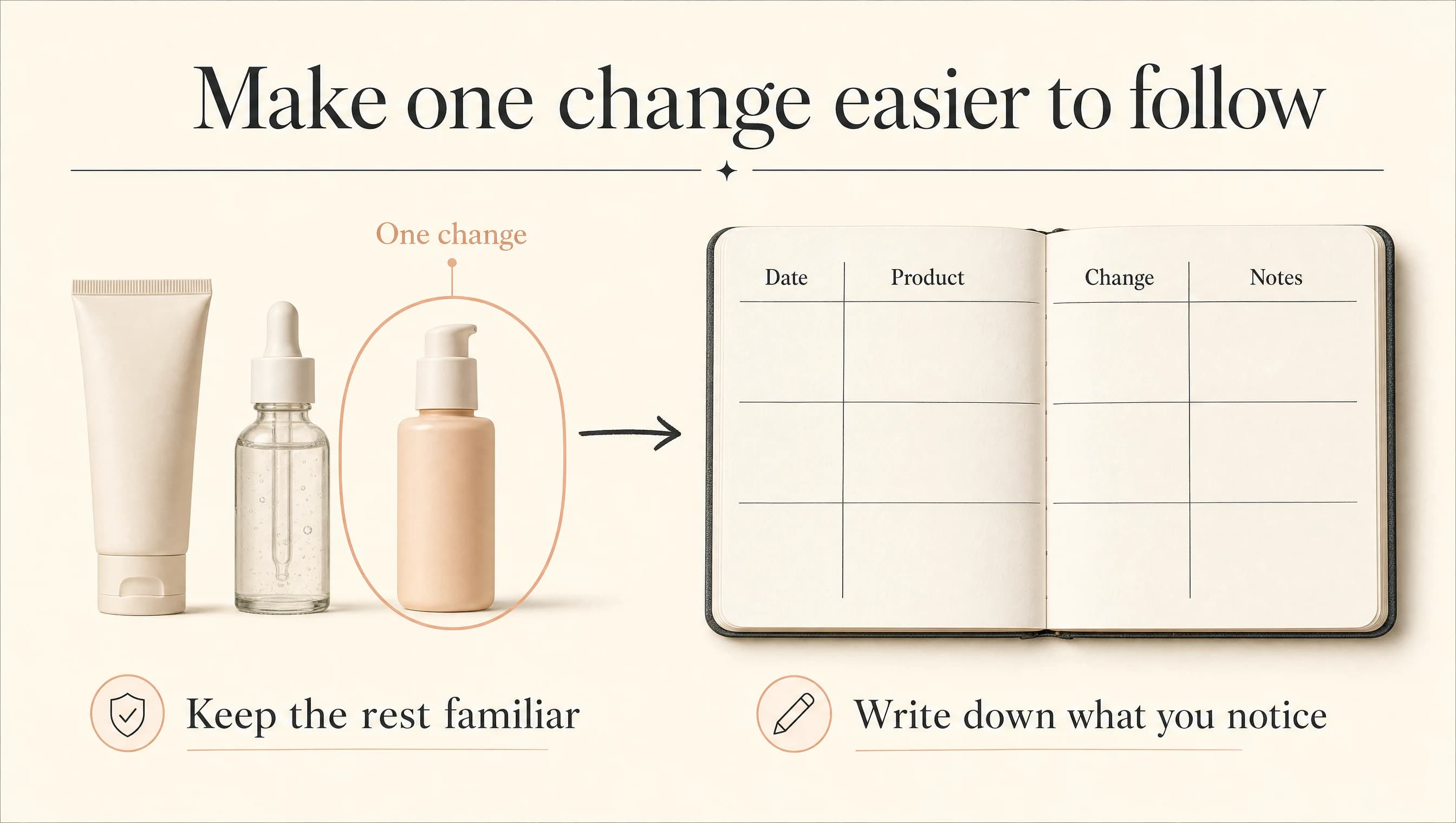
- Use a quarter-sized area on the underside of the arm or elbow bend.
- For the ordinary product trial described by the AAD, apply the usual amount twice daily for seven to ten days. Read the product-specific restriction below before borrowing that schedule.
- Leave a leave-on product for its normal contact time.
- For rinse-off products, the AAD describes five minutes or the instructed duration; follow a shorter labeled contact time rather than extending it.
If a reaction develops, wash the product away and stop using it. This is a trial of ordinary use on a smaller area, not an endurance challenge. If your product has less-frequent-use restrictions, ask the manufacturer or your clinician how to trial it rather than overriding those instructions with a generic schedule.
| Product situation | What matters in the trial | Mistake to avoid |
|---|---|---|
| Ordinary leave-on cosmetic | Normal amount and appropriate contact time | Applying an unusually thick layer |
| Rinse-off cleanser | Its labeled rinse-off instructions | Leaving it under a patch overnight |
| Product with special warnings | Those restrictions still apply | Treating a generic method as superior to the label |
| Known relevant allergy | Individual avoidance guidance | Deliberately testing a known trigger at home |
Prepare a record before the first application
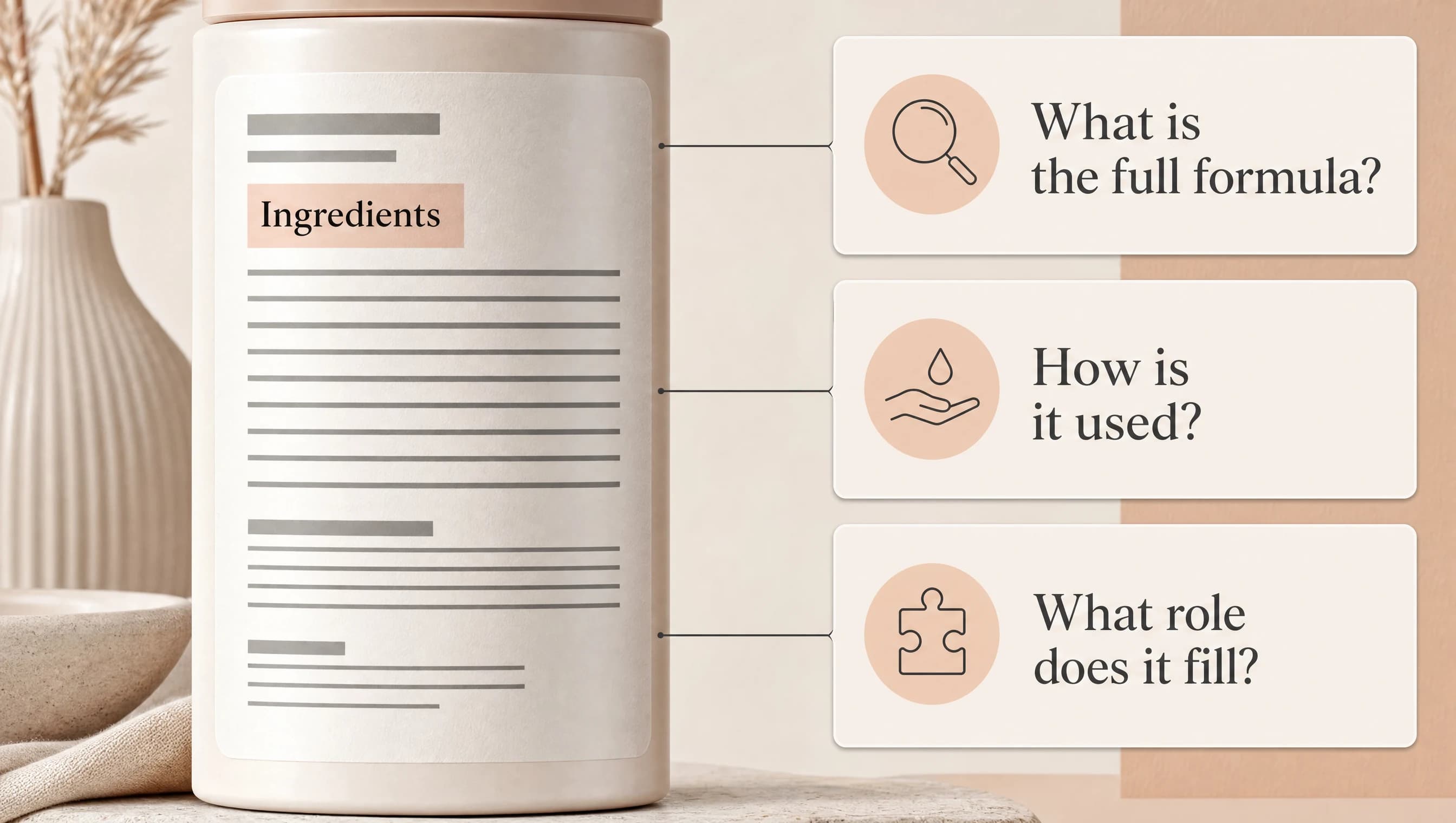
Write the exact product name and photograph the ingredient list. Note where you plan to try it and when you start. Use a record you can find again—a phone note is enough.
Keep the trial area identifiable without adding adhesive over the product. You are not reproducing the sealed allergen patches used in a dermatologist's office. Avoid trying several new formulas on an indistinguishable area at the same time; if something happens, you would have a less useful record.
Our guide to introducing a new skincare product explains how to move from this preliminary check into an ordinary routine. Our beginner skincare routine guide can also help you avoid buying several new variables at once.
What to do with the result
If the area remains comfortable, the observation supports a cautious next step according to the product's directions. It does not establish that the formula will feel identical on every part of the body or in every combination of products.
If a reaction occurs, record what you used and stop the product. For a severe or persistent reaction, seek medical care; do not repeatedly reapply it to confirm your suspicion. The FDA advises contacting a healthcare provider when a cosmetic causes a reaction or problem. Urgent symptoms such as breathing difficulty need urgent help, not a longer skincare trial.
For shopping after discomfort, read sensitive-skin product guide and fragrance-free versus unscented labels. These can improve your questions, but a front-label claim cannot tell you which ingredient caused a reaction.
When clinical patch testing is a different next step
Diagnostic patch testing investigates potential contact allergens using a clinician's protocol and follow-up readings. Its purpose and interpretation differ from trying a small amount of moisturizer at home. The AAD describes it as a way to investigate persistent suspected allergic skin reactions.
Bring the product names, ingredient photographs and a short timeline to the appointment. Those records are useful even if you cannot identify the cause yourself. Our skin-barrier observation checklist can help organize descriptions without turning them into a diagnosis.
Frequently asked questions
Is a 24-hour trial enough to rule out an allergy?
No. A single short trial cannot rule out all delayed or future reactions. Follow suitable product guidance, and seek clinical assessment for a suspected allergy rather than treating a timer as proof.
Should I leave cleanser on overnight for the test?
No. Keep rinse-off products within their normal instructions. A home trial should not turn a cleanser into an overnight leave-on treatment.
Can I test a product that previously caused a severe reaction?
Do not deliberately re-expose yourself at home to confirm a severe reaction. Discuss the product and your history with a healthcare professional instead.
Sources
AAD: How to test skin care products (aad.org) — https://www.aad.org/public/everyday-care/skin-care-secrets/prevent-skin-problems/test-skin-care-products/
AAD: Clinical patch testing (aad.org) — https://www.aad.org/public/diseases/eczema/types/contact-dermatitis/patch-testing-rash
FDA: Reporting cosmetic product problems (fda.gov) — https://www.fda.gov/cosmetics/cosmetics-compliance-enforcement/how-report-cosmetic-product-related-complaint
Clear guidance, checked before publication.
Solvi articles are structured by our editorial team and reviewed for clarity, consistency, and responsible health language. We update pages when guidance or product information changes.