Fragrance-Free vs Unscented Skincare: Read Past the Front Label
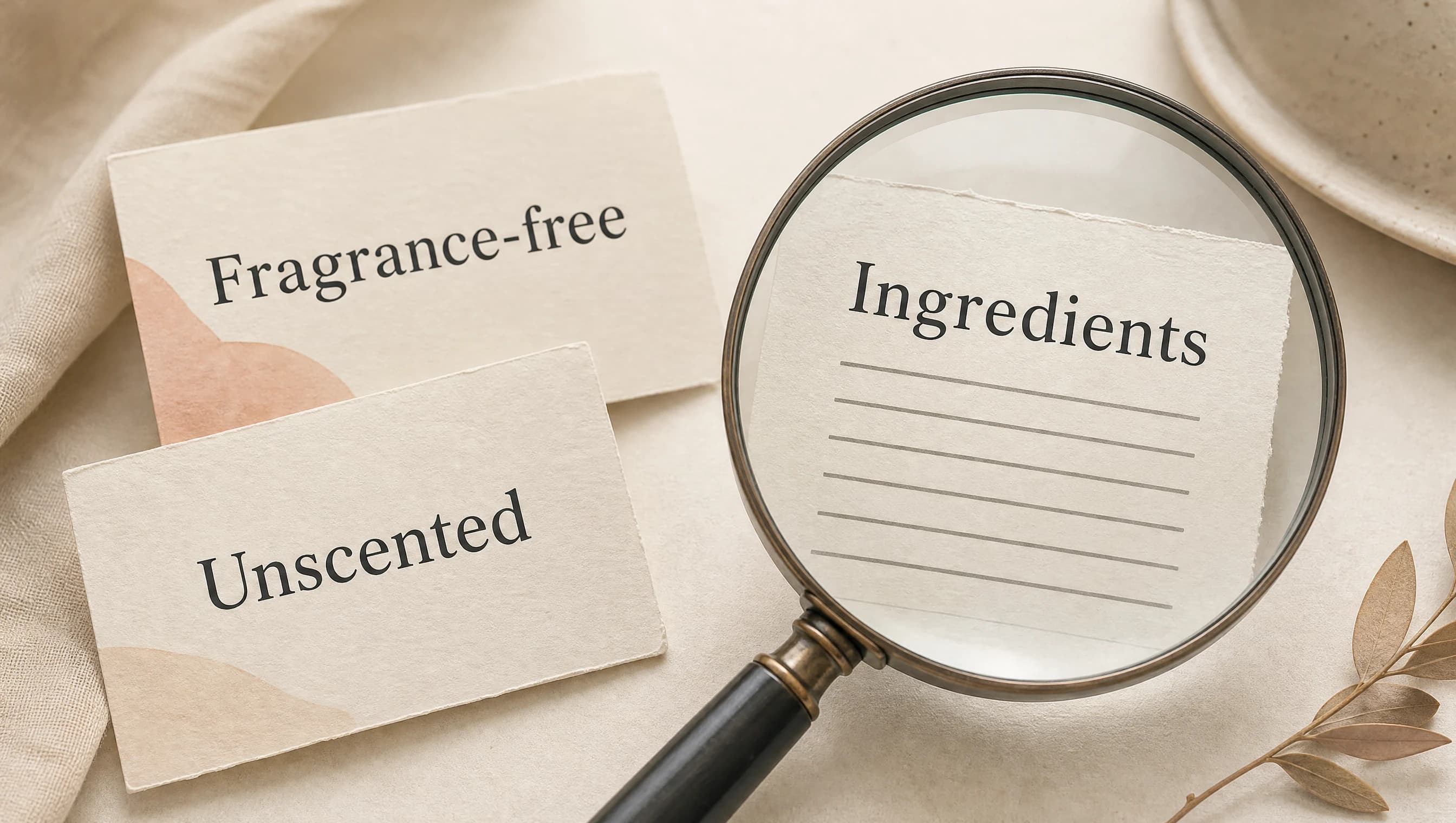
Choose fragrance-free as your starting filter when you want to avoid added fragrance. Do not treat unscented as equivalent: a product can have little noticeable smell while containing ingredients used to mask another odor. Neither label, by itself, guarantees that your skin will tolerate the formula.
The practical task is to match the whole ingredient list to your own restrictions. Smelling a tester, choosing a natural-looking package, or finding the word “gentle” on the front cannot complete that check.
What the two labels actually help you decide
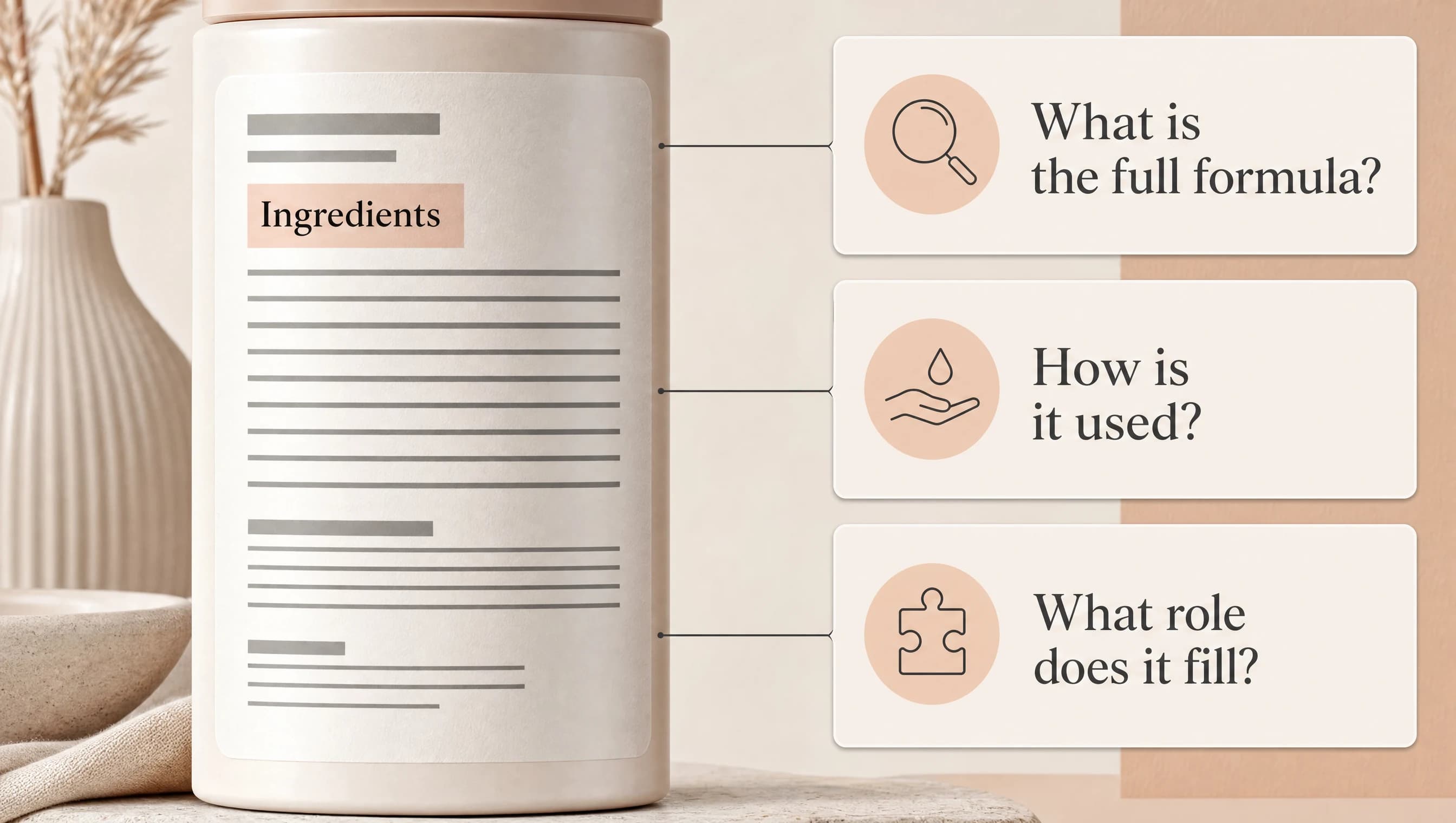
The FDA explains that masking fragrance can appear in an unscented cosmetic. Its separate allergen guidance also notes that terms including fragrance-free and hypoallergenic have no governing federal definition or standard in the US. Read these statements together: fragrance-free is a useful shopping signal, but it is not an allergy certificate.
| What you see | Useful interpretation | What to check next |
|---|---|---|
| Fragrance-free | A starting point for avoiding added scent | Full ingredients and any known allergens |
| Unscented | A claim about noticeable smell | Whether masking fragrance is present |
| Essential oils or botanical fragrance | An ingredient description, not an exemption | Exact ingredients you need to avoid |
| For sensitive skin | The brand's intended audience | Your tolerance of the actual formula |
This is a US label discussion. Do not assume the same wording has identical regulatory meaning in every country.
A three-pass shopping check
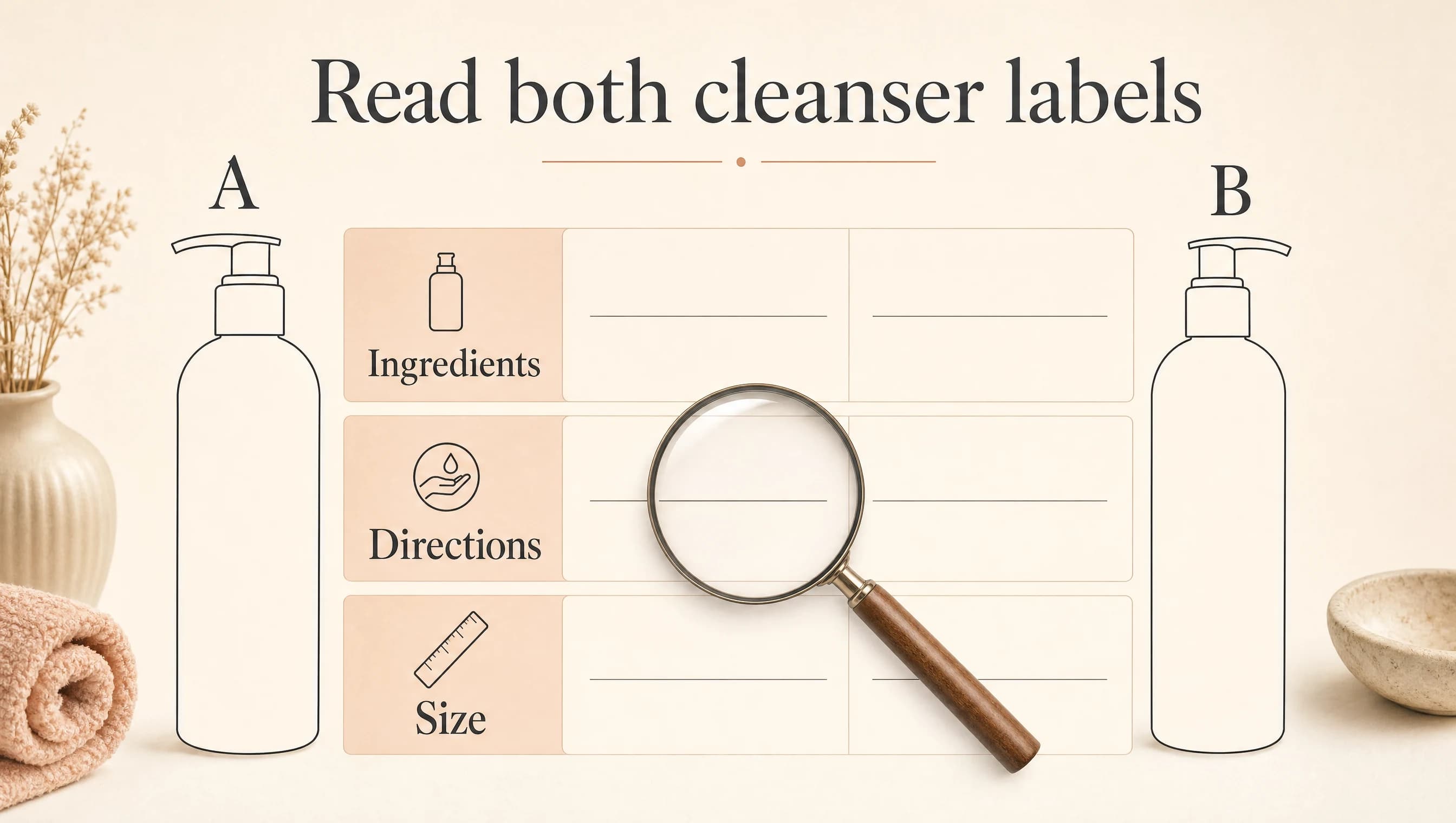
First, identify the exact product. A cleanser and its “refreshing” version may share branding but have different ingredients. Check the country page, product name, and packaging in front of you rather than a photograph from an old review.
Second, read the ingredient panel. Fragrance may be listed under a collective term rather than as every component. If you have a diagnosed allergy, compare the panel with the names your clinician gave you; a general internet list cannot replace that personal avoidance list.
Third, decide whether an unanswered question matters. If you simply dislike strongly scented products, your preference may be enough to narrow the choice. If a specific allergen is the concern and the label leaves it unclear, ask the manufacturer about that exact formula before buying.
Two shopping situations with different answers
Imagine two otherwise appealing moisturizers. One says unscented; the other says fragrance-free. You have no known allergy but prefer a routine without added scent. Start by investigating the fragrance-free option and compare the complete formulas. There is no need to turn that preference into a claim that all scented skincare is unsafe.
Now imagine that a dermatologist has identified a specific contact allergen. The decision is narrower: does either formula contain the ingredient you must avoid? A fragrance-free product can still contain a different ingredient on your avoidance list. In this situation, the reassuring front label is less important than the relevant ingredient information.
Our guide to choosing products for sensitive skin helps frame the wider routine question. For label claims that often appear beside fragrance-free, continue with what hypoallergenic means and how to try a new product on a small area.
What to do with a product that stings
Do not use the absence of perfume as a reason to dismiss discomfort. A reaction can have more than one explanation, and a blog comparison cannot identify the culprit from the word “fragrance.” Stop using a product that causes a concerning reaction and seek medical advice if symptoms are significant or persist.
The AAD recommends mild, fragrance-free products for sensitive skin and specifically warns about masking fragrance in unscented products. That advice supports a simpler shortlist; it does not mean every formula on that shortlist will work for you.
Choose the next step from the reason you checked the label. For a simpler everyday routine, use the beginner routine guide. If several products coincide with discomfort, the skin-barrier observation checklist helps you describe the pattern without assigning a diagnosis.
Frequently asked questions
Can a fragrance-free product still smell?
Yes. The ingredients themselves may have an odor. A detectable smell does not, on its own, establish that perfume was added; inspect the formula or ask the manufacturer.
Is unscented better than fragranced skincare for everyone?
No universal ranking follows from that word. If fragrance avoidance is your goal, investigate fragrance-free options rather than assuming an unscented label settles the issue.
Does fragrance-free mean hypoallergenic?
No. They are different claims, and neither proves that a product is safe for a particular person's known allergy. Ingredient information and individualized guidance matter more.
Sources
FDA: Fragrances in Cosmetics (fda.gov) — https://www.fda.gov/cosmetics/cosmetic-ingredients/fragrances-cosmetics
FDA: Allergens in Cosmetics (fda.gov) — https://www.fda.gov/cosmetics/cosmetic-ingredients/allergens-cosmetics
AAD: Skin care tips for men (aad.org) — https://www.aad.org/public/everyday-care/skin-care-basics/care/skin-care-for-men
Clear guidance, checked before publication.
Solvi articles are structured by our editorial team and reviewed for clarity, consistency, and responsible health language. We update pages when guidance or product information changes.