How to Tell If Skincare Has Been Reformulated: A Version Check
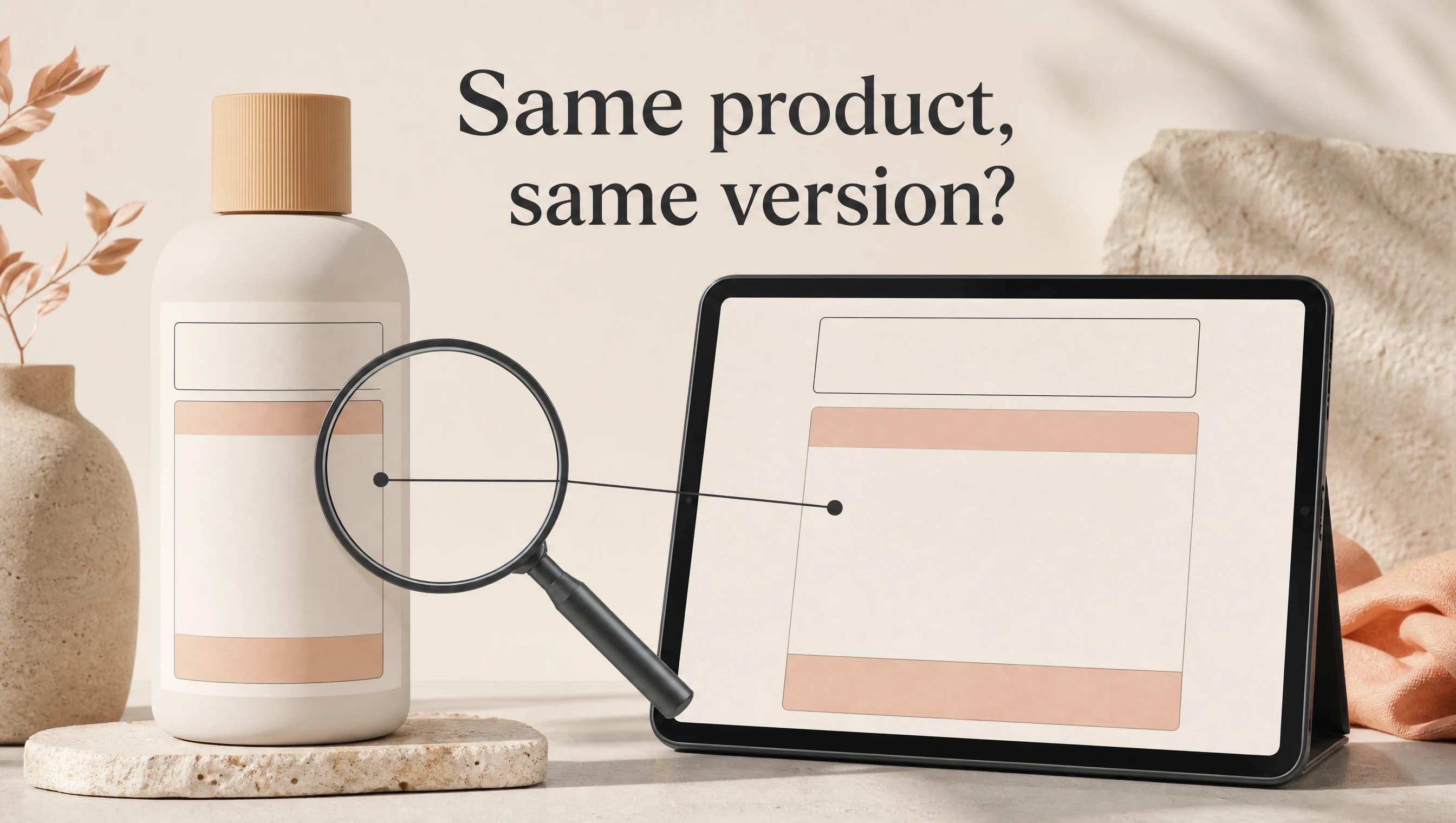
An explicit manufacturer statement is the clearest evidence that skincare has been reformulated. A difference between ingredient lists for the same product and market is a reason to investigate, but it does not by itself identify a formula change: permitted ordering differences can also affect the list. A new bottle color, changed photograph or different feel likewise raises a question rather than proving exactly what changed.
Before replacing a product you used to like, check its identity. Similar names, regional versions and retailer images can make two different products look like a before-and-after reformulation.
Match the versions before comparing ingredients
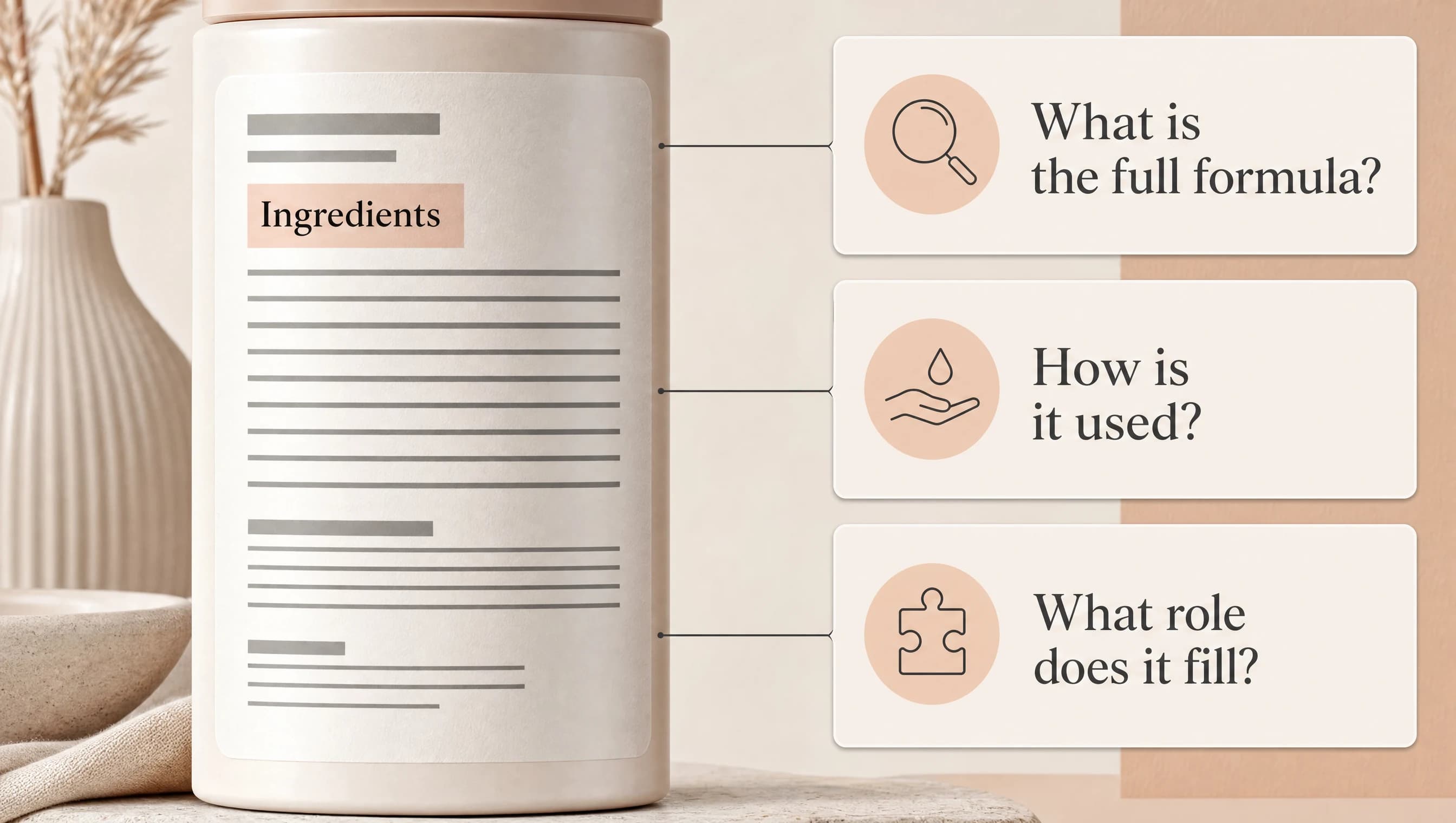
| Detail | What to record | Why it matters |
|---|---|---|
| Full product name | Include cream, lotion, SPF and other suffixes | Similar names can identify different products |
| Country or market | Where the product was sold | Regional formulas or labels may differ |
| Ingredient photograph | The actual old and new packages | Retailer copy may not match your bottle |
| Batch and opening information | Preserve codes and dates if available | Helps the manufacturer identify your version |
| Manufacturer explanation | Save the statement and its context | Stronger evidence than guessing from packaging |
Keep the original images even if you type the lists into a note. Transcription errors can turn a misspelled ingredient into an apparent formula change.
Compare presence before trying to infer strength
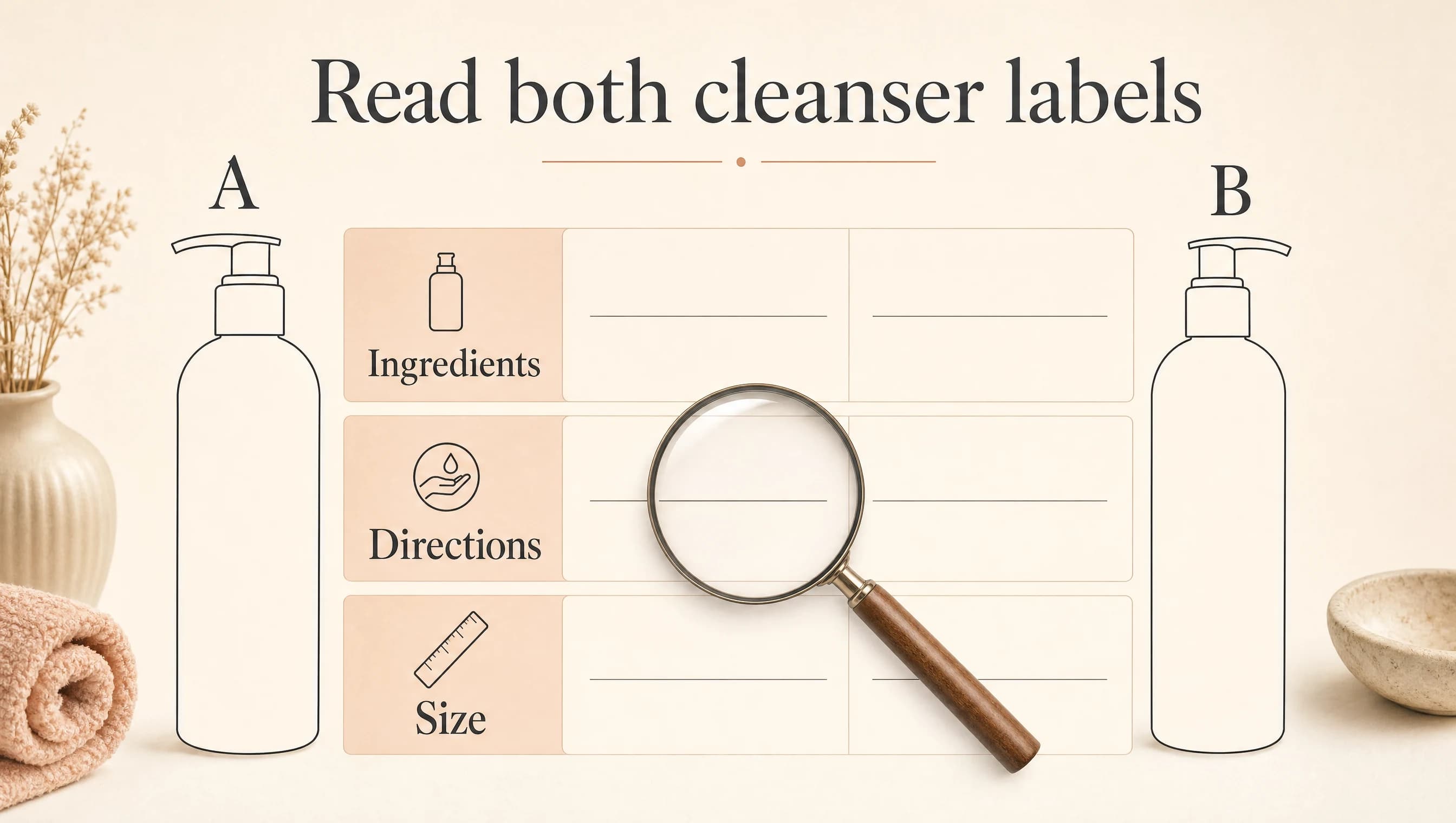
Mark ingredients that appear or disappear. Then note order changes separately. Do not immediately turn an order change into a precise concentration claim.
The FDA's US cosmetic-labeling rules allow ingredients at one percent or less to appear in any order after the higher-concentration ingredients. Ingredient order therefore cannot reconstruct the full formula or prove that a familiar ingredient has been reduced by a particular amount.
Our ingredient-list reading guide explains those limits. The aim is to identify questions you can verify, not to manufacture certainty from the position of one name.
Look for an explicit brand explanation
The Ordinary's Hyaluronic Acid 2% + B5 with Ceramides is an example where the manufacturer openly describes an updated formula and compares it with the original. That is a more reliable starting point than trying to infer a change from a different product image.
CeraVe also tells shoppers that ingredient lists are updated and to consult the package for the most current list relevant to personal use. This makes the actual bottle important when an online page and your purchase do not match.
An explicit update does not automatically mean the new formula is better or worse for you. It tells you a change occurred; suitability remains a separate question about the current product and your needs.
Ask the manufacturer a narrow question
Use a short message with your photos: “I have [full product name] purchased in [country], batch [code]. My package and your current page show different ingredient lists. Do these represent a reformulation, regional variants or different products? Which directions apply to my bottle?” Attach clear images of both lists rather than asking the company to identify a formula from package color.
Avoid asking the company to diagnose a reaction from a brief message. If discomfort is the reason for investigating, stop an offending product and seek appropriate medical advice. A version check can clarify what you used, but it cannot determine every reason your skin changed.
Keep the timeline in a short skincare diary. Include when you opened the product and whether you changed anything else in the routine. This is more useful than relying on a general feeling that the bottle “used to work better.”
For deciding what to do next, use our beginner routine guide to keep changes manageable. Our sensitive-skin product guide can help with a more careful shortlist, and the skin-barrier observation checklist helps describe discomfort without diagnosing it.
Frequently asked questions
Does new packaging always mean a reformulation?
No. Packaging can change without establishing an ingredient change. Look for the manufacturer's explanation and compare the actual product information.
Does a changed ingredient order prove reduced potency?
No. Ordering rules have limits, and the list does not disclose every concentration. Avoid a potency claim unless the manufacturer or suitable evidence actually supports it.
Should I automatically stop buying a reformulated product?
Not solely because it changed. Review the current formula against your needs and restrictions. If you experienced a concerning reaction, address that separately rather than relying on the product's old reputation.
Sources
FDA: Cosmetics Labeling Guide (fda.gov) — https://www.fda.gov/cosmetics/cosmetics-labeling-regulations/cosmetics-labeling-guide
The Ordinary: Hyaluronic Acid 2% + B5 with Ceramides (theordinary.com) — https://theordinary.com/en-us/hyaluronic-acid-2-b5-serum-with-ceramides-100637.html
CeraVe: Moisturizing Cream ingredient information (cerave.com) — https://www.cerave.com/skincare/moisturizers/moisturizing-cream
Clear guidance, checked before publication.
Solvi articles are structured by our editorial team and reviewed for clarity, consistency, and responsible health language. We update pages when guidance or product information changes.