How to Keep a Skincare Diary That Helps You Make Decisions
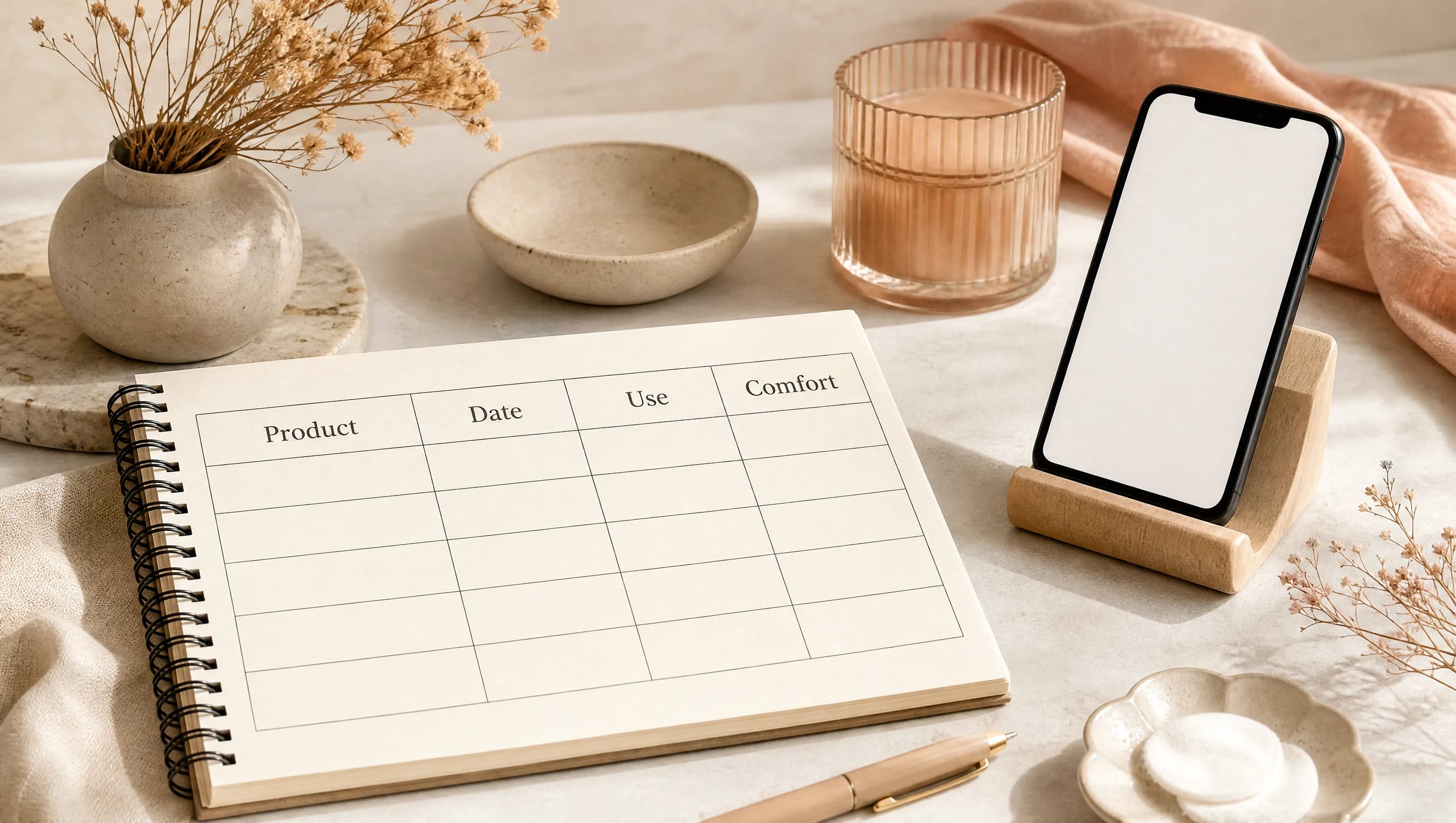
A useful skincare diary records what you used, when you used it and what you noticed. It does not need a daily beauty score, a long questionnaire or a theory about every new spot. Its purpose is to preserve facts that memory tends to compress.
Keep the record short enough to maintain on an ordinary busy day. A phone note or a few columns in a notebook is sufficient. More data is helpful only when it answers a question you actually have.
Use this five-column template
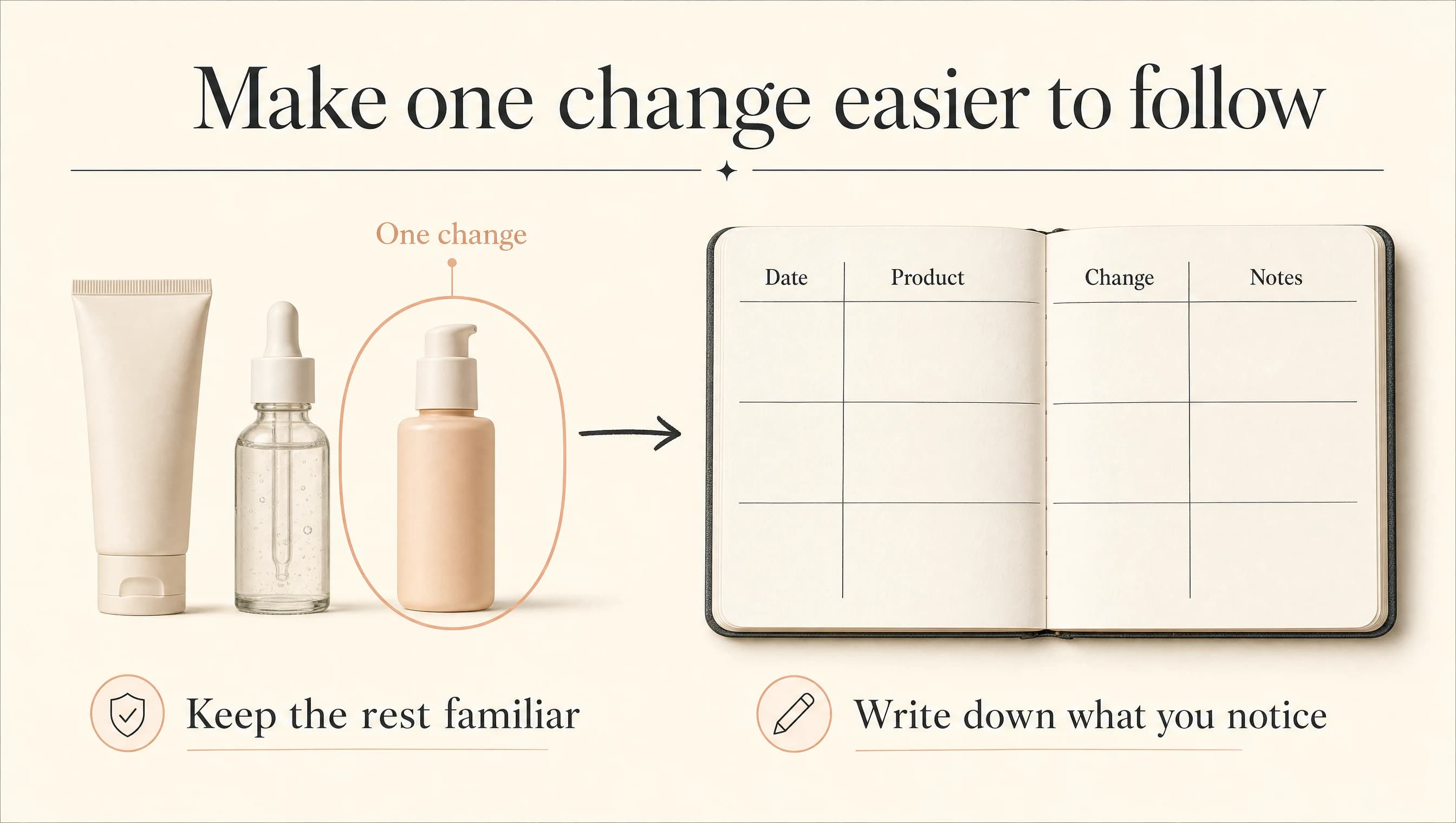
| Date and time | Product and area | What changed | Observation | Next practical action |
|---|---|---|---|---|
| Monday evening | New cleanser, face | First use replacing old wash | Cheeks felt tight afterward | Check directions and record next use decision |
| Tuesday morning | Familiar routine | Nothing new | Cheeks comfortable before washing | Keep the observation separate from a cause |
| Wednesday evening | New moisturizer, cheeks | One planned change | Liked the finish under makeup next day | Continue evaluating the specific goal |
These are fictional examples showing the level of detail to record, not a prescribed schedule or a prediction of how your skin will respond. Write ordinary descriptions rather than diagnosing yourself.
The “next action” column keeps the diary useful. It might say “check the exact product label,” “stop this product and ask for advice,” or “no change needed.” It should not automatically produce another purchase.
Make the first entry a product inventory
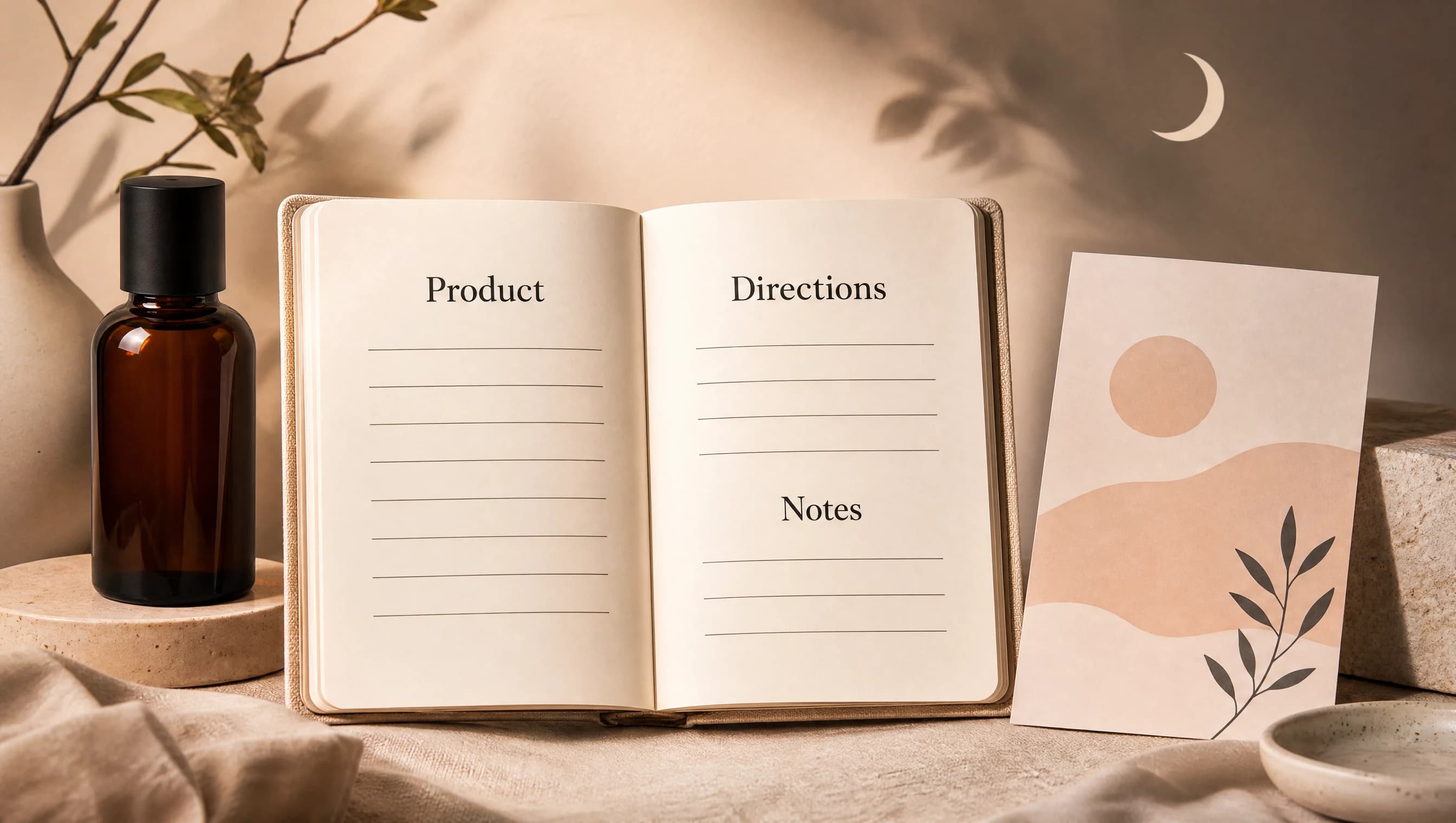
Photograph the labels of products currently in use. Record the full name, version and country if relevant. If a product is new, note its opening date and batch code when available. These details help distinguish a real formula change from two similarly named products.
Keep a separate list of known allergies or instructions from your clinician, using the wording you were given. Do not build an allergy list by assuming that every uncomfortable product proves a reaction to its headline ingredient.
The NHS describes symptom timing and exposure history as part of assessing contact dermatitis. A concise record can support that discussion, while leaving diagnosis to the clinician.
Photograph consistently, or skip photos
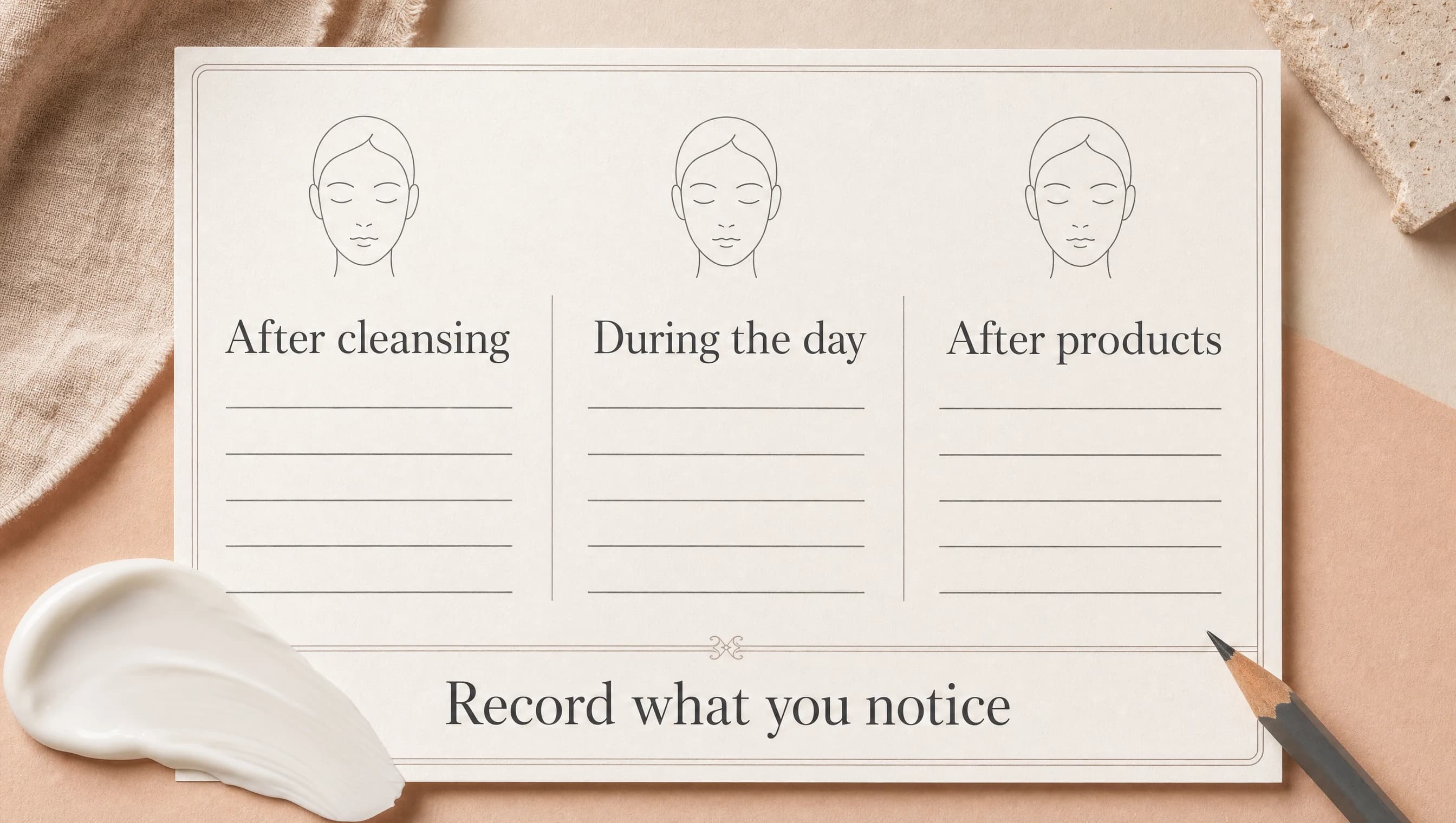
If photos help you remember a visible change, keep lighting, distance and angle reasonably similar. Avoid filters and beauty modes. Add a date and a short note about what you want the image to show.
Do not use differently lit selfies as proof that a serum has changed pigmentation or skin texture. A diary is not a controlled efficacy study. It can tell you what happened in your routine, but it cannot isolate every influence or establish that one ingredient caused the result.
If taking photographs makes you scrutinize your face unhelpfully, use written observations instead. The tool should make decisions clearer rather than consume more attention than the routine itself.
Review patterns without forcing an explanation
At a convenient review point, look for concrete changes: several new products on the same day, a different application frequency, a repeated handling problem, or discomfort that warrants medical advice. Mark uncertainty openly.
Our new-product introduction guide can help make the next change easier to interpret. If a familiar product suddenly seems different, use the reformulation-check guide to investigate the exact version before attributing the difference to your skin.
Choose a follow-up only when the diary raises a specific question. The beginner routine guide helps separate essentials from extras. If your notes mainly describe discomfort, use the skin-barrier observation checklist to make those descriptions more precise.
If a cosmetic causes a reaction, the FDA advises stopping it and contacting a healthcare provider. Keep relevant packaging information for that conversation or a product report; do not continue exposure merely to improve the record.
Frequently asked questions
Do I need to score my skin every day?
No. Specific observations usually tell you more than an unexplained number. Choose a record format you can use consistently without turning it into a burdensome task.
Can a diary prove which ingredient caused a reaction?
No. Timing may raise a question, but it does not establish causation or diagnose an allergy. Bring the history and product information to an appropriate healthcare professional.
What should I bring to a dermatology appointment?
A concise timeline, exact product names, ingredient photographs and relevant symptom images can make your account clearer. Follow any additional preparation instructions from the clinic.
Sources
NHS: Contact dermatitis diagnosis (nhs.uk) — https://www.nhs.uk/conditions/contact-dermatitis/diagnosis/
FDA: Reporting cosmetic product problems (fda.gov) — https://www.fda.gov/cosmetics/cosmetics-compliance-enforcement/how-report-cosmetic-product-related-complaint
AAD: Clinical patch testing (aad.org) — https://www.aad.org/public/diseases/eczema/types/contact-dermatitis/patch-testing-rash
Clear guidance, checked before publication.
Solvi articles are structured by our editorial team and reviewed for clarity, consistency, and responsible health language. We update pages when guidance or product information changes.