How to Introduce a New Skincare Product Without Losing Track
Introduce a new cosmetic by deciding what it is for, checking its instructions, trying it on a small area when appropriate, and keeping the rest of the routine understandable. The goal is to learn whether the actual product fits your needs—not to complete an entire new routine in one evening.
There is no universal waiting period that proves every product effective or safe. A cleanser, moisturizer, cosmetic retinoid and prescribed treatment have different purposes and directions. Keep prescribed care under your clinician's guidance.
Define success before opening the bottle
Write one sentence about the change you want. “A cleanser that handles my makeup with less fuss” is useful. “Better skin” is too broad to evaluate and can lead to adding more products whenever the first purchase feels inconclusive.
| Product role | A practical question to evaluate | A poor success measure |
|---|---|---|
| Cleanser | Does it handle the intended removal task comfortably? | The strongest squeaky feeling |
| Moisturizer | Does it fit the areas and finish I need? | The longest ingredient list |
| Optional active | Am I using it as directed for a clear purpose? | The most tingling or peeling |
| Replacement formula | Is it a useful replacement for my existing step? | Being newer than the previous bottle |
This is an observation framework, not a promise that every cosmetic outcome appears on a short schedule. If your goal is treatment of an ongoing condition, get guidance appropriate to that condition.
Read use instructions and make a baseline note
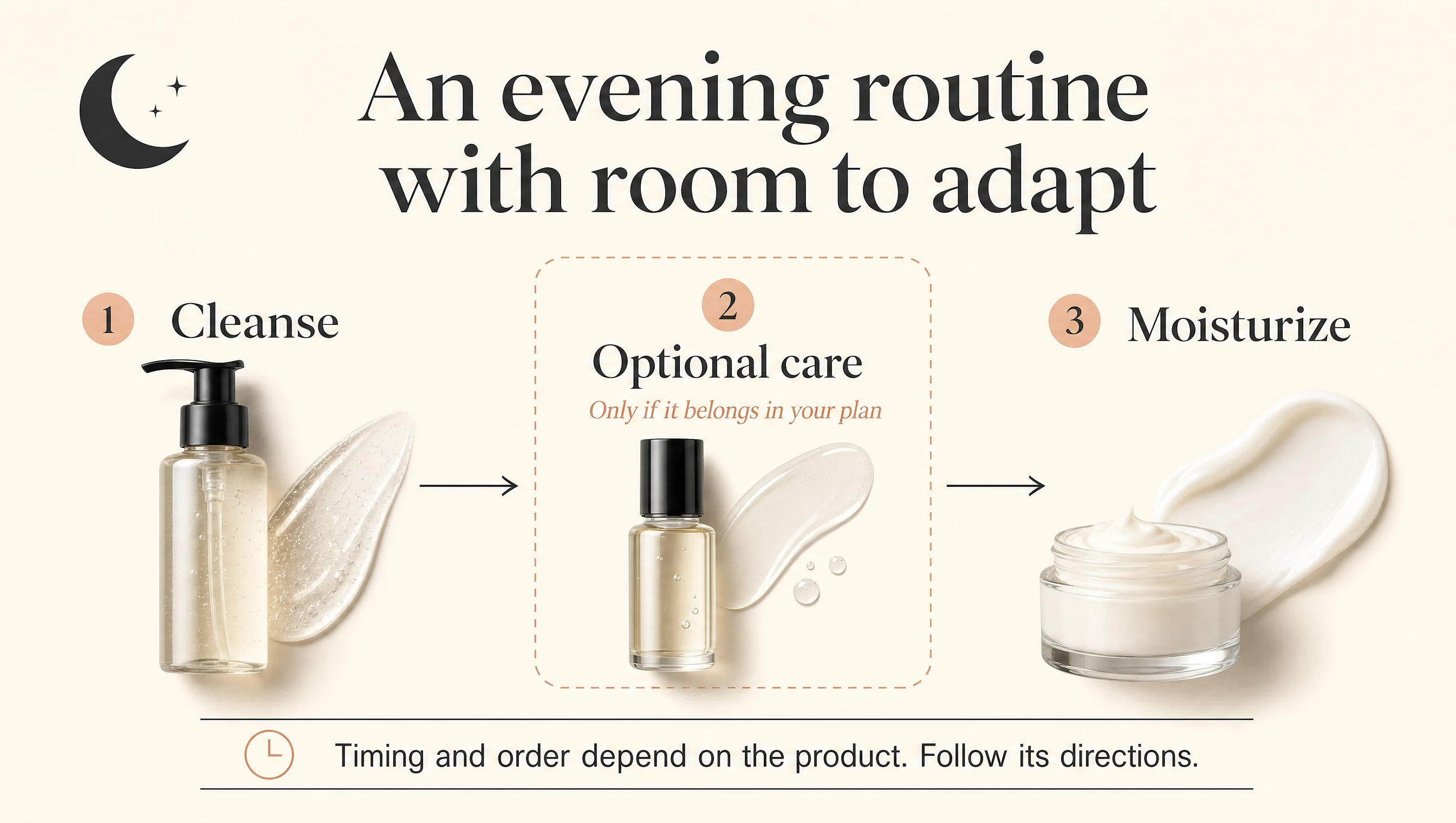
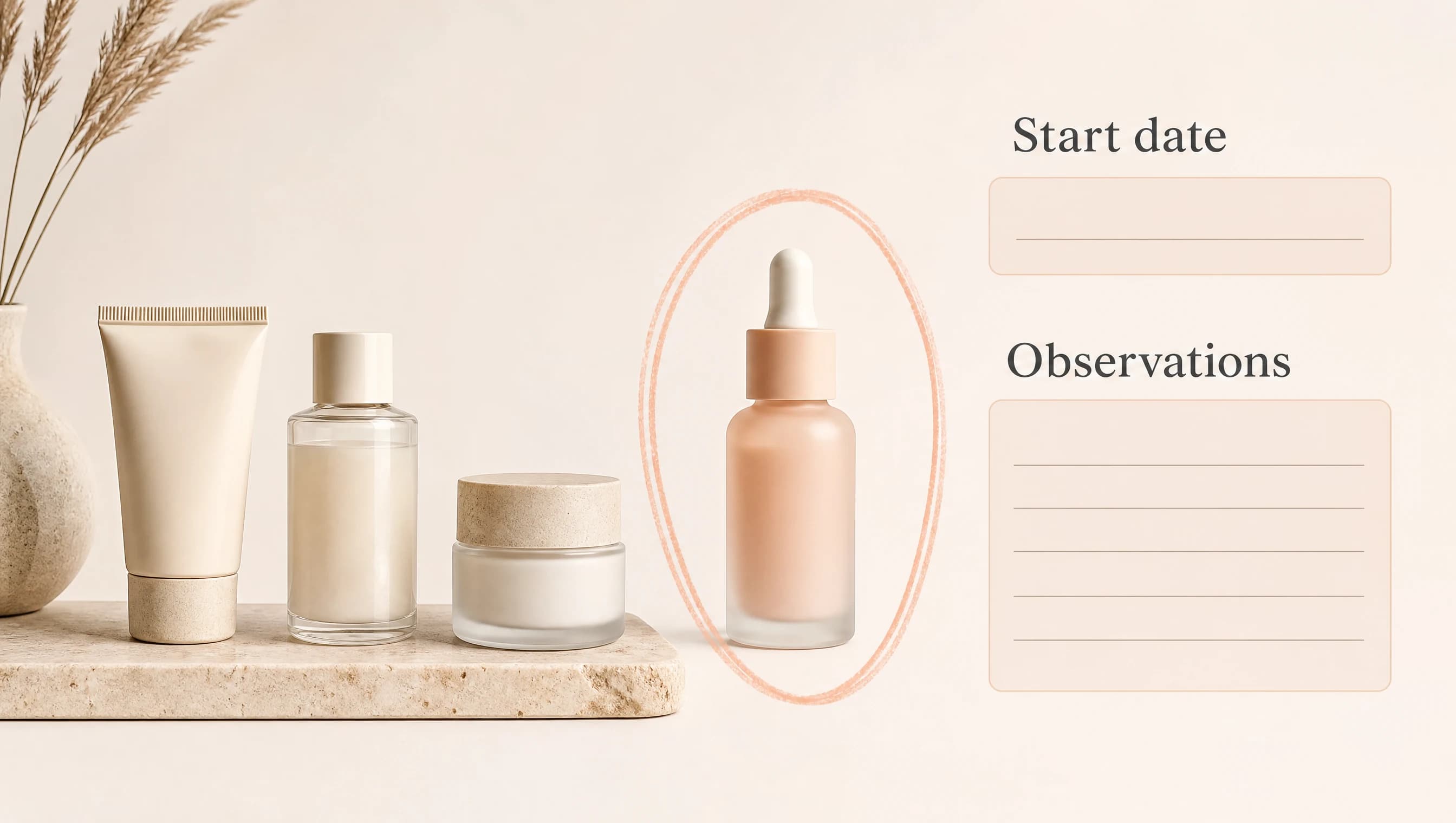
A useful starting note is brief: “New product: exact name and region. Replaces: my current moisturizer. Other changes: none planned.” Add a package photo, then copy its area-of-use, frequency, contact-time and sun-protection restrictions. If it replaces nothing, name the purpose of the extra step before adding it.
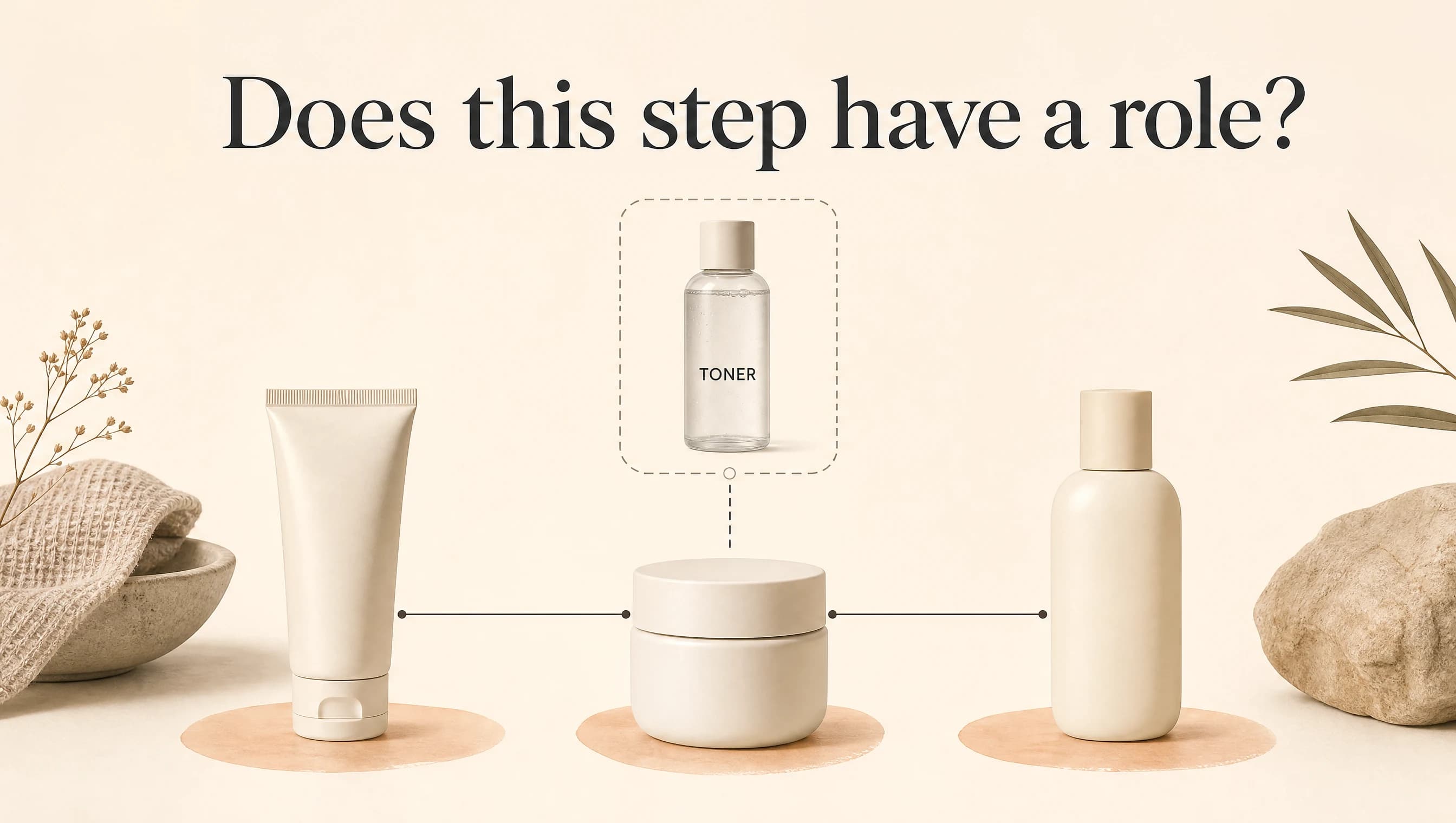
The FDA advises following cosmetic directions and warnings. That simple step matters when similar-looking products have different functions: an acid toner does not inherit the instructions of the hydrating toner it replaces.
If your routine is already complicated, start with our beginner skincare routine guide. For sensitivity-related selection, our sensitive-skin product guide can help you decide which questions to resolve before trial use.
Keep the first change identifiable
The AAD recommends preliminary small-area testing of new skincare. Our home skincare testing guide explains the procedure and the important rinse-off exception. Passing a preliminary trial does not guarantee future tolerance or prove that the product will work identically on every area.
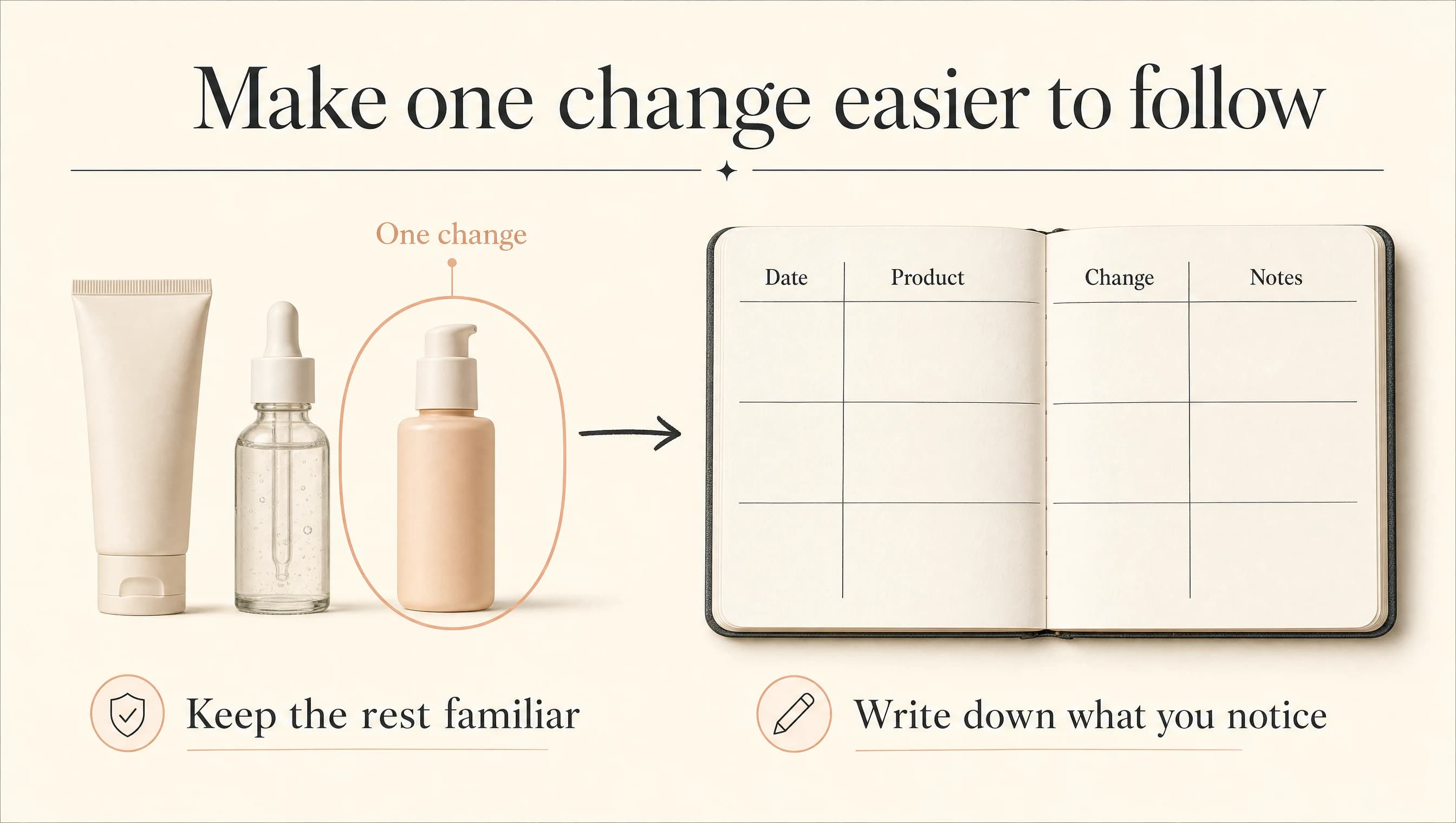
After that preliminary stage, use the product according to its instructions. Avoid launching several unrelated cosmetic changes at once when you can reasonably separate them. This is a way to keep your observations interpretable, not a controlled clinical experiment.
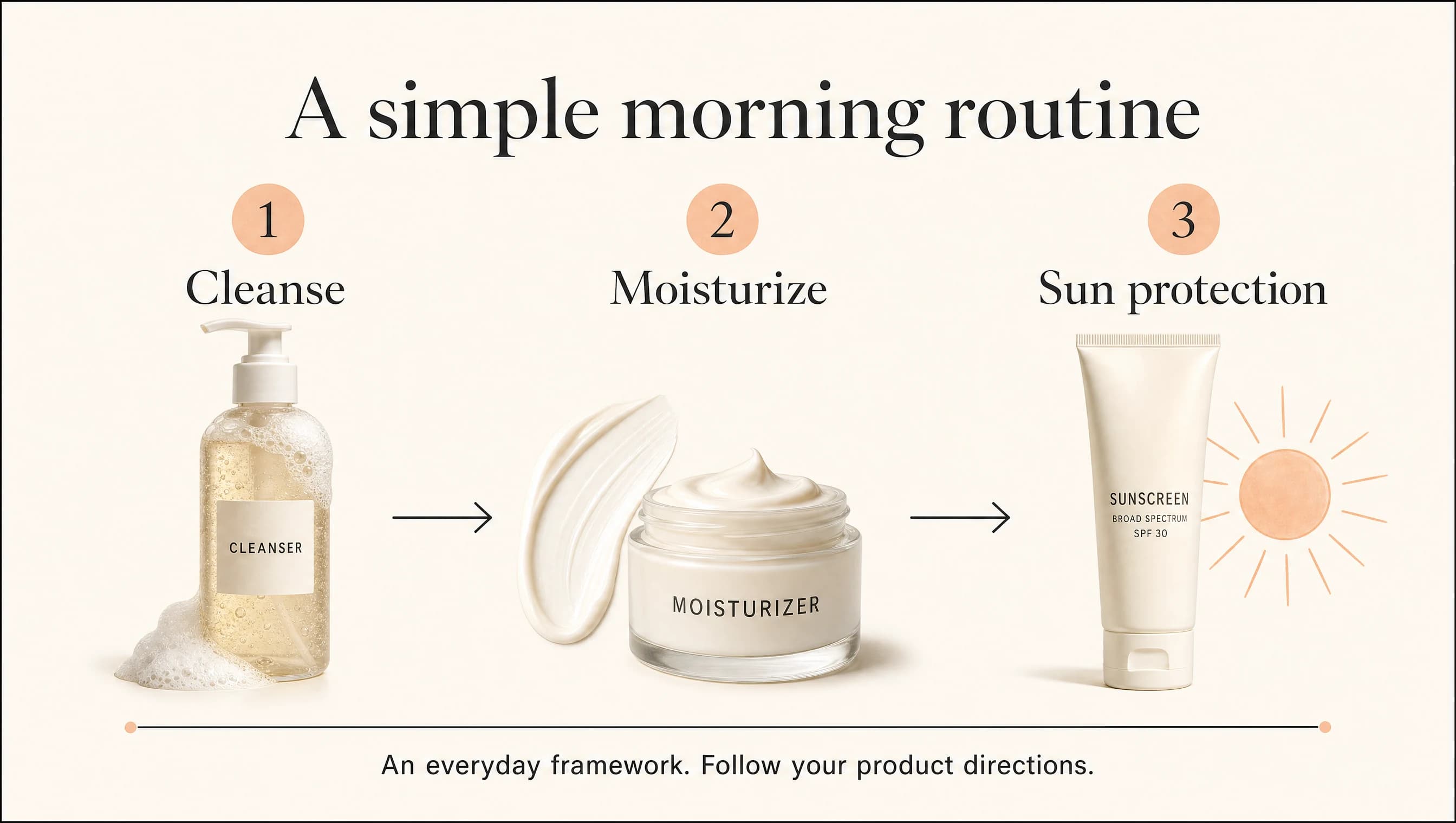
For example, replacing a moisturizer while keeping familiar cleansing and sun protection gives you a clearer practical comparison than changing all three. If several changes are necessary, write them down rather than pretending you can isolate a single cause afterward.
Separate discomfort from the result you hoped for
Use a short record of when the product was applied, where, and what you noticed. Our skincare diary template shows how to do this without turning every day into an elaborate skin assessment.
Do not push through a concerning reaction because an influencer calls it purging. The FDA advises stopping a cosmetic that causes a reaction and contacting a healthcare provider. A serious or persistent problem needs care, not an attempt to finish the evaluation period.
Our skin-barrier observation checklist can help you describe discomfort, but it cannot identify the cause. Keep observations and explanations separate: “stung on application” is an observation; “this proves the active is working” is an unsupported interpretation.
Frequently asked questions
How many days should I wait before adding another product?
There is no single interval that answers every product and goal. Follow the specific directions, allow the preliminary trial its appropriate time, and keep changes sufficiently separate to understand your experience.
Should I introduce every product from a set together?
Not simply because they were sold together. Identify the role of each item and whether you need it. Several simultaneous changes make the result harder to interpret.
Does no immediate stinging mean the product suits me?
It is only one observation. Some reactions develop later, and cosmetic usefulness is a separate question from immediate comfort. Keep the product's directions and your actual goal in view.
Sources
FDA: Using cosmetics safely (fda.gov) — https://www.fda.gov/cosmetics/resources-consumers-cosmetics/using-cosmetics-safely
AAD: How to test skin care products (aad.org) — https://www.aad.org/public/everyday-care/skin-care-secrets/prevent-skin-problems/test-skin-care-products/
FDA: Reporting cosmetic product problems (fda.gov) — https://www.fda.gov/cosmetics/cosmetics-compliance-enforcement/how-report-cosmetic-product-related-complaint
Clear guidance, checked before publication.
Solvi articles are structured by our editorial team and reviewed for clarity, consistency, and responsible health language. We update pages when guidance or product information changes.