A Travel Skincare Routine You Can Pack and Actually Use
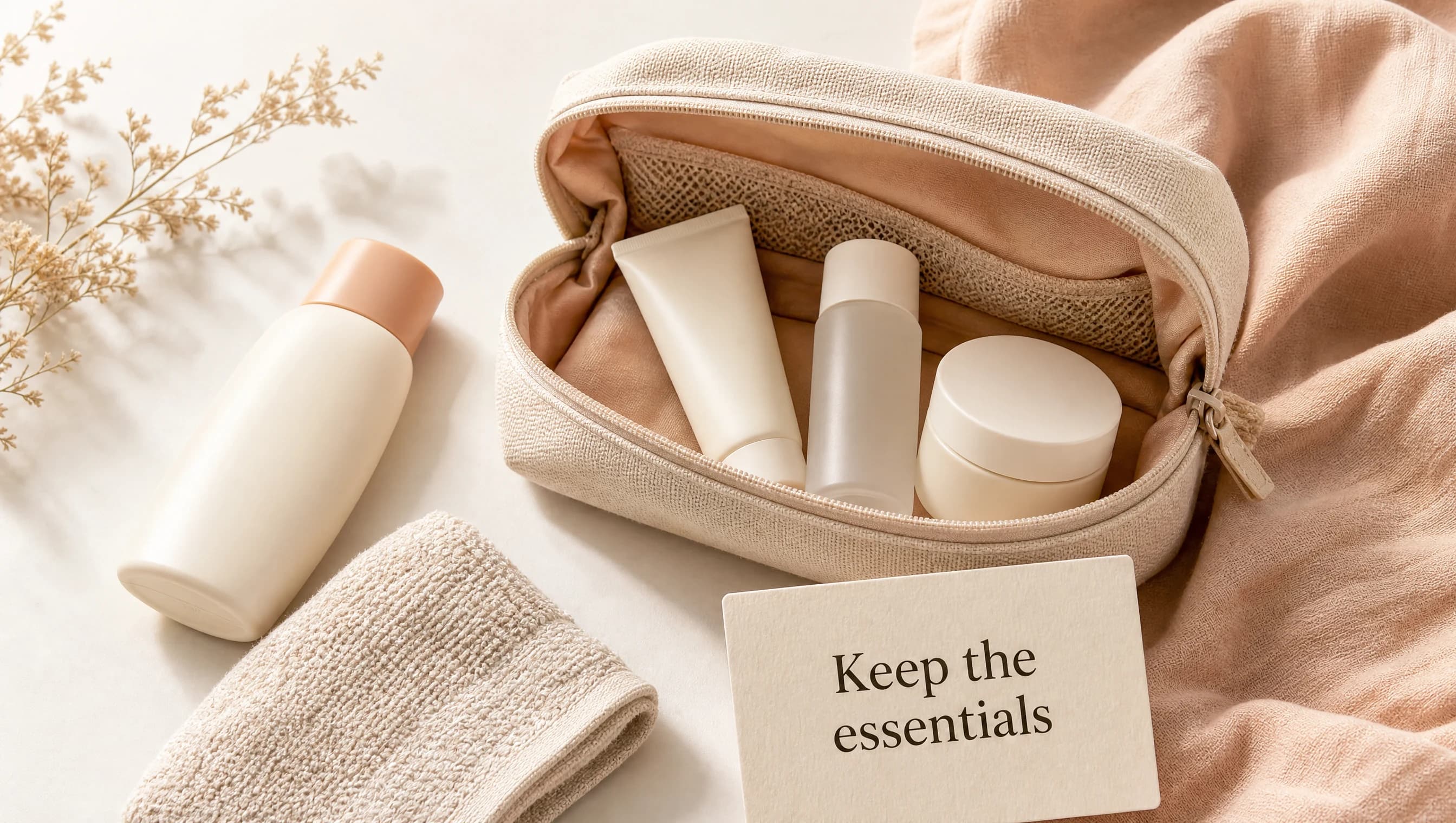
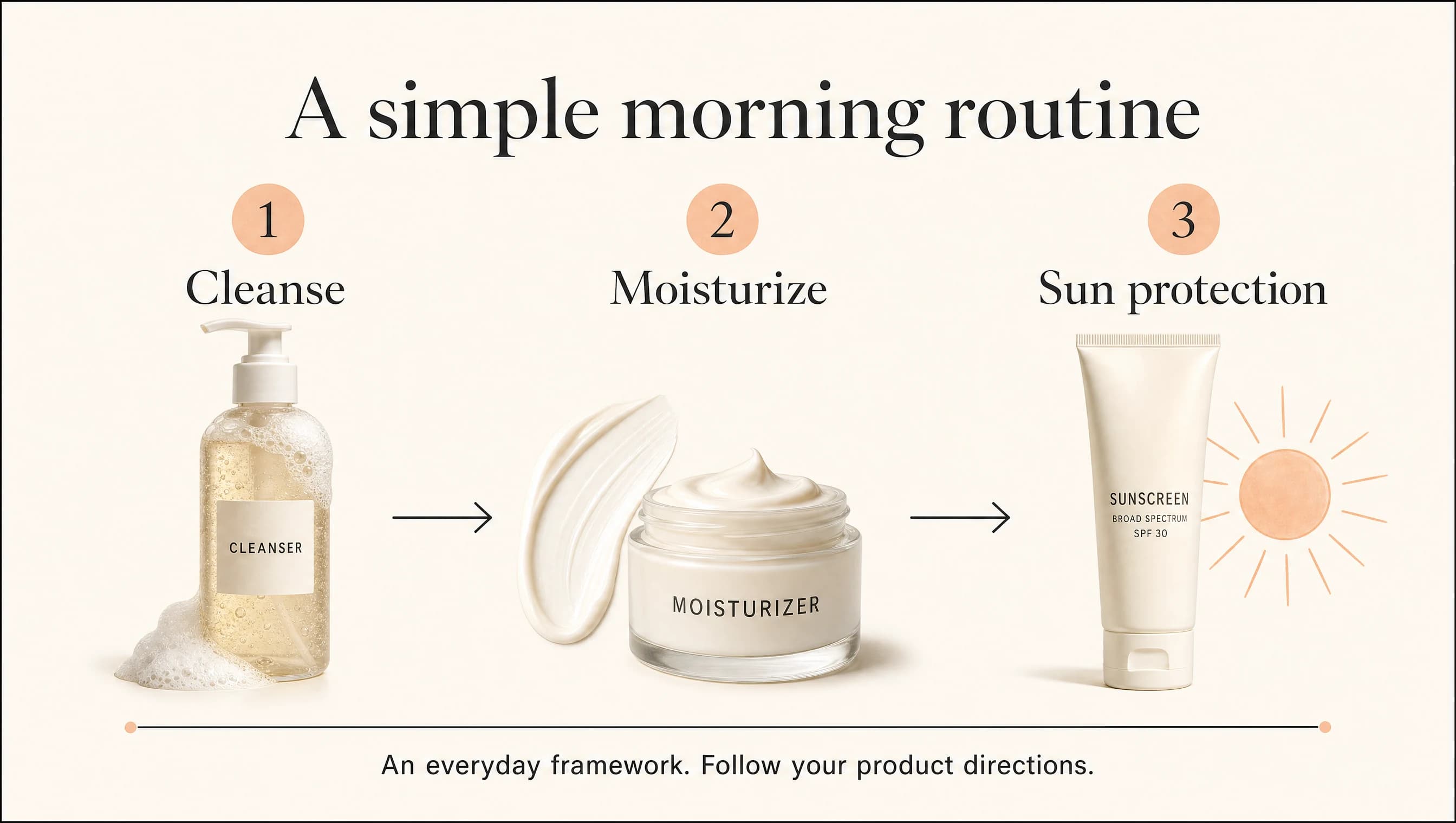
Pack a travel skincare routine around familiar products that serve a clear purpose: cleansing, moisturizing and sun protection, plus any prescribed care you need to continue. Add an optional cosmetic only when you expect to use it and can transport it appropriately.
A trip is not a requirement to buy a matching set of new minis. The simplest useful packing decision is often to bring a manageable version of a routine you already understand.
Make a destination-based packing list
| Trip situation | What to plan for | What does not automatically help |
|---|---|---|
| Short city break | Enough familiar essentials for the trip | A new multi-step set |
| Outdoor or swimming days | Appropriate sun protection and reapplication supply | A tiny sunscreen bottle chosen only for appearance |
| Different climate | Your usual moisturizer plus a realistic comfort plan | Several untested rescue products |
| Carry-on only | Container limits at each relevant airport | Assuming a nearly empty large bottle counts as a small container |
The AAD's basic routine framework is useful here because it gives each item a job. Your packing list can then reflect the actual days and activities rather than the number of products that fit in a toiletry bag.
Calculate the supply before choosing the container
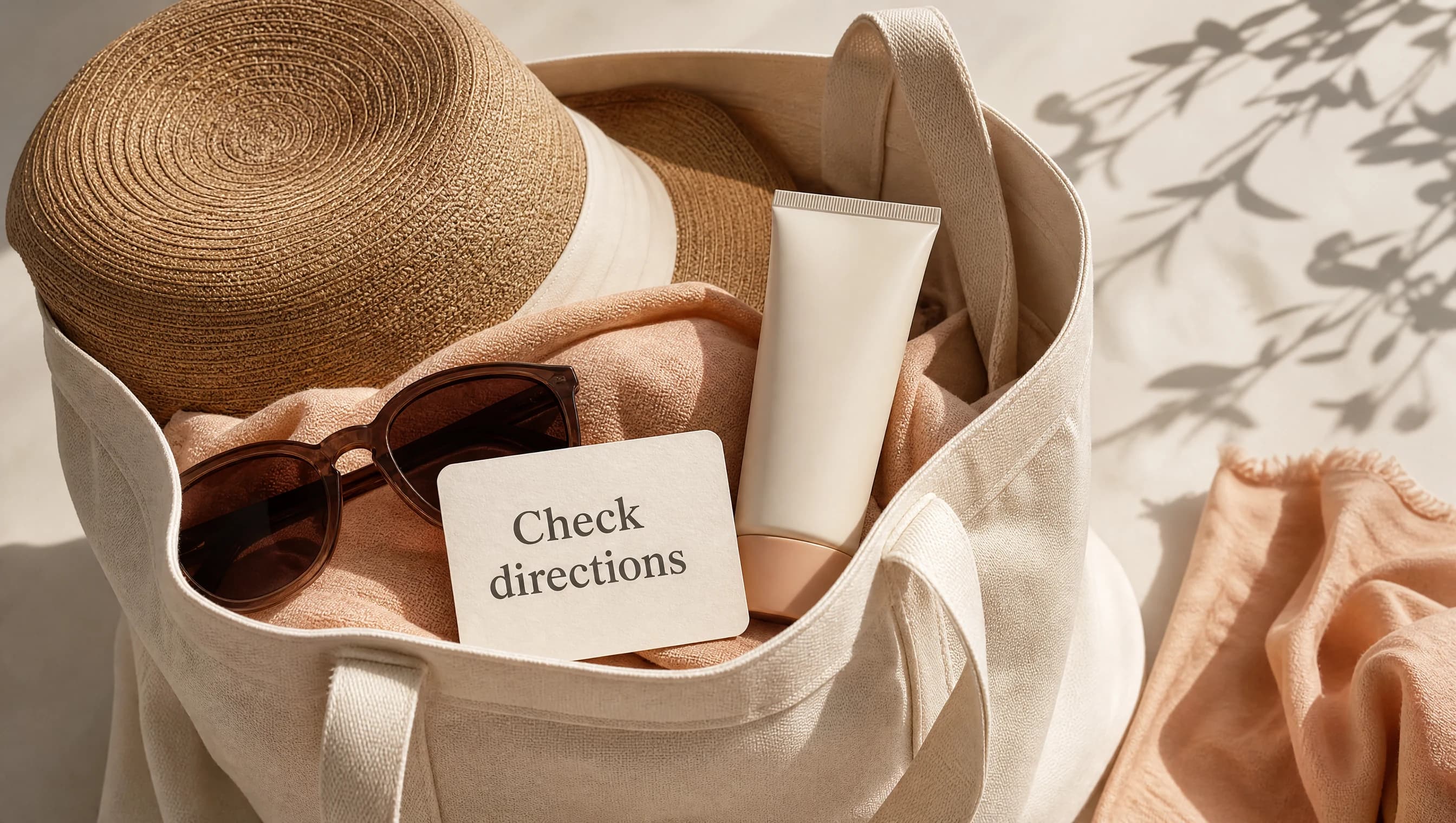
For a fictional three-night city break, start with a familiar cleanser, moisturizer, sunscreen and any prescribed care you need to continue. Add a makeup remover only if your planned cosmetics need it. Keep the first-night essentials accessible. Estimate supply from your actual labeled use and activities; the trip length alone does not establish a sunscreen quantity.
| Packing decision | City-break example | Change it when |
|---|---|---|
| Essentials | Familiar cleanser, moisturizer and sunscreen | Your established routine or clinician’s instructions differ |
| Optional extra | The remover needed for makeup you will wear | You will not wear that makeup |
| Supply | Enough for actual use, including sunscreen reapplication | Outdoor or swimming plans increase the task |
| Container | Clearly identified package with accessible directions | The formula or route imposes a specific constraint |
If luggage limits make your usual supply impractical, plan a reliable way to obtain more at the destination. Keep the exact product name and relevant ingredient information with you so that a similar-looking package does not become an accidental substitute.
For your morning cleansing decision, read whether you need to wash your face in the morning. Before packing last summer's tube, check whether sunscreen has expired.
Keep labels and storage instructions accessible
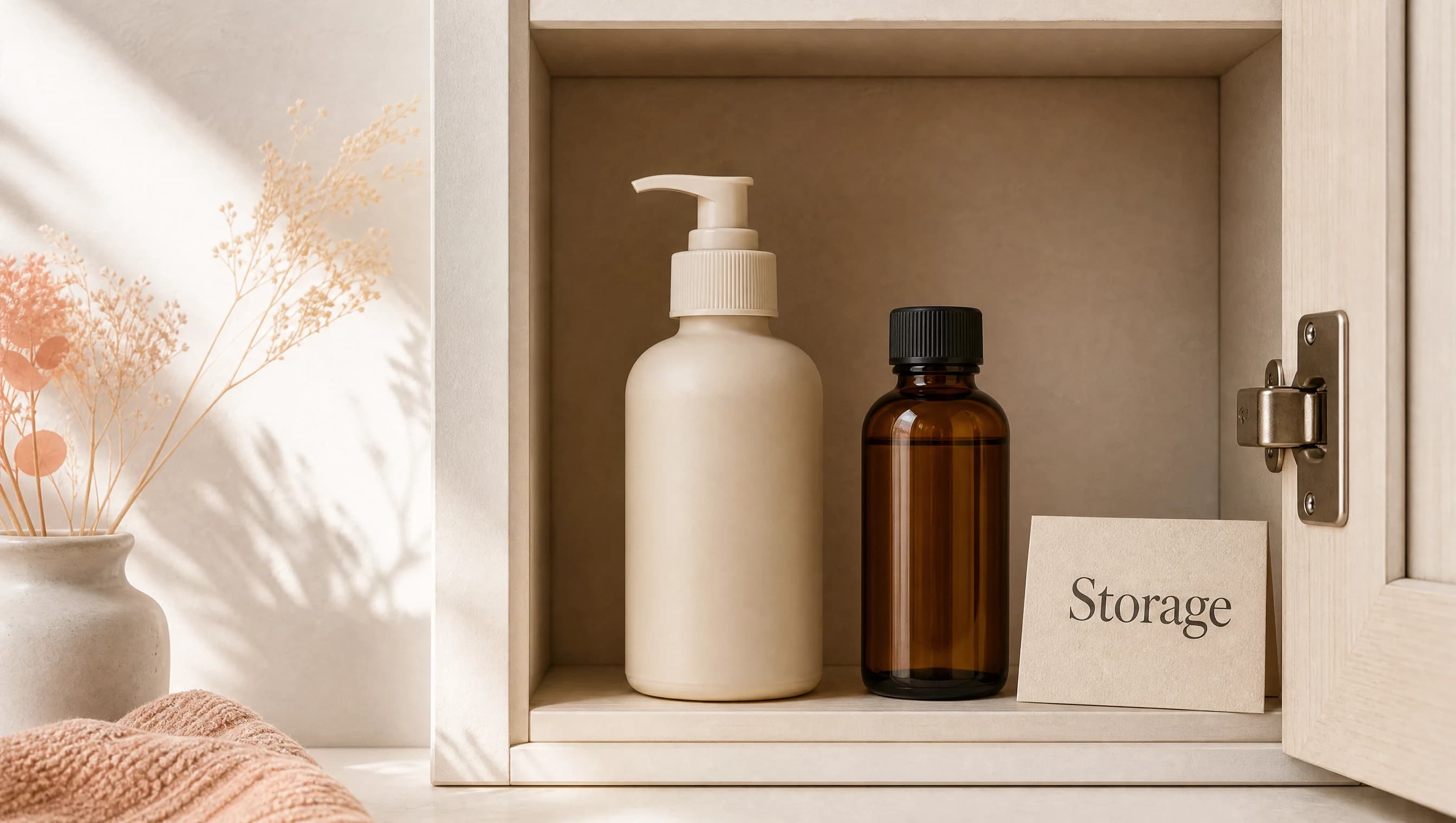
Original packaging makes the product identity and directions easier to preserve. If you use a suitable smaller container for an ordinary cosmetic, label it clearly and keep a photo of the original instructions. Do not assume every formula is suitable for transfer; check the manufacturer's guidance when packaging or stability matters.
The FDA advises protecting cosmetics from temperature extremes and keeping containers clean and closed. Avoid leaving the toiletry bag in a hot parked car or treating a tightly sealed pouch as protection from all heat exposure.
For airport screening, verify the current rules for your route. Chicago's airport guidance states the US 3-1-1 framework: liquid, gel, cream and similar containers of no more than 3.4 ounces, fitting in one quart-size bag. Other locations and special medical circumstances can involve different rules, so use the relevant authority's instructions before departure.
Make arrival night deliberately easy
Place the products you will need first somewhere accessible. A late arrival is easier when cleanser and moisturizer are identifiable rather than hidden among several anonymous bottles.
Avoid introducing multiple optional actives to compensate for feeling tired or looking different in hotel lighting. If something feels uncomfortable, review the actual change—climate, product, washing pattern or application frequency—before building a whole new routine around the trip.
Our beginner skincare routine guide can help you simplify the list. Our sensitive-skin product guide helps when choosing a replacement away from home. If a changed routine becomes uncomfortable, the skin-barrier observation checklist helps you record what you notice.
Keep treatment or procedure-specific travel questions with the clinician managing that care.
Frequently asked questions
Do I need different skincare for every trip?
Not automatically. Start with products that already suit your routine, then adjust the packing plan for climate, activities, duration and transport requirements.
Can I put every product in the same type of travel jar?
Do not assume that. Some products depend on particular packaging or storage conditions. Preserve identity and instructions, and check product-specific advice before transferring a formula.
Are new samples a good way to save luggage space?
They are small, but several unfamiliar products introduce several new variables. Familiar essentials are usually easier to evaluate and manage during a trip.
Sources
AAD: Skin care on a budget (aad.org) — https://www.aad.org/public/everyday-care/skin-care-basics/care/skin-care-budget
FDA: Using cosmetics safely (fda.gov) — https://www.fda.gov/cosmetics/resources-consumers-cosmetics/using-cosmetics-safely
Chicago Department of Aviation: TSA security guidance (flychicago.com) — https://www.flychicago.com/ohare/myflight/security/Pages/TSA.aspx
Clear guidance, checked before publication.
Solvi articles are structured by our editorial team and reviewed for clarity, consistency, and responsible health language. We update pages when guidance or product information changes.