Should You Wash Your Face in the Morning? A Practical Guide

A gentle morning wash is a reasonable default: the American Academy of Dermatology’s face-washing guidance describes morning and evening cleansing, with washing after heavy sweating. But a morning routine should respond to what happened overnight and how your skin feels—not become a contest to remove every trace of oil.
If washing leaves persistent discomfort, review the cleanser and technique rather than assuming you need a stronger wash or declaring that everyone should skip cleansing. Product-specific treatment instructions also take priority over a generic routine suggestion.
Use the morning in front of you

| Situation | A useful next step |
|---|---|
| You want an ordinary morning cleanse | Use the gentle cleanser’s normal directions |
| You have just completed a sweaty workout | Treat that wash as part of the morning schedule |
| An overnight product has specific removal instructions | Follow those instructions |
| Your current wash leaves tightness or discomfort | Reassess the wash rather than increasing intensity |
| You have no sink access | Consider a product expressly labeled for waterless use |
The table is a planning tool, not a new cleansing prescription. It keeps a practical morning decision from turning into several automatic washes.
Our before-and-after workout skin-care guide helps when exercise changes the schedule. If tightness is the issue, start with why your face feels tight after washing.
A rinse and a cleanser are different choices

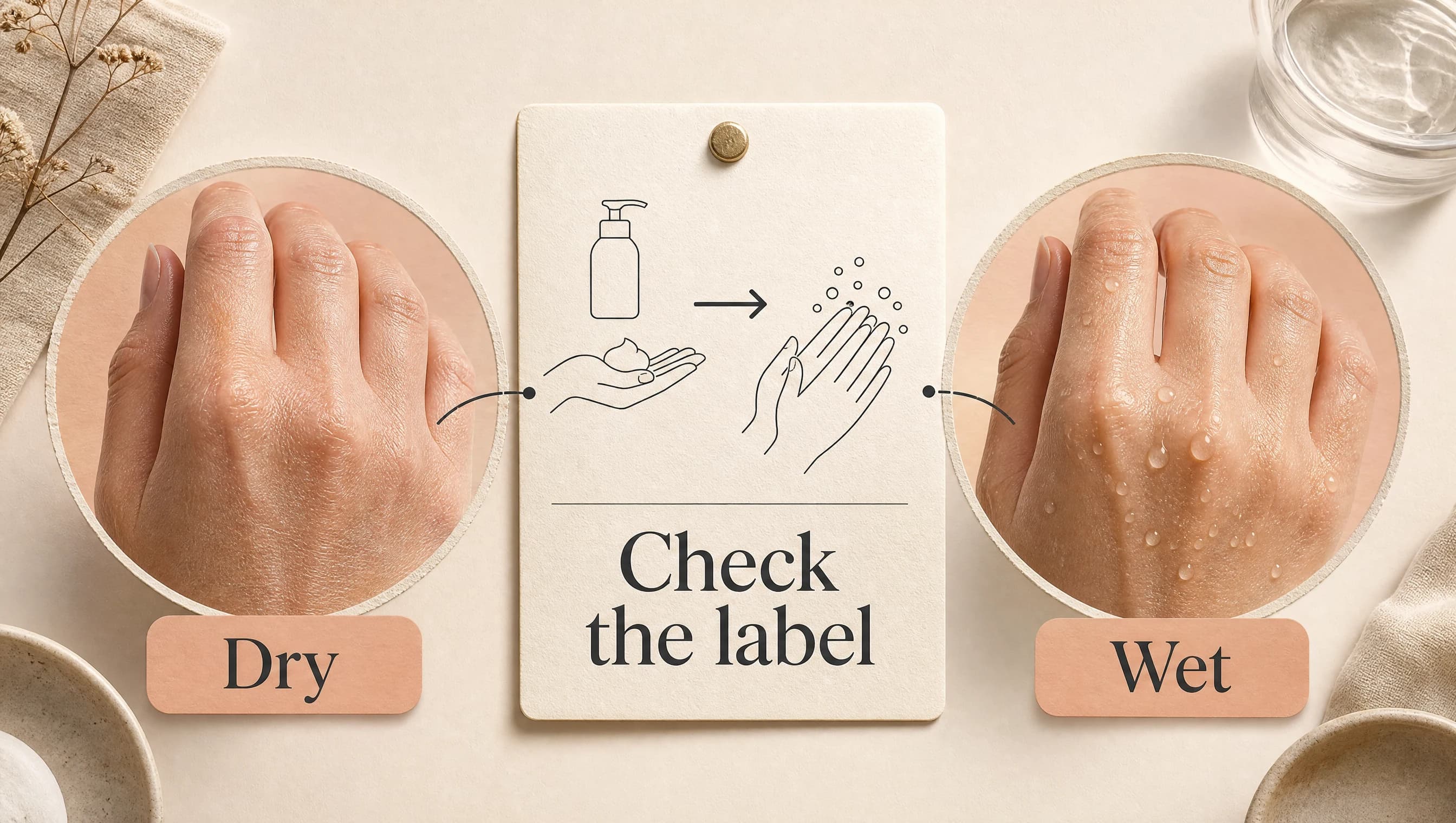
Rinsing with water is not the same method as using a cleanser according to its directions. The reviewed guidance does not establish one water-only rule that works for every face, overnight product and morning situation.
Instead of asking whether all morning cleansing is good or bad, identify what you need to remove and whether the current method is comfortable. A cleanser used on wet skin should still be rinsed; an explicitly waterless method should be followed as written.
Cetaphil Gentle Skin Cleanser, for example, offers a waterless option involving gentle application and removal of excess with a soft cloth. That instruction belongs to that formula. It does not make every cream cleanser suitable for leaving on the skin.
Do not carry the whole evening routine into the morning
The evening may involve makeup removal that is irrelevant after waking. Repeating a makeup-remover step merely because it sits beside the sink can add work without a clear purpose.
If you are evaluating that extra step, our sensitive-skin double-cleansing guide explains the separate decision. A makeup-remover shortlist is useful for an actual removal task, not evidence that you need remover every morning.
For a portable cleansing format, our micellar-water guide for combination skin compares options. Keep the product’s label instructions attached to whichever method you choose.
Simplify the sequence around the wash

The AAD’s budget-conscious routine guidance centers on cleansing, moisturizing and sun protection. It does not require a long sequence of optional products to make a morning wash worthwhile.
For a morning without exercise, identify the wash or other approach you have chosen within the relevant guidance, then the usual care that follows it. For a workout soon after waking, account for the wash after sweating before automatically adding another full wash just before it. The useful plan names the task and timing rather than counting washes as achievements.
Keep prescription or other treatment instructions in their own place. A general article cannot decide whether an overnight treatment should be removed, repeated or rescheduled.
Frequently asked questions
Does oily skin need a stronger morning cleanser?
Oiliness alone does not establish that. Start with a gentle product and its directions rather than treating a squeaky or tight finish as the target.
Should I wash before and after every morning workout?
Washing after sweating is part of AAD guidance. A separate pre-workout wash depends on the actual situation; do not add it solely to satisfy a morning checklist.
Does waterless cleansing mean any product can stay on?
No. Only use a waterless method when the product’s own directions permit it.
Sources
American Academy of Dermatology: Face washing 101 (aad.org) — https://www.aad.org/public/everyday-care/skin-care-basics/care/face-washing-101
American Academy of Dermatology: Skin care on a budget (aad.org) — https://www.aad.org/public/everyday-care/skin-care-basics/care/skin-care-budget
Cetaphil Gentle Skin Cleanser: specified waterless and rinse-off methods (cetaphil.com) — https://www.cetaphil.com/us/products/product-categories/all-cleansers/cetaphil-gentle-skin-cleanser/302990110227.html
Clear guidance, checked before publication.
Solvi articles are structured by our editorial team and reviewed for clarity, consistency, and responsible health language. We update pages when guidance or product information changes.