Skincare Expiration Dates and PAO Symbols: Which Clock Applies?
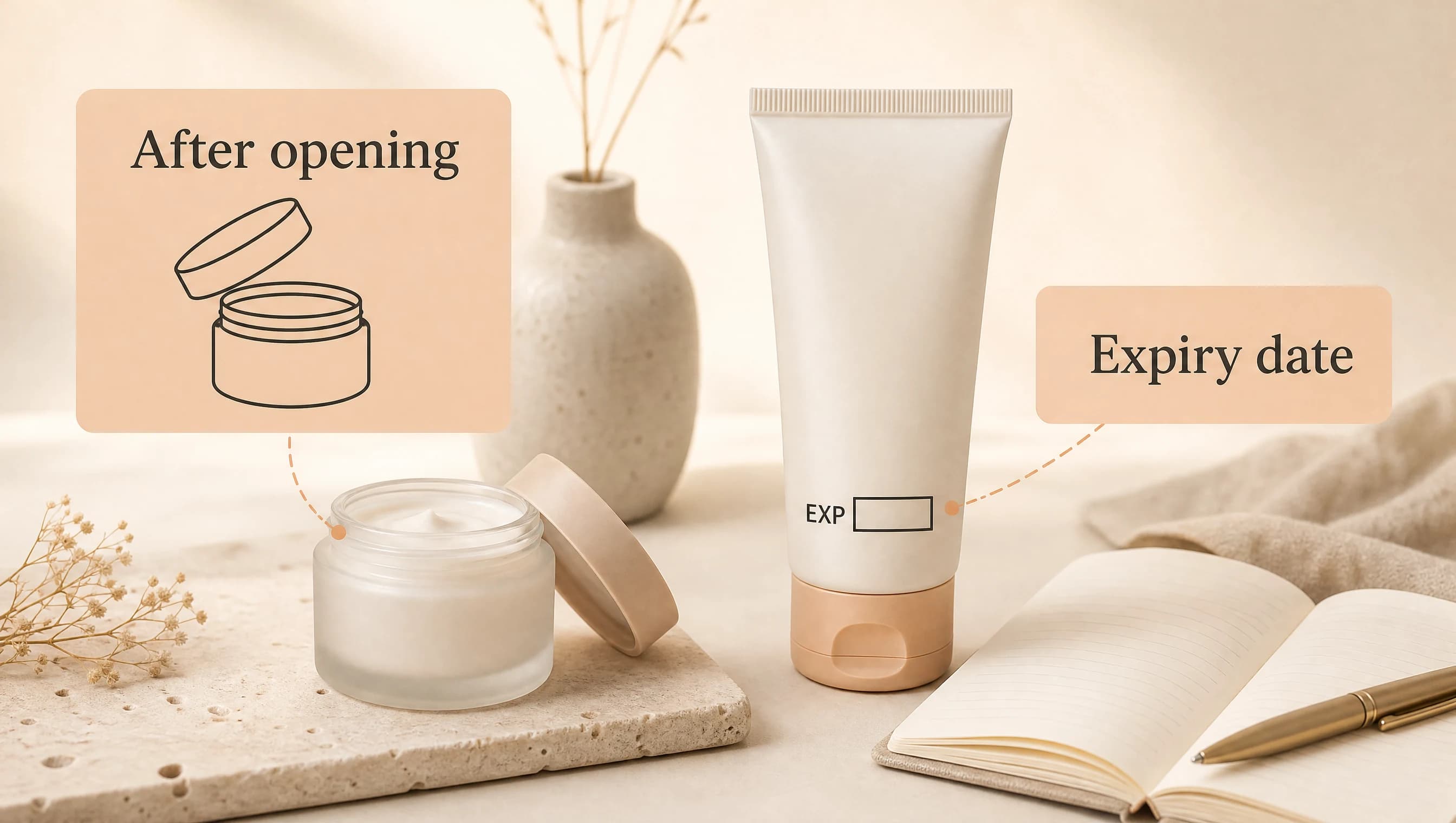
An expiration date and a period-after-opening (PAO) symbol answer different questions. A printed expiry or minimum-durability date is a calendar reference. An open-jar symbol such as 12M refers to a period after opening. A batch code identifies production information; it is not automatically a consumer-readable expiration date.
Check every applicable instruction on your own package. Do not give an old product a fresh lifespan simply because you have only just found it at the back of a drawer.
Identify the mark before calculating a date
| Mark or information | How to use it | Common mistake |
|---|---|---|
| Printed expiry or durability date | Read the date and any stated conditions | Ignoring it because the bottle is mostly full |
| Open jar with 6M, 12M or another period | Record opening date and the indicated interval | Counting from purchase instead of opening |
| Batch or lot code | Keep it for manufacturer questions | Assuming an online decoder knows the exact formula's shelf life |
| No obvious date | Check brand guidance for the specific product | Treating missing information as unlimited life |
Ireland's medicines and cosmetics regulator, HPRA, explains the open-jar PAO symbol and the EU distinction for products with durability greater than thirty months. The FDA notes that ordinary cosmetics do not have a general US requirement for an expiry date on the label. Market context therefore matters.
Set up a record you will actually keep
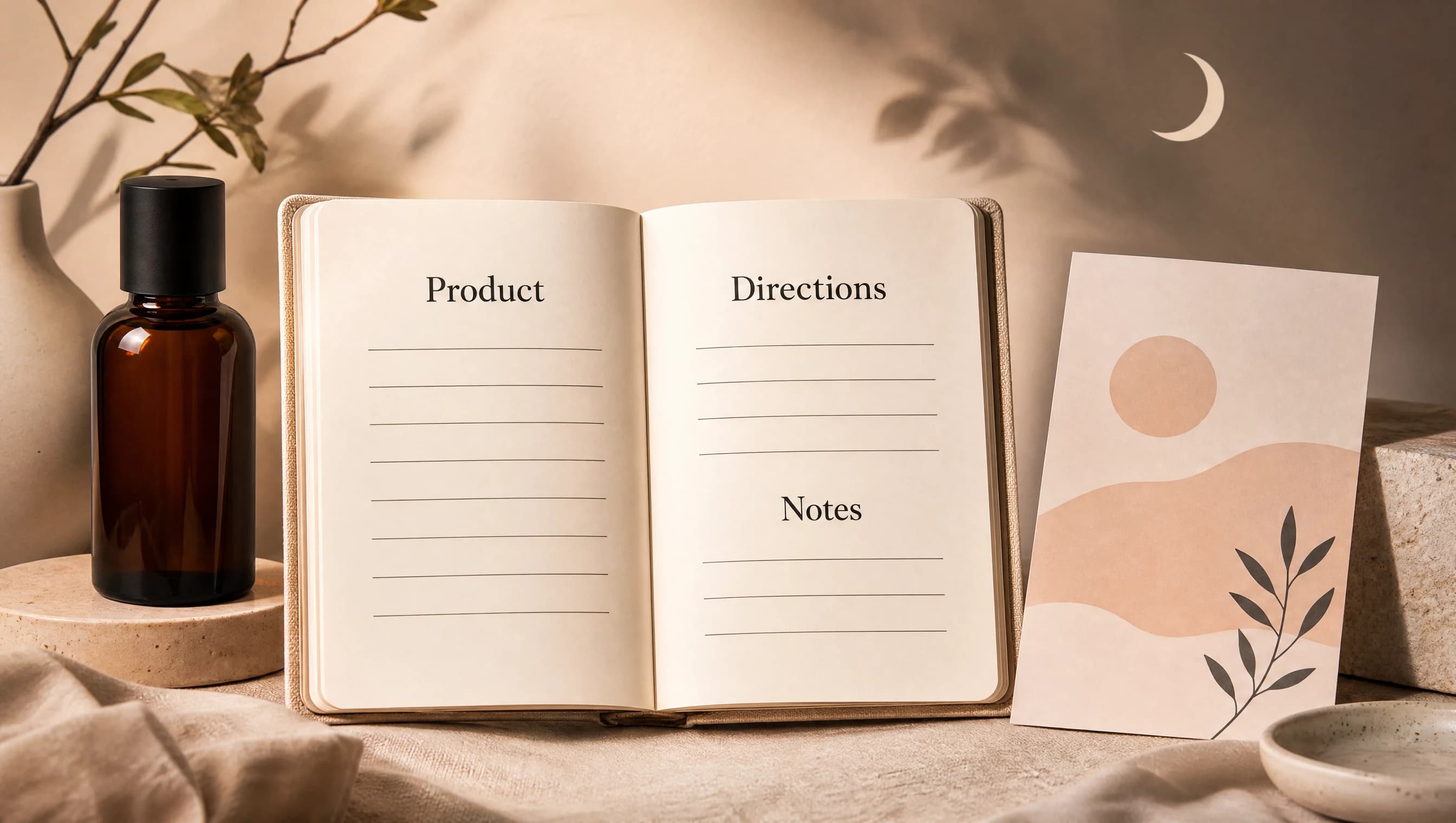
When you open a product, write the date on a small label or in a phone note. Photograph the package's instructions and batch code at the same time. This takes less effort than trying to reconstruct a purchase six months later.
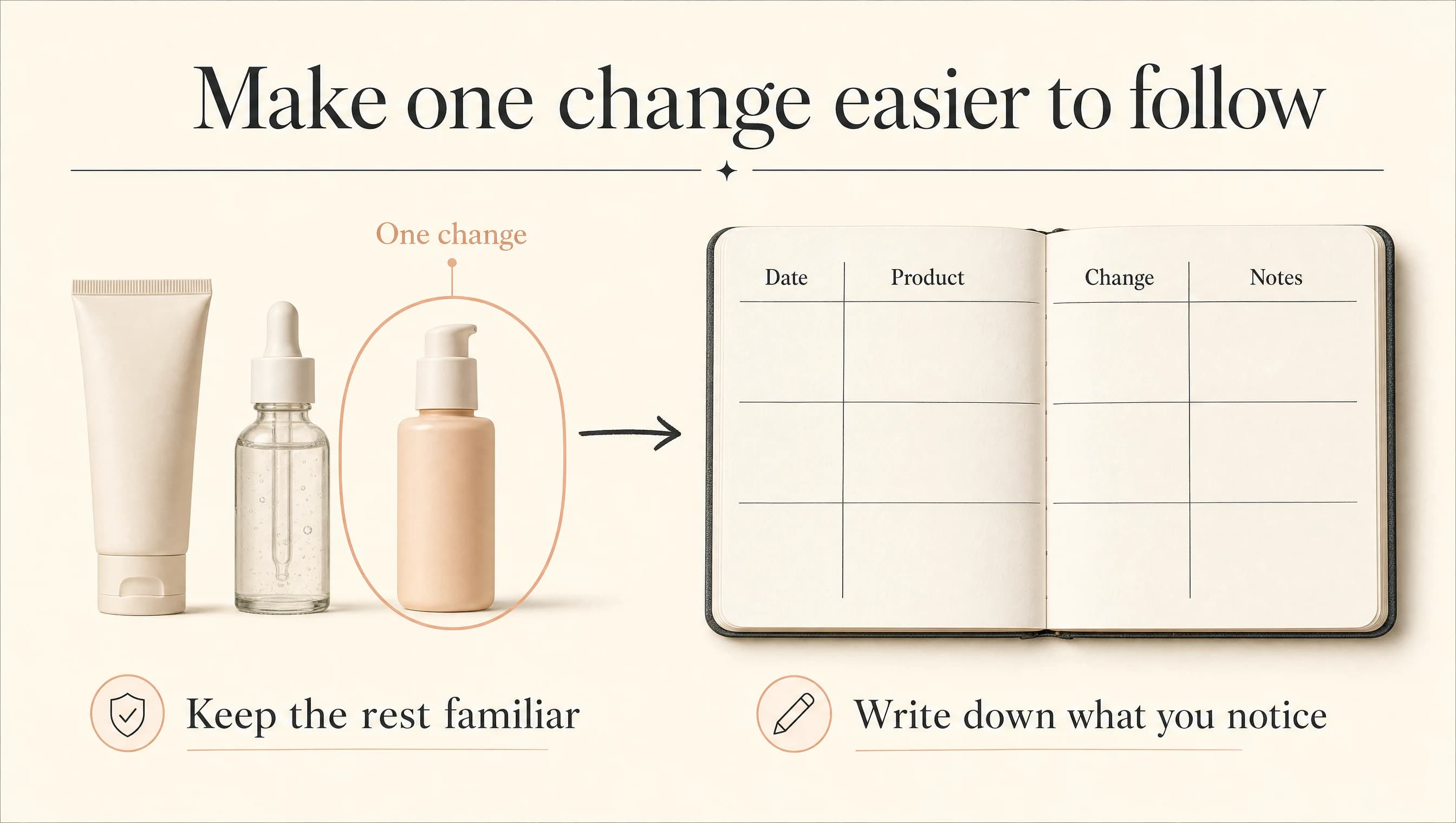
Use a three-column record: product, opening date and package guidance. For “Moisturizer A / 3 March / 12M,” the twelve-month point is 3 March the following year. That calculation does not override an earlier printed limit, special product guidance or a reason to stop using a changed product. It is an illustration of a label period, not a shelf-life recommendation for every moisturizer.
Do not automatically open backup products when they arrive. Keeping track of one in-use bottle is simpler than managing several half-used versions of the same step.
Storage and handling still matter
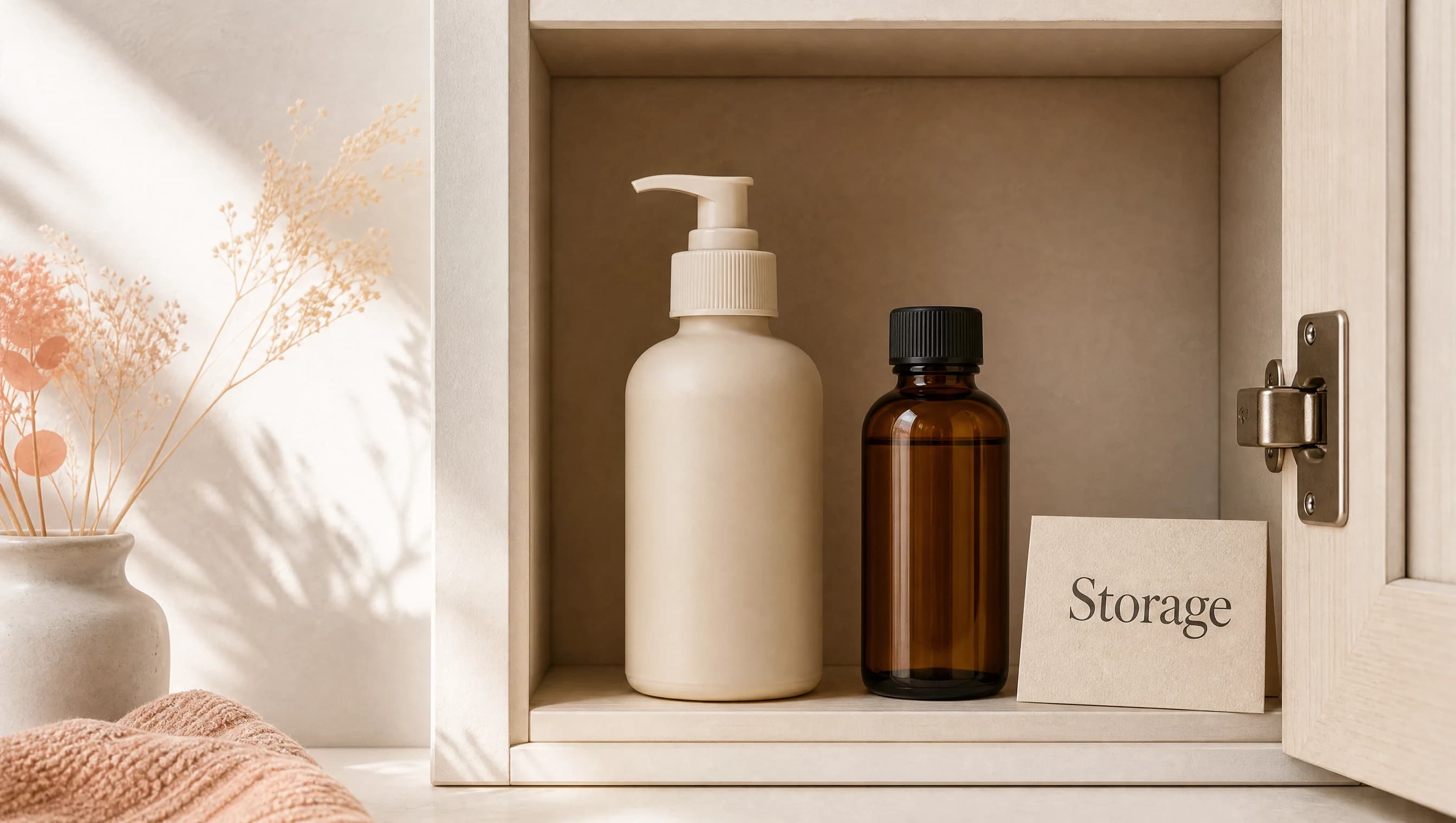
A date assumes appropriate use and storage; it is not a promise that a contaminated or heat-damaged product remains suitable until the final day. The FDA describes several ways cosmetics can change over time, including contamination, separation and exposure-related changes.
Keep packaging clean, close it after use and follow any product-specific temperature instructions. Avoid adding water to revive a drying formula or moving a product into an unlabeled container merely to make a shelf look neater.
If you notice an unexpected change in smell, color, texture or separation, stop and check the manufacturer's guidance. Do not decide that a product is safe solely because it smells normal, either: sensory checks cannot establish everything about its condition.
Treat sunscreen and special instructions separately
In the US, sunscreens are drugs, including moisturizers with SPF. Do not apply a generic cosmetic rule to them. Our sunscreen expiration guide covers that specific decision. Product-specific storage also matters for certain actives; see how to store retinol serum rather than assuming every serum belongs in the refrigerator.
When contacting a brand, provide the full product name, country, lot code, purchase and opening dates if known, and the change you observed. Ask a question about your actual product rather than requesting a universal lifespan for an ingredient.
For an appearance change in a particular active, our vitamin C oxidation guide addresses that narrower question. Use the beginner routine guide to identify which steps need replacing, and the sensitive-skin product guide when ingredient restrictions shape the replacement.
Frequently asked questions
Does 12M mean the product expires twelve months after purchase?
On an open-jar PAO symbol it refers to the period after opening. Also check any printed date and the manufacturer's storage or use instructions.
Is a batch code the same as an expiry date?
No. It is a production reference. The manufacturer is the appropriate source for interpreting an unclear code or determining the relevant guidance for your formula.
Can an unopened cosmetic last forever?
No. Being unopened does not establish unlimited stability. Look for the applicable date and storage guidance, and ask the manufacturer when the information is unclear.
Sources
HPRA: Cosmetic products labelling (hpra.ie) — https://www.hpra.ie/regulation/cosmetics/labelling-and-claims/cosmetic-products-labelling
FDA: Cosmetic shelf life and expiration dating (fda.gov) — https://www.fda.gov/cosmetics/cosmetics-labeling/shelf-life-and-expiration-dating-cosmetics
FDA: Using cosmetics safely (fda.gov) — https://www.fda.gov/cosmetics/resources-consumers-cosmetics/using-cosmetics-safely
Clear guidance, checked before publication.
Solvi articles are structured by our editorial team and reviewed for clarity, consistency, and responsible health language. We update pages when guidance or product information changes.