How to Store Retinol Serum: Follow the Exact Label
Store retinol serum according to its exact label, including any instruction that begins after opening. Refrigeration is required for some products, but it is not a universal rule for every retinol formula. Keep the original directions and record when you open the bottle.
The Ordinary Retinol 0.2% in Squalane is a useful example: its current page explicitly says to refrigerate after opening. That instruction should not be silently transferred to a different serum or cream whose manufacturer gives other storage guidance.
Start with the product you actually own
Read the bottle, carton and current manufacturer page together. Confirm the full name, concentration if stated, market and version. Similar packaging within one brand does not mean every product shares the same requirements.
| Item to record | Why it is useful | What to avoid assuming |
|---|---|---|
| Full product name | Identifies the correct instructions | Every retinoid from the brand is the same |
| Opening date | Gives context for an after-opening limit | You will remember it months later |
| Printed expiry or use period | Records the maker's stated limit | Appearance can extend that limit |
| Storage instruction | Identifies any special requirement | Every serum belongs in a refrigerator |
| Batch or lot code | Helps the manufacturer identify the bottle | An unofficial decoder proves freshness |
Keep the record next to the bottle or in one package photograph: “Exact product: __. Opened: __. Maker’s after-opening limit: __. Required storage: __.” Fill it from that product rather than copying another serum’s shelf life. For the broader label question, see expiration dates and period-after-opening symbols.
Refrigerate when the manufacturer instructs it
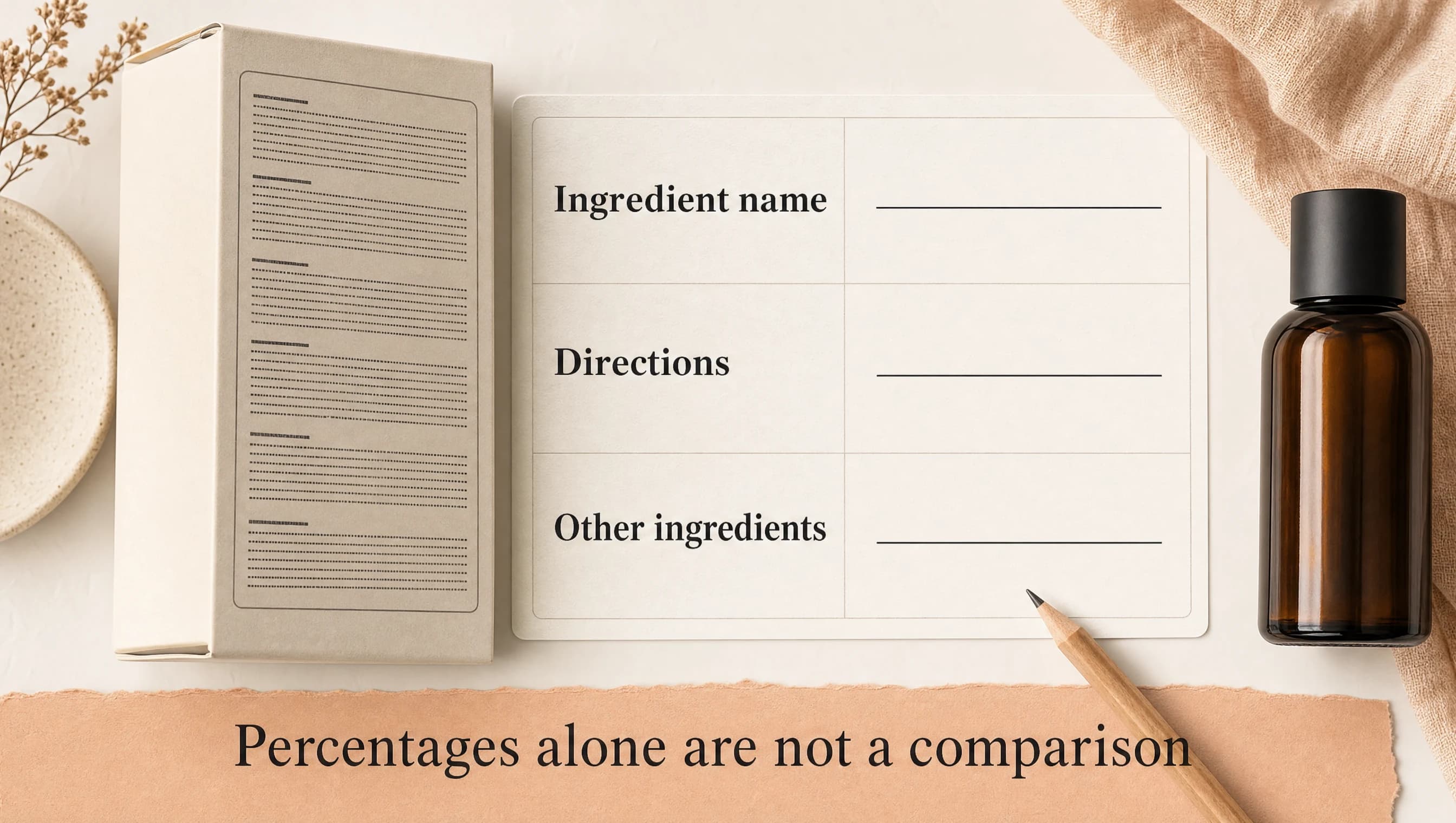
For The Ordinary Retinol 0.2% in Squalane, the reviewed instructions supply two entries: “Storage: refrigerate after opening. Use period: within three months.” Add your own opening date. Its evening-use and other product warnings still apply; these storage entries belong to this named formula.
If a different retinol product does not mention refrigeration, do not assume that colder storage must improve it. Ask the manufacturer when its guidance is unclear. This article does not establish a universal storage temperature or an extra shelf-life allowance from refrigeration.
A product marketed as stable or encapsulated still needs its own storage instructions followed. A technical description is not permission to disregard the label.
Consider the storage environment
The FDA explains that a cosmetic's shelf life depends on its type, handling and storage. Temperature changes, air, sunlight and moisture can affect products. This supports reading storage requirements carefully; it does not let you calculate remaining retinol potency at home.
Choose a location consistent with the label and keep the container properly closed. Avoid treating a decorative display spot as suitable merely because the bottle looks attractive there. The manufacturer's instructions are a better guide than a general bathroom-shelf photograph.
Do not transfer serum into an unmarked container without considering the loss of identification, directions and original packaging. If travel requires a change, ask the manufacturer whether the proposed container and storage conditions are appropriate for that product.
Do not diagnose potency from color alone
A change in smell, texture or appearance can be a reason to stop and ask the manufacturer about the product. It cannot tell you a precise remaining retinol percentage. Conversely, an unchanged appearance does not establish that a bottle is within its recommended use period.
If you notice something different, record the opening date, storage history and lot code. Photograph the product and contact the manufacturer for guidance. Do not try to restore it by mixing in water, another serum or a preservative.
If a new bottle looks different from the last one, our reformulation-checking guide can help separate a version question from a storage question. Neither a changed carton nor a social-media comment proves the cause.
Keep storage and use decisions separate
Correct storage does not establish that a retinol product suits your skin. If it causes irritation, follow its stop-use guidance rather than assuming careful refrigeration makes continued use appropriate.
For broader product choices, read our retinol guide for mature skin or retinol and dark spots. For moisturizer order, the sandwich-method guide addresses a different question and does not change storage requirements.
Frequently asked questions
Should every retinol serum go in the fridge?
No. Refrigerate when the exact product instructs it. The reviewed Ordinary serum does, but other formulas need their own label check.
Can refrigeration extend the printed use period?
Do not assume that. Follow the manufacturer's stated limit unless it explicitly provides different guidance for your product.
Does yellowing prove the retinol is ineffective?
Color alone cannot quantify potency. Stop and ask the manufacturer about an unexpected change, using the lot code and storage history.
Sources
The Ordinary: Retinol 0.2% in Squalane (theordinary.com) — https://theordinary.com/en-us/retinol-02-in-squalane-serum-100439.html
FDA: Shelf life and expiration dating of cosmetics (fda.gov) — https://www.fda.gov/cosmetics/cosmetics-labeling/shelf-life-and-expiration-dating-cosmetics
FDA: Using Cosmetics Safely (fda.gov) — https://www.fda.gov/cosmetics/resources-consumers-cosmetics/using-cosmetics-safely
Clear guidance, checked before publication.
Solvi articles are structured by our editorial team and reviewed for clarity, consistency, and responsible health language. We update pages when guidance or product information changes.