How much sunscreen to use on your face without guessing
Use enough sunscreen to cover your face generously and evenly, following the product directions. The AAD's current application guide gives a face recommendation of at least one teaspoon. Do not silently replace that with a tiny moisturizer-sized dab or assume that a fixed number of pumps means the same amount from every bottle.
Start with the guidance you are actually using
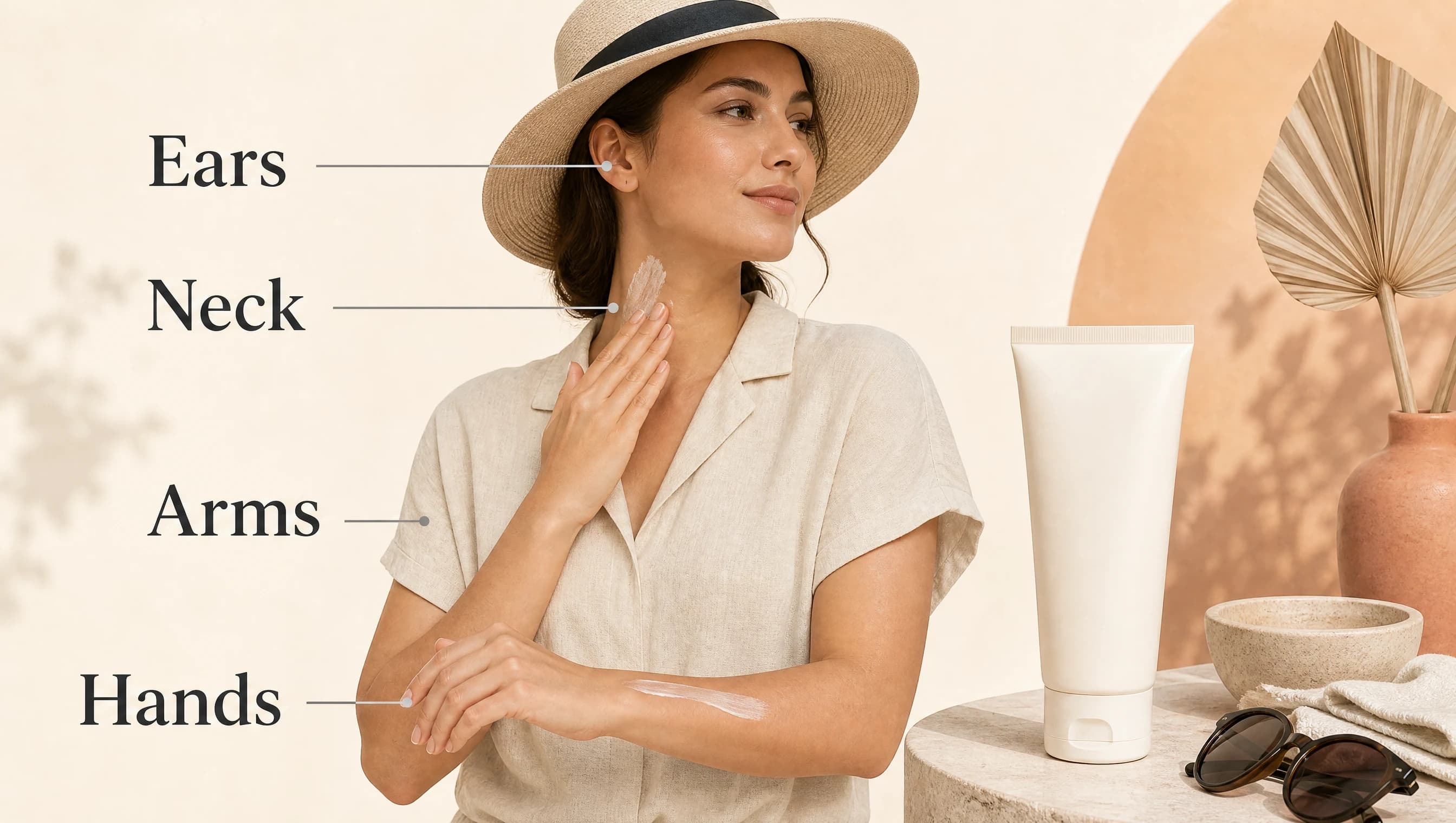
Application advice is often shortened into a slogan, then shared without its context. The AAD guide separately discusses the face and the larger amount used to cover exposed body skin. Manufacturer directions may instead say to apply liberally. Read the actual wording before converting it into your own routine.
For example, CeraVe AM SPF 50 instructs liberal application before sun exposure. Its product instructions do not establish that two pumps from any dispenser equal the amount every adult needs. A pump count from a different product is not a measurement for yours.
Why finger and pump shortcuts vary
A line from a narrow nozzle and a line from a wide opening can look similarly long while dispensing different amounts. Fingers also differ. These shortcuts can help someone remember an established routine, but they cannot turn every bottle into a calibrated measuring device.
| Shortcut | Useful for | What it cannot establish |
|---|---|---|
| A remembered pump count | Repeating use of the same dispenser | Equivalence across different bottles |
| Lines on fingers | A visible application reminder | A universal volume for every nozzle |
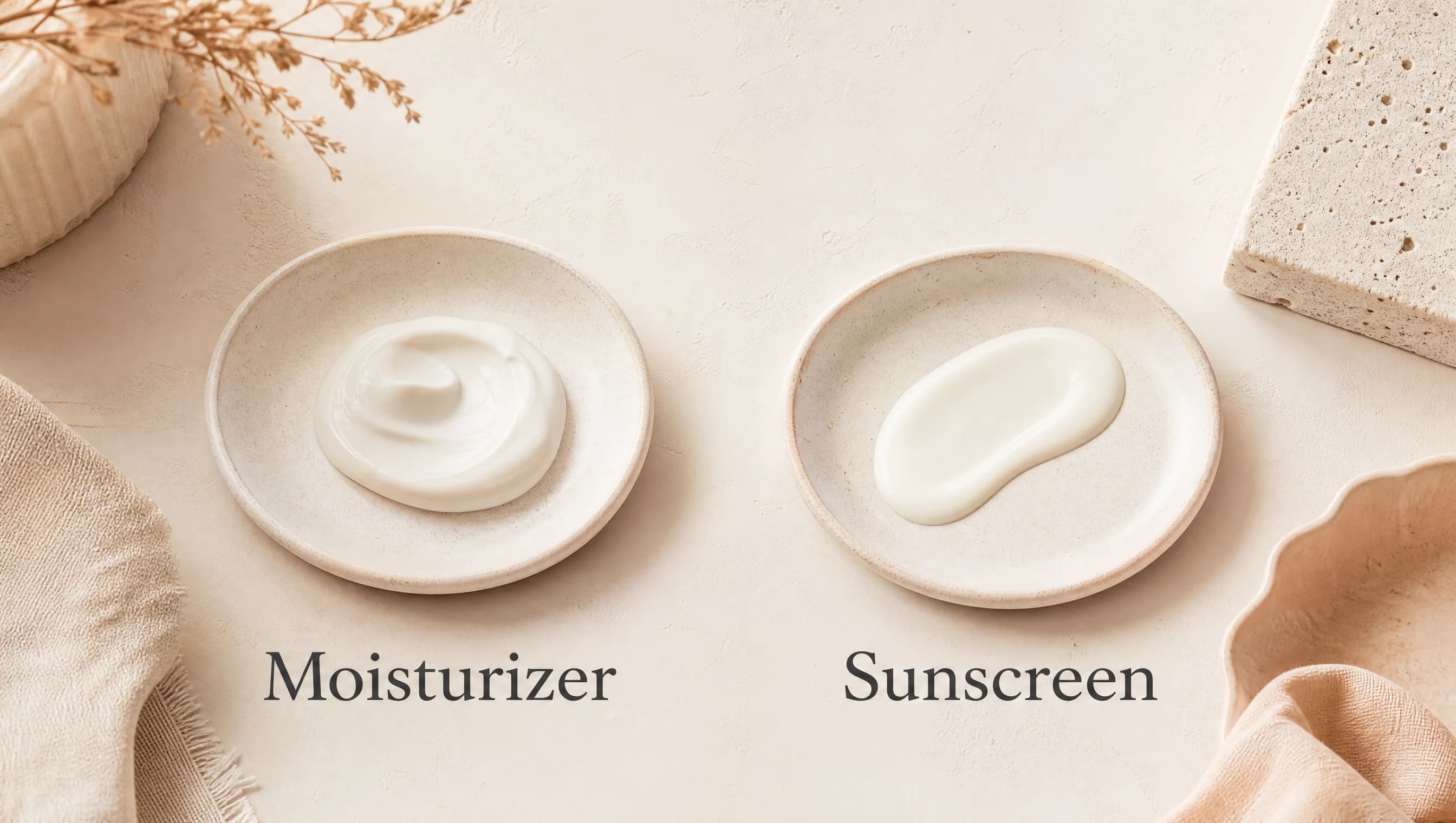
| A small moisturizer-sized dot | A familiar cosmetic habit | Adequate sunscreen coverage |
| Reading the exact directions | Understanding the intended application | Your measured protection after wear |
The practical question is not which shortcut looks neatest in a video. It is whether it helps you apply the product generously to every intended area.
Make missed areas easier to notice
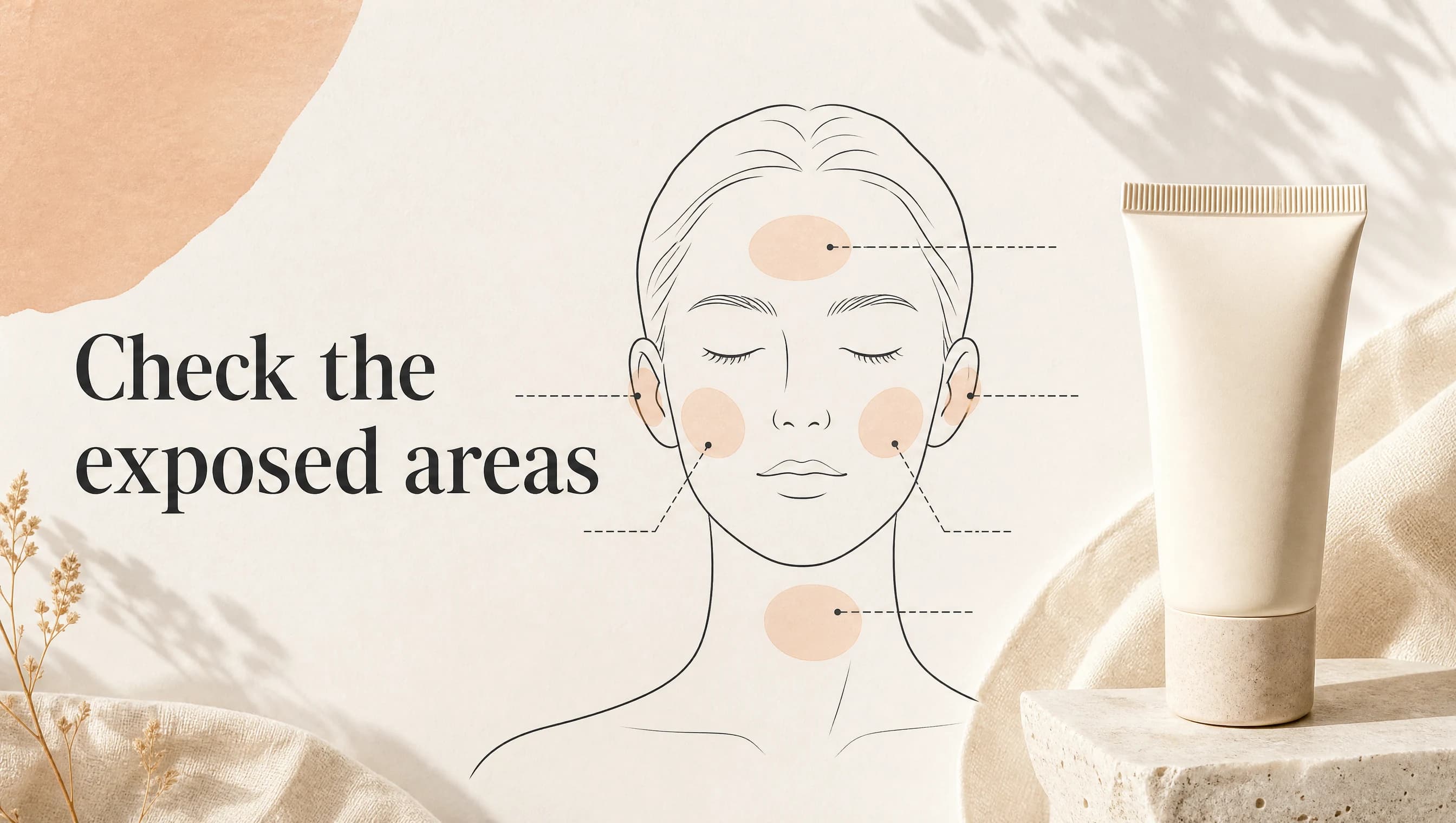
Before applying, consider the whole area you intend to cover. Work methodically across the face and finish the edges rather than putting most of the product on the central cheeks. Neck and ears are separate areas that should not disappear from your plan because you searched for a face amount.
Use a mirror and adequate light for the application. This helps you notice a skipped hairline or an uneven patch; it does not measure SPF. An invisible finish also cannot prove that enough was applied.
- Before application, check whether this formula needs shaking and read its eye-area restrictions.
- Use the product’s directed application across the intended facial area.
- Before putting it away, inspect the edges of the area you intended to cover.
- If correct use feels too heavy, address the formula or optional layers beneath it rather than using less.
Solve discomfort without shrinking the amount
Suppose a sunscreen feels acceptable as a small dab but heavy when used generously. That is a formula-selection problem. Try simplifying optional layers underneath or choose a more comfortable sunscreen, instead of redefining the amount around the finish you prefer.
When comparing two products, keep the application approach consistent enough to make the texture comparison useful. A thin film of one and a generous application of the other is not a fair comfort comparison. Neither comparison measures their actual sun protection on your skin.
Frequently asked questions
Is the face amount the amount for my whole body?
No. Guidance for covering exposed body skin concerns a much larger area. Check which body area a recommendation describes before applying the number to your face or your entire outing.
Can I count the sunscreen already in my foundation?
Do not subtract an assumed contribution from makeup. You would need to know that the cosmetic is applied according to its own sunscreen directions. Plan the sunscreen application independently.
Is one morning application enough?
The amount and the reapplication schedule are different requirements. Follow your product's directions for both. A generous first application does not make later maintenance unnecessary.
Related decisions
- Best Sunscreen for Combination Skin: Find the Finish That Works on Every Zone
- How to Stop Sunscreen From Pilling: A Layering Troubleshooting Guide
- Best Sunscreen for Melasma: Why Tinted SPF Is the Smartest Daily Buy
- Sunscreen stick vs lotion — Adapt amount and coverage thinking to the different application pattern of sticks.
- Spray sunscreen vs lotion for face — Review the separate coverage and application issues of sprays.
Sources
AAD: How to apply sunscreen (aad.org) — https://www.aad.org/public/everyday-care/sun-protection/shade-clothing-sunscreen/how-to-apply-sunscreen
CeraVe: US AM Facial Moisturizing Lotion SPF 50 (cerave.com) — https://www.cerave.com/skincare/moisturizers/facial-moisturizers/am-facial-moisturizing-lotion-spf-50
FDA: Sunscreen consumer guidance (fda.gov) — https://www.fda.gov/drugs/understanding-over-counter-medicines/sunscreen-how-help-protect-your-skin-sun
Clear guidance, checked before publication.
Solvi articles are structured by our editorial team and reviewed for clarity, consistency, and responsible health language. We update pages when guidance or product information changes.