Best Sunscreen for Melasma: Why Tinted SPF Is the Smartest Daily Buy


For melasma, the best sunscreen is a daily broad-spectrum SPF 30 to 50+—with a strong case for a tinted formula that lists iron oxides. That tint is not merely cosmetic: visible light can matter in melasma, and tinted iron-oxide sunscreens have shown better melasma control in studies than options without that visible-light-focused layer.
The most effective choice is the one you can apply generously, enjoy wearing, and reapply when you are outdoors. Think beyond the headline SPF number: the right finish, shade match, and formula type determine whether sunscreen becomes a dependable pigment-protection step or another product left in the cabinet.
The sunscreen brief for melasma
Melasma is not the same decision as choosing sunscreen for an occasional dark mark after a blemish. With melasma, the shopping list needs to cover broad-spectrum UV protection and visible-light protection, which is why a tinted sunscreen with iron oxides is a particularly practical starting point.
Look at the ingredient panel rather than assuming every tinted formula offers this benefit. Iron oxides should be listed if visible-light protection is part of the reason you are buying the tint. A product can be beautifully beige and still require a closer look at its ingredient list.
Your non-negotiables
- Choose broad-spectrum protection with SPF 30 to 50+ for daily use.
- Prioritize a tinted sunscreen that lists iron oxides when melasma is the concern.
- Pick a water-resistant option if sweating, swimming, or extended outdoor time is part of your day.
- Make sure the formula layers comfortably over your skincare and under makeup, if you wear it.
- Treat a good shade match as functional, not frivolous: an off-tone cast can make regular use less likely.
A hat and time in the shade do not replace sunscreen, but they make a useful second line of defense, especially during the brightest parts of the day. The goal is a repeatable system rather than a single “perfect” tube.
What to buy for melasma

The best face sunscreen for melasma often falls into one of four format families. None wins for every skin tone, sensitivity profile, or makeup preference; the intelligent buy is the format that meets the iron-oxide and SPF brief while fitting the rest of your morning.
| Format | What it feels like | Best for | Main tradeoff |
|---|---|---|---|
| Tinted mineral SPF 50 | Usually a cream or lotion with a soft, skin-evening veil | Reactive skin and people who prefer mineral filters | Shade ranges and blending can be limiting |
| Tinted chemical + iron-oxide SPF | Often lighter, more fluid, or more makeup-friendly | Those who want a less creamy finish or easy layering | May not suit every ingredient-sensitive routine |
| Untinted mineral SPF | Creamy to lotion-like, depending on formula | Minimal routines or times when tint is not wanted | Does not provide the same iron-oxide visible-light angle |
| Tinted SPF as complexion step | Can resemble a sheer skin tint or light base | Anyone who wants sunscreen and light coverage in one step | Color matching becomes essential |
The everyday front-runner
A tinted mineral SPF 50 that lists iron oxides is an especially strong category to consider for melasma. It combines a high daily SPF target with tint, and it can be a sensible direction for people whose skin is reactive or who already know they prefer mineral formulas.
Expect a lotion or cream texture more often than an invisible gel. For dry-feeling skin, that cushion can be welcome. For oilier complexions, seek a formula described in a way that aligns with your finish preference, then give it a full morning at home before making it your commute-day staple.
The lightweight alternative
A tinted chemical sunscreen with iron oxides may appeal if dense mineral creams feel like too much under makeup. This category can be a useful fit when your priority is a more fluid texture, a smoother base for complexion products, or simply a finish you are more inclined to apply in a sufficient layer.
The label still does the deciding. Confirm broad-spectrum coverage, SPF, and iron oxides; “tinted” alone is not the whole answer.
The makeup-minded option
A tinted SPF that works like a sheer complexion product can reduce the number of morning layers. It may be especially useful for someone who usually wears light coverage and would rather not stack a separate sunscreen plus a base product.
That convenience comes with one important check: do not apply less simply because it looks like makeup. Sunscreen needs to be applied as sunscreen, not dabbed on as spot coverage.
Mineral versus chemical: which formula fits?

For melasma, mineral versus chemical is not the central contest. Tinted iron oxides, broad-spectrum protection, an appropriate SPF, and consistent use carry more practical weight than choosing a side based on marketing language alone.
Still, formula family can affect comfort. Mineral sunscreen is a natural place to begin for someone with reactive skin, while a chemical option may be worth considering for someone who finds it easier to wear in a lightweight, fluid format. The right answer is the one that does not create a daily objection at the mirror.
Choose mineral when
- Your skin is reactive and you want to begin with a mineral option.
- You prefer a creamier, more protective-feeling texture.
- You can find a tint that blends cleanly into your skin tone.
- You want an SPF 50 mineral tinted formula as your daily baseline.
Consider chemical plus tint when
- You strongly prefer a lighter or more fluid sunscreen format.
- Your sunscreen needs to sit neatly beneath makeup.
- You have found mineral formulas too thick, dry, or difficult to color-match.
- The formula still offers broad-spectrum SPF and lists iron oxides.
A routine that makes sunscreen easier to keep using
Sunscreen earns its place in a melasma routine when it is not competing with too many fussy layers. Keep the morning sequence polished but uncomplicated, and reserve more treatment-focused steps for guidance from a dermatologist or other qualified clinician.
Morning routine
- Cleanse or rinse in the way that suits your usual routine.
- Apply any compatible daytime skincare you already use, allowing it to settle if needed.
- Apply broad-spectrum SPF 30 to 50+, ideally a tinted iron-oxide formula for melasma.
- Add makeup only after your sunscreen layer is in place, if makeup is part of your routine.
- When outdoors, reapply every two hours and use physical barriers such as a hat.
Evening routine
- Remove sunscreen and cleanse according to your usual routine.
- Use your regular moisturizer or barrier-supporting step.
- If you use pigment-targeting topicals such as hydroquinone, a retinoid, or azelaic acid, use them only as directed or under professional supervision.
- Let the next morning's sunscreen do its part; treatment products do not substitute for daytime protection.
No sunscreen replaces prescription melasma treatment. If melasma is persistent, changing, or not responding to a careful routine, a dermatologist can help guide treatment options and determine what belongs in your regimen.
How to find a tint you will actually wear
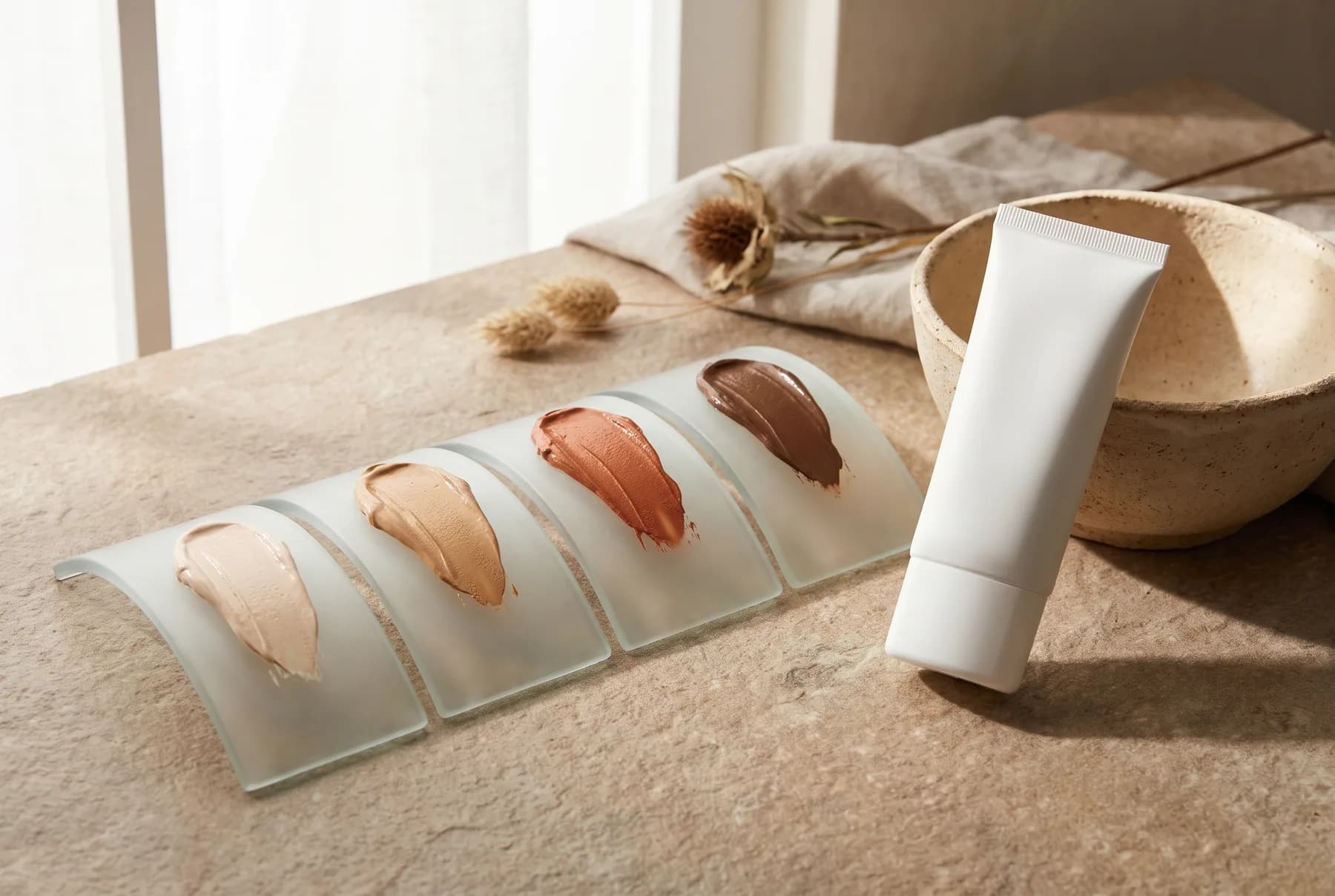
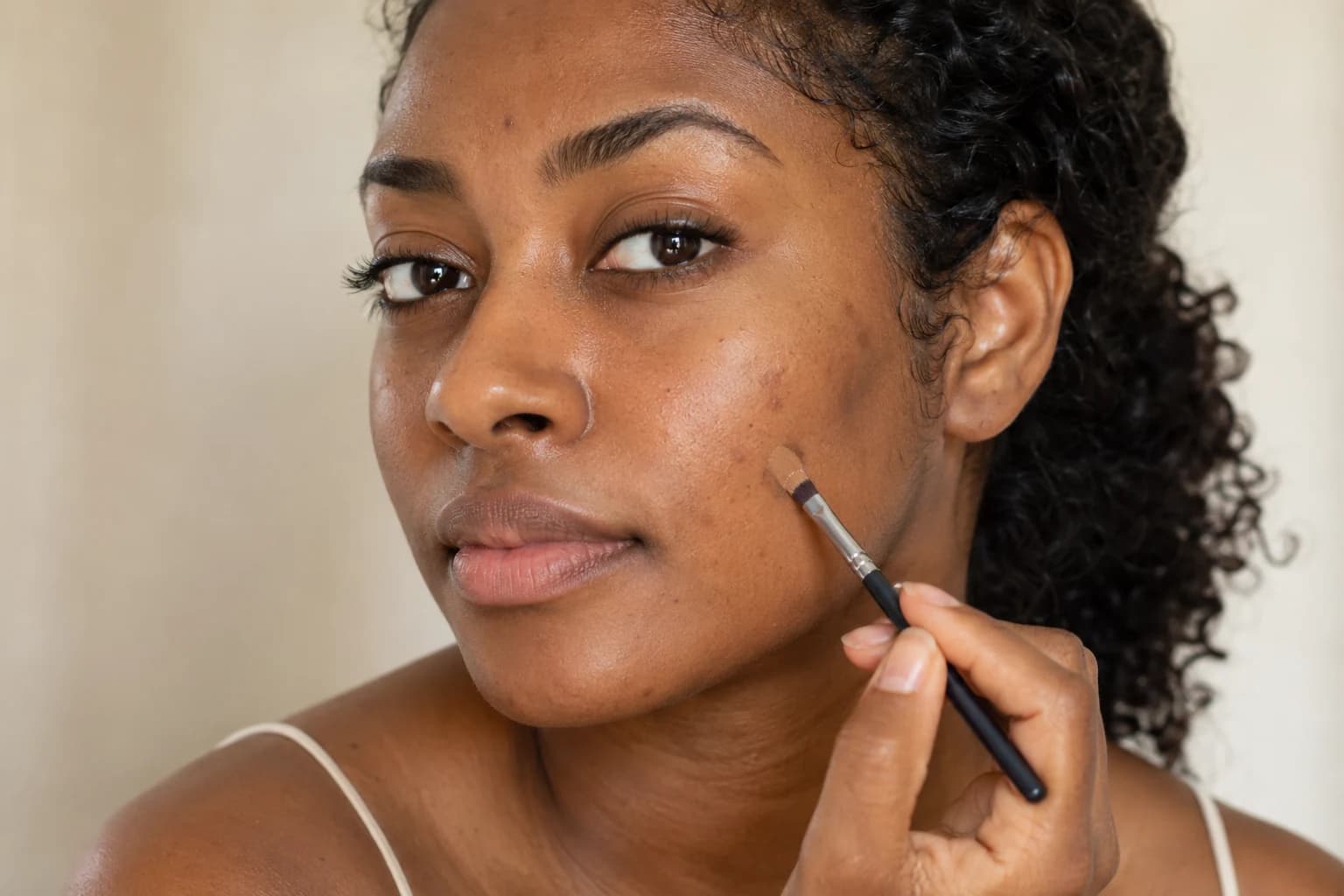
A tinted sunscreen is only useful if the tint does not make you feel disguised. Instead of searching for a dramatic coverage effect, look for a shade that disappears into the face and neck with a finish you can tolerate daily—dewy, natural, or more muted depending on your preference.
Deeper skin tones may need extra care in the matching process because some tinted mineral formulas offer a limited shade range. If one shade leaves a gray, peach, or overly light cast, that is a valid reason to keep looking rather than force the formula into your routine.
A practical matching checklist
- Test the tint along the jawline, where it meets both face and neck.
- Check it in daylight instead of relying only on a bathroom mirror.
- Let the formula settle before judging the final tone and finish.
- Look for a seamless effect rather than a foundation-level color correction.
- Consider whether you can comfortably apply enough product without the tint looking heavy.
For many people, a tint that is slightly sheer is more forgiving than one with opaque coverage. If your preferred sunscreen is untinted, it can still be a useful UV-protection choice, but it does not offer the same specific iron-oxide consideration for visible light.
How to read a sunscreen label before checkout
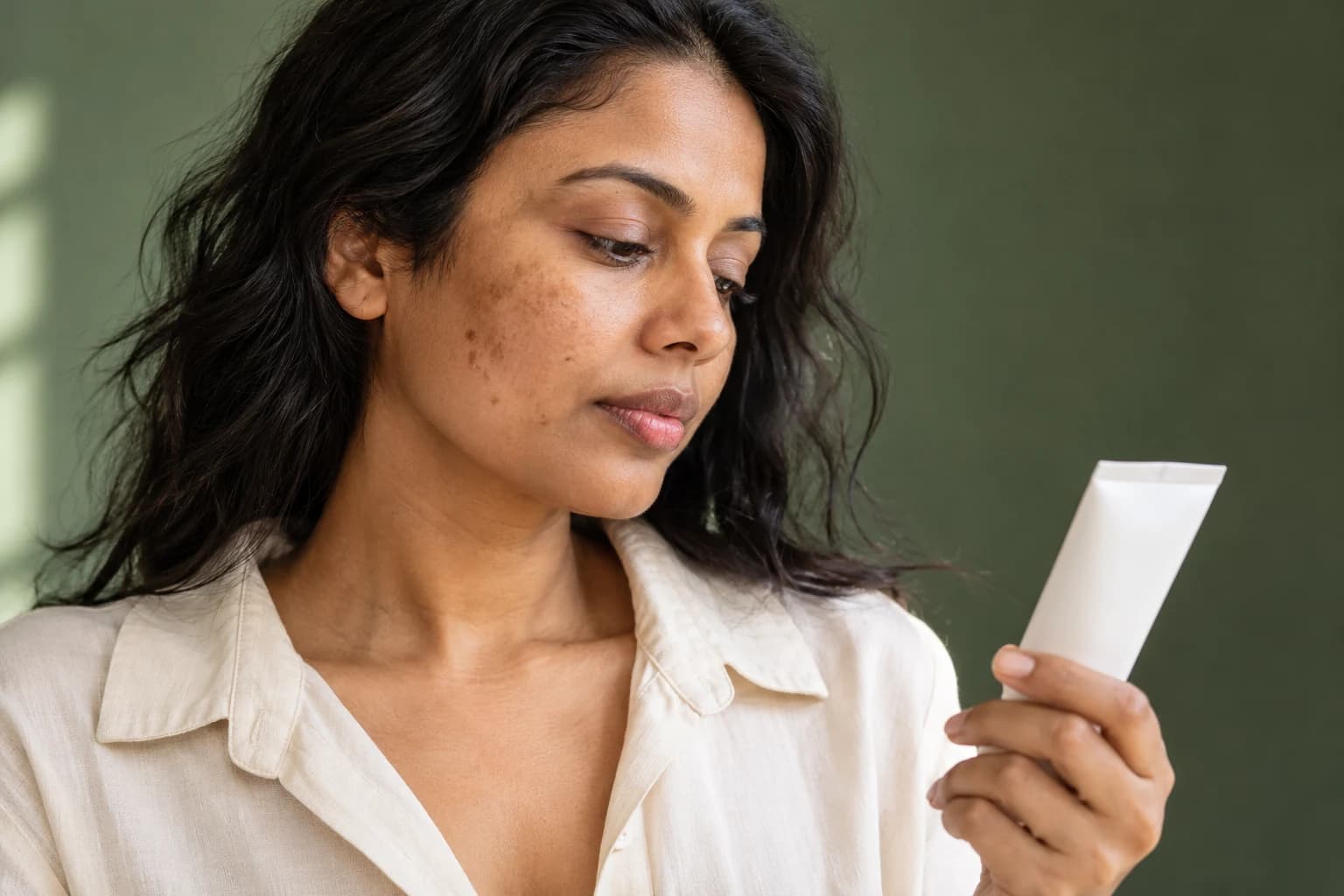
Avoid making a decision from front-label claims alone. The back panel is where you can confirm whether a formula meets the practical melasma brief, particularly when online product images make several similar-looking options seem interchangeable.
Use this three-part filter
- Protection: Find “broad spectrum” and choose SPF 30 to 50+.
- Visible light: If you want a melasma-focused tinted option, check that iron oxides appear on the ingredient list.
- Wearability: Confirm the tint, texture, water resistance, and likely fit with your existing routine.
Water resistance is especially relevant if your day includes heat, exercise, or swimming. It does not eliminate the need to reapply, but it is a useful filter for matching sunscreen to real life.
Also consider your own friction points. A polished glass-like finish may sound appealing, but if you dislike shine, choose a finish you will happily reach for. Likewise, a substantial cream can be a great choice if your skin likes it—and an impractical one if you know you avoid heavier textures.
Related reading
- Best Treatment for Facial Hyperpigmentation
- Treatment for Dark Spots on Face: Step-by-Step
- Mineral vs. Chemical Sunscreen for Sensitive Skin
Frequently asked questions
Is tinted sunscreen better for melasma?
Tinted sunscreen that contains iron oxides is a particularly useful option for melasma because it addresses visible light in addition to broad-spectrum UV protection. Confirm iron oxides on the ingredient panel rather than relying on the word “tinted.”
What SPF is best for melasma?
Choose a daily broad-spectrum SPF 30 to 50+. Many people shopping specifically for melasma will prefer SPF 50 or higher within that range, especially if the formula is comfortable enough to use consistently.
Do I need mineral sunscreen for melasma?
Not necessarily. A mineral formula can be a smart starting point for reactive skin, but a chemical sunscreen with iron oxides can also suit melasma if it is broad-spectrum, has an appropriate SPF, and is easy for you to wear regularly.
Can I wear makeup over tinted sunscreen?
Yes. Apply sunscreen as its own complete layer first, then add makeup if desired. A tinted formula may also replace a light complexion product for people who prefer fewer layers.
Sources
- JaneyooMD: Dermatologist article on tinted SPF for melasma
- Healthline: Overview of tinted sunscreens and iron oxide
- DermFND: Melasma sunscreen product collections
Clear guidance, checked before publication.
Solvi articles are structured by our editorial team and reviewed for clarity, consistency, and responsible health language. We update pages when guidance or product information changes.

Iris Kim
Advanced Skincare Writer. Iris explores retinoids, peptides, face oils, and emerging actives, making advanced skincare easier to understand.