Tinted vs untinted sunscreen: choose the right finish and coverage
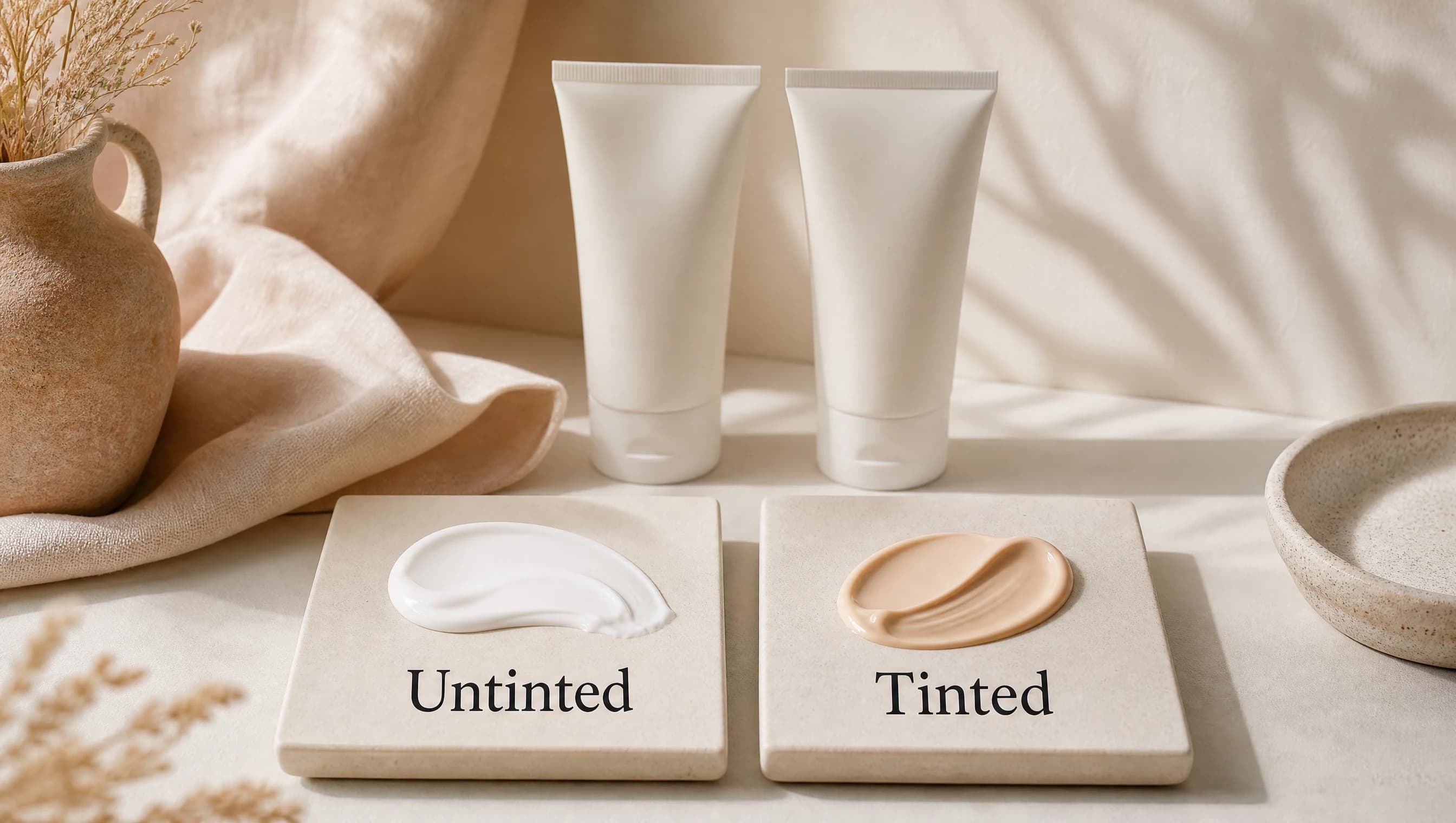
Choose tinted sunscreen if you want a wearable tint or less visible white residue; choose untinted if you prefer no added color and the finish suits you. In both cases, check the sunscreen label. Color is not an SPF rating, and a tint you can tolerate only in a tiny amount is not a good practical match.
Separate three different questions
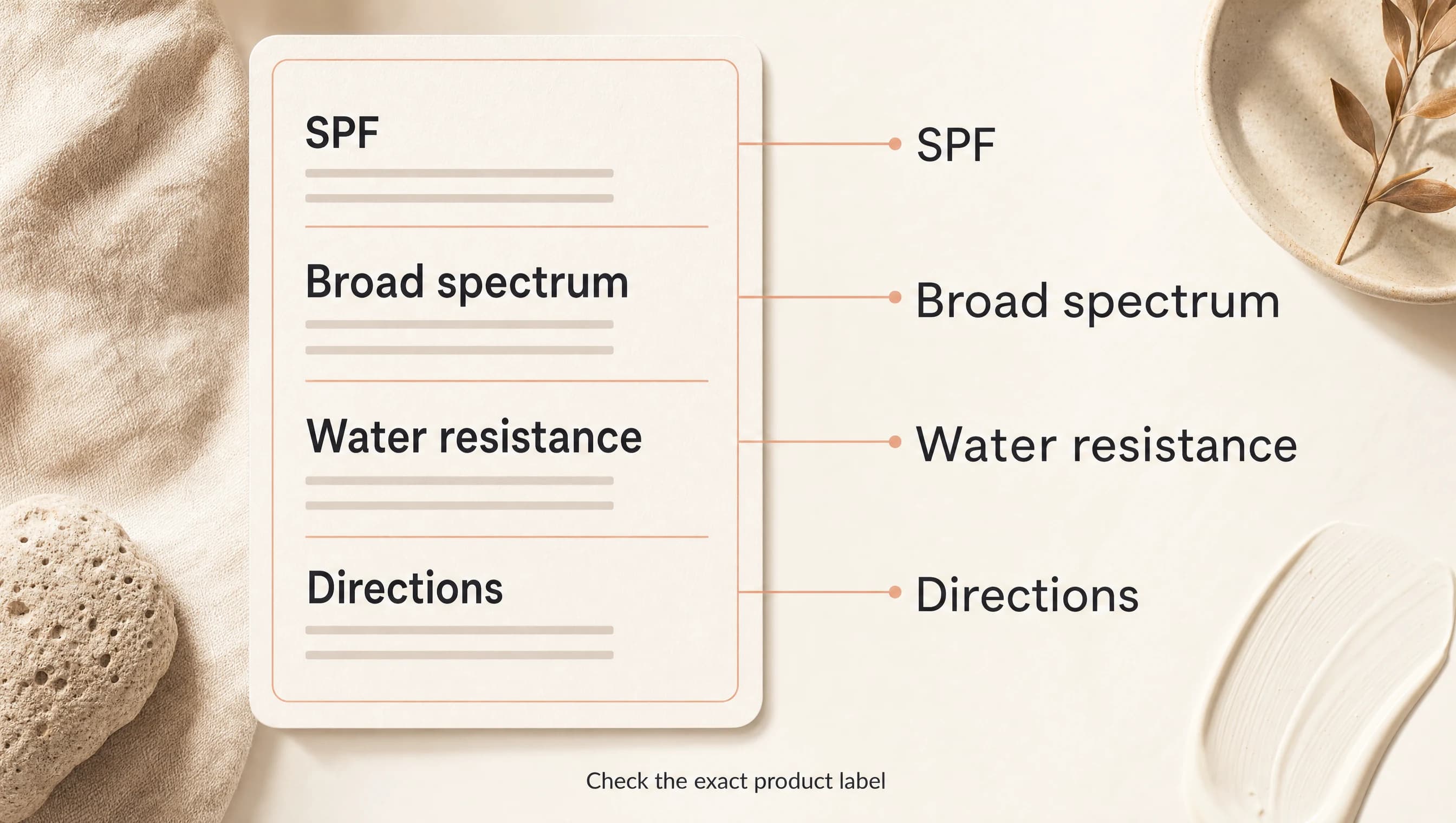
The SPF number, the product's broad-spectrum claim and the cosmetic tint tell you different things. FDA explains that broad-spectrum labeling concerns UVA and UVB protection. A darker-looking product does not let you calculate stronger UV protection.
Tinted sunscreen may also be relevant to visible-light-related pigmentation. AAD's application guidance discusses iron-oxide-containing tinted sunscreen in that context. That does not turn every tinted formula into a treatment for existing marks or prove equivalent performance across all tints.
| Your priority | Tinted may suit you | Untinted may suit you |
|---|---|---|
| Some cosmetic color | If the shade and finish work | If you prefer separate makeup |
| Avoiding white residue | A matching tint can help | A suitably sheer formula may work |
| No color transfer concerns | Evaluate the exact product | No added tint may be simpler |
| Pigmentation-focused advice | Consider the appropriate formula with guidance | Do not infer visible-light coverage from SPF alone |
Shade matching is part of adequate application
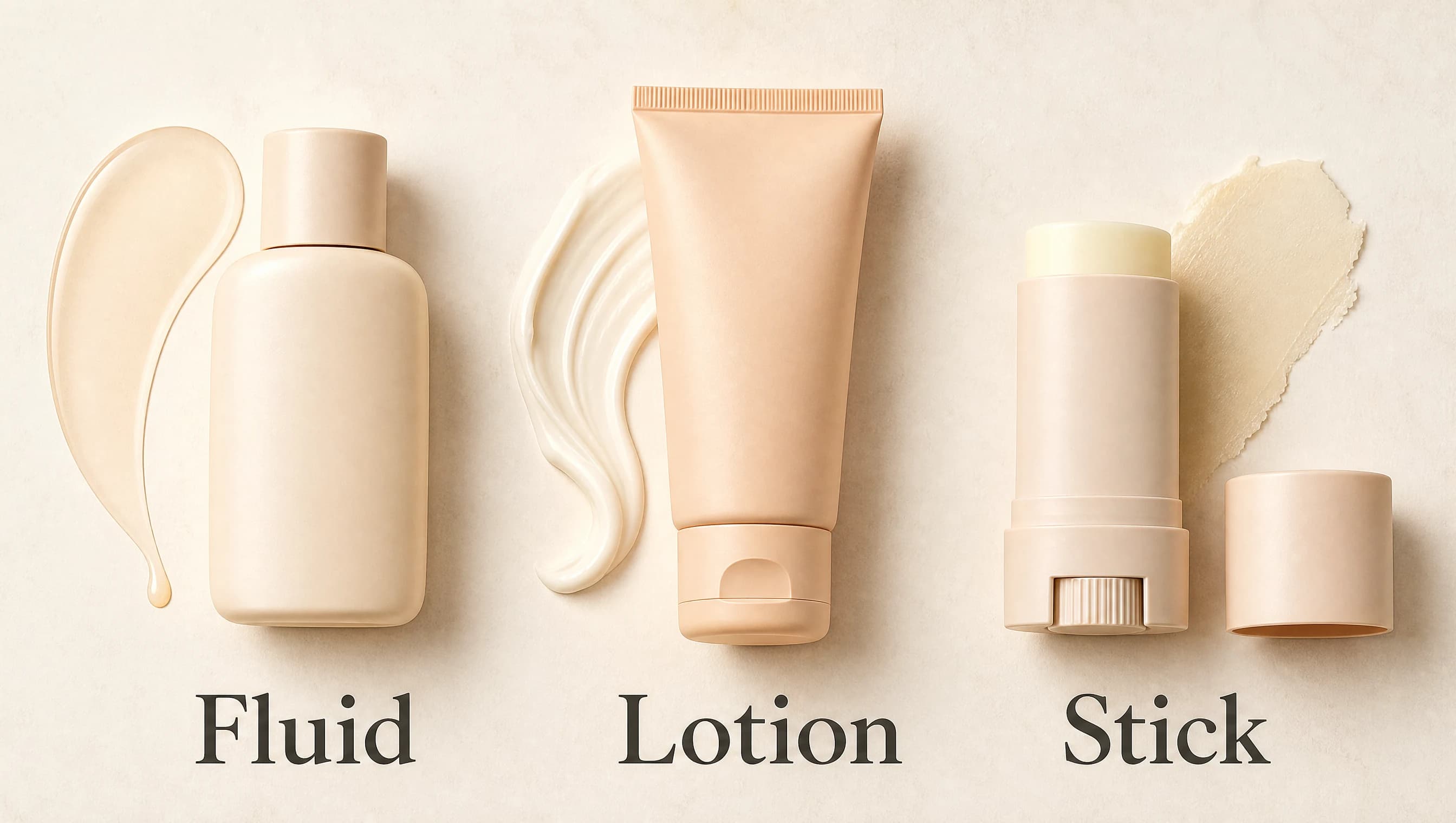
Try to evaluate a tint at the application you would actually use. A barely visible swatch does not show how the whole face will look. Depth and undertone both matter, as does the relationship to your neck and exposed skin.
CeraVe's US Hydrating Mineral Face Sheer Tint SPF 30 is available in light, medium and deep shades and includes iron oxides. Those are current product facts, not proof that the range suits every person.
Decide how much makeup work you want it to do
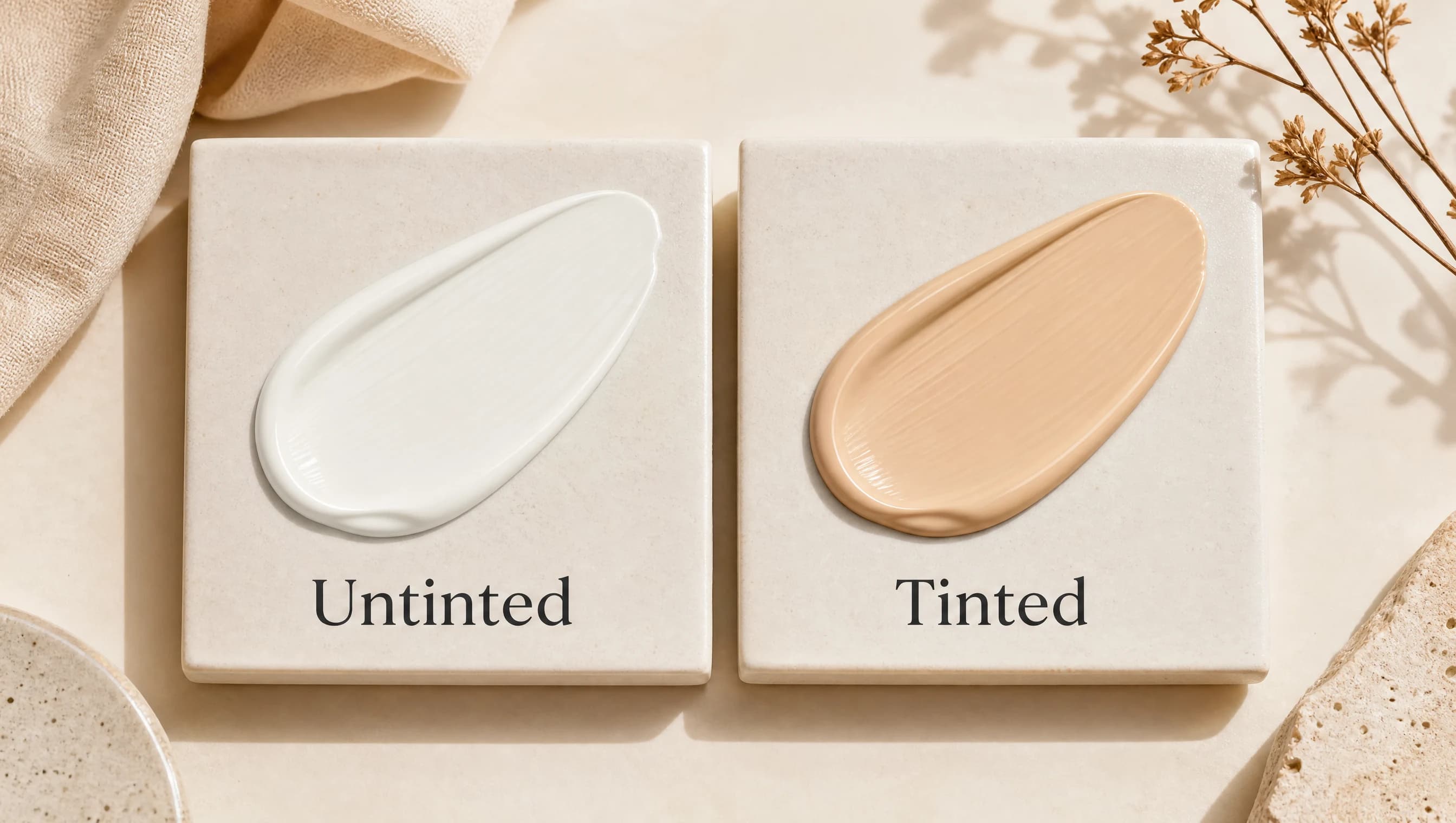
A tint can simplify a routine if you enjoy its appearance on its own. It does not have to provide foundation-level coverage. If you want more cosmetic coverage, assess how the rest of your makeup works over the sunscreen.
For example, someone might prefer a tinted sunscreen with a small amount of concealer afterward. Another person might prefer an untinted sunscreen under their existing foundation. Both are cosmetic strategies; neither lets you add the printed SPF numbers together.
Be realistic about later use. A heavily tinted product may be inconvenient to reapply in your circumstances. That practical limitation belongs in the choice, alongside how it looks in the morning.
Compare complete products
Do not choose solely from the word mineral, chemical, tinted or invisible. Check the actual protection claims, directions, shade range and intended use. A product sold under a similar name in another market may be different.
- If a tint fits at directed application, decide whether it replaces some cosmetic coverage and how you will reapply it.
- If the shade only looks right when applied very thinly, compare another shade or an untinted sunscreen instead of reducing sunscreen use.
- If you prefer foundation over untinted sunscreen, assess that pairing at proper sunscreen use and plan later maintenance.
A good choice should make the whole routine easier to carry out. If the cosmetic effect is unacceptable or the formula is uncomfortable, another finished product may be a better fit than trying to customize it in your palm.
Frequently asked questions
Is tinted sunscreen always better for dark spots?
The formulation and the reason for the pigmentation matter. Iron-oxide-containing tinted products may be relevant to visible light, but a tint alone is not a diagnosis or treatment plan.
Can I mix two shades to make a match?
Do not assume a custom mixture preserves the labeled protection. Look for a finished shade you can use as directed, or ask the manufacturer about its specific product.
Does untinted sunscreen leave a white cast by definition?
No. Untinted describes the absence of an added cosmetic tint, not a guaranteed finish. Evaluate the actual formula rather than the category name.
Related decisions
- How to avoid white cast from sunscreen — Separate cast, tint and texture before replacing the product.
- Is makeup with SPF enough — Distinguish a tinted sunscreen from makeup carrying an SPF label.
Sources
FDA: Sun safety and sunscreen precautions (fda.gov) — https://www.fda.gov/consumers/consumer-updates/tips-stay-safe-sun-sunscreen-sunglasses
AAD: How to apply sunscreen (aad.org) — https://www.aad.org/public/everyday-care/sun-protection/shade-clothing-sunscreen/how-to-apply-sunscreen
CeraVe US: Hydrating Mineral Face Sheer Tint SPF 30 (cerave.com) — https://www.cerave.com/sunscreen/face/hydrating-mineral-sunscreen-spf-30-face-sheer-tint-medium
Clear guidance, checked before publication.
Solvi articles are structured by our editorial team and reviewed for clarity, consistency, and responsible health language. We update pages when guidance or product information changes.