SPF 30 vs 50: choose protection you can actually use
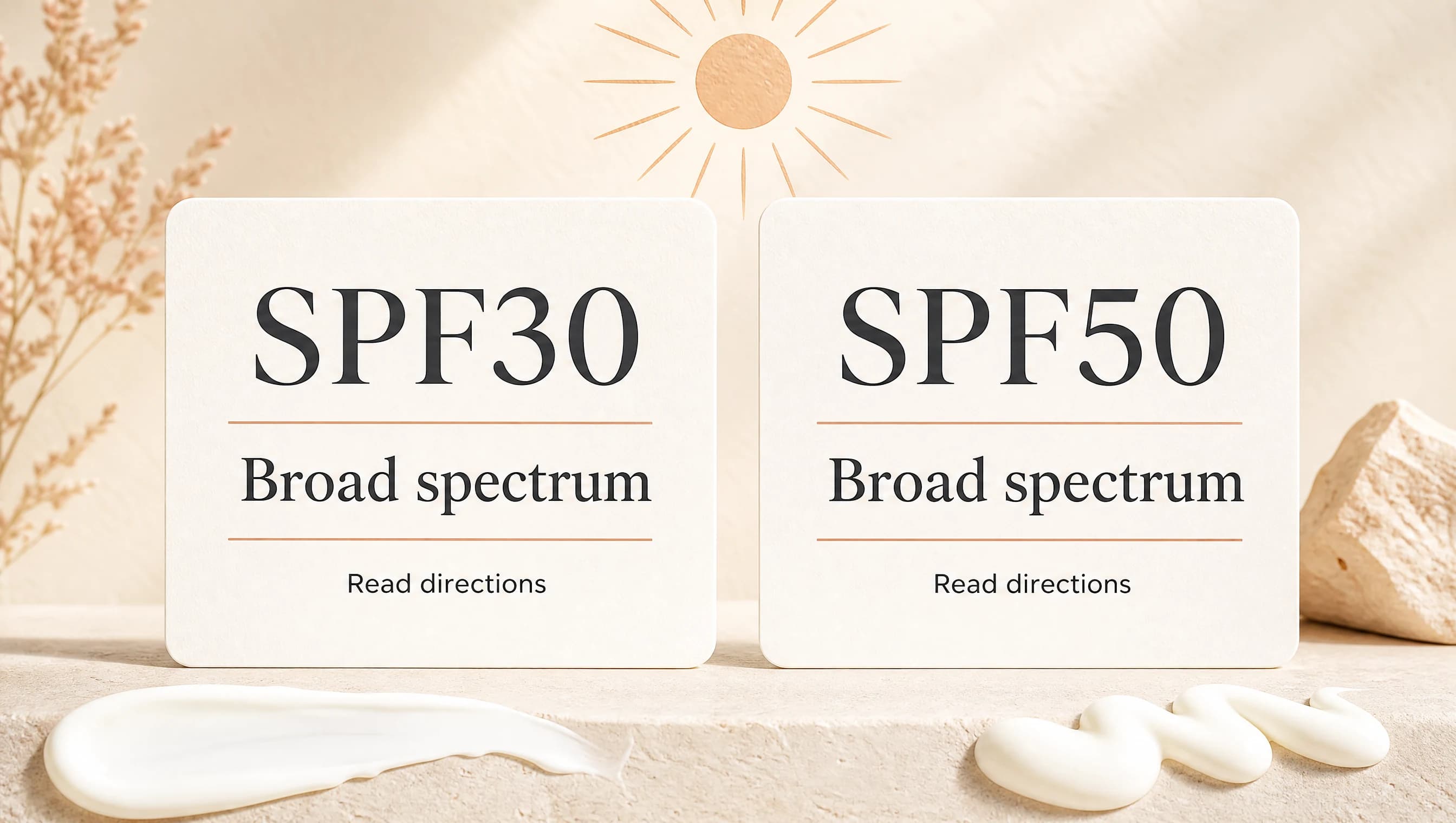
SPF 50 offers more tested protection against sunburn than SPF 30, but it does not buy a longer interval between applications. Choose between complete products: their coverage, directions, finish and suitability for your plans matter alongside the number. A wearable SPF 30 can be a sensible choice; reducing the amount of an uncomfortable SPF 50 is not the solution.
What changes when the number increases
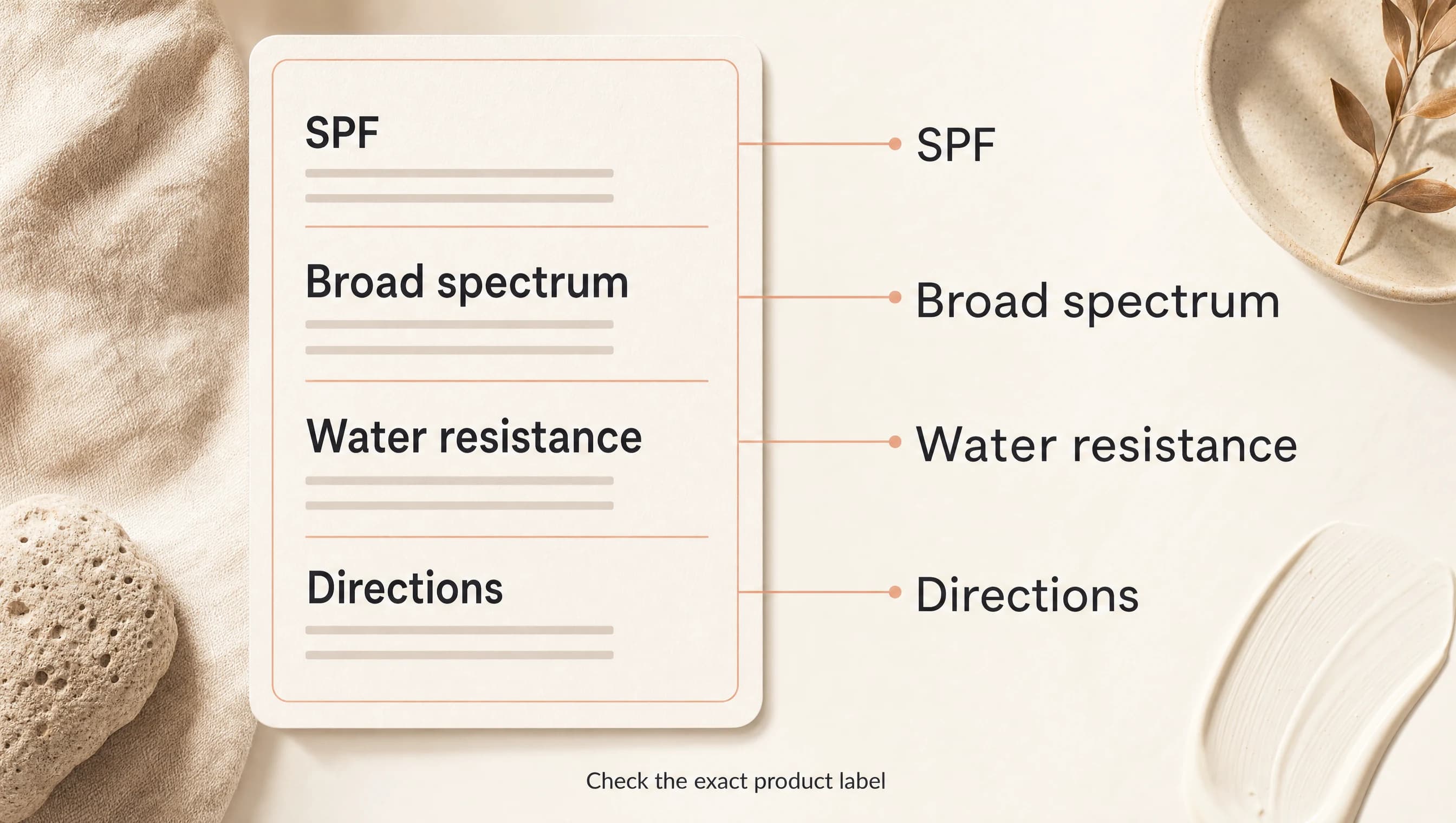
SPF mainly describes UVB-related sunburn protection under standardized testing. It does not provide a separate numerical UVA rating or tell you how many hours you can safely stay outside. Broad-spectrum labeling is the additional check for UVA and UVB coverage, according to FDA consumer guidance.
That makes comparing two numbers a two-stage decision. First check that each product is appropriate for the situation. Then compare whether you can apply and maintain the chosen formula as directed. A high number cannot rescue a bottle that stays in your bag.
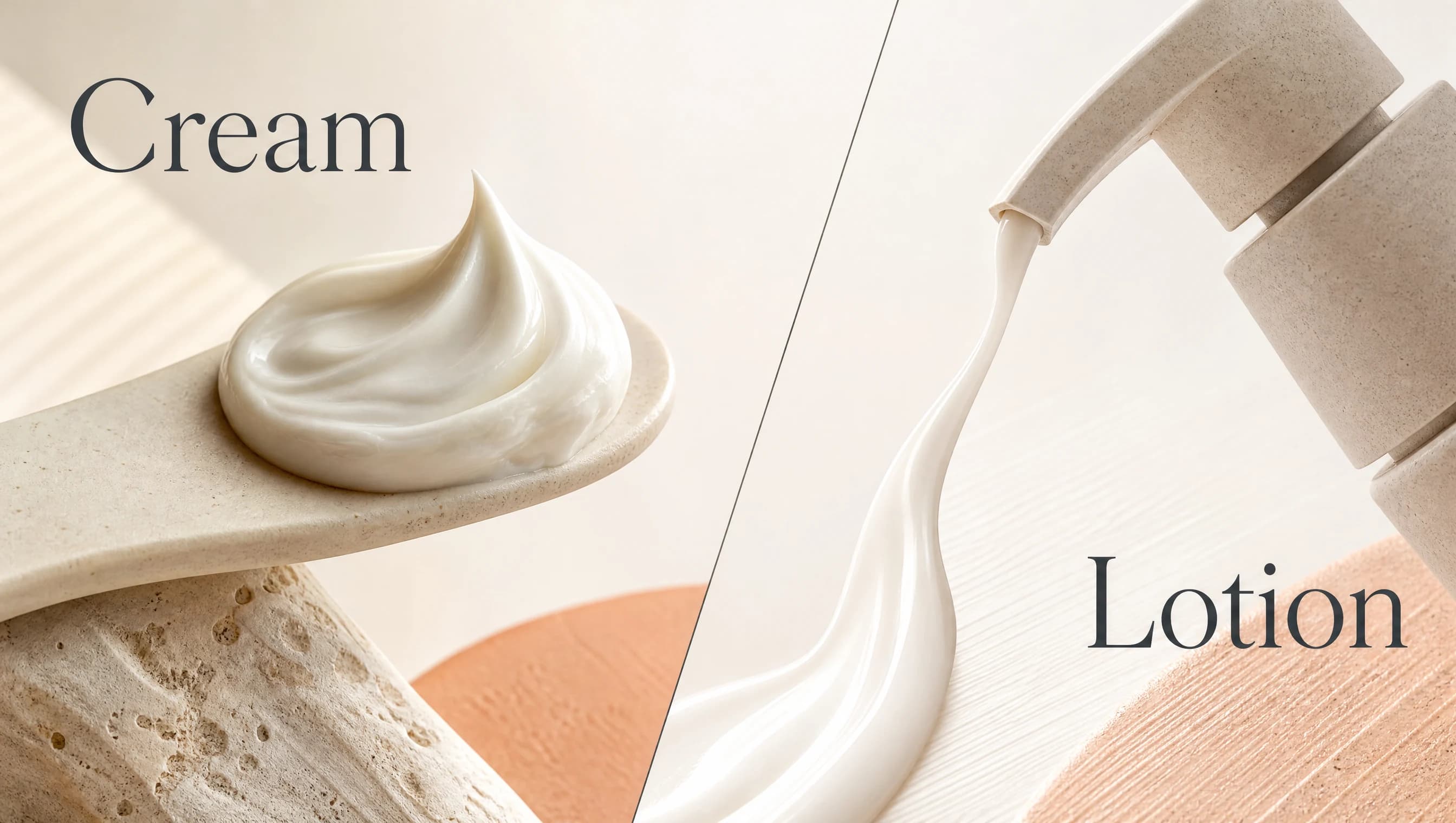
Consider a commuter comparing a lotion they enjoy with one that pills under makeup. The useful next experiment is the actual morning routine, not deciding that all SPF 50 products feel the same. Another SPF 50 texture may solve the problem without changing the protection goal.
Compare two actual US labels
CeraVe's US AM Facial Moisturizing Lotion pages offer a straightforward example. One identifies SPF 30 and the other SPF 50. Both identify broad-spectrum protection and direct reapplication at least every two hours. Both point users toward a water-resistant sunscreen for swimming or sweating.
| What changes or stays the same? | The named CeraVe AM comparison |
|---|---|
| Printed SPF | 30 on one formula, 50 on the other |
| Broad-spectrum claim | Stated for both reviewed products |
| Maintenance | A higher SPF number does not grant a longer reapplication interval |
| Swimming or sweating choice | Check for a suitable water-resistant product rather than deciding from SPF alone |
These are manufacturer label comparisons, not a wear test or proof that one feels better on your skin. Check the package you buy: the names and formulations available in another country can differ.
Choose for the activity, then the finish
For an ordinary morning, compare comfort without changing the required amount. For a swimming trip, start by checking water resistance. For a long outdoor day, plan access to the product rather than assuming the morning application completes the job.
- Put both labels beside your actual schedule.
- Eliminate any option that lacks the coverage or water-resistance claim you need.
- Choose a texture you can apply adequately.
- Keep the bottle accessible for its required reapplication.
Imagine packing for a walk followed by a swim. Selecting the higher-numbered AM lotion still leaves the swimming requirement unresolved. Selecting an appropriately labeled water-resistant sunscreen answers that separate question. The useful distinction is the intended activity, not whether the bottle happens to say face moisturizer.
Make the morning choice sustainable
If a formula stings, feels unpleasant or disrupts makeup, record the specific difficulty. Was it the product alone or the full combination? Did it work on a simpler morning? This gives you a more useful replacement brief than deciding that every higher-SPF product is unsuitable.
Keep your comparison modest: comfort, finish and ease of following directions are things you can observe. A home comparison cannot measure the protection remaining on your skin. Do not use the absence of redness as proof that an application was sufficient.
Frequently asked questions
Does SPF 50 let me stay outside longer without reapplying?
No. AAD guidance explicitly separates the SPF number from the reapplication interval. Plan the same attention to maintenance rather than treating the larger number as extra time.
Should I throw away a comfortable SPF 30?
Not solely because it is SPF 30. Check its complete label, condition and fit for your activity. If it meets your needs and you use it appropriately, the comparison does not automatically require another purchase.
Is SPF 50 twice as protective as SPF 30?
That shorthand is misleading. The labels represent standardized sunburn testing, not a simple promise about your real-world exposure. Compare the number together with coverage and directions instead of calculating personal safe time.
Related decisions
- Mineral vs. Chemical Sunscreen for Sensitive Skin: The Formula-First Guide
- The best facial sunscreen for mature skin: a hydrating, low-settle guide
- Best Sunscreen for Combination Skin: Find the Finish That Works on Every Zone
- Do you need sunscreen indoors — Apply the SPF choice to the separate decision about indoor exposure.
- How much sunscreen to use on face — Understand application amount before assuming the higher SPF number compensates for using less.
Sources
FDA: Sunscreen consumer guidance (fda.gov) — https://www.fda.gov/drugs/understanding-over-counter-medicines/sunscreen-how-help-protect-your-skin-sun
AAD: Sunscreen FAQs (aad.org) — https://www.aad.org/media/stats-sunscreen
CeraVe: US AM Facial Moisturizing Lotion SPF 30 (cerave.com) — https://www.cerave.com/skincare/moisturizers/am-facial-moisturizing-lotion-with-sunscreen
CeraVe: US AM Facial Moisturizing Lotion SPF 50 (cerave.com) — https://www.cerave.com/skincare/moisturizers/facial-moisturizers/am-facial-moisturizing-lotion-spf-50
Clear guidance, checked before publication.
Solvi articles are structured by our editorial team and reviewed for clarity, consistency, and responsible health language. We update pages when guidance or product information changes.