Why Is Skin Still Dry After Moisturizing? A Routine Audit
Skin can still feel dry after moisturizing when the product or routine does not meet its needs, or when a skin condition needs assessment. The useful next step is a short routine audit, not automatically a stronger serum or a thicker layer of every product you own.
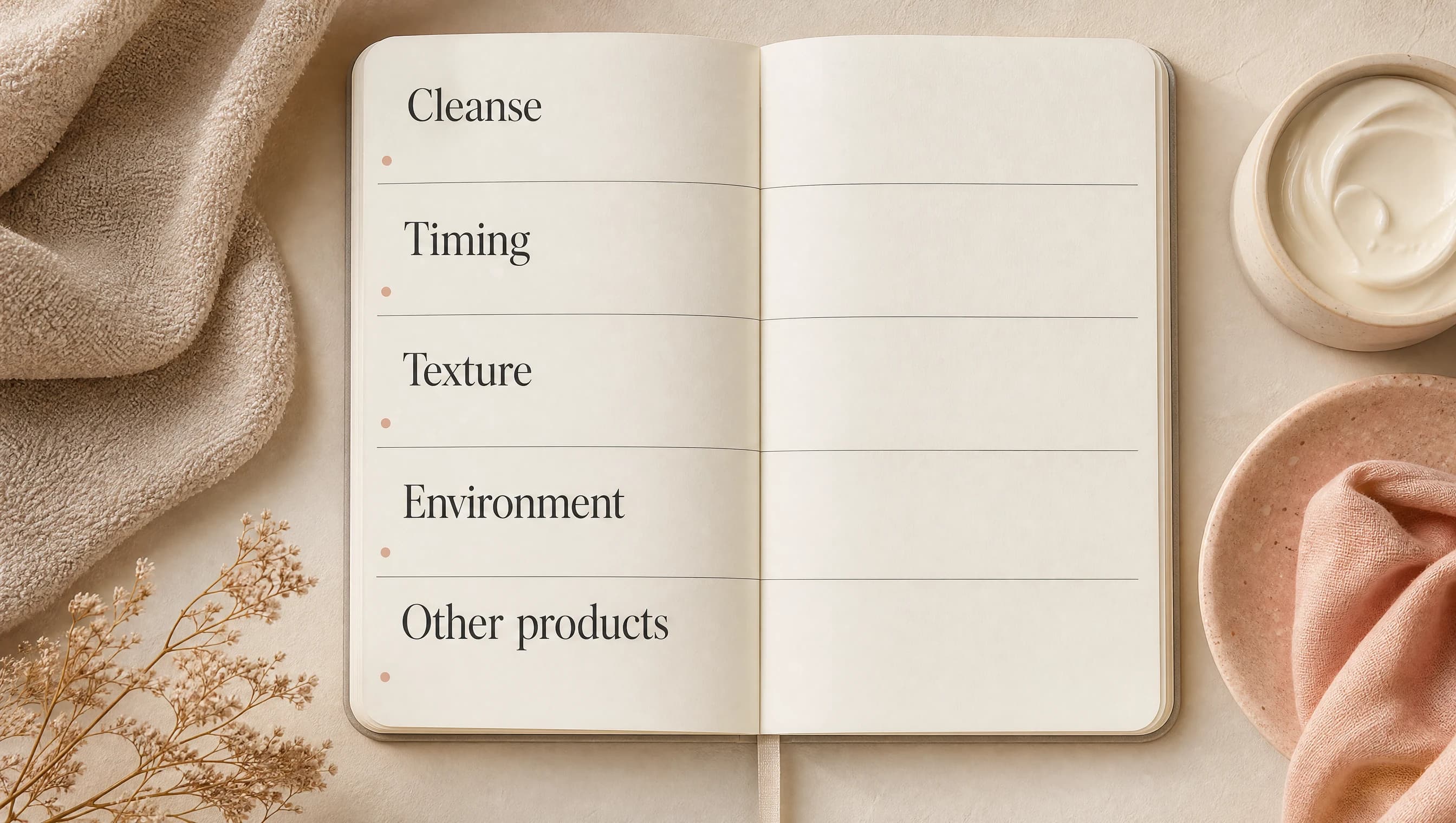
Look at cleansing, application timing, moisturizer format, environment and recent additions. Record when the discomfort occurs and what it feels like. Persistent dryness, burning or worsening symptoms deserve professional advice rather than a fixed home-repair deadline.
Describe the problem before changing products
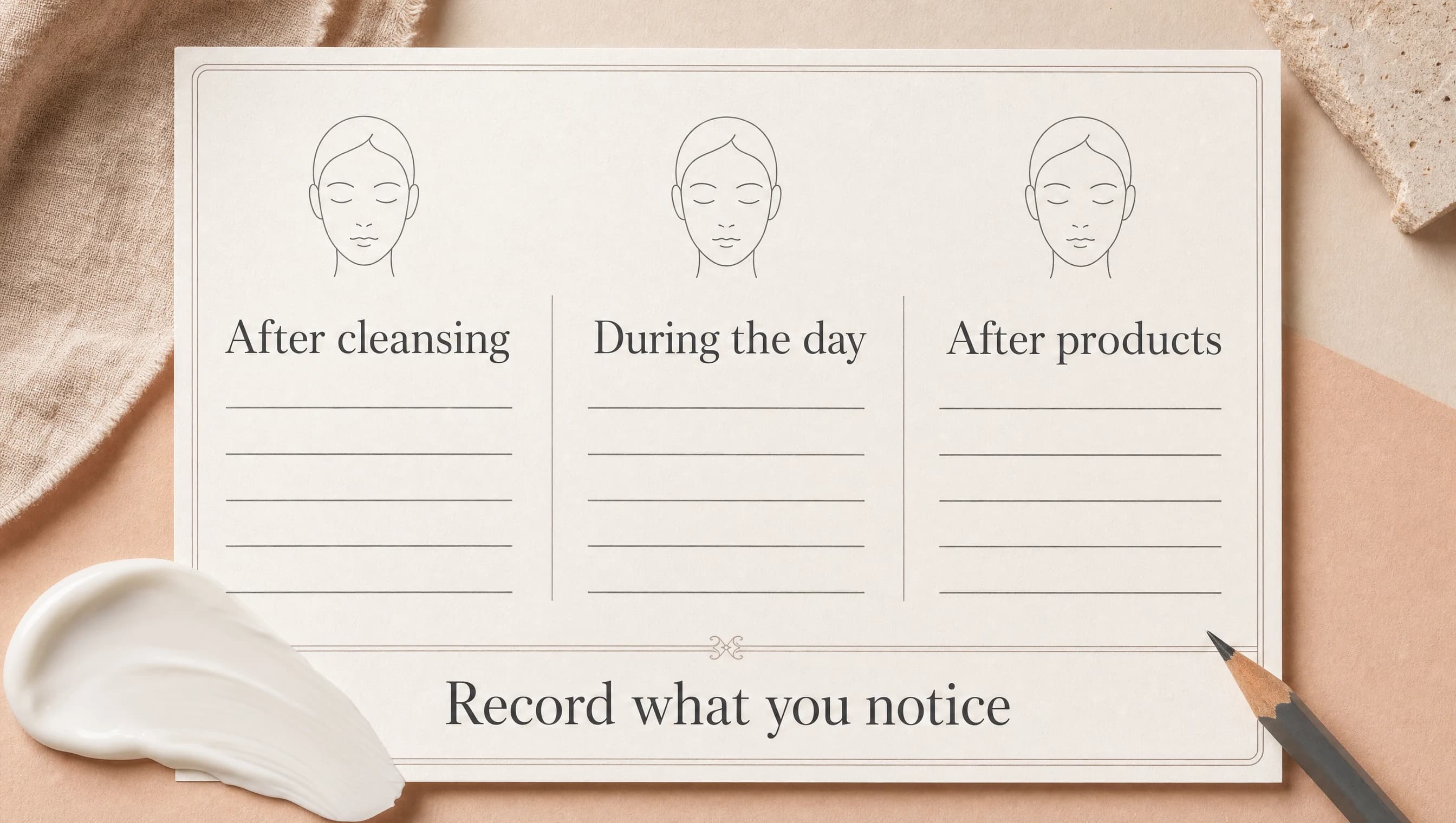
“Dry” can mean tightness, roughness, visible flakes or an uncomfortable feeling after a particular step. Those descriptions help you explain the issue without deciding on a diagnosis yourself.
| Observation | What to record | Useful next question |
|---|---|---|
| Tight after washing | Cleanser, water temperature and frequency | Is cleansing contributing to discomfort? |
| Comfortable briefly, then dry-feeling | Moisturizer name and application timing | Does the format suit the routine? |
| Stinging when products touch skin | Products involved and when it began | Should I stop experimenting and seek advice? |
| New flakes after several additions | Exact changes and dates | Which optional changes can be paused? |
| Persistent or worsening problem | Duration, affected areas and symptoms | Is professional assessment needed? |
Our dry versus dehydrated skin guide explains why these words should not become diagnoses based on appearance alone.
Review washing and moisturizer timing
The AAD's dry-skin guidance recommends gentle washing and moisturizing while skin is still damp after bathing. These are practical routine points to check before assuming you need a new ingredient.
A useful entry could read: “I wash with hot water; my face feels tight afterward; I put moisturizer on later.” Those are observable steps to review against the gentle-cleansing and moisturizing guidance, not proof that the moisturizer has failed. Describe the method and timing before replacing several products together.
Do not turn damp-skin advice into a reason to disregard a treatment that has different instructions. Keep prescribed directions intact and ask for help when they are difficult to reconcile with the rest of your routine. Our moisturizer guide for dehydrated-feeling skin can help you compare ordinary moisturizing options in that context.
Check the format and the complete formula
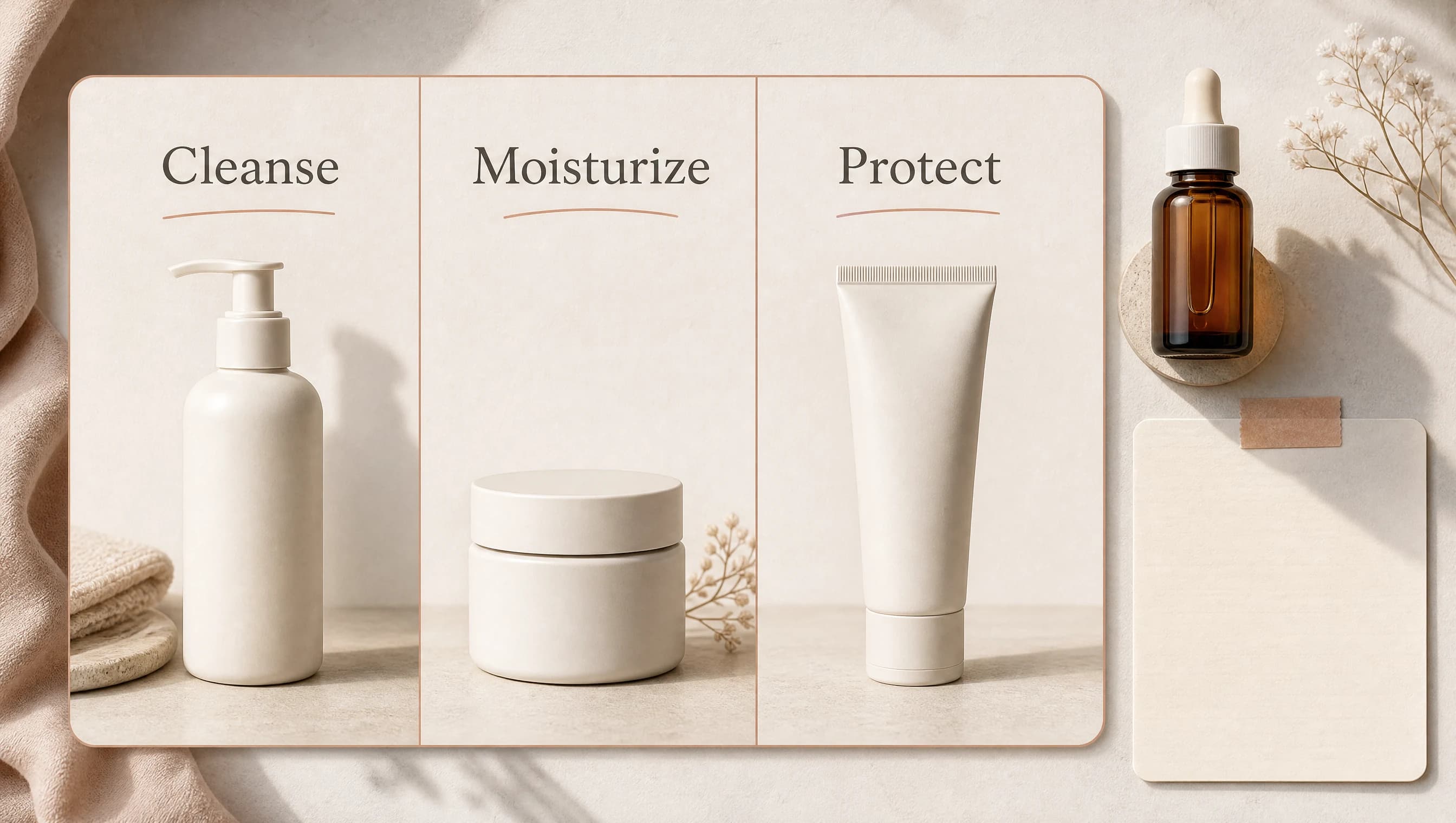
A light gel, lotion and richer cream can feel different in use. The AAD's moisturizer-selection guide discusses choosing formats according to skin needs. The answer is not simply to buy the product with the longest ingredient story.
Read the complete product name and intended use. A treatment lotion that exfoliates is a different decision from a plain moisturizer. Similarly, a serum may not replace the whole role of a moisturizer just because both mention hydration.
If you are comparing ingredient functions, read ceramides versus hyaluronic acid. For visibly flaky areas, our dry, flaky skin moisturizer guide keeps the focus on finished-product choices rather than counting highlighted ingredients.
Look at the routine around the moisturizer
Recent changes matter. A new cleanser, exfoliant, retinoid, fragrance-containing product or additional washing step may be relevant to the timing of discomfort. The AAD notes that some products can aggravate excessively dry skin; persistent problems should not be addressed by continuing to add layers over them.
Also note practical environmental changes, such as more time in heated rooms or a change in weather. These observations are context, not proof of a single cause. Avoid changing every part of the routine at once if you are trying to understand an ordinary product preference.
Our skin-barrier concern checklist can help you collect this history. Bring the product names and dates to an appointment if the problem persists. That is more informative than arriving with a long list of ingredients you suspect based only on online comments.
Set a stopping point for self-experimentation
The AAD recommends seeing a dermatologist when dryness continues despite appropriate care, and reporting burning, stinging or irritation from products. Painful, cracked or bleeding skin also warrants assessment rather than another shopping experiment.
You do not need to wait for a promised two-week repair window to expire before asking for help. Nor should you assume that persistent symptoms prove a particular disease. A professional can assess the pattern and recommend care appropriate to the cause.
Frequently asked questions
Should I immediately buy a thicker cream?
Check the whole routine first. Format can matter, but cleansing, other products and persistent symptoms may be equally relevant.
Does stinging mean the moisturizer is working?
Do not use that assumption to continue an irritating product. Stop and seek advice when irritation persists or is concerning.
How long should I wait before getting help?
There is no universal waiting period here. Persistent, worsening, painful, cracked or bleeding skin is a reason to seek assessment.
Sources
American Academy of Dermatology: Dry skin relief (aad.org) — https://www.aad.org/public/everyday-care/skin-care-basics/dry/dermatologists-tips-relieve-dry-skin
American Academy of Dermatology: Choosing moisturizer (aad.org) — https://www.aad.org/public/everyday-care/skin-care-basics/dry/pick-moisturizer
American Academy of Dermatology: Skin care on a budget (aad.org) — https://www.aad.org/public/everyday-care/skin-care-basics/care/skin-care-budget
Clear guidance, checked before publication.
Solvi articles are structured by our editorial team and reviewed for clarity, consistency, and responsible health language. We update pages when guidance or product information changes.