Ceramides vs Hyaluronic Acid: Do You Need to Choose?
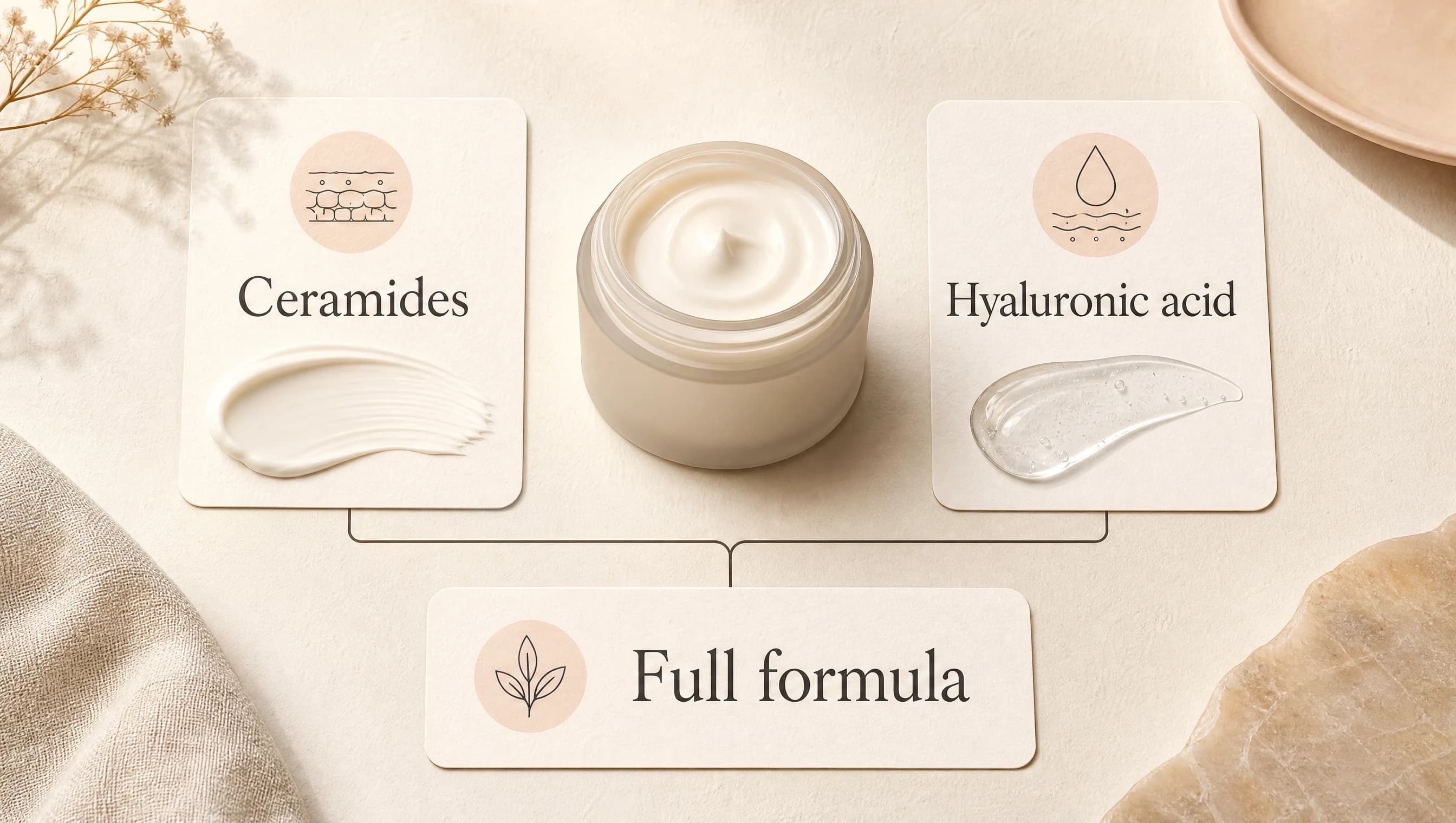
Ceramides and hyaluronic acid serve different, complementary moisturizing roles, so you usually do not need to choose one and exclude the other. Ceramides are associated with the skin's lipid structure; hyaluronic acid is used as a water-binding humectant. A finished moisturizer can contain both.
The more useful buying question is whether your current formula already covers the role you are trying to add.
Compare roles rather than declaring a winner
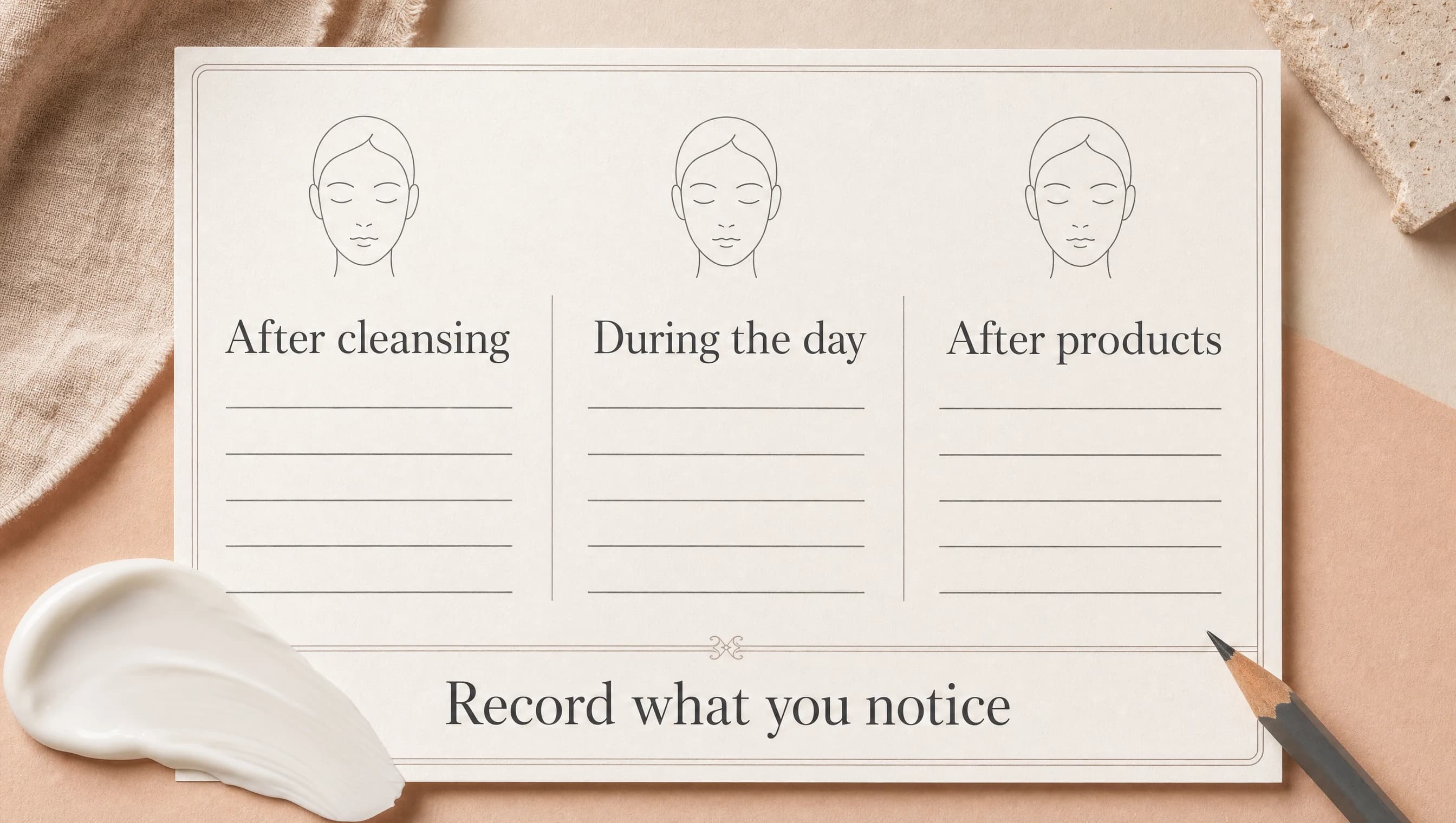
| Question | Ceramides | Hyaluronic acid |
|---|---|---|
| Broad role | Lipid-related support in moisturizing formulas | Humectant role, helping hold water |
| Label examples | Ceramide NP, AP or EOP | Hyaluronic acid or sodium hyaluronate |
| What the name cannot establish | A complete formula's performance | A complete formula's performance |
| Do you need a separate product? | Not necessarily | Not necessarily |
DermNet's barrier-cream guidance distinguishes humectants, including hyaluronic acid, from lipid ingredients such as ceramides. That provides a way to understand labels. It does not create a universal hierarchy or show that one bottle will work better for you.
Two complete moisturizers contain both
The reviewed Vanicream Daily Facial Moisturizer list contains hyaluronic acid and several ceramides. The reviewed CeraVe Moisturizing Cream list contains ceramides and sodium hyaluronate.
Those examples demonstrate why a ceramides-versus-HA choice can be a false shopping split. A single formula can combine them alongside other ingredients. It is not necessary to buy a ceramide cream and a separate HA serum simply to ensure both names appear somewhere in your routine.
The two example products are not interchangeable and are not ranked here. Their whole formulas, directions and formats differ. For a specific product choice involving Vanicream, read Vanicream Cream versus Daily Facial Moisturizer instead of deciding from one highlighted ingredient.
Give an extra serum a specific job
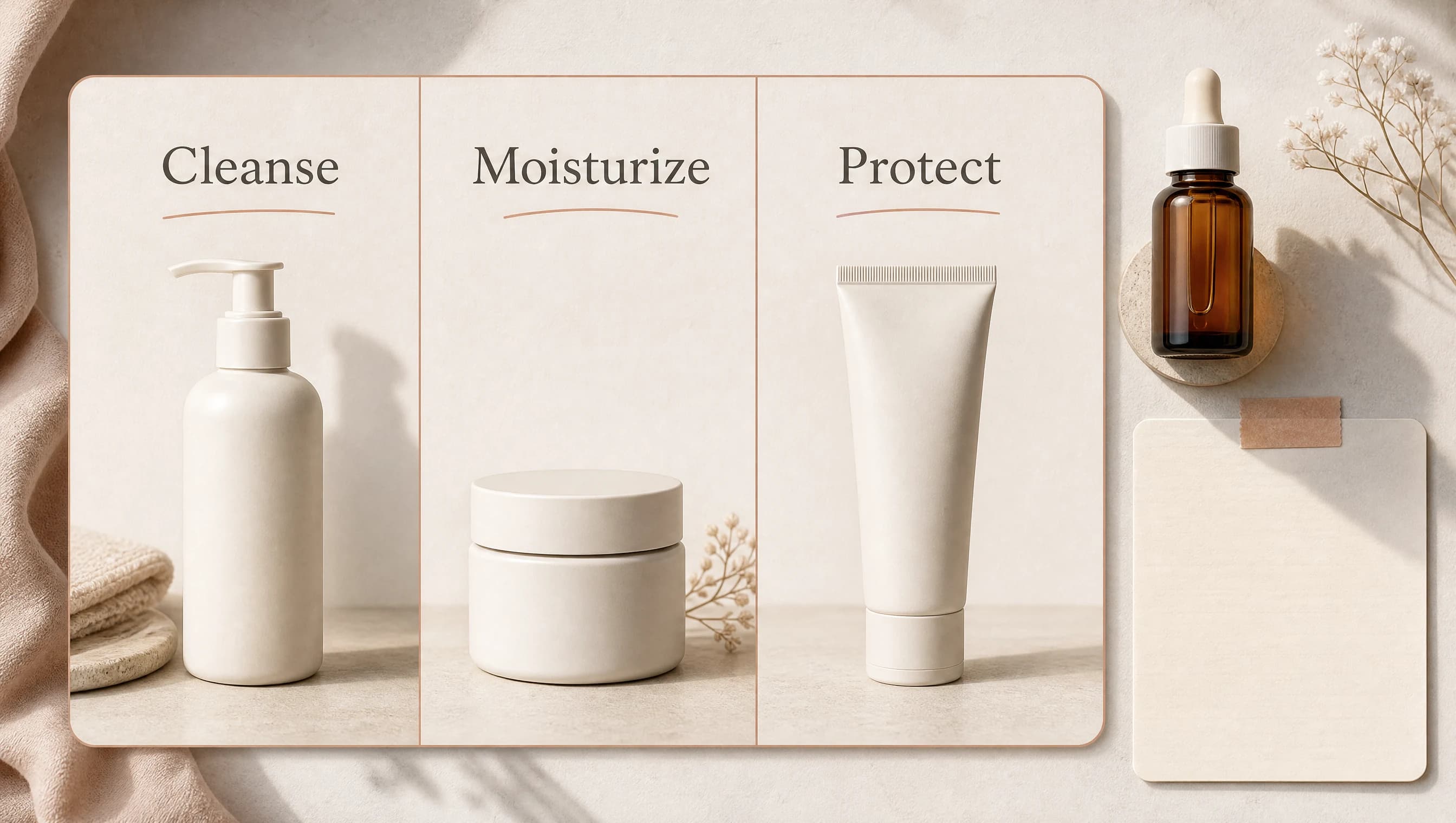
A completed example: “My cream already lists ceramides and sodium hyaluronate, and it feels comfortable. I was considering a separate HA serum only because a routine diagram showed one.” The ingredients already overlap with that proposed step. Keep the cream unless the serum has a separate purpose you can describe; a second ingredient name alone does not create one.
Our guide to moisturizing dehydrated-feeling skin helps when the question involves comfort. If the issue is ongoing stinging or irritation, our skin-barrier concern checklist can organize observations, but neither an ingredient comparison nor a quiz diagnoses the cause.
Read the ingredient list without guessing percentages
Look for exact ingredient names, then check whether the manufacturer supplies additional formulation information. Do not convert position on a list into an invented percentage or assume that more named ceramides necessarily means a better moisturizer.
Use this small worksheet:
- Write the complete name of your current moisturizer.
- Mark any listed ceramides and hyaluronic-acid-related ingredients.
- Note other products that repeat the same intended moisturizing role.
- Describe what remains unsatisfactory about the routine.
- Consider a change only if it addresses that description.
For another comparison within the humectant category, see glycerin versus hyaluronic acid. A different humectant name is not automatically a different need, and an ingredient's popularity is not evidence that your routine requires a separate bottle of it.
Keep symptoms and shopping questions separate
Persistent dryness or discomfort may not be resolved by selecting the ingredient with the more appealing explanation. Review cleansing, product instructions and the overall routine, and seek professional advice when symptoms persist or worsen.
For visibly flaky areas, our dry, flaky skin moisturizer guide is a more practical next page than a winner-takes-all ingredient ranking. The goal is to identify a useful product role and format, not assign a diagnosis from the front label.
Frequently asked questions
Can they appear in the same moisturizer?
Yes. Both reviewed moisturizer examples contain ceramides and a hyaluronic-acid-related ingredient. Check your own formula before adding a separate step.
Does my cream need several ceramide names?
The number of names alone cannot establish performance. Evaluate the whole product rather than using ingredient counting as a quality score.
Is an HA serum compulsory for dry-feeling skin?
No. First check the moisturizer you already use and the problem you want to solve. A separate serum is a product decision, not a required response to one symptom.
Sources
DermNet: Barrier cream ingredient roles (dermnetnz.org) — https://dermnetnz.org/topics/barrier-cream
Vanicream: Daily Facial Moisturizer (vanicream.com) — https://www.vanicream.com/product/vanicream-daily-facial-moisturizer
CeraVe: Moisturizing Cream (cerave.com) — https://www.cerave.com/skincare/moisturizers/moisturizing-cream/
Clear guidance, checked before publication.
Solvi articles are structured by our editorial team and reviewed for clarity, consistency, and responsible health language. We update pages when guidance or product information changes.