Dry vs Dehydrated Skin: Use Observations, Not a Pinch Test
In skincare language, dry skin usually describes a tendency toward insufficient oil, while dehydrated skin describes reduced water in the skin. The signs can overlap. An oily-looking face can still feel tight or uncomfortable, and a single photograph cannot reliably sort every case into one category.
Use the distinction to ask better questions about your routine, not to diagnose yourself with a pinch test. What changed, where the discomfort appears and what happens after washing are more useful starting observations than assigning a permanent label immediately.
The distinction and its limits
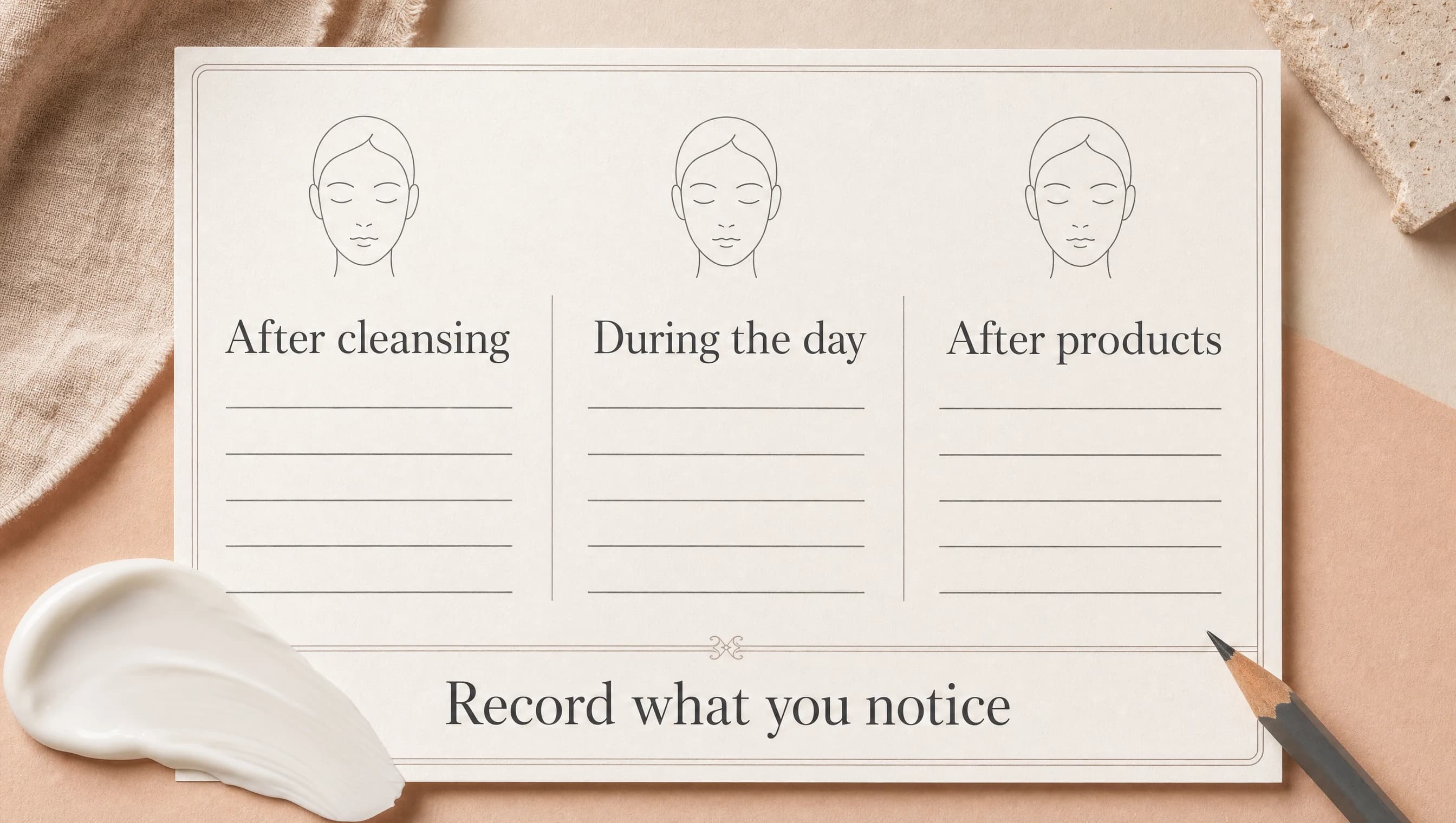
CeraVe's educational guide separates dry skin as a skin type from dehydration as a temporary state. This is a helpful cosmetic explanation, but real symptoms do not always divide neatly. Flaking, tightness or irritation may need professional assessment rather than another online category.
| What you notice | Useful question | What it does not prove |
|---|---|---|
| Tightness mainly after washing | Did cleansing or water temperature change? | A definite diagnosis of dehydrated skin |
| Persistent dryness in several areas | Does your current moisturizer meet your needs? | That a serum alone is the missing step |
| Shine plus uncomfortable cheeks | Which areas feel different, and when? | That the whole face needs stronger cleansing |
| Burning with several products | Is there an unresolved reaction or condition? | That you should exfoliate away the roughness |
Treat the table as an observation worksheet. It is deliberately designed to preserve uncertainty where a home observation cannot establish a cause.
Record the pattern before replacing everything
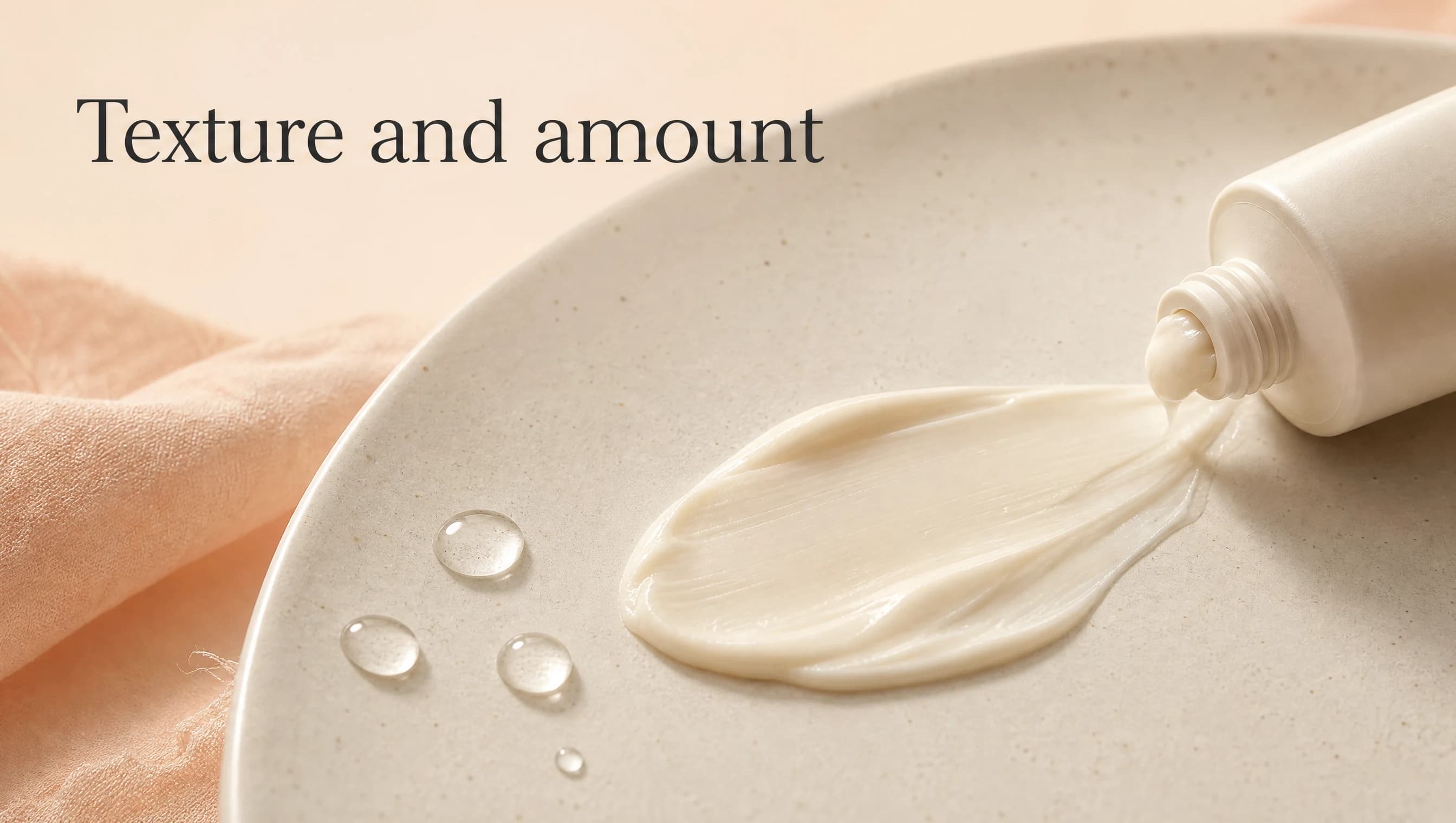
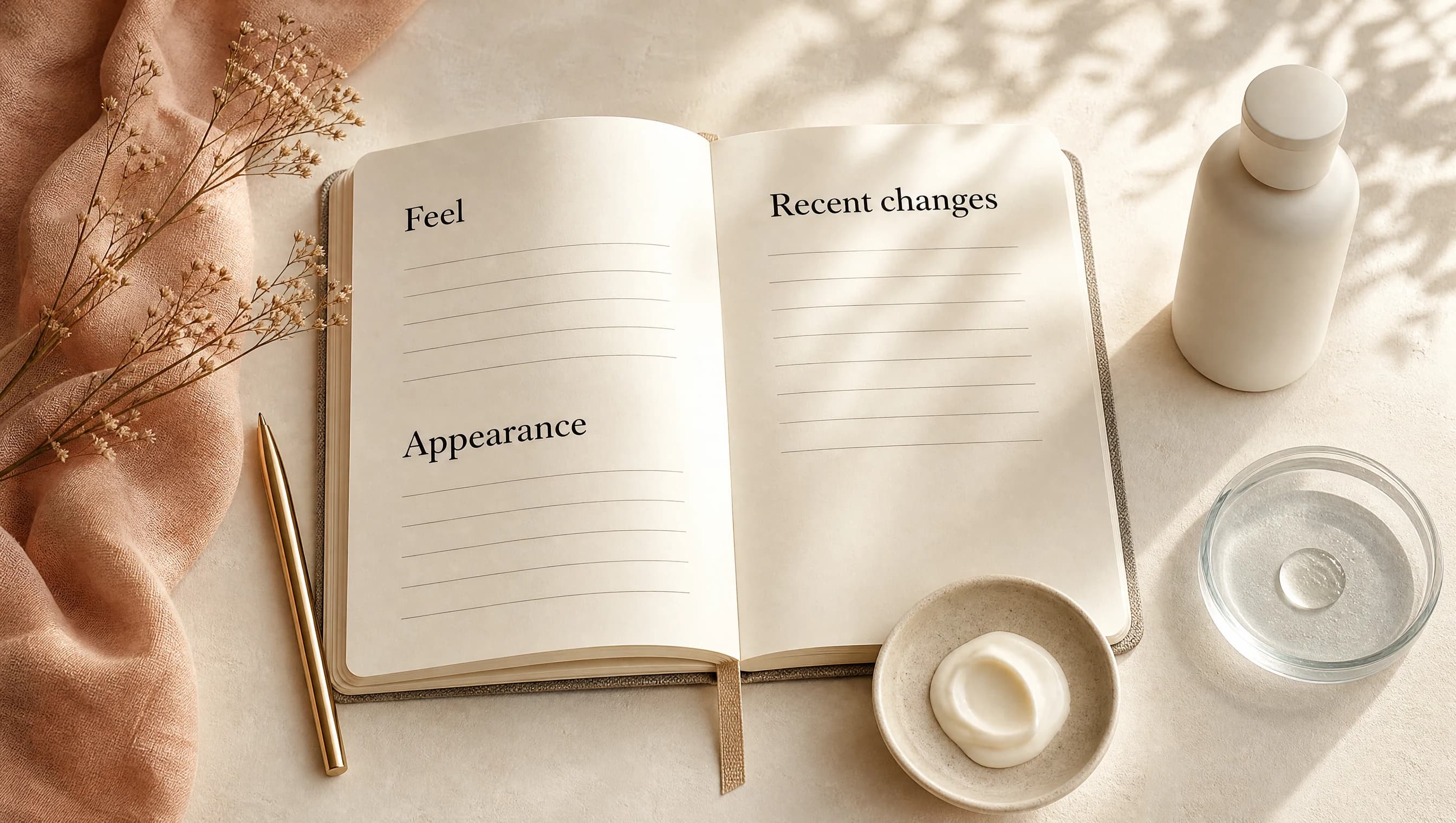
| Entry | Concrete observation | Next useful question |
|---|---|---|
| After washing | Cheeks feel tight after a newly introduced cleanser | Did method, frequency or formula change? |
| Later in the day | Forehead looks shiny while cheeks still feel tight | Are these different areas asking for different format preferences? |
| Before another purchase | Several new hydrating products were added together | Which changes can be described clearly before adding more? |
“Cheeks felt tight after the new wash; forehead looked shiny by lunch” is more informative than “my barrier is ruined.” The first statement preserves timing and location. The second introduces a conclusion you may not have evidence for.
Also note relevant routine changes: a different climate, more frequent washing, a newly introduced exfoliant, or a product you used more often than its directions suggested. These observations can help you decide what to review and give a clinician a clearer history if needed.
Review cleansing and moisturizing together
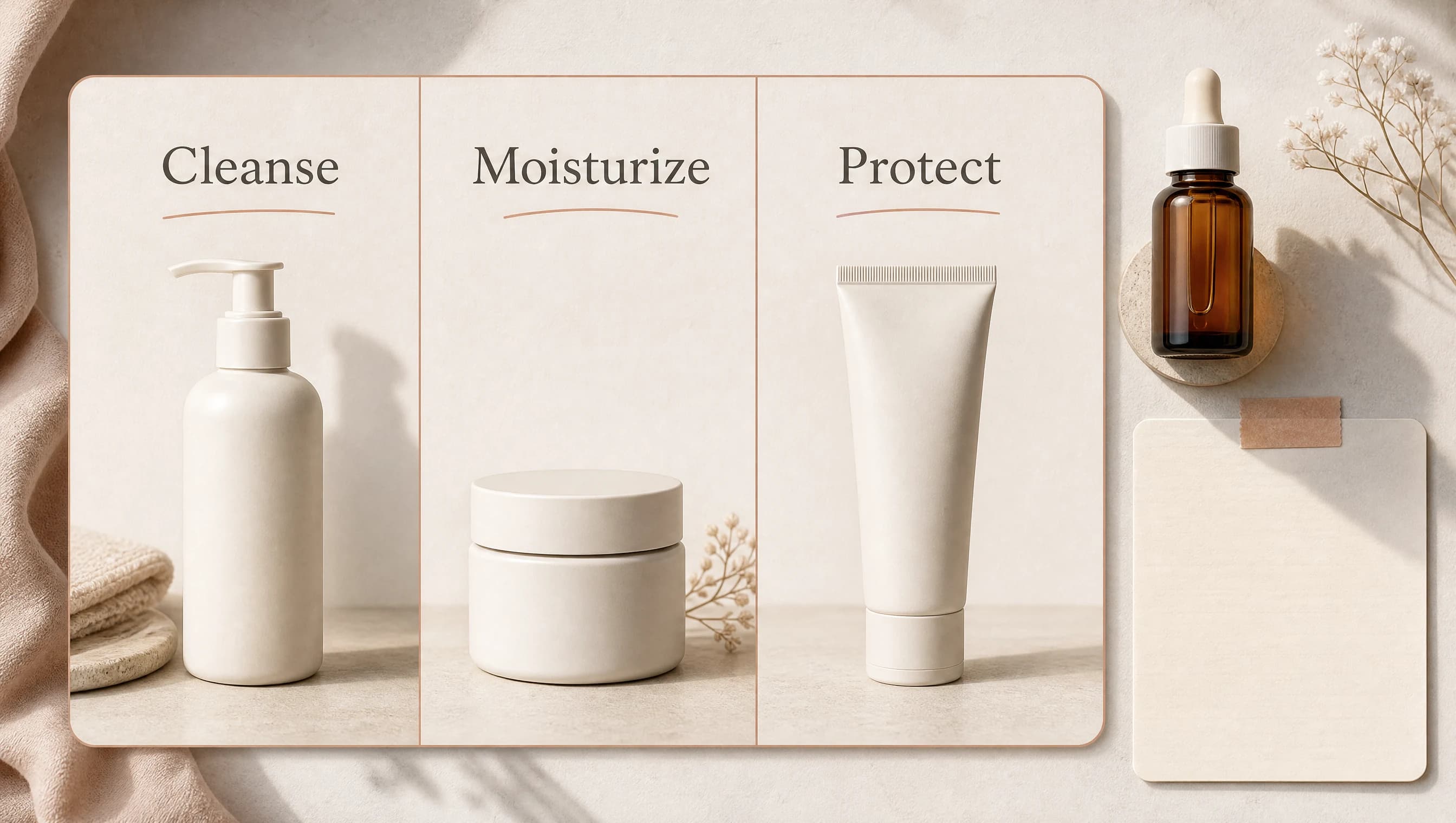
Avoid treating a hydrating serum as the automatic answer to every tight feeling. A routine may need a more suitable cleanser, a different moisturizer, fewer optional steps, or clinical advice. Buying several new products together makes those possibilities harder to separate.
The AAD's dry-skin guidance favors creams or ointments over lotions for more effective moisture support in dry skin. It also advises gentle handling and short, warm rather than hot baths or showers. Apply the relevant principle to your routine without assuming the richest possible product is best for every area of your face.
Our dehydrated-skin moisturizer guide and dry, flaky-skin moisturizer guide address different shopping priorities. If your moisturizer seems insufficient, read why skin can still feel dry after moisturizing before adding a second hydrating product.
Understand product roles without multiplying steps
An ingredient list may include water-binding ingredients, softening ingredients and ingredients that help reduce water loss in the same moisturizer. You do not need one bottle for every role simply because a diagram lists them separately.
The distinction is explained in humectants, emollients and occlusives. Use it to understand a formula's purpose, not to calculate your skin's water or oil levels from its appearance.
If symptoms include significant pain, cracks, bleeding, a spreading rash or persistent discomfort, seek medical advice. Our skin-barrier observation guide can help organize what you have noticed, but neither it nor a quiz can identify every cause of dryness.
Bring the resulting priorities back to the observations you have recorded.
Frequently asked questions
Can oily skin be dehydrated?
Yes, the cosmetic distinction allows for oiliness and reduced skin hydration at the same time. Shine alone cannot establish that your skin has all the moisture support it needs.
Does a skin-pinch test identify my facial skin type?
Do not rely on it for this shopping decision. A simple pinch does not establish the cause of facial tightness, flaking or irritation, and it cannot replace clinical assessment when symptoms warrant it.
Should I buy a hyaluronic-acid serum first?
Only if an extra hydrating step has a clear purpose. Review cleansing, moisturizer and recent changes first; a separate serum is one option, not a requirement for every uncomfortable face.
Sources
CeraVe: Dry or dehydrated skin (cerave.com) — https://www.cerave.com/skin-smarts/skincare-tips-advice/dry-or-dehydrated-skin-tips
AAD: Dermatologists tips for relieving dry skin (aad.org) — https://www.aad.org/public/everyday-care/skin-care-basics/dry/dermatologists-tips-relieve-dry-skin/
AAD: How to pick the right moisturizer (aad.org) — https://www.aad.org/public/everyday-care/skin-care-basics/dry/pick-moisturizer
Clear guidance, checked before publication.
Solvi articles are structured by our editorial team and reviewed for clarity, consistency, and responsible health language. We update pages when guidance or product information changes.