Azelaic Acid vs Niacinamide: Pick a Clear Cosmetic Role
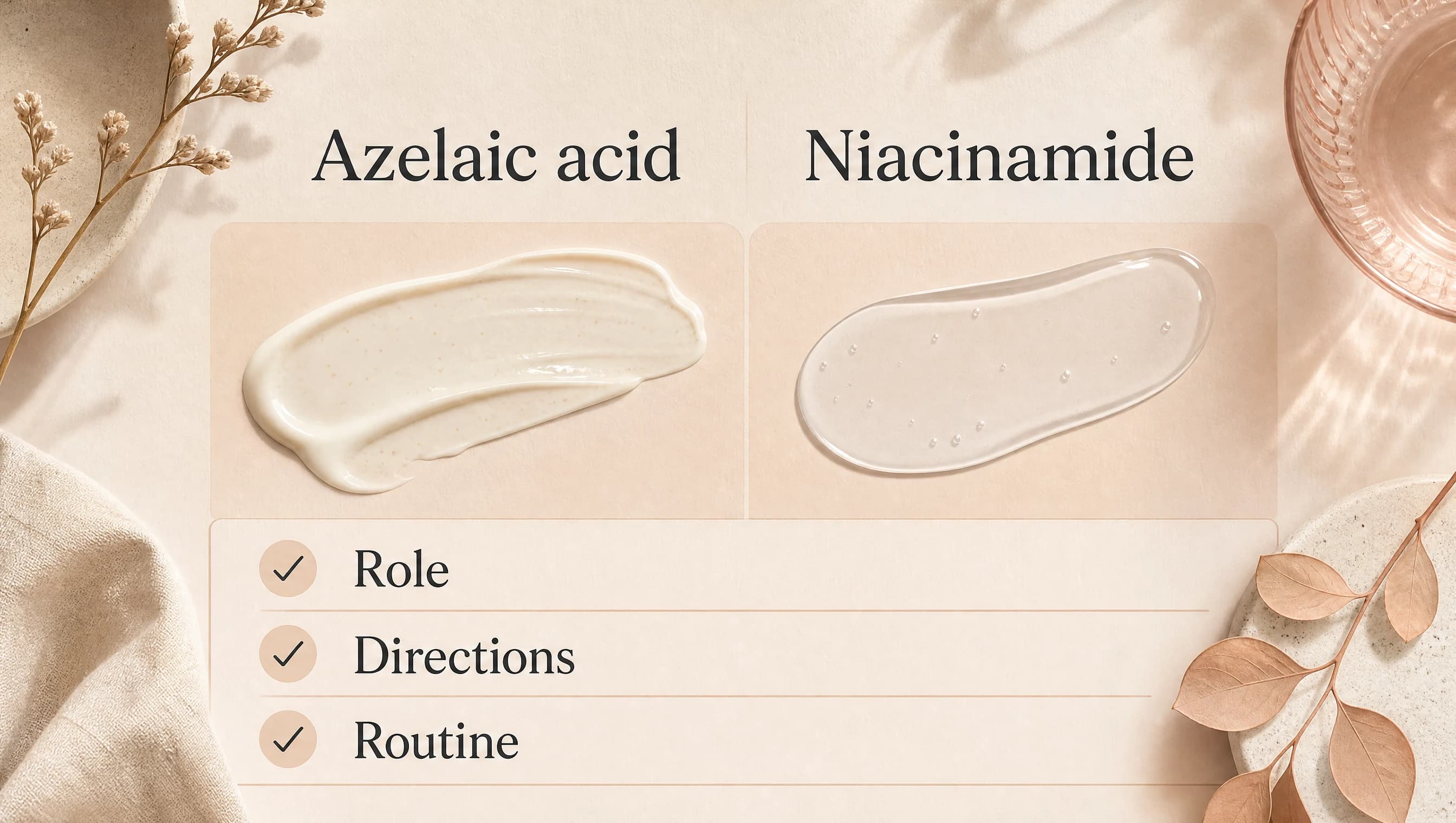
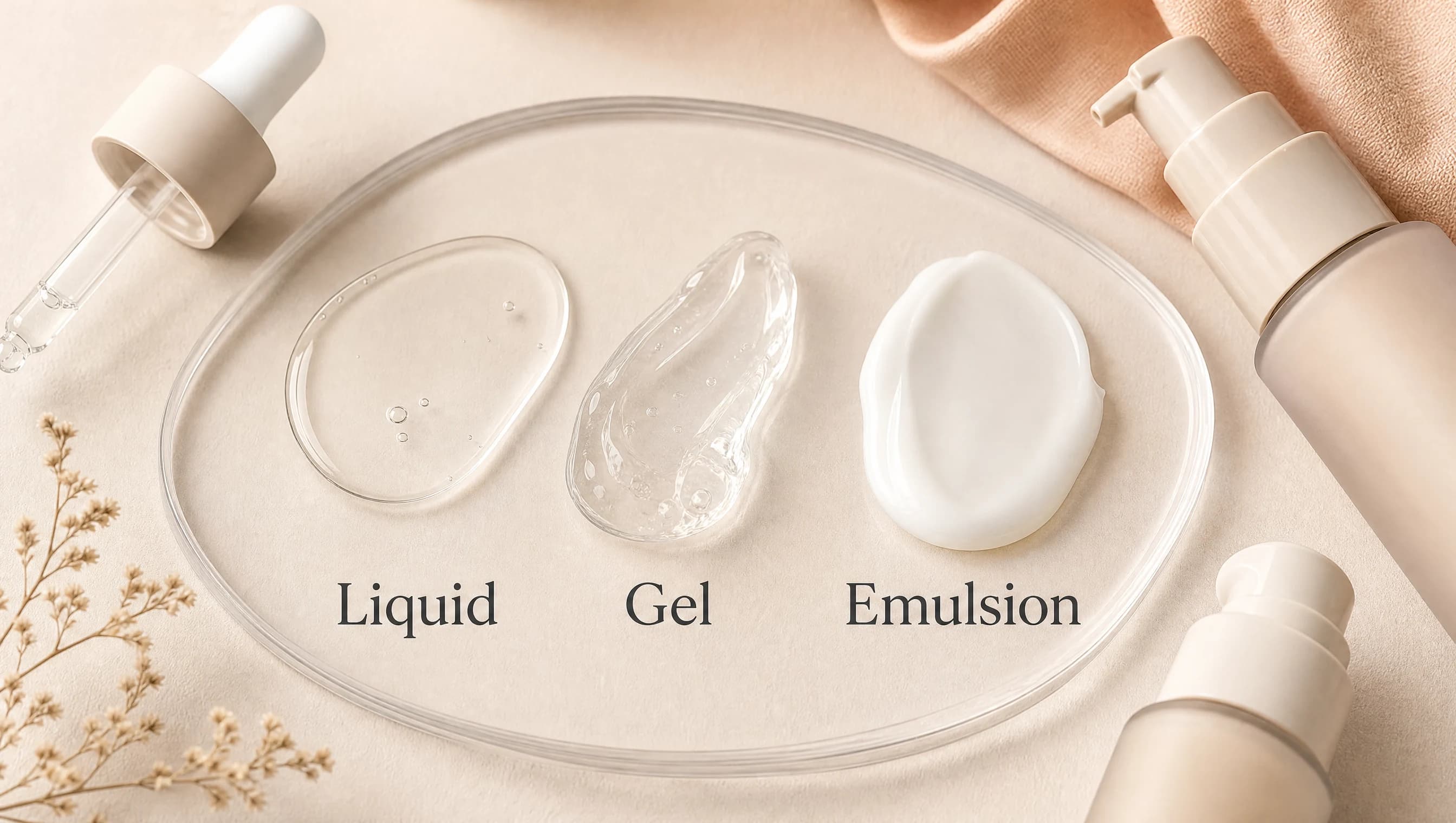
Choose azelaic acid or niacinamide by the exact cosmetic product and the job you want it to do. The Ordinary's Azelaic Acid Suspension 10% is a cream-like formula; its Niacinamide 10% + Zinc 1% is a water-based serum. The matching “10%” does not make them equivalent or establish which is better for your skin.
If you are trying to treat a diagnosed condition, separate that question from shopping for a cosmetic. A comparison of these two products is not a reason to replace prescribed treatment or assume that a cosmetic concentration has the same evidence as a medicine.
Compare two products with different roles
| Your main question | More relevant starting point | What still needs checking |
|---|---|---|
| Visible shine is the concern | The Ordinary Niacinamide 10% + Zinc 1% lists visible shine among its targets | Whether its water-based serum fits your current steps |
| Uneven-looking tone or texture is the concern | The Ordinary Azelaic Acid Suspension 10% is positioned for these appearances | Whether you want its cream-like suspension and can follow its directions |
| The two products overlap with what you already use | Review the existing step before buying another serum or suspension | Which single change would address a real gap |
| You need treatment for a persistent condition | Get condition-specific advice | A cosmetic label does not replace prescribed treatment |
These branches use the manufacturers’ stated cosmetic targets and formats. They narrow a shopping question; they do not demonstrate that either product treats the cause of redness or outperforms the other for uneven tone.
Separate appearance goals from treatment decisions
“Uneven-looking tone” is a cosmetic shopping goal. Persistent redness, painful breakouts or a diagnosed condition can require a different conversation. The FDA distinguishes cosmetics and drugs by intended use, including whether a product is intended to treat disease.
That distinction matters when an ingredient appears in both cosmetic discussions and medical treatment. You cannot transfer findings from a particular prescription formulation to every cosmetic containing the same ingredient.
Our azelaic acid and facial redness guide examines that context. If you already have treatment instructions, use them as the reference rather than replacing them with a comparison chart.
Let your existing routine narrow the choice
Look at the step you are considering changing. If you want a liquid serum before moisturizer, that is a different preference from wanting a cream-like suspension. If your moisturizer already contains niacinamide, consider whether another niacinamide product has a clear purpose before adding one.
For a concentration-specific choice, our 5% versus 10% niacinamide comparison looks at actual formulas. Our niacinamide serum guide for uneven tone explores that narrower shopping goal.
A clear priority is more useful than selecting an ingredient because it appears in several popular routines.
Check instructions before deciding to combine them

Choosing one does not require combining both. The azelaic suspension's current instructions permit morning or evening use, direct users to avoid the eye area and call for sun protection. Read the rest of the label as well, including what to do if irritation occurs.
For the niacinamide serum, check its own compatibility guidance against every product you plan to use. Instructions attached to a particular formula should not be replaced by a general social-media statement that an ingredient “goes with everything.”
Use this short process:
- Choose the one cosmetic outcome you want to prioritize.
- Identify the full product name and format.
- Check the current directions and restrictions.
- Introduce one product as a deliberate change.
- Keep the rest of the routine understandable while deciding whether the addition suits you.
Our guide to introducing a new skincare product develops that last step. It is easier to interpret one change than several new products introduced together.
Stop comparing ingredients when comfort is the real issue
If your routine is already uncomfortable, adding a second active to fix the first can make the situation harder to understand. Our serum guide for sensitive skin keeps formula selection and tolerance in view.
For persistent or significant symptoms, seek appropriate professional advice. There is no obligation to make either comparison product work for you, and no need to interpret discomfort as a sign that a product is effective.
Frequently asked questions
Which is better for redness?
First separate a cosmetic appearance concern from persistent redness or a diagnosed condition. The product comparison here does not establish a universal treatment recommendation.
Can I use both azelaic acid and niacinamide?
Check the exact products and your existing instructions. Do not assume that buying both is necessary or that one universal schedule applies to every formula.
Should I replace prescribed azelaic acid with the 10% suspension?
Do not use this cosmetic comparison to change prescribed treatment. Discuss that decision with the clinician who manages it.
Sources
The Ordinary: Azelaic Acid Suspension 10% (theordinary.com) — https://theordinary.com/en-us/azelaic-acid-suspension-10-exfoliator-100407.html
The Ordinary: Niacinamide 10% + Zinc 1% (theordinary.com) — https://theordinary.com/en-us/niacinamide-10-zinc-1-serum-100436.html
FDA: the distinction between cosmetics and drugs (fda.gov) — https://www.fda.gov/cosmetics/cosmetics-laws-regulations/it-cosmetic-drug-or-both-or-it-soap
Clear guidance, checked before publication.
Solvi articles are structured by our editorial team and reviewed for clarity, consistency, and responsible health language. We update pages when guidance or product information changes.