Vitamin C vs Retinol: Choose One Useful Next Step
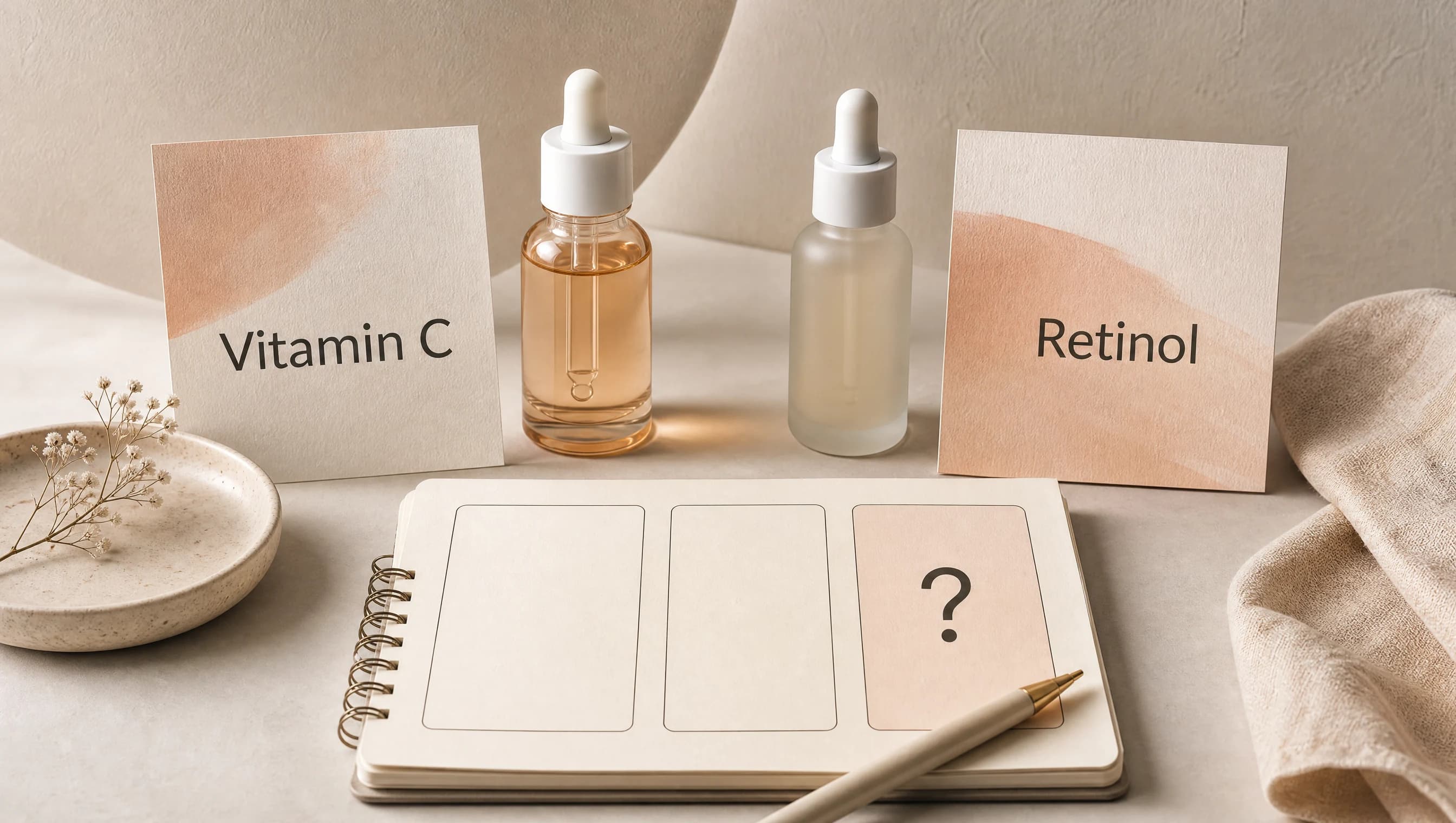
Choose between vitamin C and retinol by the concern you want to prioritize and the product you can realistically use. Both appear in dermatologists' cosmetic skin-care guidance, but they are not interchangeable, and buying both immediately is not a requirement for a complete routine.
If you are comparing them for the first time, select one optional step after checking the exact directions and any reasons it may be unsuitable. If you are pregnant, the American Academy of Dermatology advises against retinoid use; this is not a situation for choosing your own alternative retinoid schedule.
Start with one clearly stated goal
The AAD discusses vitamin C for concerns such as dark spots and signs of aging, and retinol for the appearance of uneven tone, pigmentation and texture. That overlap explains why a simple “vitamin C for this, retinol for that” chart can overpromise.
Instead, write the decision in practical terms: “I want to address uneven-looking tone, I already like my moisturizer, and I want to add only one product.” That gives you a manageable shortlist rather than a shopping list for every concern mentioned on a label.
| Your situation | A decision you can make now | What remains open |
|---|---|---|
| You like your current vitamin C or retinol step | Keep it unless you can name a reason to change | A different ingredient is not automatically an upgrade |
| You want one optional product for tone or texture | Compare exact formula targets and directions against that single goal | The broad ingredient names do not establish an efficacy winner |
| Your evening already contains a product you want to keep | Check the proposed product’s timing before buying | The example 23% vitamin C suspension prefers evening use |
| You are pregnant or have persistent irritation | Resolve suitability with appropriate clinical guidance | The AAD advises avoiding retinoids during pregnancy |
It does not decide whether a medical treatment is suitable for you.
Do not treat either name as one formula
“Vitamin C” can refer to direct L-ascorbic acid or different derivatives in different product bases. Our L-ascorbic acid versus derivative comparison explains why the ingredient name and texture need to be read together.
Likewise, retinol is one member of the retinoid family. A cosmetic retinol serum should not inherit a prescription product's results simply because both belong to that family. If you are also comparing retinol with retinal, our retinol-versus-retinal guide keeps that separate choice in view.
Fit the product into a real morning or evening
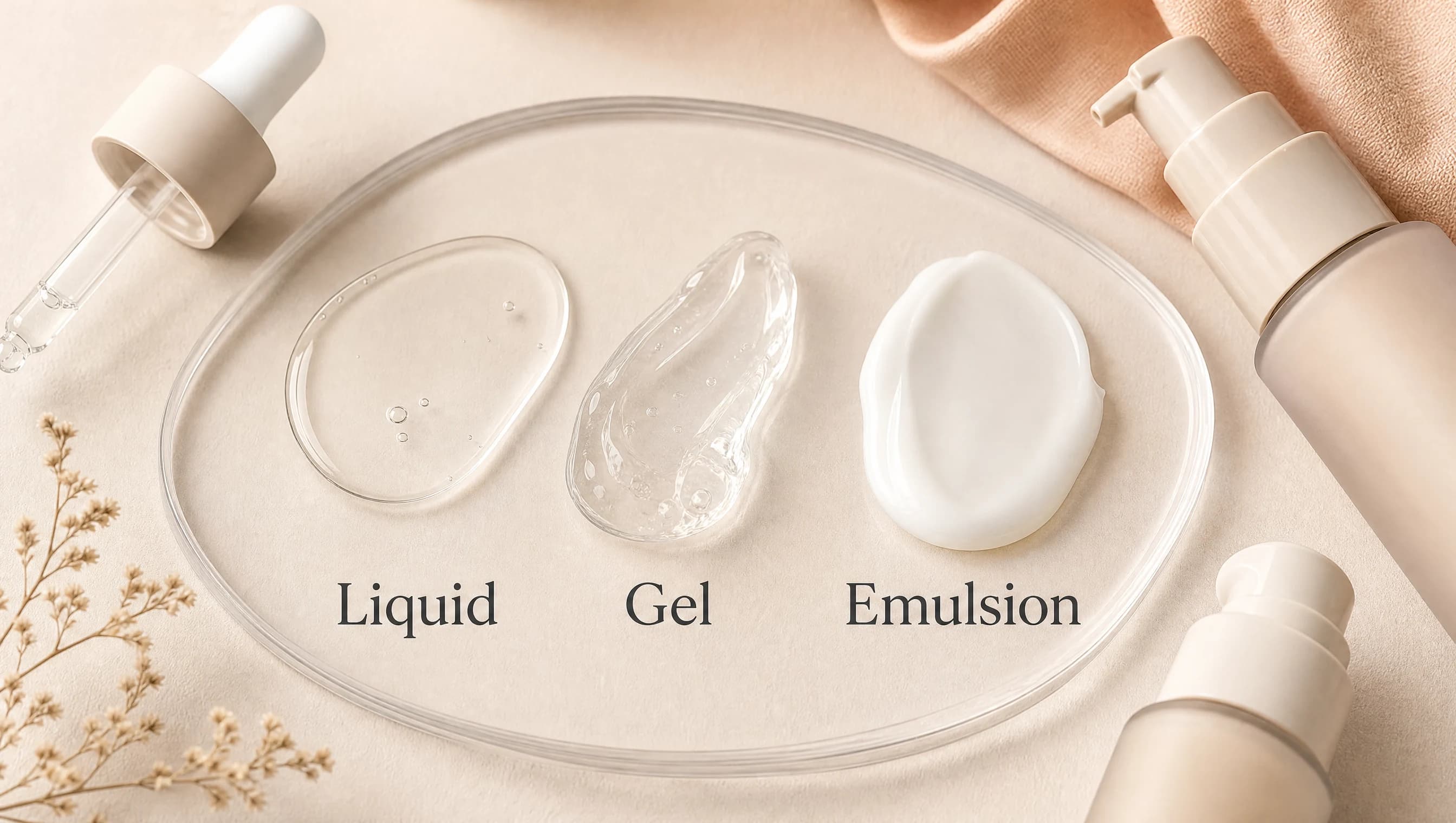
“Vitamin C in the morning, retinol at night” is a familiar routine pattern, but it should not replace the instructions for your actual bottle. For example, The Ordinary's Vitamin C Suspension 23% + HA Spheres 2% specifies once-daily use, ideally in the evening.
This matters if your only available space is an evening routine already built around another product. You may prefer a different vitamin C formula, keep the existing product or postpone the addition. You do not need to force the two into the same session.
Our guide to vitamin C timing addresses that scheduling choice. For retinol, the retinol sandwich method guide discusses a commonly proposed moisturizer arrangement; use it alongside the actual product directions, not as permission to keep using a formula that causes a reaction.
Make the first purchase easy to evaluate

An understandable decision has a starting point and one main change. Before adding either product:
- Starting point: write the one concern you want a new step to address.
- Existing step: name the product you plan to keep, including its required timing.
- Candidate: record the exact new formula and its directions.
- Decision: if the proposed role or timing is already occupied, choose what would be replaced or postpone the purchase.
This is a planning exercise, not a clinical trial. Notes about consistency, comfort and whether a step fits your day are useful. They cannot establish that one ingredient is more effective for everybody.
If your current problem is repeated discomfort, our serum guide for sensitive skin helps frame the product-selection question. Persistent or significant symptoms deserve professional advice rather than a second active to counter the first.
Give yourself permission to keep one
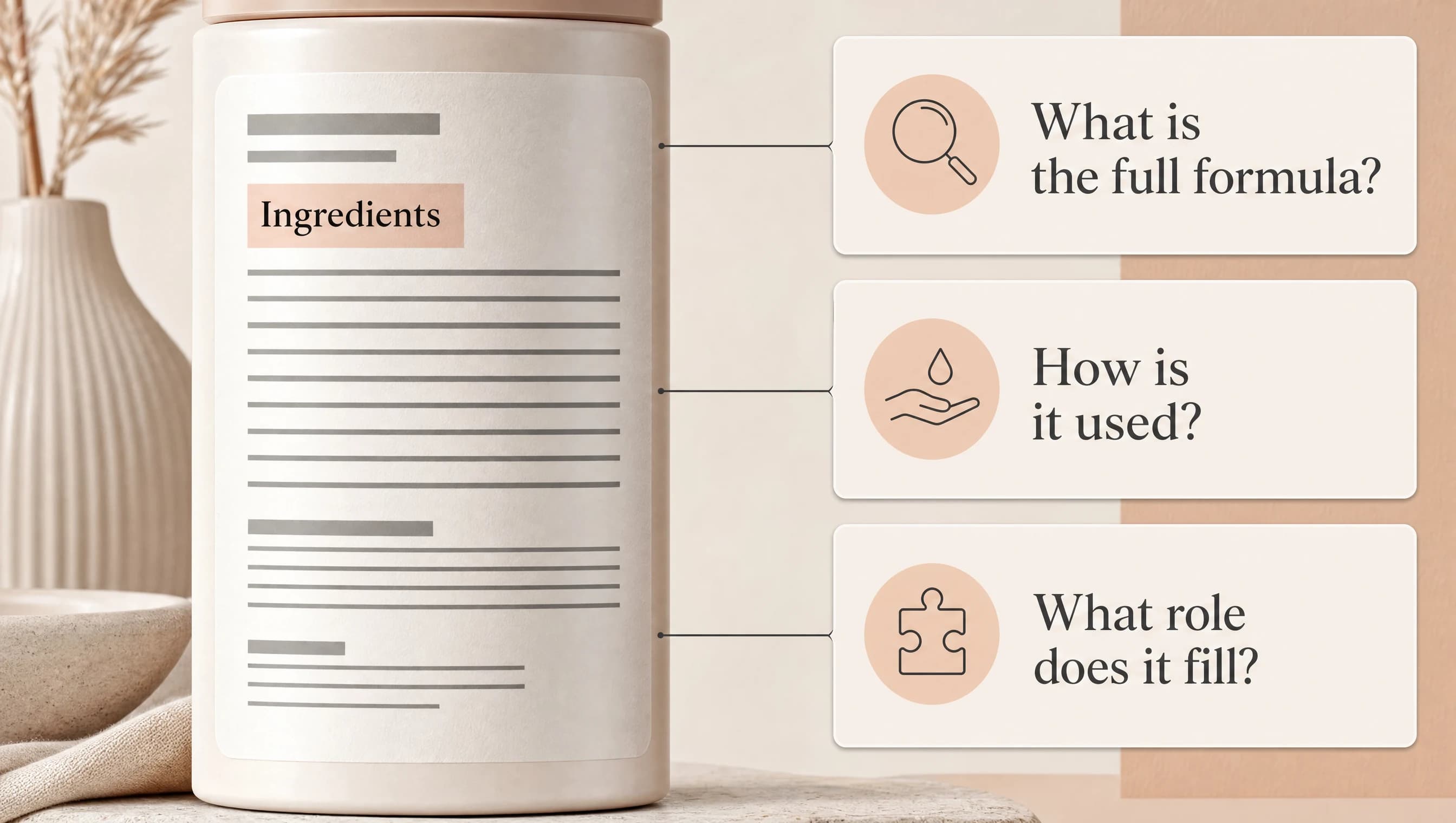
There is no need to graduate from vitamin C to retinol, or from retinol to using both, simply because a routine graphic has two empty slots. If one product suits your priorities and the routine is manageable, keeping it is a valid outcome of the comparison.
Frequently asked questions
Which is better for dark spots?
The ingredient names alone do not settle that question. Consider the cause of the concern, the exact product and appropriate professional advice when needed, rather than assuming a universal winner.
Do I need both vitamin C and retinol?
No. Choose a product because it fills a clear role, not because a comprehensive-looking routine contains both.
Should all vitamin C products be used in the morning?
No. Product instructions differ, including the evening preference on the suspension discussed here. Follow the exact formula's guidance.
Sources
American Academy of Dermatology: skin care in your 20s (aad.org) — https://www.aad.org/public/everyday-care/skin-care-basics/care/skin-care-in-your-20s
American Academy of Dermatology: retinoid and retinol guidance (aad.org) — https://www.aad.org/public/everyday-care/skin-care-secrets/anti-aging/retinoid-retinol
The Ordinary: Vitamin C Suspension 23% directions (theordinary.com) — https://theordinary.com/en-us/vitamin-c-suspension-23-ha-spheres-2-vitamin-c-100451.html
Clear guidance, checked before publication.
Solvi articles are structured by our editorial team and reviewed for clarity, consistency, and responsible health language. We update pages when guidance or product information changes.