Retinol vs Retinal: Compare the Formula, Not Just the Percentage
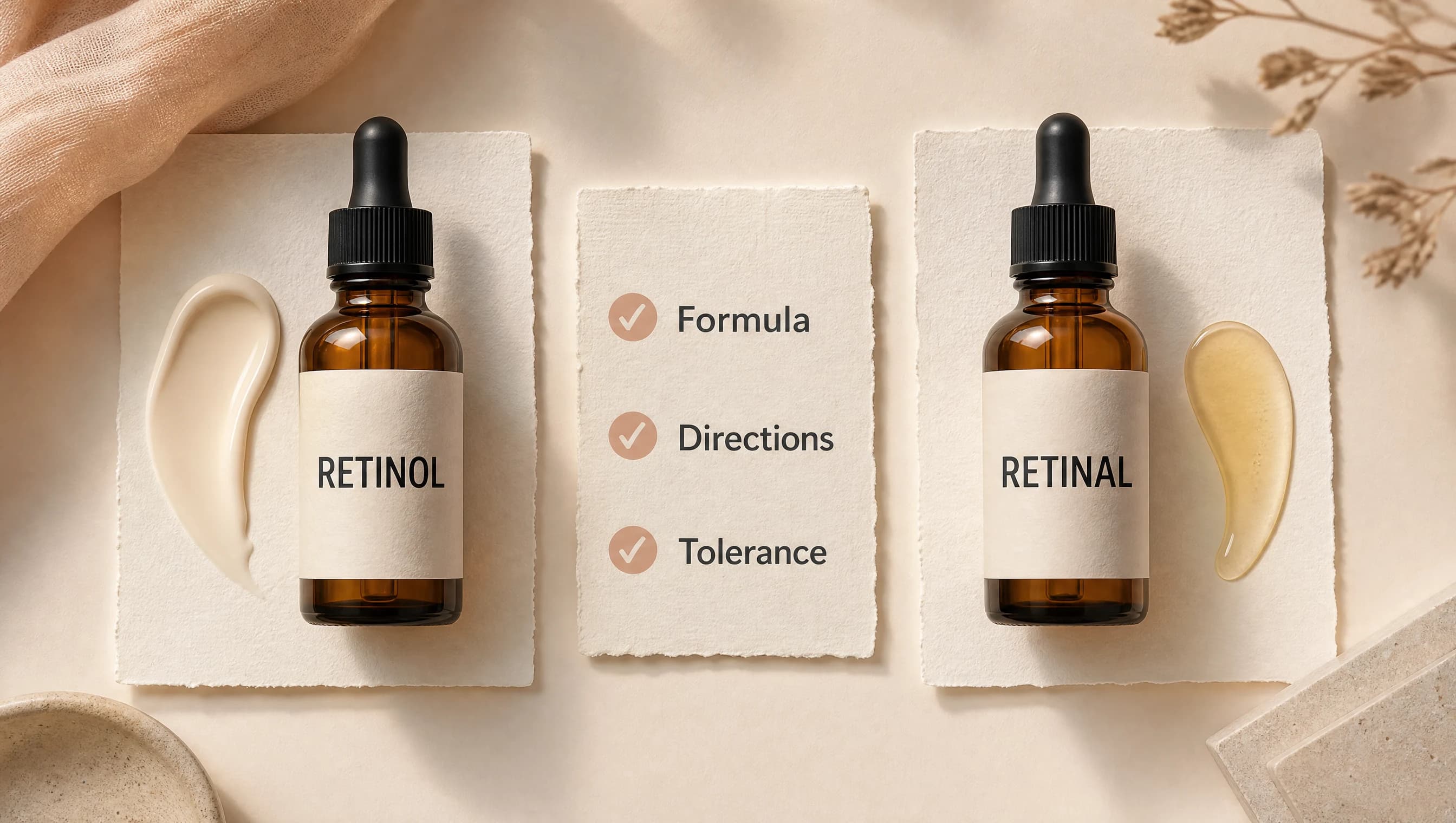
Retinol and retinal are both cosmetic retinoids, but they are different ingredients. Retinal, also called retinaldehyde, is one conversion step closer to retinoic acid. That biochemical distinction does not give shoppers a reliable formula for turning a retinal percentage into an equivalent retinol percentage.
Choose a product around your experience, its directions and the result you want to assess. If a retinol already suits your routine, the existence of retinal is not a reason by itself to replace it. If you are new to retinoids, the strongest-looking label is a poor starting criterion.
Retinol and retinal at a glance
| Question | Retinol | Retinal |
|---|---|---|
| Ingredient name to look for | Retinol | Retinal or retinaldehyde |
| Relationship | A vitamin A derivative in the retinoid family | A different vitamin A derivative in the same family |
| Can equal percentages be compared directly? | No | No |
| Main shopping task | Match the complete formula to your experience | Check especially carefully whether the product targets experienced users |
| Reason to keep a current product | It suits the intended goal and is comfortable to use | The same practical standard applies |
The conversion pathway is explained in The Ordinary's retinoid guide. It is background for understanding ingredient names, not independent proof that one finished product will deliver a specific multiple of another product's results.
An example where identical numbers mislead
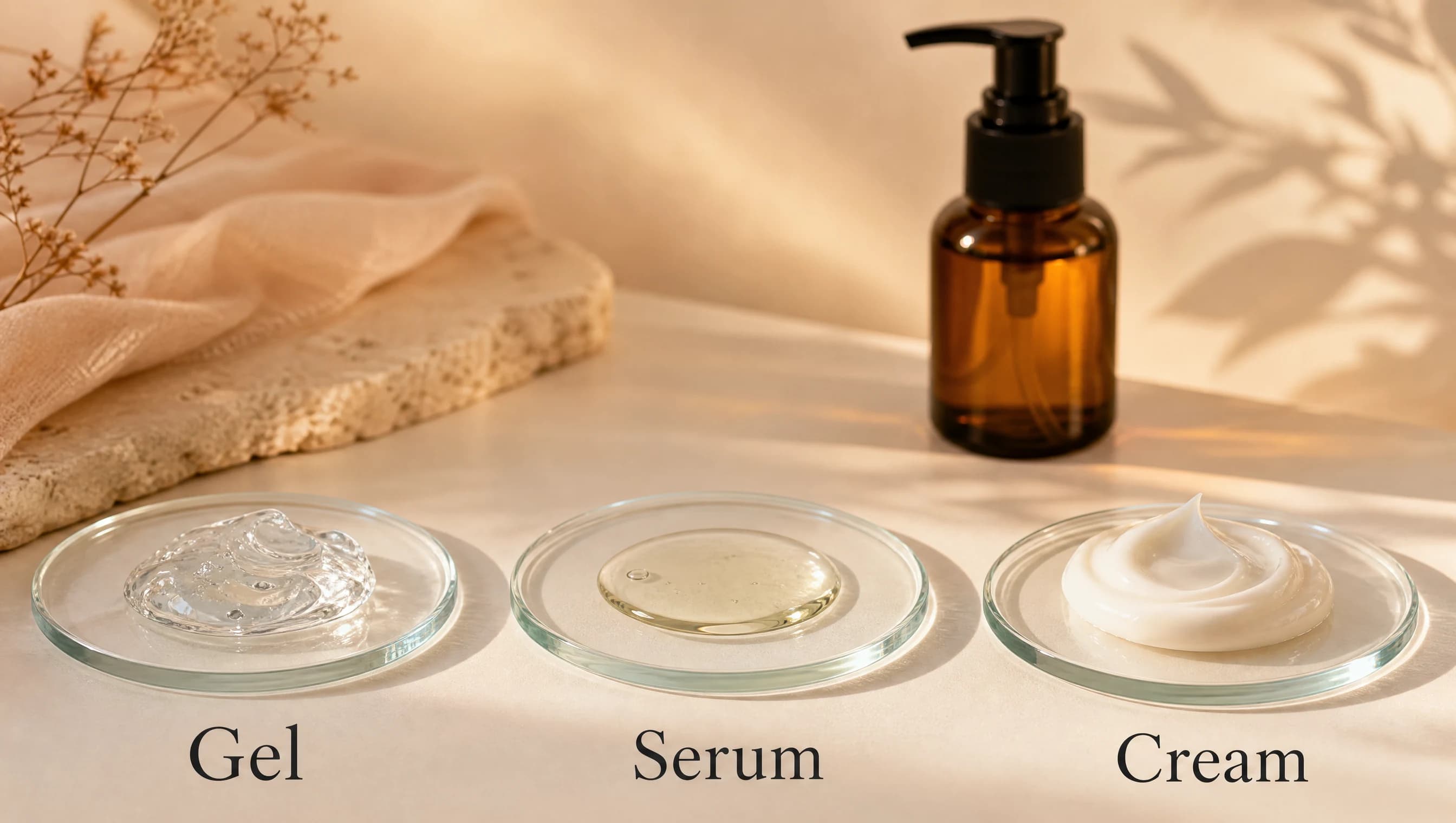
The Ordinary sells Retinol 0.2% in Squalane and Retinal 0.2% Emulsion. Reading only “0.2%” hides both an ingredient difference and a formula difference. The brand recommends the retinal emulsion for experienced retinoid users and names the lower-strength retinol option among its starting alternatives.
That label-based example supports a clear decision: do not swap between these products as though the numbers describe the same dose. It does not establish a universal starting percentage for every brand or person.
Texture also matters. An oil-based format and an emulsion can occupy the routine differently and feel different under other products. Prefer the format you can use as directed rather than treating a heavier or lighter feel as a potency test.
Choose according to the change you actually need

New to retinoids: look for clearly stated introductory positioning and readable use instructions. Begin by checking whether a retinoid is suitable at all; more redness, inflammation or an unresolved skin condition is a reason to seek guidance, not to shop for a more powerful bottle.
Comfortable with your current formula: identify a specific shortcoming before switching. Is it unpleasant texture, unclear instructions, or a goal that needs a clinician's assessment? A different ingredient name may not address the actual problem.
For the named Ordinary pair, a useful comparison note begins: “Current candidate: Retinol 0.2% in Squalane. Alternative: Retinal 0.2% Emulsion. Same printed number, different ingredient and format; the retinal is positioned for experienced users.” Add your actual experience and the two sets of directions before considering a switch. Keep unrelated cleanser or exfoliant changes out of the same decision.
For choices focused on later-life cosmetic concerns, see our mature-skin retinol guide. If uneven tone is your main question, our retinol and dark-spots guide addresses that separate decision.
Build a routine you can evaluate
Use the chosen product according to its instructions and keep basic cleansing, moisturizing and sun protection consistent. A calendar should record actual use and comfort, not reward the largest possible number of applications.
The AAD advises against retinoid use during pregnancy. It also recommends dermatologist input when significant redness, inflammation or certain acne concerns are present. Cosmetic comparisons are not a substitute for an appropriate treatment plan.
If moisturizing order is the point of confusion, our retinol sandwich-method explanation is the relevant next read. For the ingredient family and product format, compare retinol versus retinyl palmitate and retinol serum versus cream.
Frequently asked questions
Is retinal always better than retinol?
No. Ingredient identity alone cannot determine the best finished formula for an individual. Suitability, directions, formulation and tolerance remain part of the decision.
Can I use retinol and retinal together?
There is no routine need to add a second cosmetic retinoid merely to cover both names. Check the products' instructions; The Ordinary lists other retinoids among conflicts for these example formulas.
Does retinal work a fixed number of times faster?
A conversion-step explanation does not prove a particular clinical speed multiplier for products you are comparing. Look for evidence on the actual formulas and the specific outcome being measured.
Sources
AAD: Retinoid or retinol? (aad.org) — https://www.aad.org/public/everyday-care/skin-care-secrets/anti-aging/retinoid-retinol/
The Ordinary: Guide to using retinoids (theordinary.com) — https://theordinary.com/en-us/blog/definitive-guide-using-retinoids.html
The Ordinary: Retinal 0.2% Emulsion (theordinary.com) — https://theordinary.com/en-us/retinal-02-emulsion-100646.html
The Ordinary: Retinol 0.2% in Squalane (theordinary.com) — https://theordinary.com/en-us/retinol-02-in-squalane-serum-100439.html
Clear guidance, checked before publication.
Solvi articles are structured by our editorial team and reviewed for clarity, consistency, and responsible health language. We update pages when guidance or product information changes.