L-Ascorbic Acid vs Vitamin C Derivatives: Read the Whole Label
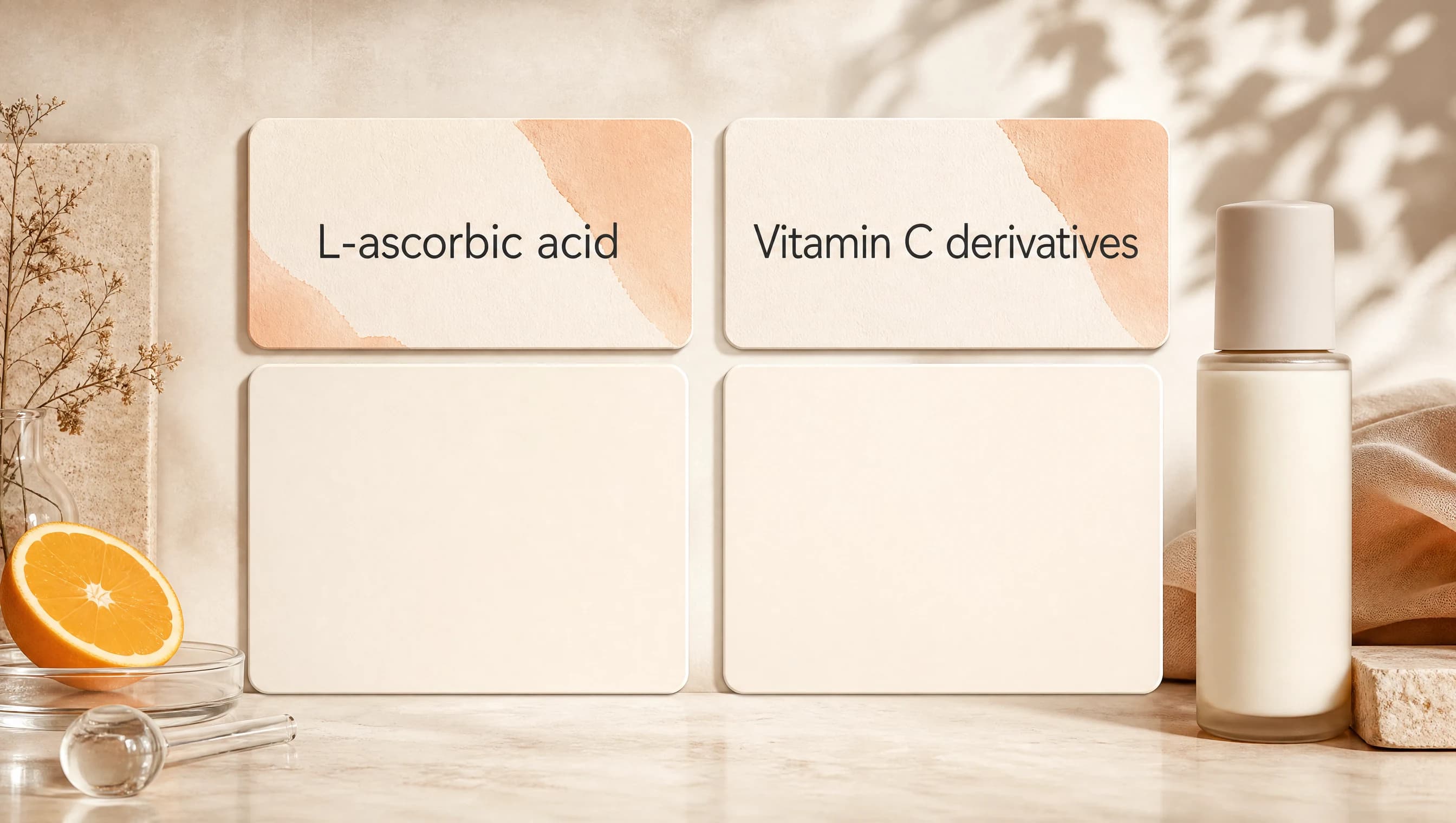
L-ascorbic acid is direct vitamin C; a derivative is a different named form, such as ascorbyl glucoside. Choose by the exact ingredient and finished formula rather than assuming that every derivative behaves alike or that the largest percentage wins.
For a useful real-world comparison, The Ordinary's Vitamin C Suspension 23% + HA Spheres 2% contains L-ascorbic acid in a water-free suspension. Its Ascorbyl Glucoside Solution 12% is a water-based derivative serum. The decision includes texture and instructions as well as the ingredient name.
Read the name before comparing the number
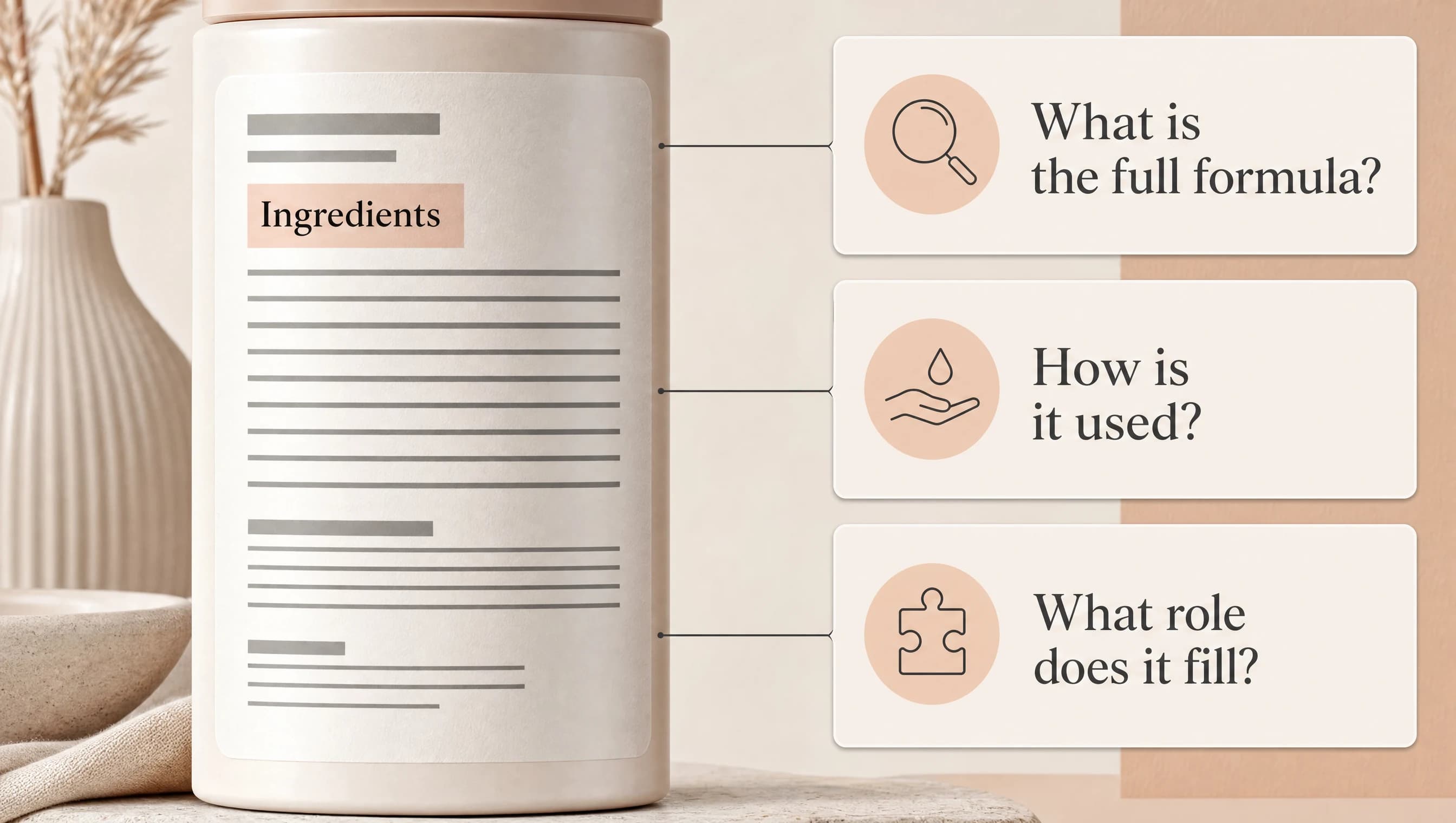
| Label example | What you are comparing | What not to assume |
|---|---|---|
| L-ascorbic acid | Direct vitamin C | Every L-ascorbic acid product has the same texture or directions |
| Ascorbyl glucoside | One specific vitamin C derivative | Its percentage converts directly to an equivalent L-ascorbic acid percentage |
| “Vitamin C complex” on a front label | A description that needs a closer look | The front label identifies every form or its concentration |
The Ordinary's vitamin C education guide distinguishes direct vitamin C from named derivatives. It is manufacturer guidance, not independent proof that every product in a category delivers the same outcome.
When two bottles list different compounds, a 23-versus-12 comparison is not like comparing the same ingredient at two concentrations. It cannot tell you that one works almost twice as well or that the other is half as useful.
Decide whether you want a suspension or a serum
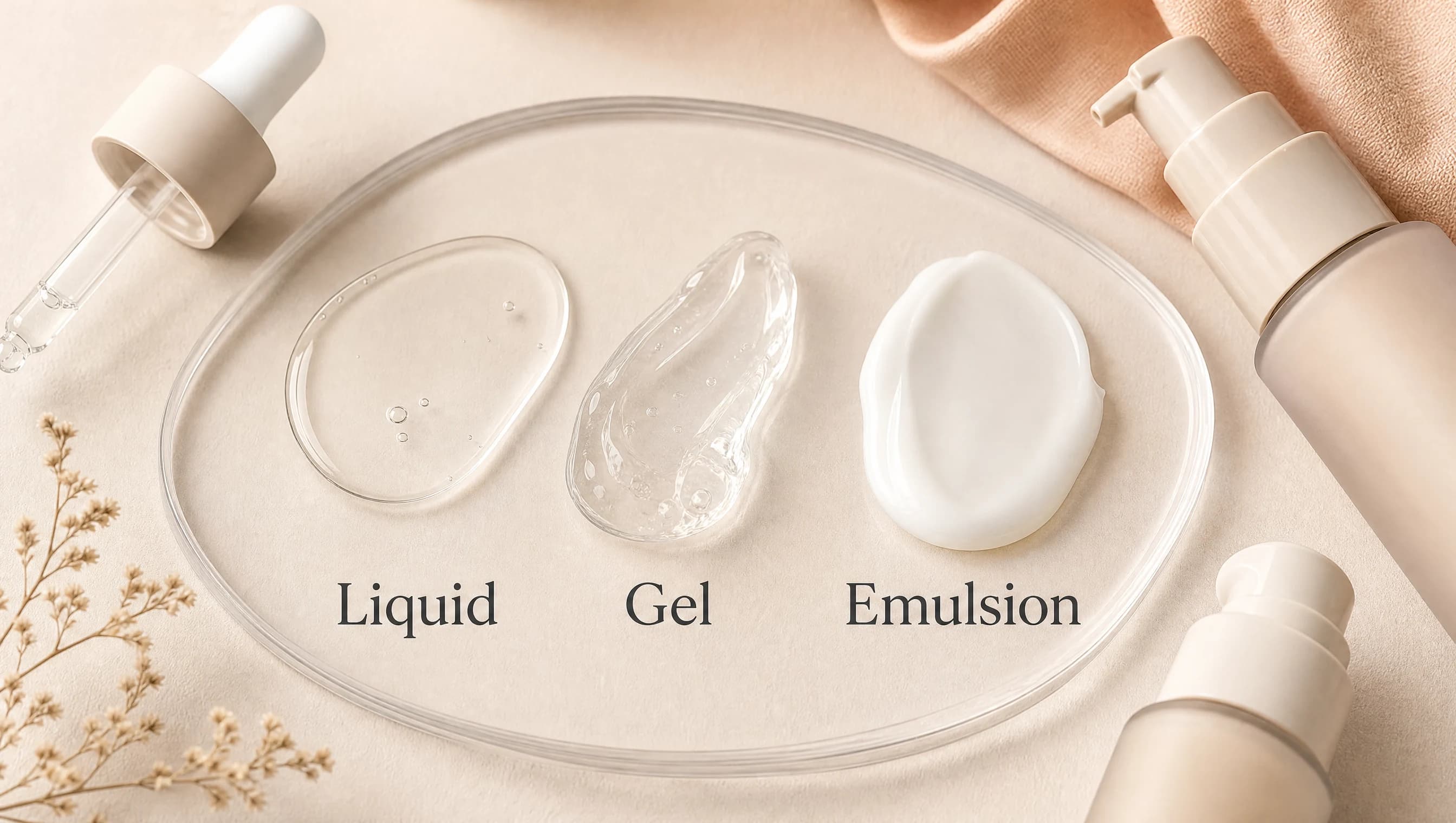
The 23% Suspension is described by its manufacturer as having a slightly granular texture. That can be a decisive shopping detail if you want a smooth-feeling liquid under other products. The Ascorbyl Glucoside 12% product is a water-based solution, so it offers a different format to consider.
Choose the suspension because its exact format and directions suit you, not because a high percentage feels more serious. Choose the solution because you prefer that type of product, not because “derivative” guarantees that it cannot irritate your skin.
There are also differences within the derivative category. An oil-soluble derivative in an oily formula and ascorbyl glucoside in water should not be collapsed into one shopping recommendation. The ingredient name narrows the question; the complete product answers it.
Let the exact label determine the routine
The current directions for The Ordinary's 23% Suspension say once daily, ideally in the evening. That is a useful exception to the blanket rule that every vitamin C product belongs in the morning.
Our guide to when to use vitamin C serum explains the routine question. Start with the product-specific instructions before adapting a general routine diagram.
If another active is already important to you, compare its directions with the proposed vitamin C product before purchasing. Our vitamin C versus retinol guide helps prioritize one optional step instead of automatically buying both.
The niacinamide and vitamin C guide addresses another common pairing question. General ingredient compatibility does not erase more specific restrictions printed for a finished product.
Compare the two candidates before buying
Use these examples to make the choice:
- Ordinary Vitamin C Suspension 23% + HA Spheres 2%: ascorbic acid in a suspension; the manufacturer describes a slightly granular texture. Decide whether that format fits the role you want.
- Ordinary Ascorbyl Glucoside Solution 12%: a derivative in a water-based solution. Consider it when that liquid format fits your preference, with its own directions and warnings.
- For either candidate: name the concern or existing step it would address before treating the ingredient form as a reason to buy.
If you cannot name that gap, pause the comparison. A product can be well formulated and still be unnecessary for your current priorities.
Keep the packaging or a photo of the label. When a familiar name appears on an updated bottle, our guide to recognizing a skincare reformulation helps separate packaging changes from formula changes.
Keep storage questions separate from the ingredient contest
Storage directions and changes in a product's appearance deserve their own check. Our guide to identifying possible vitamin C serum oxidation addresses that problem. Do not transfer a rule about the original color of one serum to every suspension or derivative product.
Frequently asked questions
Is L-ascorbic acid always the better choice?
No universal winner follows from the ingredient category. The exact product, available evidence, texture and your routine determine whether it is a sensible choice for you.
Is 12% ascorbyl glucoside equivalent to 12% L-ascorbic acid?
No. They are different compounds, and the percentages do not establish equal performance in finished products.
Can I assume a derivative will be gentle?
Do not treat the category as a guarantee. Evaluate the complete formula and follow its instructions, particularly if previous products have caused problems.
Sources
The Ordinary: Vitamin C Suspension 23% + HA Spheres 2% (theordinary.com) — https://theordinary.com/en-us/vitamin-c-suspension-23-ha-spheres-2-vitamin-c-100451.html
The Ordinary: Ascorbyl Glucoside Solution 12% (theordinary.com) — https://theordinary.com/en-us/ascorbyl-glucoside-solution-12-vitamin-c-100405.html
The Ordinary: direct vitamin C and derivative guide (theordinary.com) — https://theordinary.com/en-gb/blog/vitamin-c-skincare.html
Clear guidance, checked before publication.
Solvi articles are structured by our editorial team and reviewed for clarity, consistency, and responsible health language. We update pages when guidance or product information changes.