Squalane vs Squalene for Skin: Read the Difference
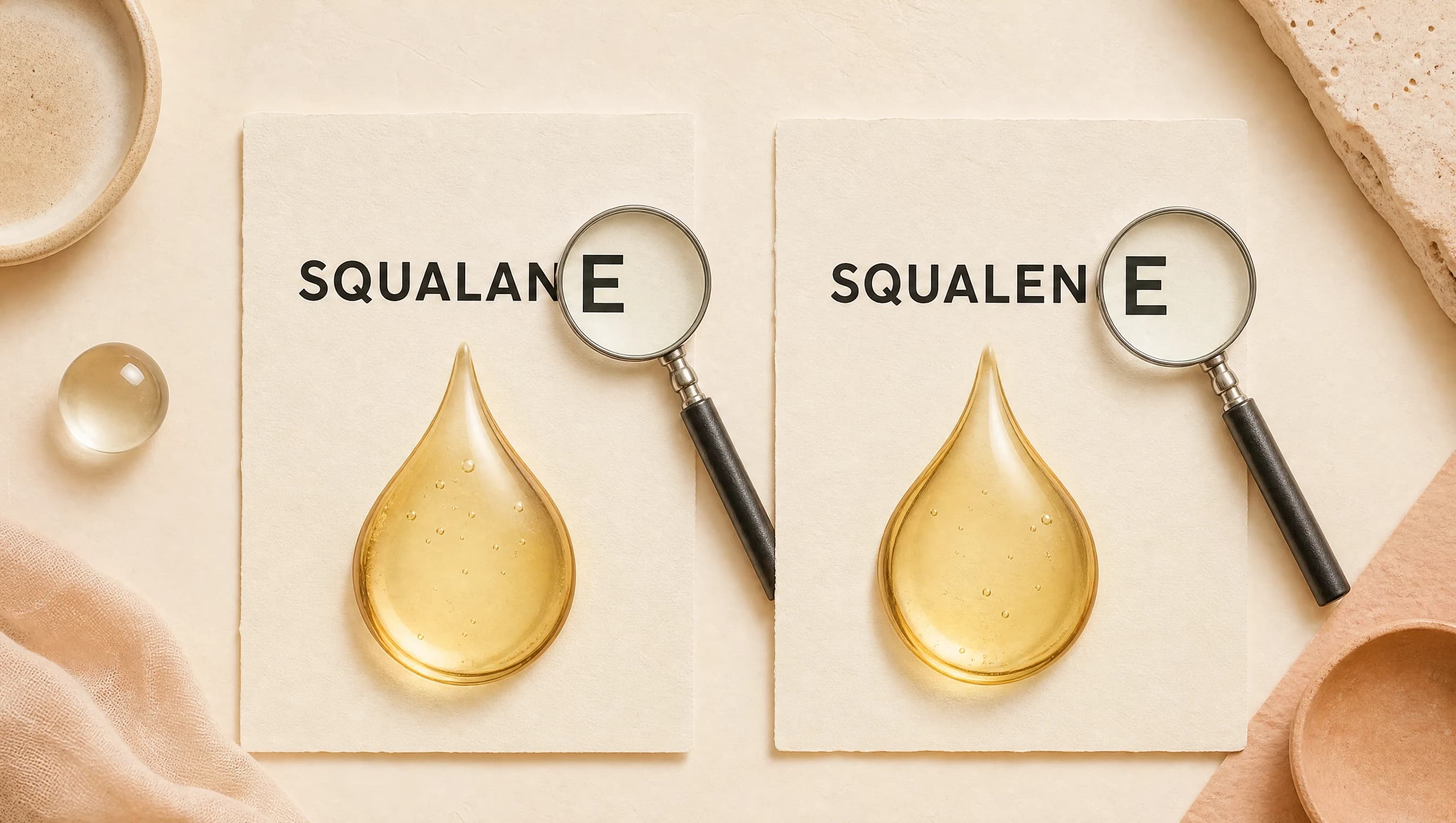
Squalane and squalene are related ingredients, but the spelling difference matters. Squalene is a lipid naturally present in skin; squalane is its hydrogenated, more stable counterpart used in cosmetics. Neither word, by itself, identifies the ingredient's source or guarantees that a finished product will suit your face.
Start by reading the ingredient list and the manufacturer's sourcing statement. Then decide whether you need a standalone oil-like product or already use the ingredient in a moisturizer.
Read the final vowel carefully
The distinction is easy to miss in a search result or on a small bottle. Squalene ends in “ene”; squalane ends in “ane.” They should not be treated as interchangeable spellings of one product ingredient.
| Label term | What it identifies | What it does not establish |
|---|---|---|
| Squalene | The unsaturated lipid discussed in skin and ingredient chemistry | The origin of a particular cosmetic ingredient |
| Squalane | Its hydrogenated, more stable counterpart | Universal tolerance or acne safety |
| Plant-derived squalane | A sourcing statement for the identified product | The source of every squalane product |
| Squalane in a moisturizer | One ingredient in a complete formula | That the formula behaves like a bottle of standalone oil |
The Ordinary explains the relationship in its squalane ingredient guide. The chemical distinction helps identify the ingredient; it does not supply a clinical comparison between every product containing either name.
Verify origin through a specific disclosure
Squalene can be found in plant and animal sources. A chemical ingredient name does not provide a complete account of how a particular supplier obtained it. If origin matters to you, look for a statement tied to the product you intend to buy.
For example, The Ordinary identifies its 100% Plant-Derived Squalane as sugarcane-derived. That is useful evidence for that named product. It is not evidence about an unrelated brand's sourcing, nor about every formula containing the word squalane.
Keep sourcing preferences separate from tolerance claims. The FDA's cosmetic-safety guidance explains that an ingredient's natural origin does not determine whether it is safe. A preference for a plant source is valid without needing to turn it into a promise about sensitive skin.
Distinguish a standalone product from a moisturizer
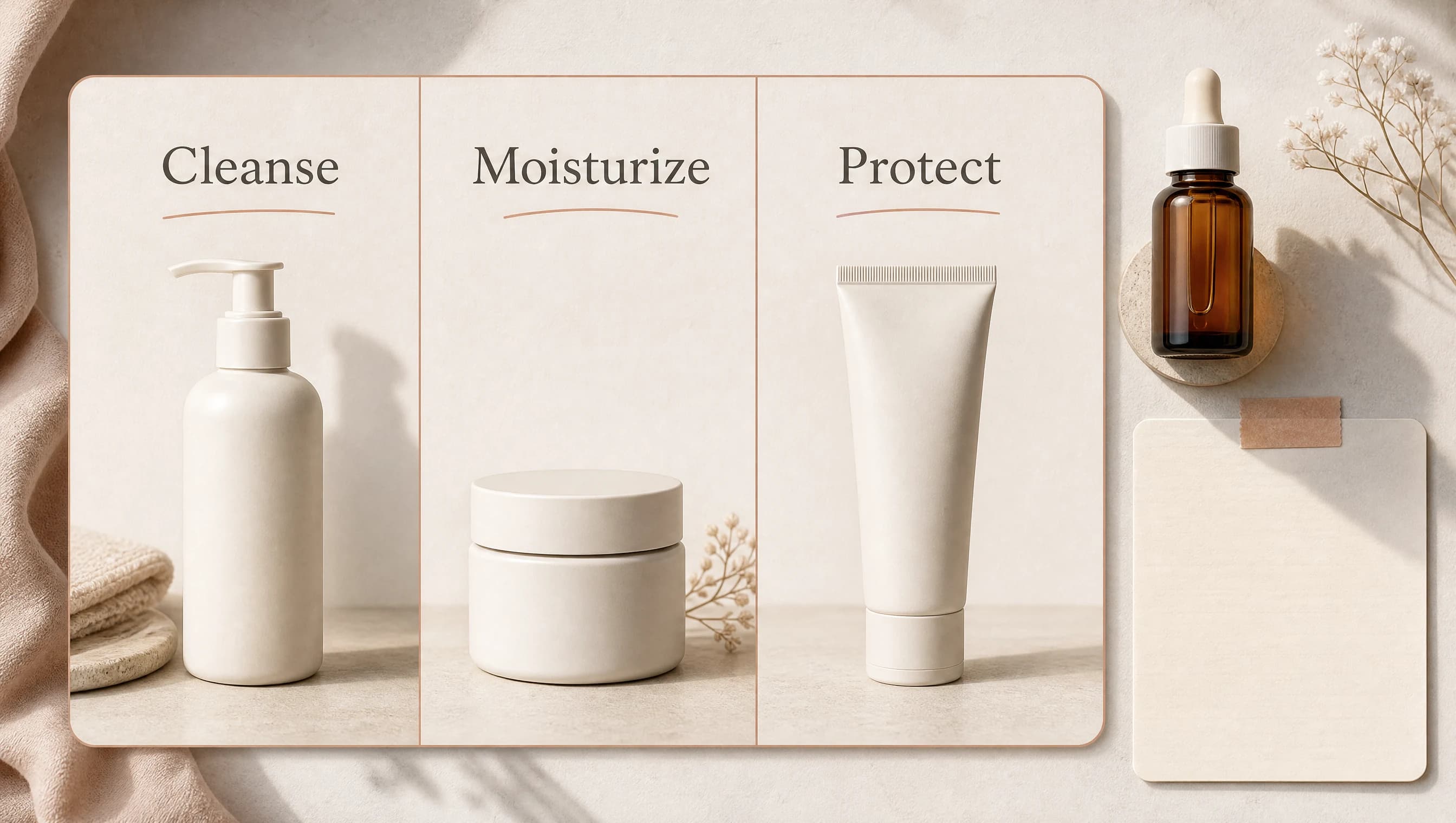
The reviewed Ordinary product lists squalane as its ingredient and describes an anhydrous, oil-like format. A lotion that contains squalane may also contain water, humectants and other ingredients that change the complete formula's role and feel.
This is why replacing a moisturizer with any oil simply because the oil sounds nourishing can miss the original goal. First identify what your moisturizer already does and what remains unsatisfactory. Our guide to moisturizers for dehydrated-feeling skin can help you frame that question more concretely.
If your concern is ingredient roles, compare humectants, emollients and occlusives rather than treating all moisturizing ingredients as substitutes. Similar front-label language can describe different parts of a formula.
Choose a useful place in the routine
Read the directions for the actual product, including whether it is intended for facial use and how it fits with other steps. The Ordinary's own squalane guide places water-based products before its oil-like step and creams later. That brand-specific sequence should not be turned into a universal instruction for every oil-based treatment.
If order is the main source of confusion, our face oil and moisturizer order guide separates standalone oils, treatment formulas and moisturizers that already contain oils. You may discover that a new layer would duplicate a role rather than solve the problem you identified.
For a routine that feels uncomfortable after several recent additions, review the changes instead of assuming one missing ingredient is responsible. Our skin-barrier concern checklist can help organize observations; it cannot diagnose the cause of irritation.
Use a label worksheet instead of a promise
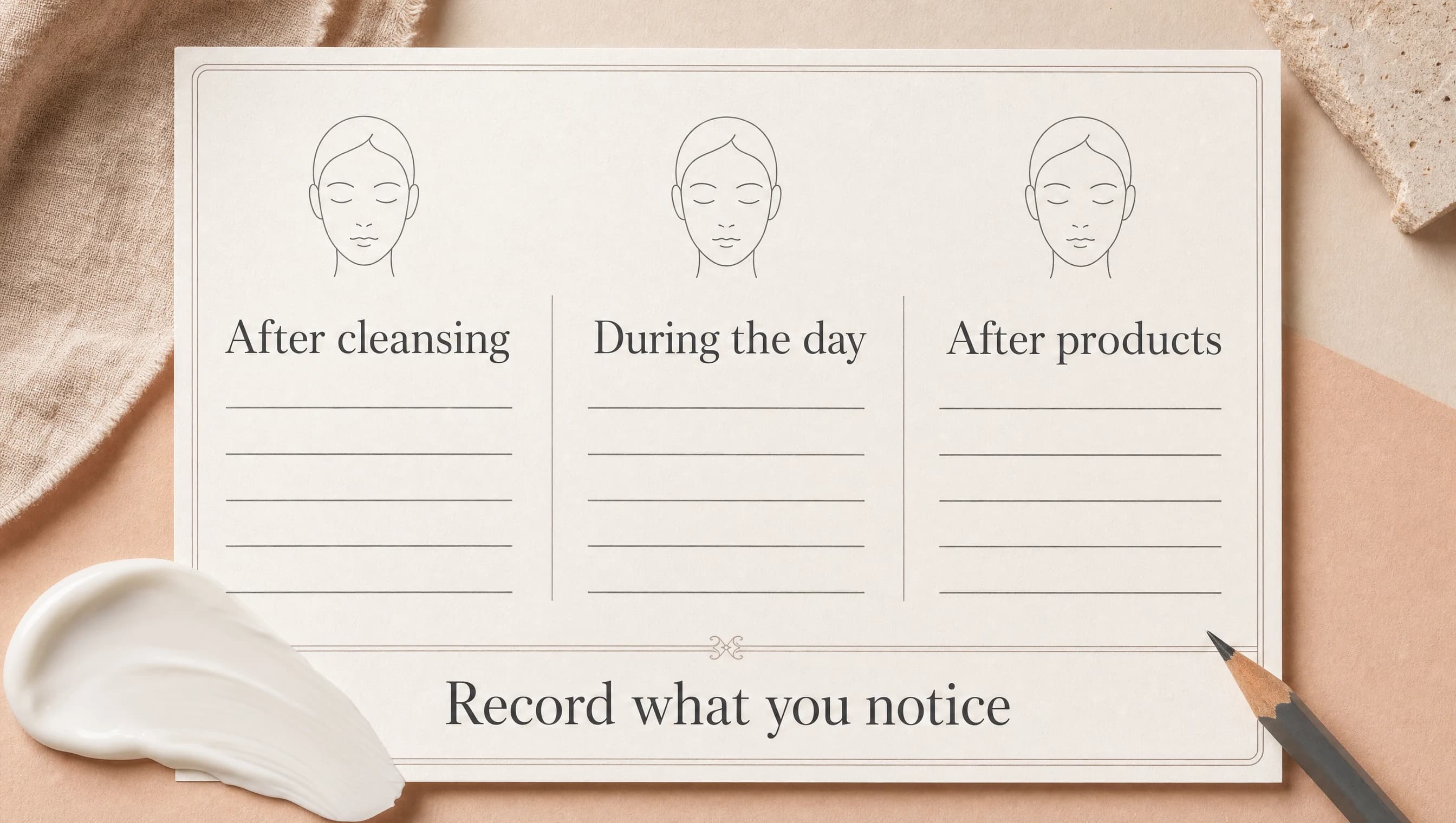
Before buying, record these details:
- Named example: The Ordinary 100% Plant-Derived Squalane identifies both the ingredient spelling and the manufacturer’s sourcing position.
- Your purchasing question: do you want this standalone product, or does a moisturizer already provide the role you need?
- Your use check: follow the exact product’s intended-area and application instructions. Another brand or a multi-ingredient formula needs its own label check.
There is no need to assign a personal suitability score from the name alone. If your skin is persistently flaky, painful or irritated, a product-origin comparison is too narrow a way to address it. Our dry, flaky skin moisturizer guide is a more relevant starting point for format questions, with professional assessment when symptoms persist.
Frequently asked questions
Are squalane and squalene the same ingredient?
No. They are related, but hydrogenation changes squalene into squalane. Check the exact spelling on the ingredient list.
Does squalane always come from plants?
The name alone does not establish origin. Use a product-specific manufacturer disclosure when sourcing matters to you.
Do I need a separate squalane bottle?
Not necessarily. Check your existing moisturizer and identify a missing role before adding another step.
Sources
The Ordinary: 100% Plant-Derived Squalane (theordinary.com) — https://theordinary.com/en-us/100-plant-derived-squalane-face-oil-100398.html
The Ordinary: Squalane ingredient guide (theordinary.com) — https://theordinary.com/en-us/blog/benefits-of-squalane-deep-dive.html
FDA: Using Cosmetics Safely (fda.gov) — https://www.fda.gov/cosmetics/resources-consumers-cosmetics/using-cosmetics-safely
Clear guidance, checked before publication.
Solvi articles are structured by our editorial team and reviewed for clarity, consistency, and responsible health language. We update pages when guidance or product information changes.