Humectant vs Emollient vs Occlusive: Read the Label
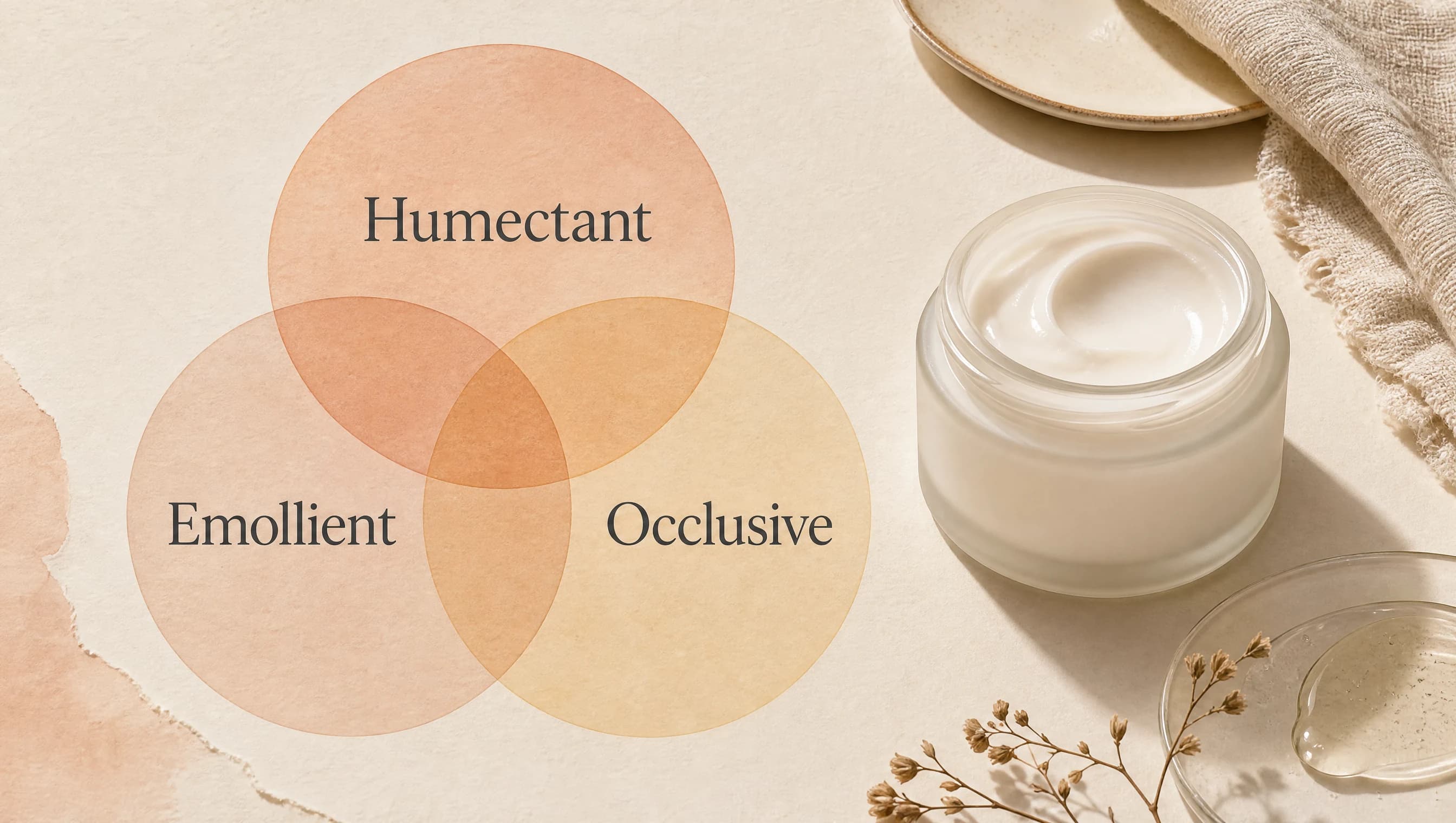
Humectants help attract and retain water, emollients soften and smooth the skin, and occlusives reduce evaporative water loss. These describe ingredient roles, not three mandatory products. One moisturizer can contain ingredients serving several of these functions.
That distinction can save you from building a routine around a vocabulary lesson. Before buying a humectant serum, an emollient oil and an occlusive balm, examine the moisturizer already on your shelf.
What each term adds to label reading
| Role | Plain-language function | Label examples |
|---|---|---|
| Humectant | Helps hold water in the outer skin layer | Glycerin, urea |
| Emollient | Helps skin feel softer and smoother | Glyceryl stearate, lanolin |
| Occlusive | Limits water escaping from the surface | Petrolatum, dimethicone |
These definitions and examples are described in DermNet's moisturizer guidance. The categories can overlap in practical formulation. They are not a scoring system in which more category names automatically mean a better product.
Annotate a real cream without copying the whole list
The reviewed CeraVe Moisturizing Cream list includes glycerin, petrolatum and dimethicone. That gives you a clear example of humectant and occlusive roles appearing together in one finished product.
The reviewed Vanicream Moisturizing Cream list includes petrolatum and glyceryl stearate. It is another example of a formula containing ingredients that can be discussed through more than one moisturizing role.
Marking a few familiar ingredients is useful for understanding roles. It does not reconstruct the formula or reveal percentages, personal tolerance or the contribution of the remaining ingredients.
Decide whether another product has a separate job
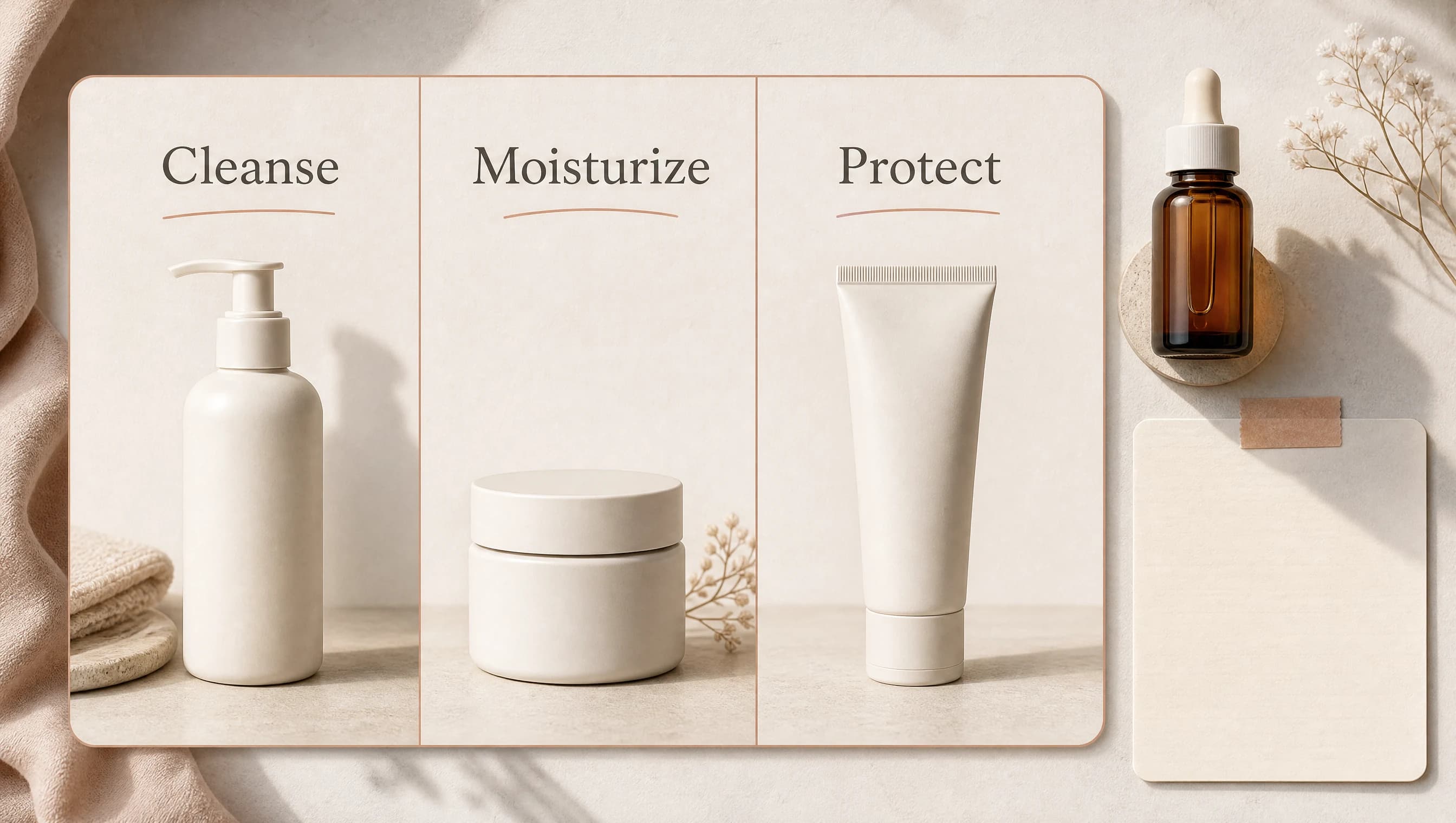
Imagine that your moisturizer already contains glycerin and an occlusive ingredient. You are considering a hydrating serum because a routine diagram says everyone needs one. The useful next question is what the serum would change for you: a preferred feel, a specific missing role or simply another bottle.
The label alone cannot tell you whether an extra layer will improve comfort. It can, however, expose overlap. That is enough to pause a purchase that otherwise seems compulsory. Our ceramides versus hyaluronic acid guide examines another common case where complementary ingredients are mistakenly presented as rivals.
For a comparison within the humectant category, see glycerin versus hyaluronic acid. Sharing a role does not make two products identical, and different ingredient names do not automatically create different routine needs.
Use the categories to ask better questions
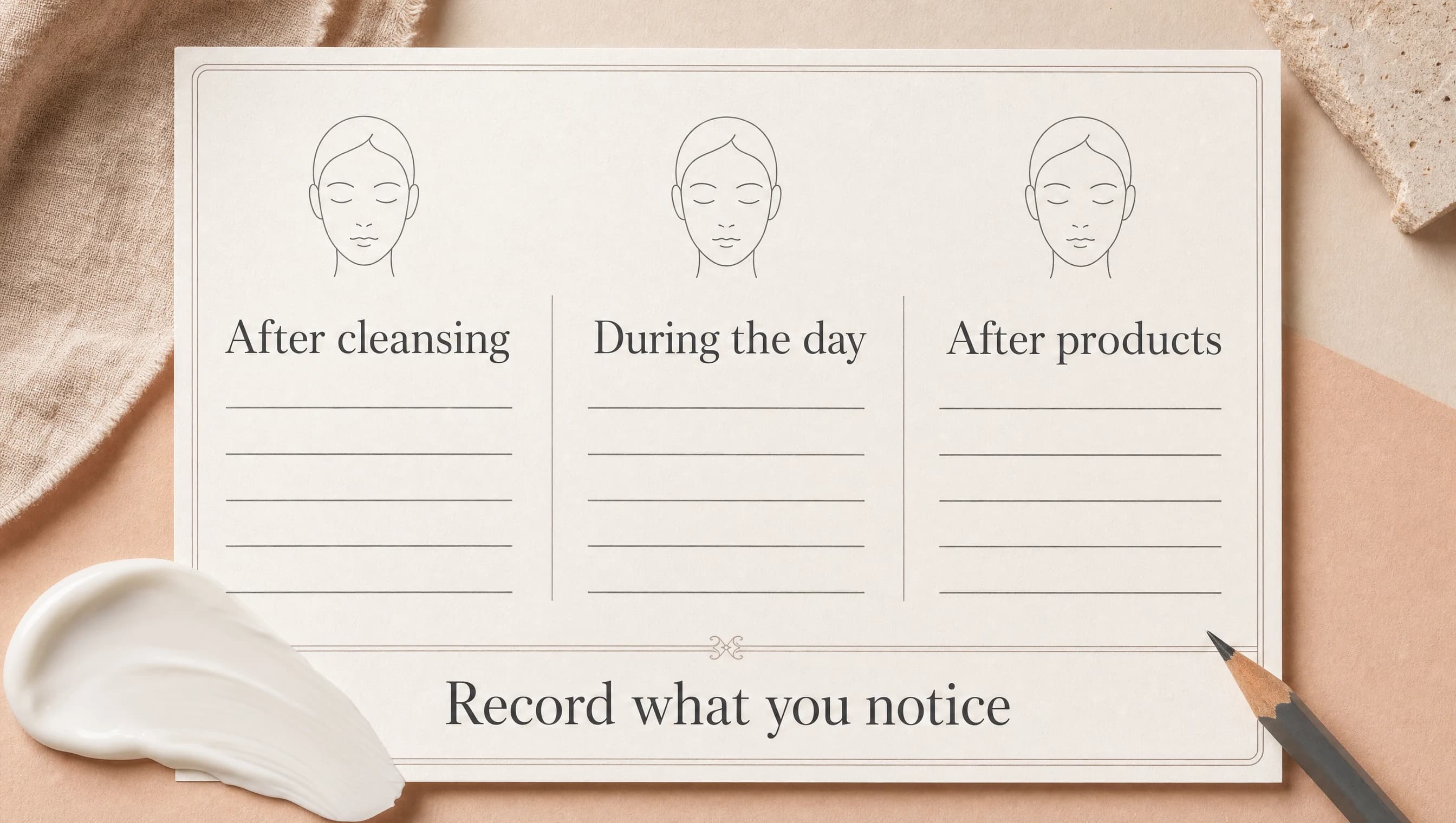
Try a small worksheet with the product in front of you:
- Example inventory: “My moisturizer already combines ingredients with more than one of these roles.” The next question is whether the finished product is comfortable.
- If it is comfortable, a separate humectant, emollient and occlusive do not each need their own bottle.
- If it feels insufficient or too heavy, describe that specific problem before choosing an extra layer or a replacement.
- Check the intended area and any treatment directions before changing how the product is used.
Do not infer that a product must be strongly occlusive because it contains a single familiar ingredient, or that a humectant-heavy description guarantees a light finish. Formula context matters. This worksheet supports a purchase decision; it cannot measure water loss or diagnose a damaged barrier.
Our moisturizer guide for dehydrated-feeling skin looks at that broader concern. If you are trying to understand discomfort rather than shop, our skin-barrier concern checklist can help organize the observations worth discussing with a professional.
Keep technique and treatment claims separate
An occlusive moisturizer and the trend called slugging are not identical ideas. Many ordinary creams already include occlusive ingredients; adding a separate heavy final layer is an additional routine decision, not the inevitable conclusion of learning this term.
Likewise, a moisturizer ingredient's function does not authorize mixing raw ingredients at home or changing prescribed treatment instructions. Work with finished products and their labels. For dry, flaky areas, our dry, flaky skin moisturizer guide offers a more relevant next step than collecting every ingredient category.
Frequently asked questions
Do I need one product from each category?
No. A finished moisturizer can combine roles. Consider an extra product only when you can identify a useful job it would add.
Is an occlusive always a separate ointment?
No. Creams and lotions can contain occlusive ingredients too. The category describes a function rather than a required package type.
Can I rank moisturizers by counting familiar ingredients?
No. Counting names cannot account for the complete formula, how you use it or your individual experience. Use the list to answer specific questions instead.
Sources
DermNet: Emollients and moisturisers (dermnetnz.org) — https://dermnetnz.org/topics/emollients-and-moisturisers
CeraVe: Moisturizing Cream (cerave.com) — https://www.cerave.com/skincare/moisturizers/moisturizing-cream/
Vanicream: Moisturizing Cream (vanicream.com) — https://www.vanicream.com/product/vanicream-moisturizing-cream
Clear guidance, checked before publication.
Solvi articles are structured by our editorial team and reviewed for clarity, consistency, and responsible health language. We update pages when guidance or product information changes.