Can You Use Niacinamide With Vitamin C? Yes—Here’s the Layering Method That Makes Sense
Niacinamide and vitamin C can share the same routine. The real decision is not whether the ingredients “cancel out,” but which vitamin C format, niacinamide texture, and morning-routine pace your skin will actually tolerate and sustain.


Yes—you can use niacinamide with vitamin C in the same skincare routine, including one after the other in the morning. Rather than chemically canceling each other out on your face, they can be a practical pairing for people looking to support a more even-looking, brighter, better-hydrated complexion.
The more useful question is: which versions can your skin live with every day? Vitamin C can range from a quick-absorbing, low-pH L-ascorbic acid liquid to a creamier derivative serum, while niacinamide may arrive as a weightless toner, a bouncy gel, or a barrier-minded moisturizer. Your best order follows texture and comfort—not old internet ingredient folklore. Clinical research supports topical niacinamide’s effects on visible uneven tone and signs of photoaging, while topical vitamin C has antioxidant, photoprotective, and pigment-focused applications; formulation stability remains especially important for vitamin C.
The short answer: yes
The lingering warning against this duo comes from a chemistry concern that has been stretched far beyond a bathroom counter. Modern finished skincare products are formulated, tested, and packaged as products—not improvised by mixing raw powders in the palm of your hand. Current skincare guidance and the presence of both ingredients in formulated products support using niacinamide and vitamin C together when your skin is comfortable with them.
That does not mean every two-serum combination feels equally elegant. L-ascorbic acid—the classic pure form of vitamin C—is usually formulated at a low pH and may feel tingly, watery, or slightly tacky. A high-strength niacinamide serum can be more substantial, often with a gel-slip finish. Put both on an already reactive face, plus exfoliating acids and a strong cleanser, and the issue may be irritation from a crowded routine—not a forbidden ingredient marriage.
[Editor’s Note] Think of this pair as a styling problem, not a chemistry exam: fewer layers, compatible finishes, and daily sunscreen will usually make the routine more successful.
The smart-pairing edit
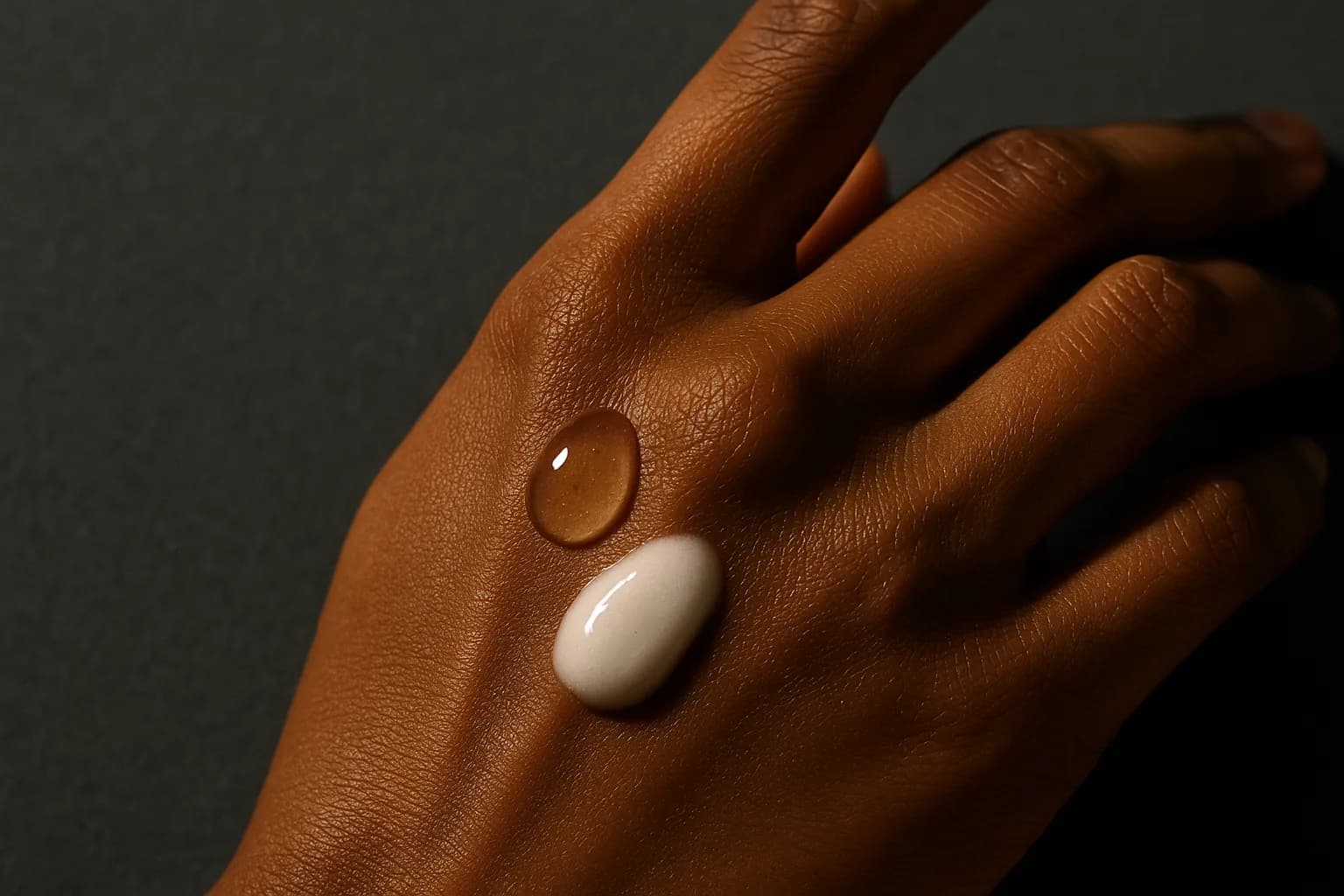
The appeal is division of labor. Vitamin C is often chosen for antioxidant support and a more luminous, even-looking tone; niacinamide is valued for its barrier-supportive role and its ability to improve the look of sallowness, uneven tone, fine lines, and red blotchiness in clinical studies. Niacinamide has also been shown to increase key stratum-corneum lipids and reduce transepidermal water loss in dry skin.
In a morning routine, that can translate to a sensible visual strategy: a vitamin C step beneath sunscreen, with niacinamide helping the overall routine feel less like an all-out active assault. It is not a substitute for sun protection, and neither serum makes sunscreen optional. The American Academy of Dermatology recommends broad-spectrum, water-resistant SPF 30 or higher.
| If your priority is... | Start with this vitamin C direction | Pair with this niacinamide format | The tradeoff to know |
|---|---|---|---|
| Maximum classic vitamin C experience | L-ascorbic acid serum | Simple 2–5% watery serum or light lotion | Can tingle; packaging and freshness matter |
| Sensitive-feeling or dry skin | A vitamin C derivative in a hydrating serum or cream | Niacinamide moisturizer | Often gentler-feeling, but derivative evidence and performance vary by formula |
| Oily or humid-climate mornings | Thin liquid or fast-dry gel vitamin C | Fluid niacinamide serum | Too many humectant layers can feel sticky under SPF |
| One-step simplicity | A professionally formulated product containing both | None required | Less flexibility to adjust one active at a time |
| Texture-first minimalism | Vitamin C serum only | Niacinamide already in moisturizer or sunscreen-adjacent daytime cream | Check the full ingredient list so you do not accidentally duplicate several actives |
Vitamin C derivatives are not interchangeable with L-ascorbic acid. They were developed in part to address stability and delivery challenges, but their conversion, supporting data, texture, and concentration vary. “Vitamin C” on the front label is only the beginning of the story.
Layer by texture, not by ingredient folklore

When you own two separate products, apply the more fluid product first and move toward the more emollient one. This is not a rule about forcing a particular pH sequence; it is simply a way to avoid pilling and to keep a thin, fast-spreading formula from skating over a richer layer.
A streamlined AM order looks like this:
- Cleanse gently, or rinse if that is all your skin needs in the morning.
- Apply the thinnest treatment. For many people, this is a watery L-ascorbic acid serum.
- Follow with niacinamide if it is a slightly thicker gel, milky serum, or lotion.
- Add moisturizer if your skin wants more cushion.
- Finish with broad-spectrum sunscreen, SPF 30 or higher.
If your niacinamide is the thinner formula and your vitamin C is a creamy emulsion, reverse steps two and three. If both are thin and water-based, either order is reasonable; use the sequence that applies smoothly without rolling into little flakes. You do not need a 10- or 20-minute pause between them. Give each layer just enough time to spread, then continue.
Avoid turning application into a DIY formulation project. Don’t pre-mix full droppers of two products in a jar, and do not judge compatibility by how a mixture looks in your palm. Layer finished formulas as directed, one light layer at a time.
A sensitive-skin version of the pairing

For sensitive skin, compatibility is personal. The gentlest plan is to introduce only one new active at a time, use it a few mornings a week at first, and make the other step a familiar, bland moisturizer. That way, if persistent stinging, itching, redness, or rash develops, you have a clearer clue about what did not agree with you.
A low-drama approach can look like this:
- Choose one vitamin C product with a short ingredient list and a texture you enjoy.
- Keep niacinamide in a moisturizer rather than adding a second concentrated serum.
- Skip scrubby cleansers and leave-on exfoliating acids in the same morning while you are getting started.
- Apply sunscreen generously as the final layer.
- Patch test a new product according to its label directions; stop using it if it causes a concerning reaction and seek medical advice for severe or persistent symptoms.
If a classic L-ascorbic acid formula consistently stings, that is useful feedback—not a sign you need to push through. A derivative-based vitamin C serum or a lower-complexity routine may be a more comfortable fit. Conversely, if a 10% niacinamide serum makes your face feel hot or congested, try fewer niacinamide layers or choose a moisturizer with niacinamide instead. The concentration alone does not predict elegance, tolerance, or value; the full formula and how often you use it matter.
How to shop for the pair without buying twice
A sharp shopping edit starts with your existing products. Niacinamide is frequently tucked into moisturizers, sunscreens, and soothing serums, so you may already be using it without realizing it. Read the ingredient list before purchasing a standalone serum. If niacinamide is already in your cream and you like the finish, your only missing step may be vitamin C.
For vitamin C, review these details:
- The form: Look for L-ascorbic acid if you specifically want the classic, extensively studied route. Look into derivatives if stability, a creamier feel, or lower-pH sensitivity is your bigger concern.
- The package: Dark or opaque, air-limiting packaging is particularly relevant for L-ascorbic acid, which is vulnerable to degradation.
- The format: A liquid can slip under sunscreen beautifully; a silicone-forward serum can leave a velvet primer effect; a cream can replace part of your moisturizer step.
- The formula around it: Fragrance, essential oils, exfoliating acids, and a dense active list may matter more to sensitive users than the headline ingredient.
- The replacement rhythm: A large bottle that oxidizes before you finish it is not necessarily a better value than a smaller, well-packaged one you can use consistently.
For niacinamide, decide whether you need a treatment or merely a supporting player. A fluid serum is easy to customize and may suit combination skin. A translucent gel can feel refreshing in warm weather but may need moisturizer over it. A lotion or cream feels less fussy and is often the most sensible choice for dry skin, winter routines, or anyone tired of a crowded shelf.
The best value is not automatically the highest percentage or the most elaborate ingredient deck. It is the format that layers cleanly with your sunscreen, stays usable through the bottle, and makes your skin feel comfortable enough for consistent wear.
Morning routine blueprints
The two-serum routine
- Gentle cleanse
- Thin vitamin C serum
- Niacinamide serum
- Moisturizer, if needed
- Broad-spectrum SPF 30+
The sensitive-skin shortcut
- Gentle cleanse
- Hydrating vitamin C derivative serum
- Niacinamide moisturizer
- Broad-spectrum SPF 30+
The one-active approach
- Gentle cleanse
- Vitamin C serum
- Moisturizer containing niacinamide
- Broad-spectrum SPF 30+
All three count. There is no bonus prize for the greatest number of droppers. Give a new routine enough uninterrupted time to assess its feel and visible effect, and keep expectations grounded: skincare can support the appearance of tone, brightness, and texture, but it is not a guaranteed fix for every concern.
Related reading
- How to Tell If Your Vitamin C Serum Is Oxidized
- Hyaluronic Acid Serum for Sensitive Skin
- Best Serum for Oily Skin: Choose by Concern
Frequently asked questions
Can you use niacinamide with vitamin C every day?
Often, yes—if both products are comfortable on your skin. Start less often if either formula is new, acidic, or prone to stinging for you, then adjust based on tolerance.
Should vitamin C or niacinamide go first?
Apply the thinner texture first. A watery vitamin C serum commonly goes before a gel or lotion-like niacinamide product, but a thin niacinamide essence can go first if your vitamin C is a cream.
Can I use both in the morning?
Yes. The morning is a natural place for the pair, especially when you finish with broad-spectrum sunscreen. Vitamin C is not sunscreen and does not replace it.
Do I need to wait between niacinamide and vitamin C?
No lengthy wait is necessary. Let the first layer spread and settle for a moment, then apply the next one. Waiting may help only if you personally prefer the feel of slower layering.
What if the combination stings?
Simplify. Use one active at a time, switch to a gentler-feeling vitamin C format, move niacinamide into moisturizer, or use the products in separate routines. Discontinue a product that causes a concerning reaction.
Sources
- PubMed — “Topical Vitamin C and the Skin: Mechanisms of Action and Clinical Applications”
- PubMed — “Stability, Transdermal Penetration, and Cutaneous Effects of Ascorbic Acid and Its Derivatives”
- PubMed — “Nicotinamide Increases Biosynthesis of Ceramides as Well as Other Stratum Corneum Lipids”
- PubMed — “Topical Niacinamide Reduces Yellowing, Wrinkling, Red Blotchiness, and Hyperpigmented Spots in Aging Facial Skin”
- American Academy of Dermatology
Clear guidance, checked before publication.
Solvi articles are structured by our editorial team and reviewed for clarity, consistency, and responsible health language. We update pages when guidance or product information changes.

Iris Kim
Advanced Skincare Writer. Iris happily gets lost in retinoids, peptides, face oils, and emerging actives. Her goal is to make advanced skincare feel considered and understandable instead of intimidating.