Hyaluronic Acid on Damp or Dry Skin: Read the Label
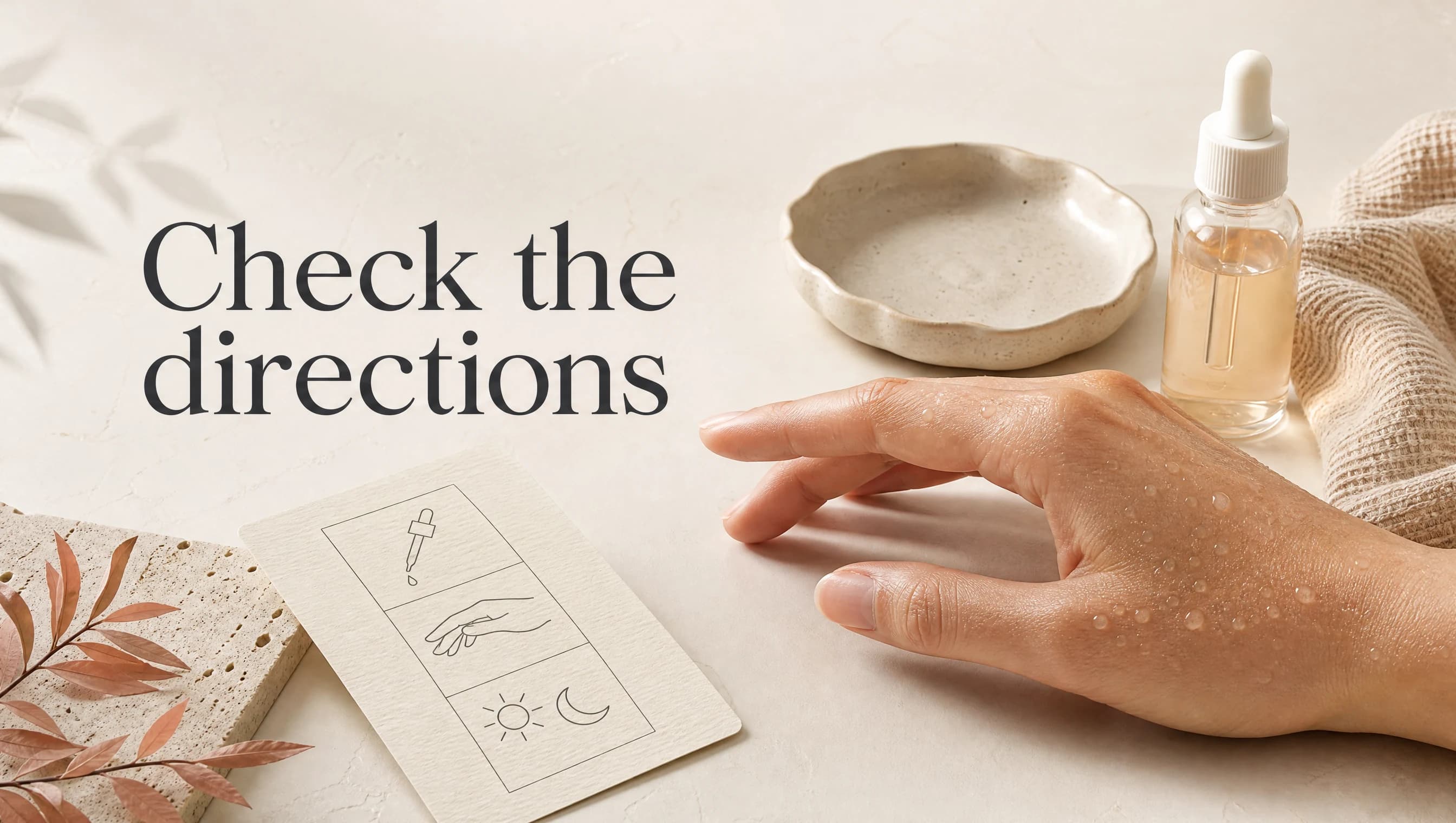
Hyaluronic acid does not create one universal damp-skin rule for every product. Follow the directions for your specific serum or moisturizer. General advice to moisturize damp skin is useful, but it should not override instructions for another treatment in your routine.
For example, The Ordinary's current Hyaluronic Acid 2% + B5 with Ceramides directions specify a few drops morning and evening without requiring damp skin in the usage steps. That does not prove dry application is superior; it shows why a label-based answer is more accurate than an absolute social-media rule.
Separate a serum instruction from moisturizer advice
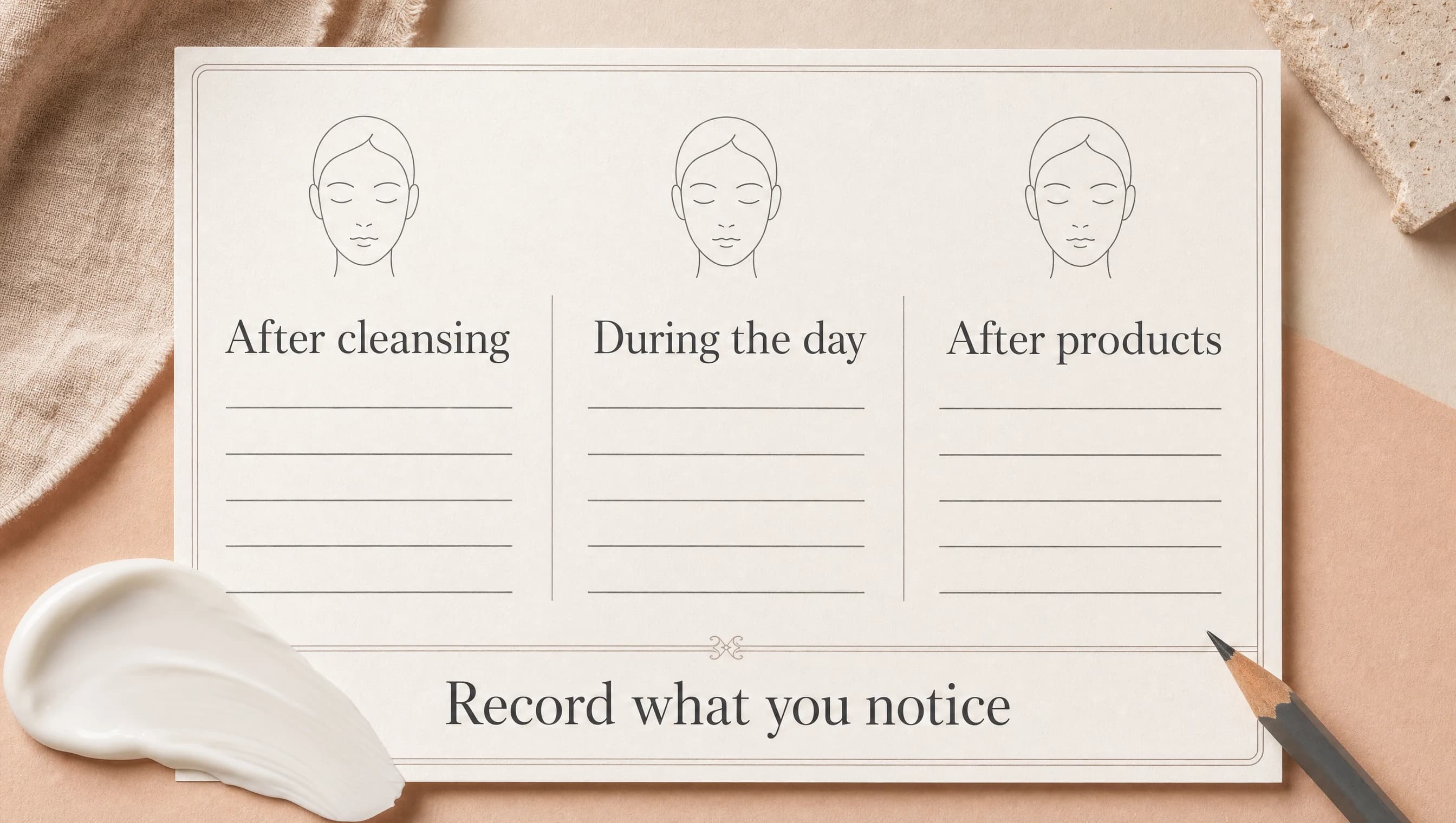
The AAD recommends applying moisturizer while skin is damp in its budget-friendly routine guidance. That recommendation concerns retaining moisture after washing. It is not a claim that every hyaluronic acid serum stops working on dry skin.
| Situation | What to check first | Practical interpretation |
|---|---|---|
| Your HA product explicitly says damp skin | Its usage directions | Follow that product's instruction |
| Your HA serum does not specify skin dampness | The rest of its directions | Do not invent a compulsory wet-skin requirement |
| You are applying ordinary moisturizer after washing | Moisturizer and routine directions | Damp-skin moisturizer advice may apply |
| Another treatment requires dry skin | Treatment label or prescriber instructions | Keep that requirement in place |
The Ordinary serum's usage page and the AAD routine guide answer different questions. Read each within its own scope.
Identify the exact product and its role
Hyaluronic acid can be part of a serum, lotion or richer cream. A formula containing it may already serve as your moisturizer. You do not need to buy a separate serum simply because a routine diagram shows one.
Record the full product name, intended area and directions. If you have several versions from the same brand, check the bottle you actually own. A reformulated serum or a different regional product may have different instructions despite similar front-label wording.
Our niacinamide versus hyaluronic acid guide helps distinguish ingredient roles. For whole-product choices, use our guide to moisturizers for dehydrated-feeling skin. Neither page can determine the cause of persistent discomfort from a label alone.
Give treatment instructions priority
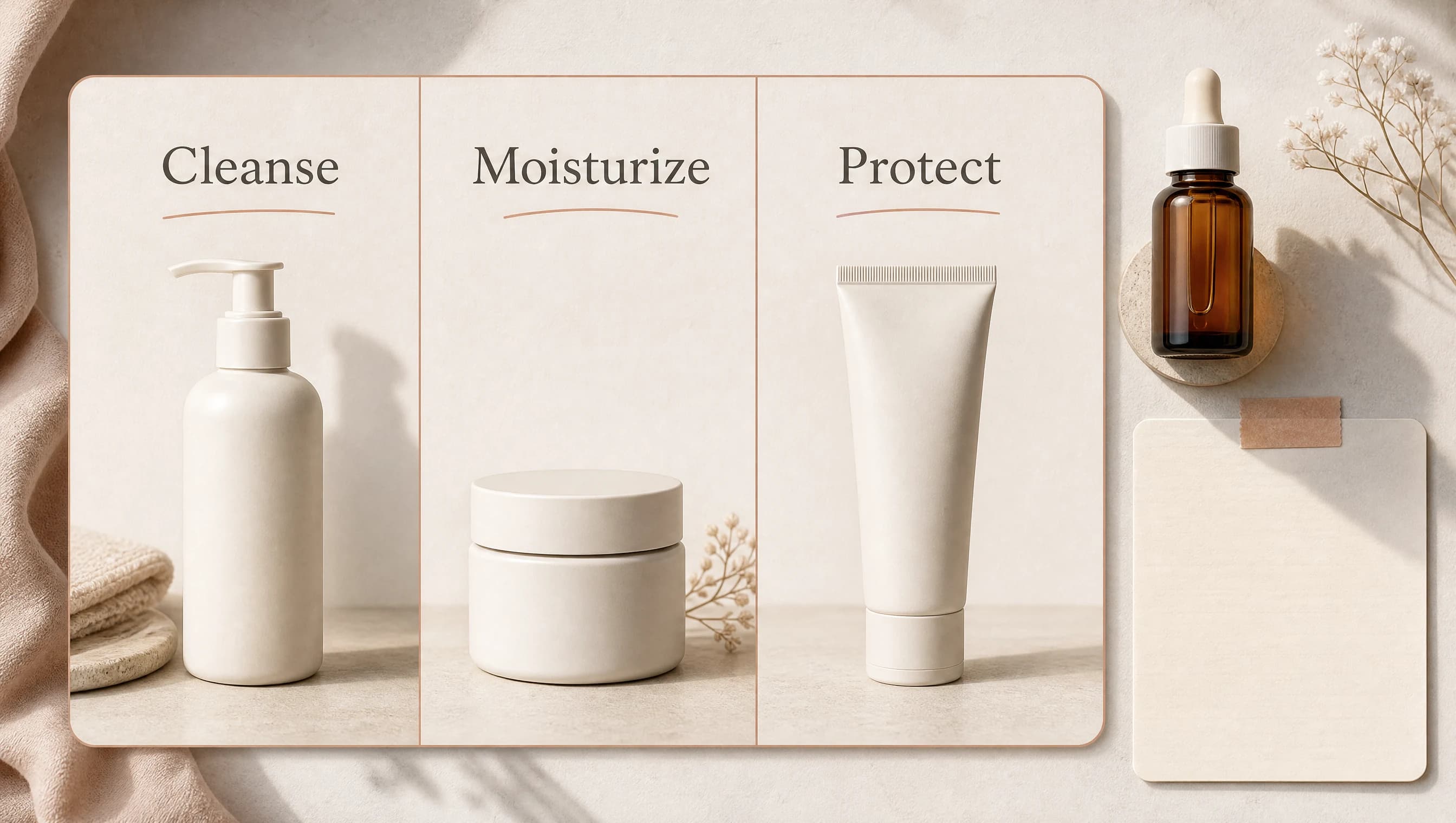
If another product requires dry skin, do not disregard that instruction to satisfy a generic HA tip. Likewise, a prescribed sequence should not be rearranged because an ingredient infographic appears simpler.
Write the treatment requirement beside the relevant step, then place optional cosmetic products only where they fit without conflicting with it. If you cannot reconcile the directions, ask your pharmacist, prescriber or the product manufacturer rather than constructing a compromise from unrelated advice.
The Ordinary's layering guide generally places water-based products before heavier formats. It is a guide to its product types, not permission to override a medicine's directions. The distinction between ingredient roles is explained further in humectants, emollients and occlusives.
Troubleshoot the routine without adding complexity
If the serum feels sticky or pills under another product, check the amount and sequence specified on the labels. Do not assume that every visible roll of product is dead skin or that more water will necessarily solve the issue.
A useful note could read: “HA product: exact name. Label: apply to damp skin. My other treatment: follow its separate dry-skin instruction.” That identifies two different instructions to resolve in the actual sequence. Do not make every step damp merely because one product calls for it; keep any optional adjustment within each product’s directions.
If the concern is burning or persistent irritation, stop experimenting with the irritating product and seek advice. Our skin-barrier concern checklist can help you organize the history, while the dry, flaky skin moisturizer guide addresses format choices.
Keep the decision small
You may only need to read one line on your bottle and return to a simple routine. A mist, additional serum and new moisturizer are not required to resolve a question about application dampness.
Frequently asked questions
Will HA fail if my face is dry?
That is not a universal rule. Follow your exact product's directions and avoid turning general moisturizer advice into a claim about every serum.
Must I buy a facial mist?
No. A damp-skin instruction does not automatically require another product. Check what the manufacturer actually asks you to do.
What if my treatment says to use dry skin?
Preserve that requirement. Ask a pharmacist or prescriber if you need help fitting optional cosmetics around it.
Sources
The Ordinary: Hyaluronic Acid 2% + B5 with Ceramides (theordinary.com) — https://theordinary.com/en-us/hyaluronic-acid-2-b5-serum-with-ceramides-100637.html
American Academy of Dermatology: Skin care on a budget (aad.org) — https://www.aad.org/public/everyday-care/skin-care-basics/care/skin-care-budget
The Ordinary: Skincare layering guide (theordinary.com) — https://theordinary.com/en-us/skincare-layering-guide.html
Clear guidance, checked before publication.
Solvi articles are structured by our editorial team and reviewed for clarity, consistency, and responsible health language. We update pages when guidance or product information changes.