Why Does My Face Feel Tight After Washing? What to Check

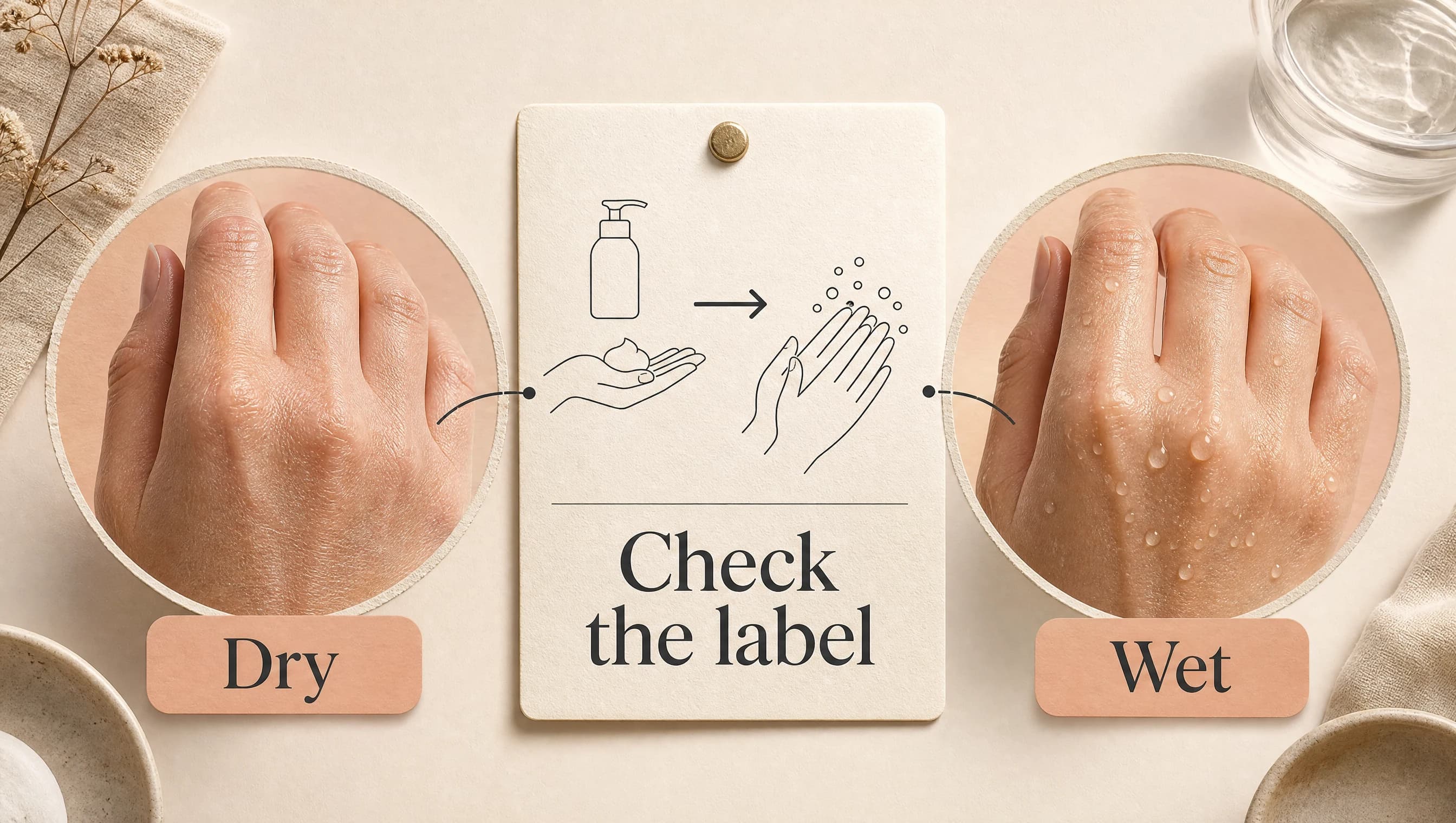
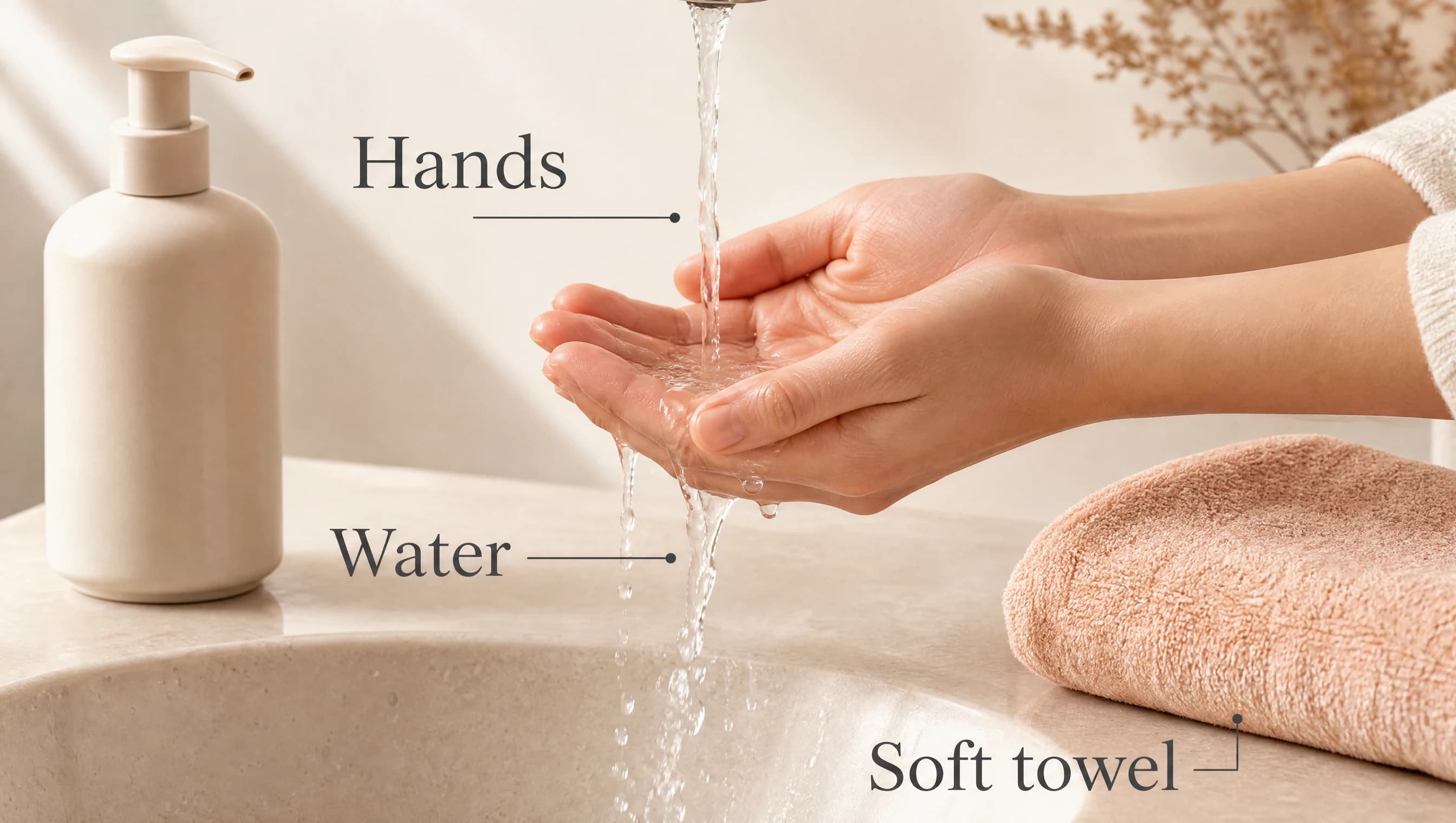
A tight feeling after washing is a reason to review the wash, not a reliable sign that your face is extra clean. Start with water temperature, rubbing, repeated cleansing and the product directions. Also consider whether another product changed around the same time.
Tightness alone does not diagnose a damaged skin barrier or identify one offending ingredient. Persistent or worsening discomfort deserves more attention than repeatedly switching to whatever cleanser is described as the gentlest.
Check the wash before adding another product
| Check | What to look for |
|---|---|
| Water | Are you using hot water rather than a comfortable lukewarm wash? |
| Friction | Are you scrubbing, brushing or rubbing with a towel? |
| Repetition | Have makeup removal, cleansing and another wash become automatic? |
| Directions | Are you using the correct wet/dry method and rinsing as instructed? |
| Other changes | Did a new leave-on product appear at the same time? |
The American Academy of Dermatology’s washing guidance supports gentle technique and avoiding scrubbing. The table turns that into a practical check; it is not a test that can diagnose the cause of your symptoms.
It should not replace assessment of ongoing painful or irritated skin.
Separate dry skin from a new reaction
Dryness, tightness and product reactions can overlap in how they feel. Do not assume that one sensation proves a particular diagnosis, or that it must be caused by the last ingredient you read about online.
Our dry-versus-dehydrated skin guide explains the terminology. If discomfort continues even after moisturizing, why skin still feels dry after moisturizer considers the broader routine.
The AAD’s moisturizer guidance advises seeking a dermatologist when dryness worsens or becomes painful, cracked, bleeding, stinging or very irritating. That is a different situation from simply deciding which cleanser texture you prefer.
Remove unnecessary friction from makeup removal
If tightness follows repeated attempts to remove one cosmetic, the removal task may be the part of the routine to reconsider. Do not keep increasing pressure or adding washes to chase a completely stripped feeling.
The makeup-remover guide for sensitive skin compares alternative formats. A micellar-water shortlist may be useful if you prefer a wipe-on method, but repeated wiping still needs attention.
Our sensitive-skin double-cleansing guide helps decide whether a second step addresses a real need. Two products are not automatically a gentler solution than one.
Make one understandable change
Use a short observation rather than a diagnosis: “Tightness starts immediately after the wash; I recently changed the cleanser and began using hotter water.” That gives you two concrete details to discuss or review. Keep further changes limited enough to describe what happened; if symptoms persist, the record can support an appropriate clinical conversation.
The AAD’s new-product guidance advises testing products before broader introduction and stopping a product if a reaction develops. If you have a significant reaction, repeatedly reapplying it to “confirm” the result is not a useful experiment.
Do not add exfoliation merely because dry skin looks flaky. The AAD’s moisturizer guidance specifically cautions against stripping dry, peeling skin through exfoliation. Address the concern before adding another active step.
Frequently asked questions
Does tight skin mean the cleanser worked well?
It is not a useful performance target. A comfortable wash should not be judged by how stripped the skin feels afterward.
Should I immediately buy a richer moisturizer?
First review the wash and the recent changes. Adding a product does not explain why the feeling appeared, and persistent symptoms may need assessment.
Can the ingredient list tell me exactly what caused it?
Not by itself. The timing, complete formula and individual response matter; an online ingredient guess is not an allergy diagnosis.
Sources
American Academy of Dermatology: Face washing 101 (aad.org) — https://www.aad.org/public/everyday-care/skin-care-basics/care/face-washing-101
American Academy of Dermatology: moisturizer choices and persistent dryness (aad.org) — https://www.aad.org/public/everyday-care/skin-care-basics/dry/pick-moisturizer
American Academy of Dermatology: testing new products and reactions (aad.org) — https://www.aad.org/public/everyday-care/skin-care-secrets/prevent-skin-problems/test-skin-care-products
Clear guidance, checked before publication.
Solvi articles are structured by our editorial team and reviewed for clarity, consistency, and responsible health language. We update pages when guidance or product information changes.