CeraVe Hydrating vs Foaming Cleanser: Which Fits Your Wash?
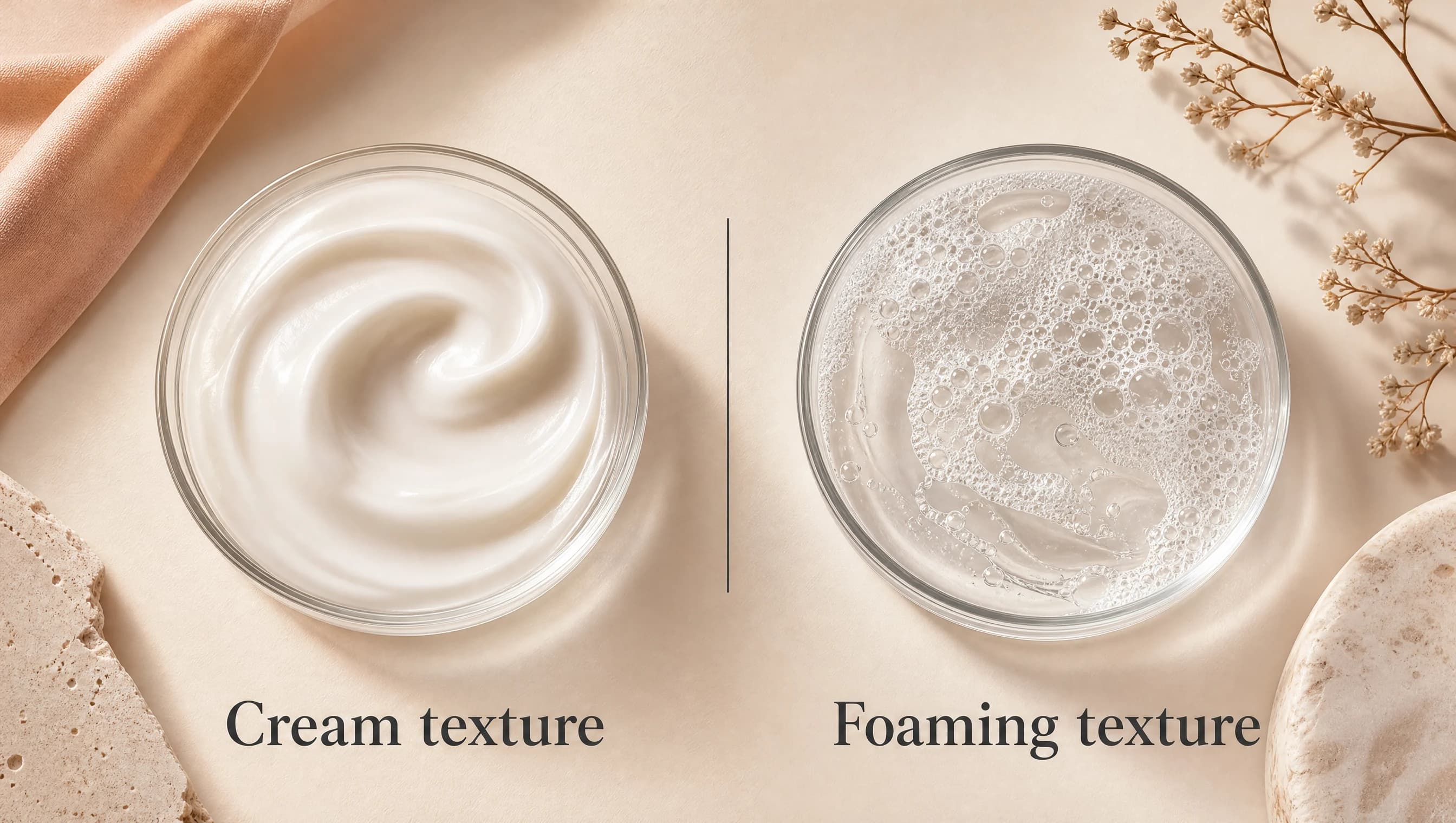
CeraVe Hydrating Facial Cleanser is the more natural starting point if your skin tends dry and you want a cream-textured wash. CeraVe Foaming Facial Cleanser is the more natural starting point if your skin tends oily and you prefer a foaming gel. Those are the products’ labeled positions, not a promise that one will suit every dry or oily face.
The useful difference is the formula and washing experience—not whether one “really cleans.” CeraVe describes both as removing makeup. Neither product page establishes that its cleanser removes every waterproof formula better than the other.
Hydrating and Foaming at a glance
This comparison covers the current US Hydrating Facial Cleanser and Foaming Facial Cleanser. It does not cover Hydrating Cream-to-Foam, Hydrating Foaming Oil Cleanser, or an acne-treatment cleanser.
| Decision point | Hydrating Facial Cleanser | Foaming Facial Cleanser |
|---|---|---|
| CeraVe’s skin-type positioning | Normal to dry | Normal to oily |
| Texture description | Cream | Foaming gel |
| A useful reason to consider it | You want a cream-textured wash | You prefer a foaming-gel wash |
| Ingredients highlighted in the displayed list | Glycerin, ceramides, sodium hyaluronate | Niacinamide, ceramides, hydrolyzed hyaluronic acid |
| Makeup-removal claim | Yes | Yes |
| What the comparison cannot establish | Your individual tolerance or complete removal of every cosmetic | Your individual tolerance or superior removal of waterproof cosmetics |
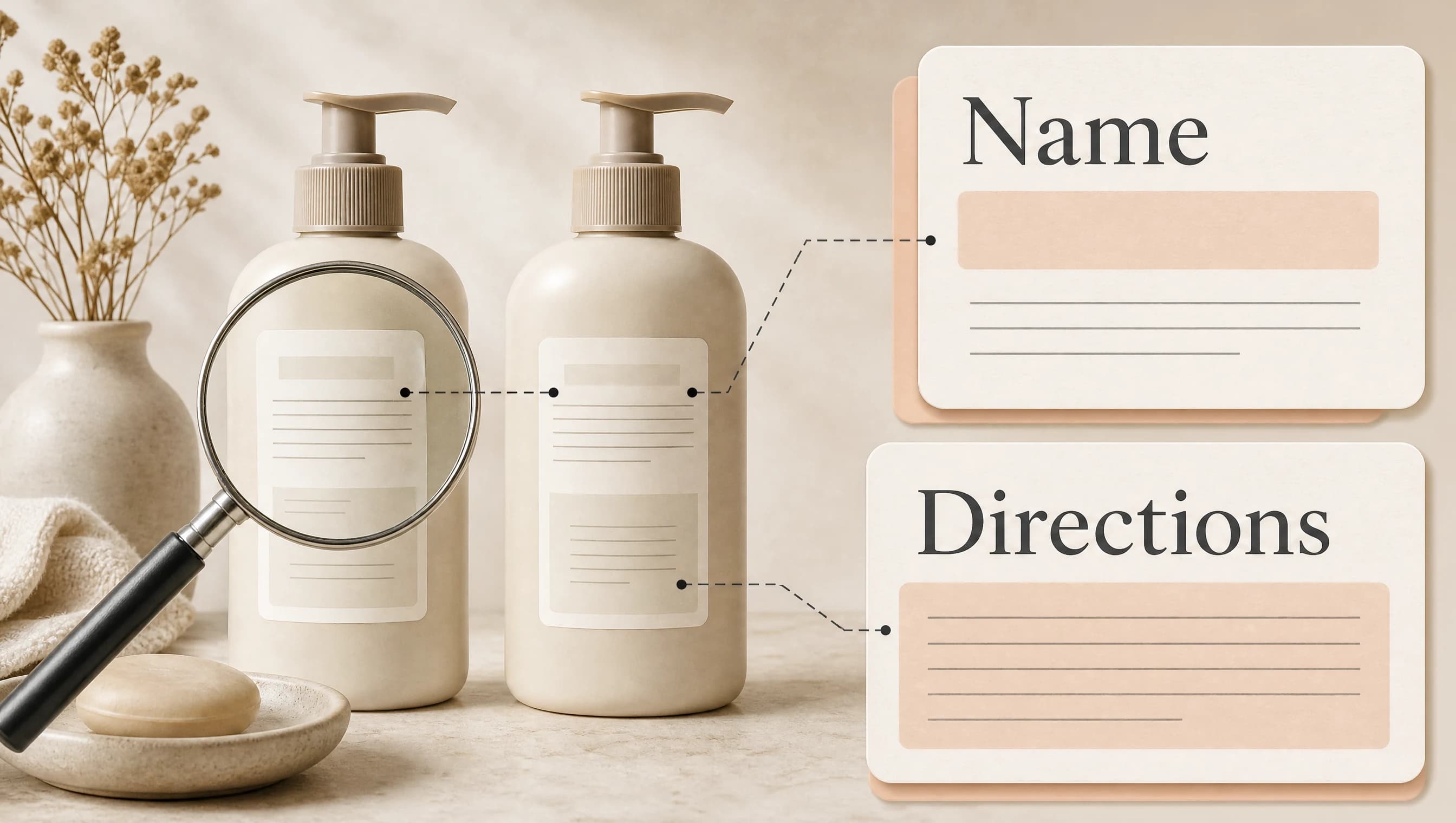
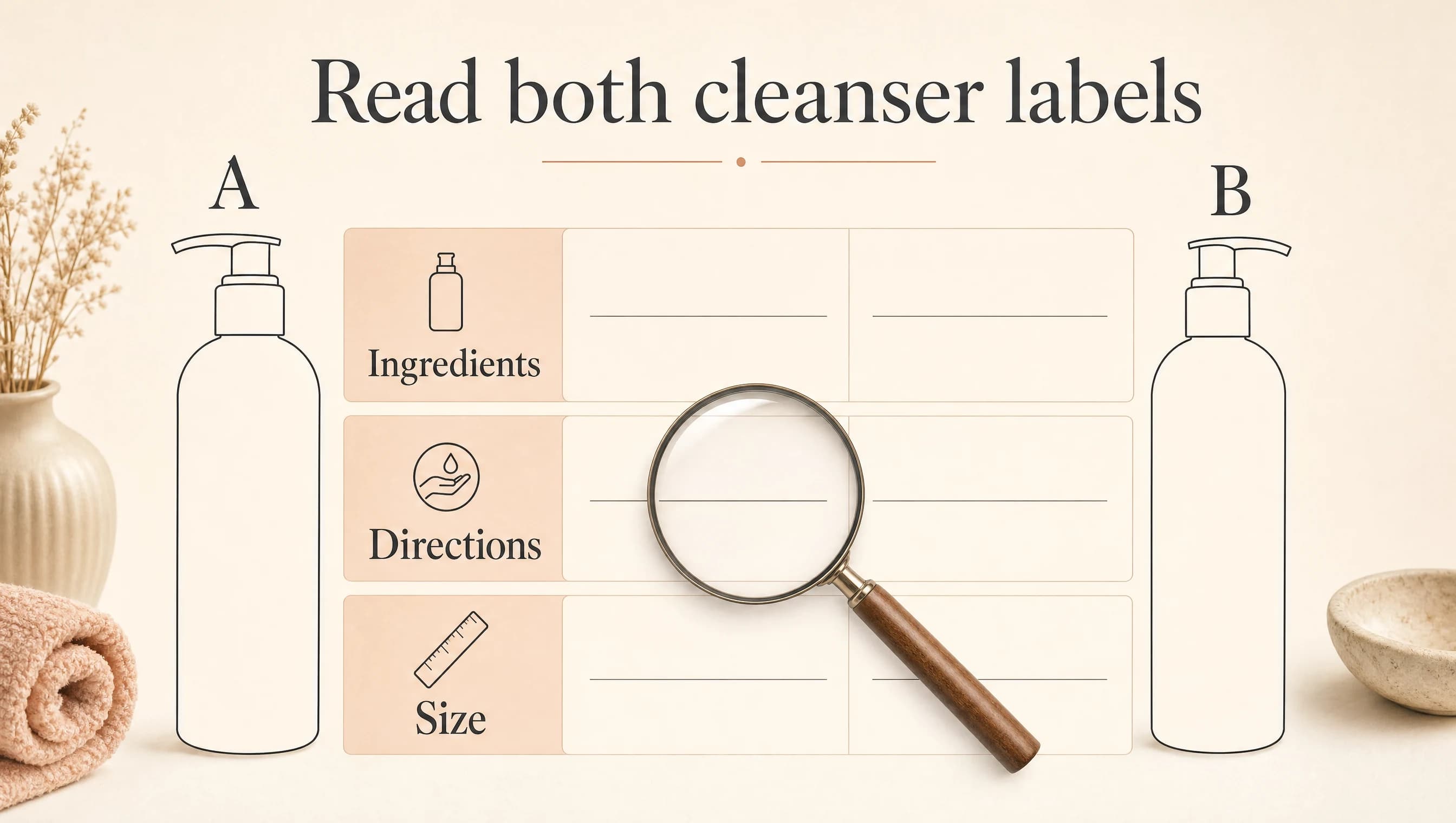
The Hydrating product page and Foaming product page provide the formula descriptions and directions behind this table. Ingredient lists can change; compare them with the product you will actually buy.
Choose by the problem with your current cleanser
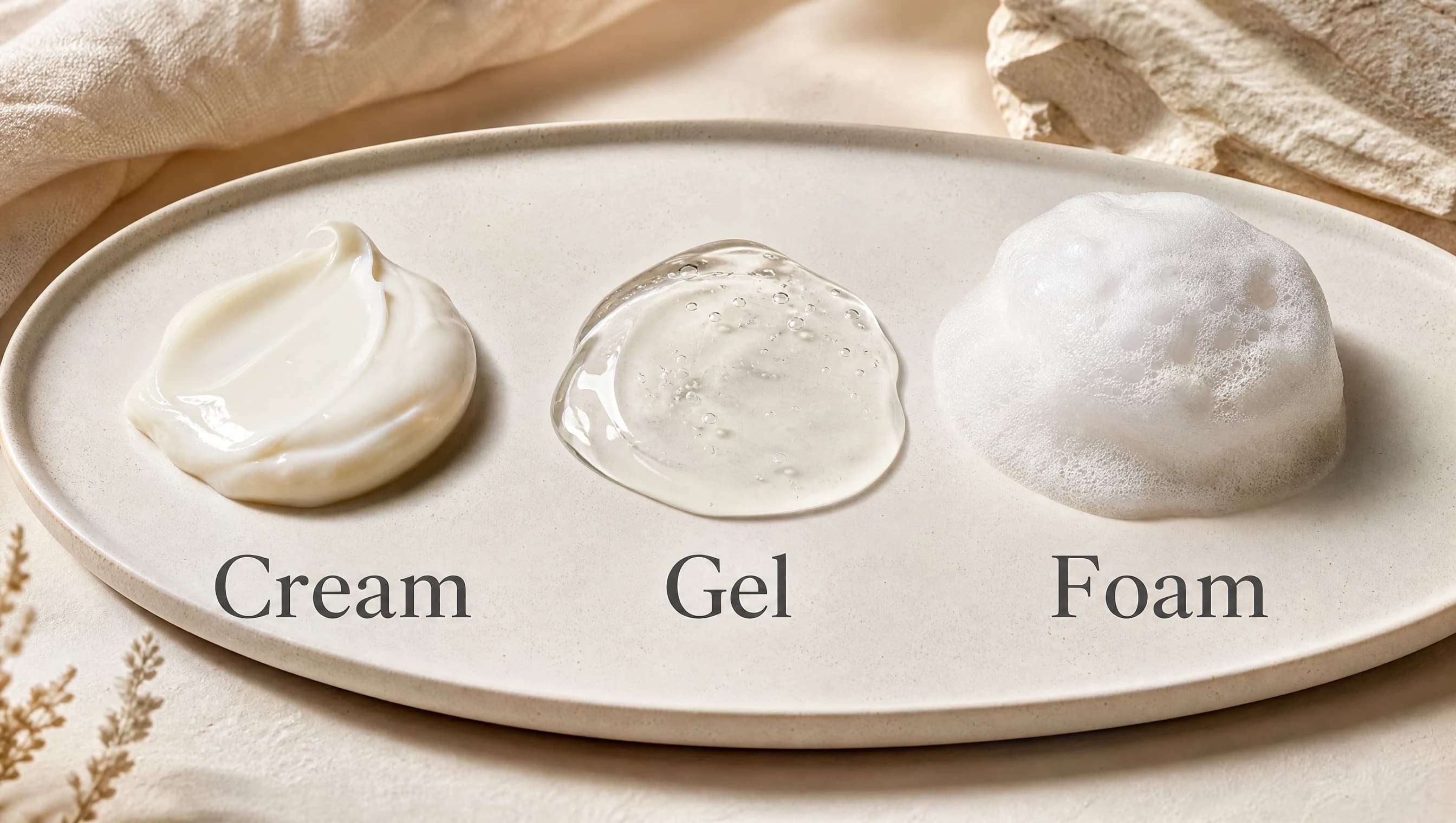
“Dry” and “oily” are useful starting labels, but your current washing experience makes the decision more concrete.
Consider Hydrating first when: you want a cream texture, your skin usually feels dry, or the cleanser you currently use leaves an uncomfortable tight feeling. That last observation is a reason to reconsider the whole washing routine, not proof that a different bottle will fix the problem.
Consider Foaming first when: your skin tends oily, you like working a gel into a lather, and a cream-textured cleanser is not the format you want to keep using. Choose it for that fit—not because foam proves a deeper clean.
Keep your current cleanser when: it removes what you need to remove and leaves your skin comfortable. A comparison is useful for solving a specific problem; it does not create a need to replace a product that works for you.
For a face with different needs in different areas, our combination-skin cleanser guide offers a broader shortlist. You do not need to buy both CeraVe products simply because your T-zone and cheeks behave differently.
What the ingredient lists tell you
Both displayed formulas contain three named ceramides. The Hydrating list includes sodium hyaluronate; the Foaming list includes hydrolyzed hyaluronic acid. Foaming also lists niacinamide, which is absent from the Hydrating list reviewed for this comparison.
These are verifiable formula differences. They are not evidence that either cleanser delivers the same result as a leave-on serum containing a similarly named ingredient. Nor does the list tell us which product will feel better on your face.
The Hydrating formula also lists fatty alcohols such as cetearyl alcohol. Calling it “alcohol-free” would therefore be inaccurate. If you have a known ingredient you avoid, check the exact ingredient name rather than relying on a broad front-label description.
If neither option matches your preferences, the Vanicream versus CeraVe Hydrating comparison examines a different product pair. For more alternatives, use our sensitive-skin cleanser guide without treating “sensitive” as a guarantee of individual tolerance.
Makeup removal is a separate question

It is easy to turn this comparison into “Hydrating for a bare face, Foaming for makeup.” The reviewed labels do not support that split. Both include makeup removal in their product descriptions.
The more useful question is whether your actual makeup or sunscreen remains after gentle washing. A persistent mascara or long-wear foundation is a specific removal task; it does not prove that your skin needs a more aggressive everyday cleanser.
Follow the cosmetic’s removal directions where available. If you are considering a separate removal step, our guide to double cleansing for sensitive skin explains that routine choice. A second cleanse is not a requirement created by choosing Hydrating.
Also check the complete product name. Hydrating Cream-to-Foam and Hydrating Foaming Oil Cleanser are separate formulas. Our comparison of those two cleansers is the relevant page if those are the bottles in your basket.
Keep washing technique consistent
Both product directions begin with lukewarm water, followed by gentle massage, rinsing and patting dry. The American Academy of Dermatology’s face-washing guidance similarly emphasizes fingertips and avoiding scrubbing. It advises limiting washing to twice daily and after sweating.
For a simple comparison, write one baseline sentence: “My current wash removes my usual products, but I dislike its creamy feel.” That gives a foaming format a practical reason to enter the shortlist. If your baseline is “the wash is comfortable and convenient,” there is no replacement problem to solve.
- Identify the exact cleanser, rather than buying by bottle color or an abbreviated listing.
- Use its directions with a gentle washing technique.
- Notice whether the product you wanted to remove is gone and how your skin feels afterward.
- Avoid changing several other products at the same time; otherwise, it becomes harder to understand the change.
Do not invent a longer washing time to make one formula perform like another. More rubbing is not a reliable way to resolve a mismatch between your cleanser and a particular cosmetic.
Frequently asked questions
Is Hydrating only for very dry skin?
No. Its current US positioning includes normal-to-dry skin. You do not need to describe your skin as extremely dry to consider a cream-textured cleanser.
Does oily skin automatically need Foaming?
No. Foaming is marketed toward normal-to-oily skin, but that is a starting point. If another cleanser removes what you need and feels comfortable, oiliness alone is not a reason to replace it.
Do I need Hydrating in the morning and Foaming at night?
That is not a requirement in the reviewed directions. Start with the job you need one cleanser to do before adding a second bottle or a more complicated schedule.
Sources
CeraVe Hydrating Facial Cleanser: product description, ingredients and directions (cerave.com) — https://www.cerave.com/skincare/cleansers/hydrating-facial-cleanser
CeraVe Foaming Facial Cleanser: product description, ingredients and directions (cerave.com) — https://www.cerave.com/skincare/cleansers/foaming-facial-cleanser
American Academy of Dermatology: Face washing 101 (aad.org) — https://www.aad.org/public/everyday-care/skin-care-basics/care/face-washing-101
Clear guidance, checked before publication.
Solvi articles are structured by our editorial team and reviewed for clarity, consistency, and responsible health language. We update pages when guidance or product information changes.