Cleansing Oil vs Cleansing Balm: Choose the Format You Will Use
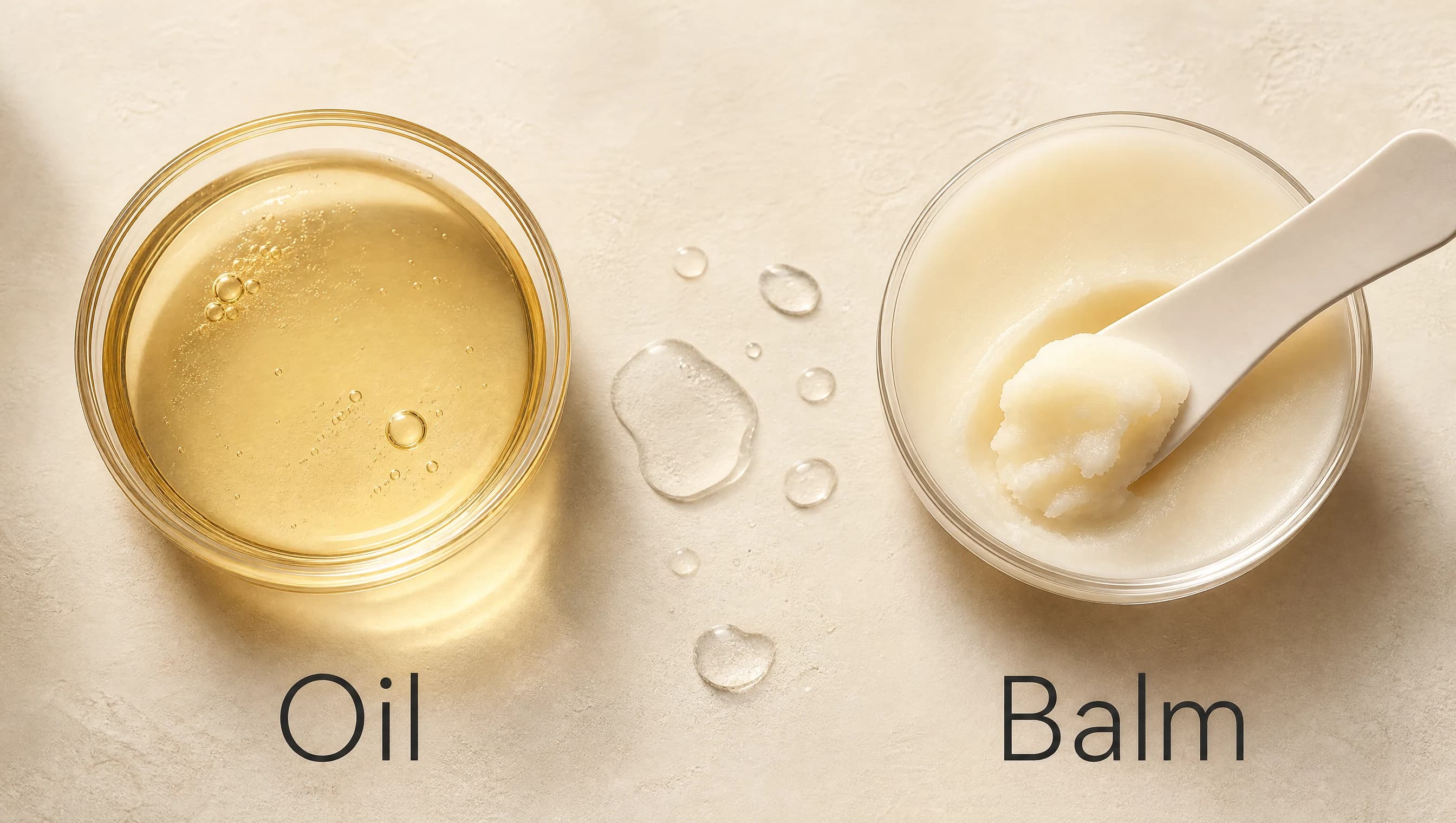
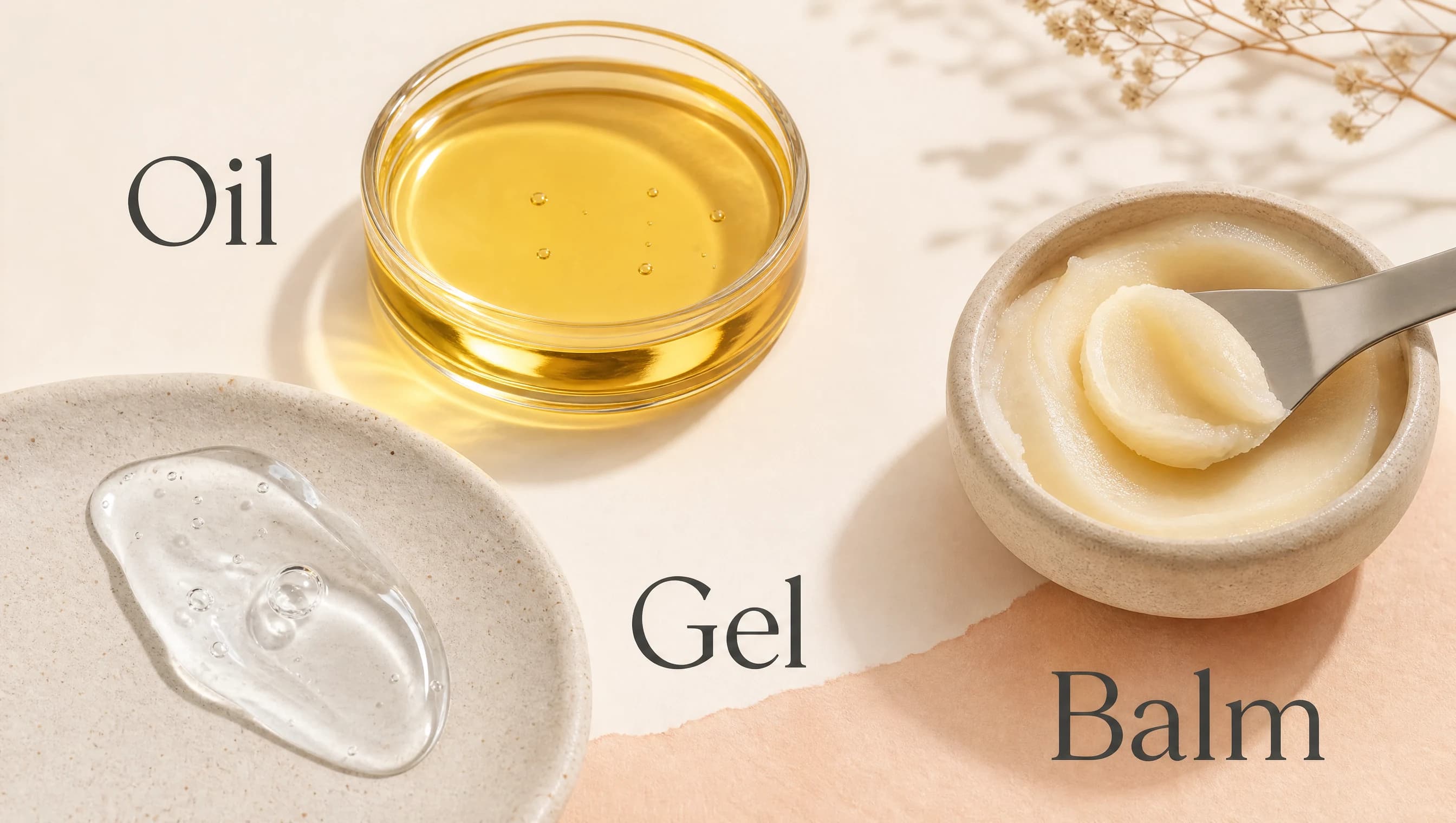
Choose a cleansing oil if you prefer a liquid you can dispense from a bottle. Choose a cleansing balm if you prefer a thicker texture that melts as you work it over the skin. Neither format automatically removes makeup better, suits oily skin better, or requires less careful rinsing.
The important distinction is the finished rinse-off formula, including its directions and eye-area restrictions. A cooking oil, a leave-on facial oil and an emulsifying cleanser are not interchangeable just because all three contain oil.
Compare the handling, not a skin-type stereotype
| Decision | Cleansing oil | Cleansing balm |
|---|---|---|
| Starting texture | Liquid | Usually solid or semi-solid |
| Dispensing preference | Often a pump or pouring bottle | Often a jar or squeeze tube |
| Main practical check | Can you control the dispense without spills? | Can you remove product cleanly and close the container? |
| Rinsing | Follow the specific emulsifying/rinsing directions | Follow the specific melting/rinsing directions |
| Makeup removal | Depends on the formula and makeup | Depends on the formula and makeup |
What two current labels actually say
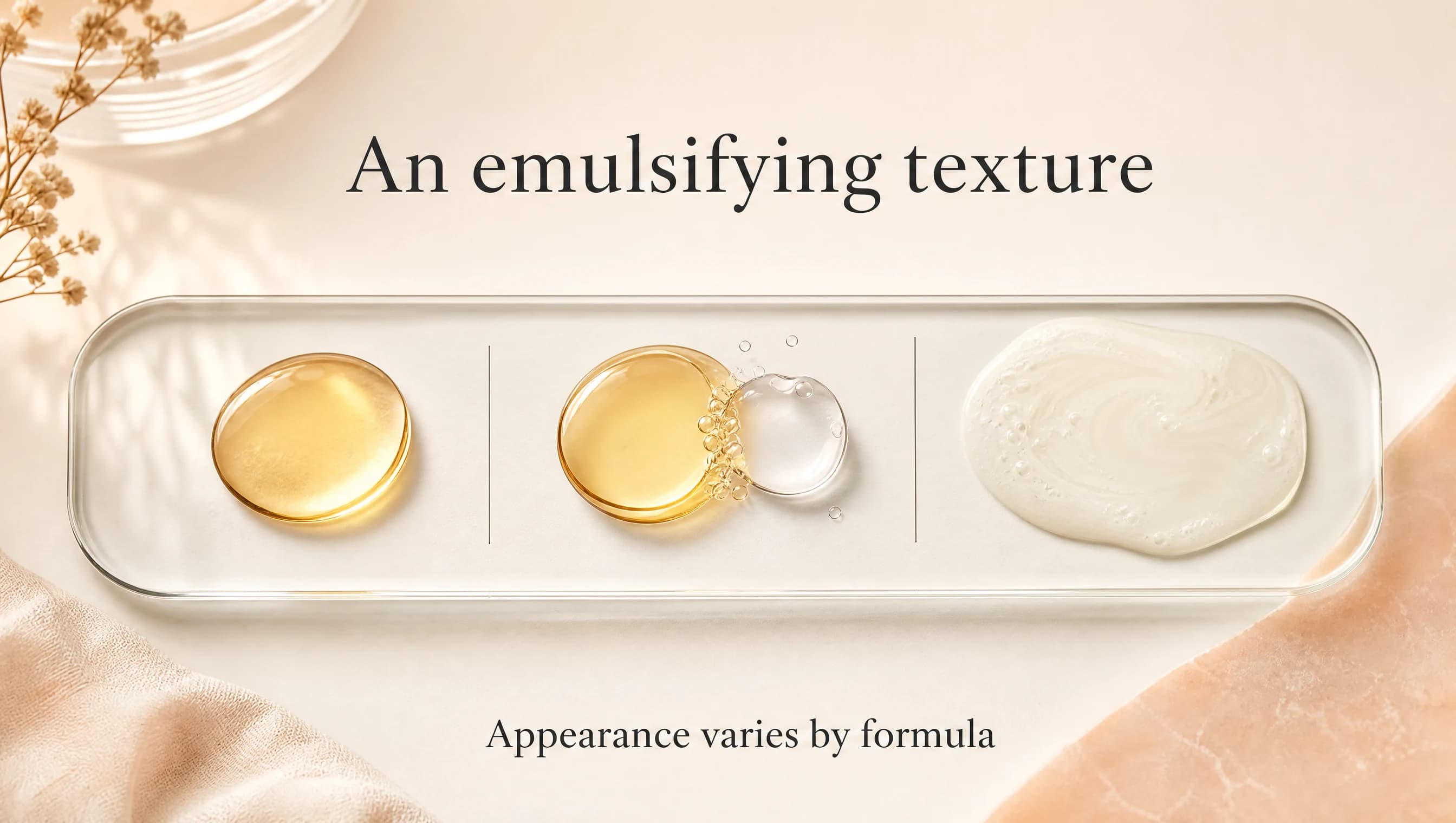
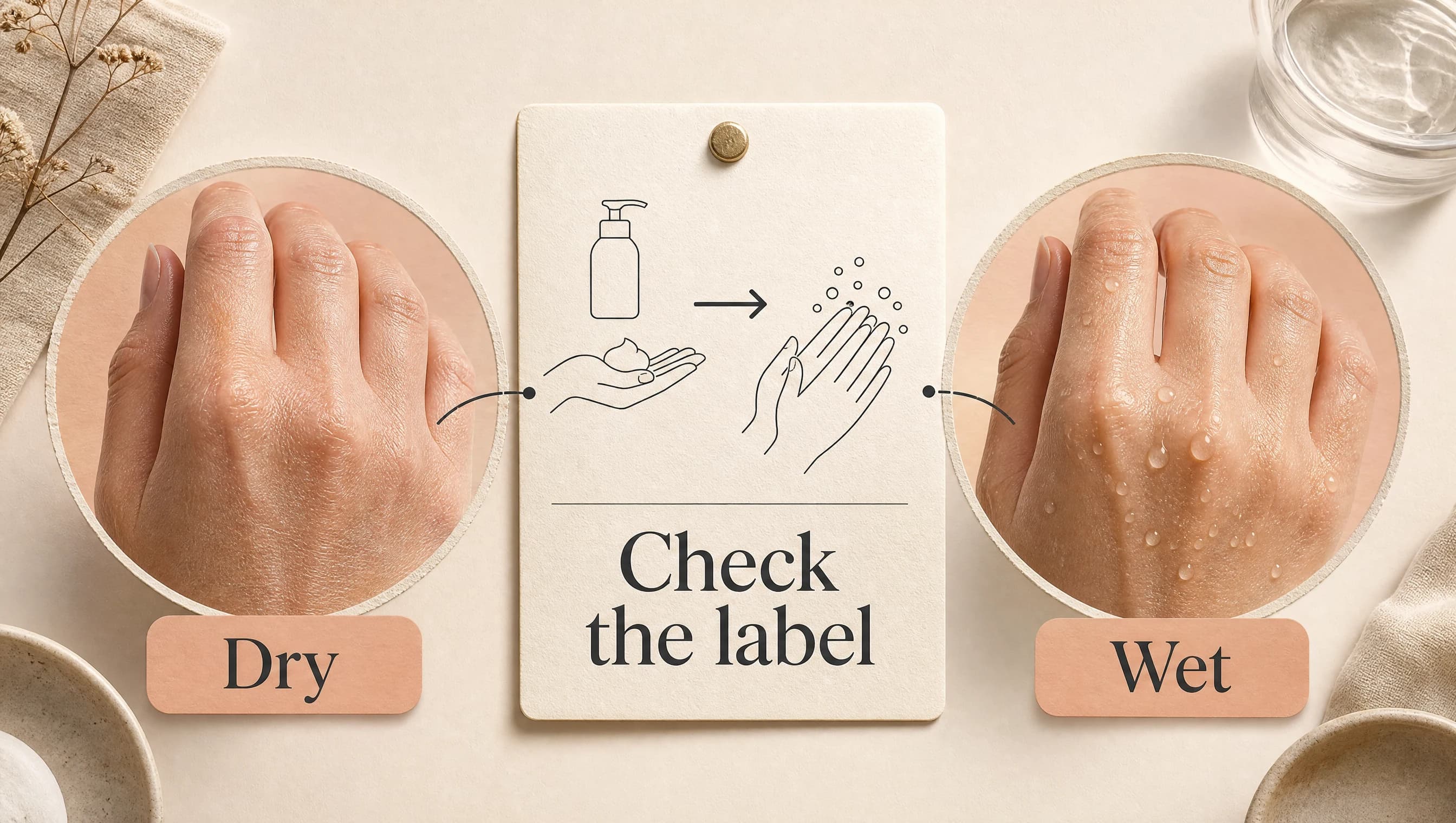
DHC Deep Cleansing Oil directs users to apply with dry hands to a dry face, add water until the cleanser turns milky, then remove it. Its ingredient list includes rosemary leaf oil. That detail matters if you are comparing formulas around personal ingredient restrictions; the word oil alone does not reveal it.
CeraVe Makeup Removing Cleanser Balm directs application to dry skin followed by rinsing. Its directions also warn against direct eye contact. Do not infer that a product can be rubbed into the eyes just because it is marketed for makeup removal.
Both brands present their examples within a double-cleansing routine. That describes their suggested use; it is not proof that every face needs two cleansers on every occasion.
Work backward from what needs removing
Make a short list of the difficult products in your routine: long-wear foundation, a particular mascara, or water-resistant sunscreen. Choose a cleanser whose label addresses the relevant task and then assess it using the directions, without aggressive rubbing.
If your existing cleanser already handles the products you wear and leaves your skin comfortable, there may be no reason to add an oil or balm. If something remains, identify that exact removal problem rather than extending every cleanse indefinitely.
For a broader guide, see double cleansing with sensitive skin. For eye and face makeup decisions, use our sensitive-skin makeup remover guide. If you prefer a different format altogether, our micellar-water comparison addresses another possible option.
Check packaging and routine fit
At a sink where you like dispensing a liquid, a cleansing-oil pump can fit the task. For a solid-format preference, compare a balm’s container and any warming or handling instructions. If the chosen product already removes your usual cosmetics comfortably, a second cleanser needs its own reason to be added.
Keep water and dirty tools out of containers, and use the product as directed. Do not add water into the bottle to create your own pre-emulsified version. If the packaging becomes inconvenient, switching format may be more useful than changing the entire cleansing method.
The Ordinary Squalane Cleanser is a reminder that the oil/balm boundary is not always obvious from packaging: its directions describe warming the product into an oil-like consistency. Read Squalane Cleanser versus Glucoside Cleanser to distinguish that format from a water-based wash.
If sunscreen is the stubborn layer, continue with removing water-resistant sunscreen.
Frequently asked questions
Are balms only for dry skin?
No format rule makes that true. Check the particular formula and your experience of it. A thick starting texture does not by itself determine whether a rinse-off product will suit you.
Do I apply oil or balm to wet skin?
Use the product directions. The specific DHC and CeraVe examples discussed here start on dry skin; that instruction should not be generalized to every oil-containing face wash.
Do I need both a cleansing oil and a balm?
Usually they are alternative formats for a similar removal task. Buying both does not automatically fill two different gaps. Choose around the makeup, sunscreen and handling preference that actually matter to you.
Sources
DHC: Deep Cleansing Oil (dhccare.com) — https://www.dhccare.com/products/deep-cleansing-oil
CeraVe: Makeup Removing Cleanser Balm (cerave.com) — https://www.cerave.com/skincare/cleansers/makeup-removing-cleanser-balm
The Ordinary: Squalane Cleanser (theordinary.com) — https://theordinary.com/en-us/squalane-face-cleanser-100446.html
Clear guidance, checked before publication.
Solvi articles are structured by our editorial team and reviewed for clarity, consistency, and responsible health language. We update pages when guidance or product information changes.