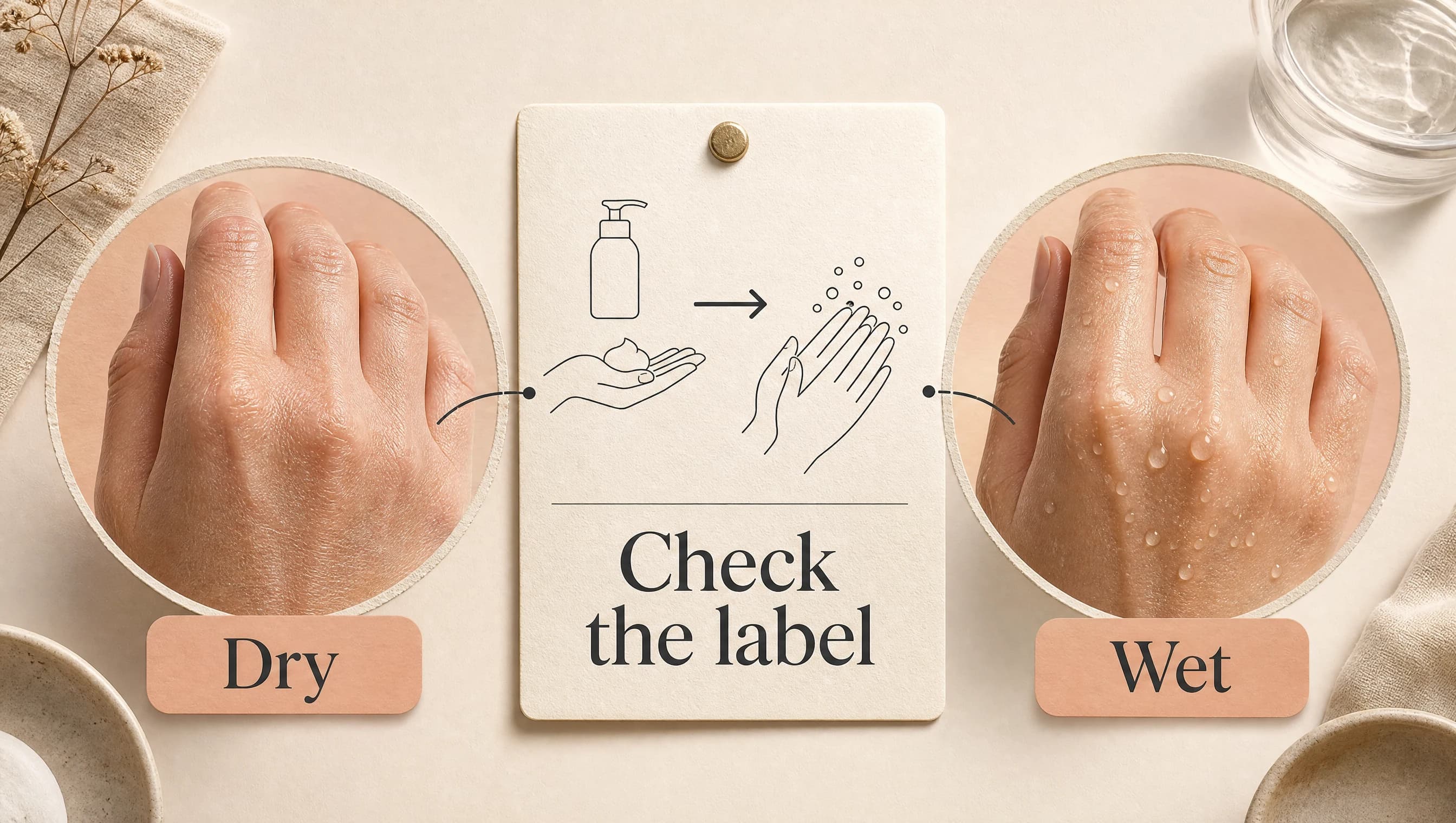
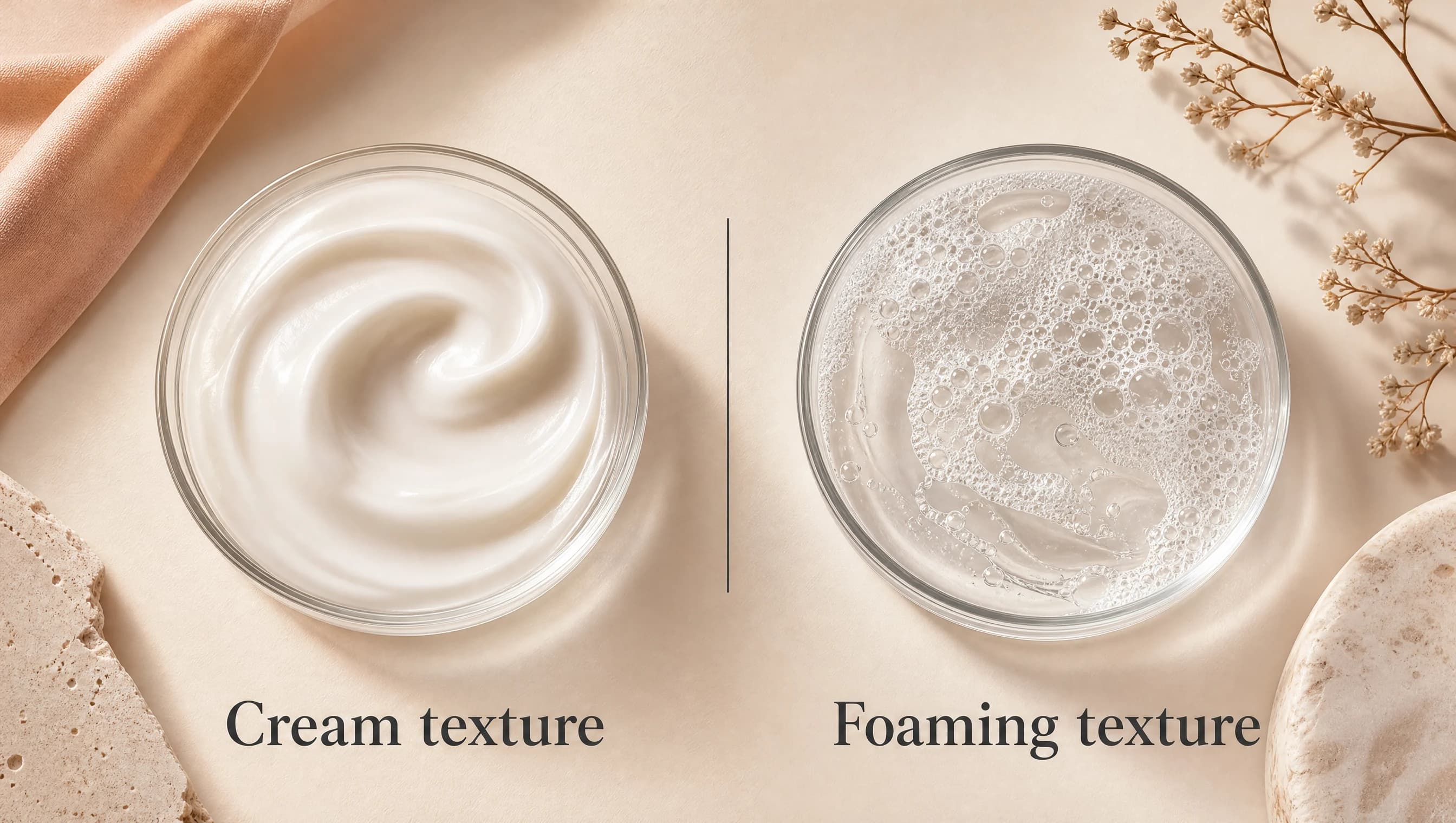
The Ordinary Squalane vs Glucoside Cleanser: Dry or Wet?
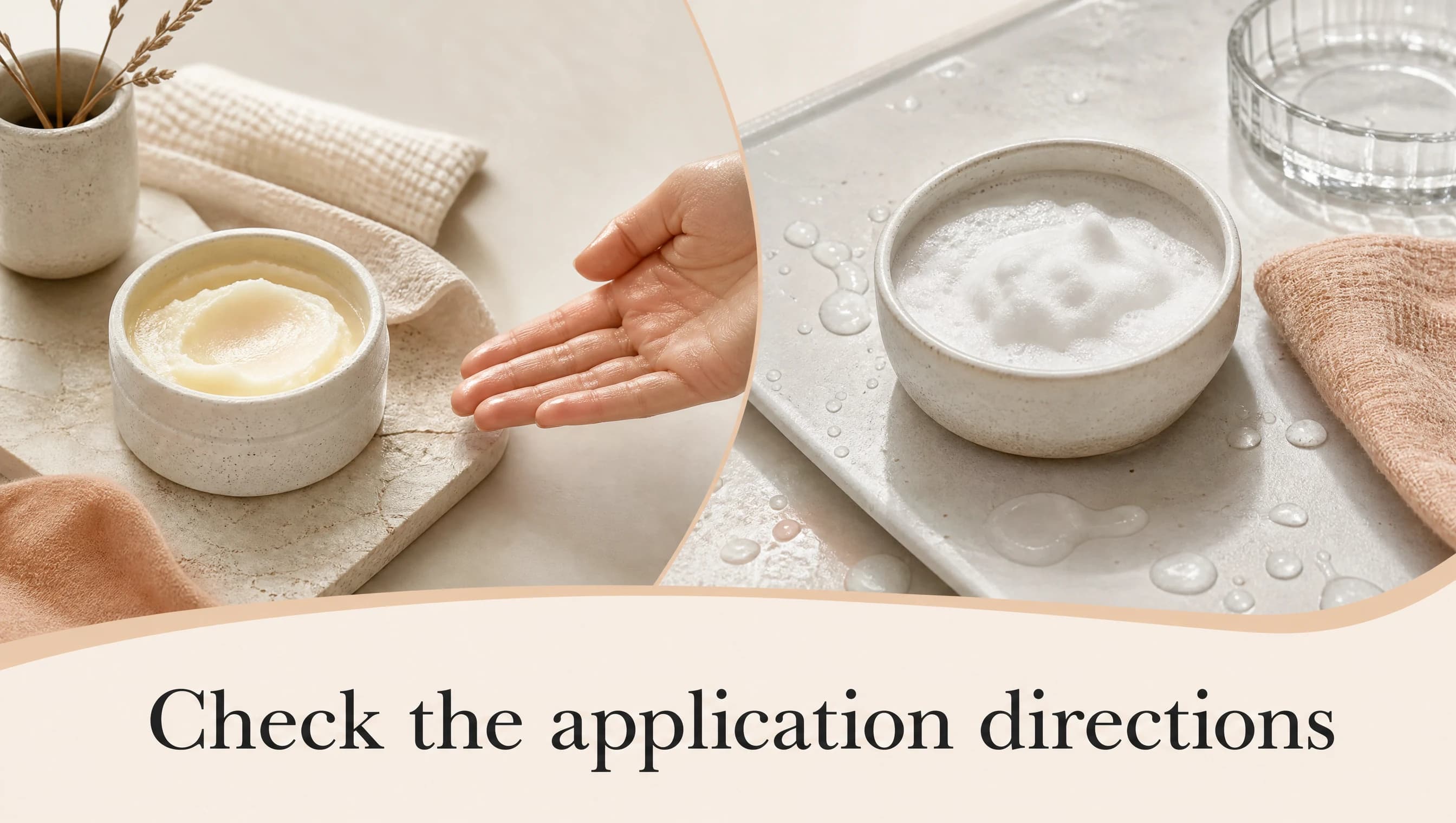
Choose The Ordinary Squalane Cleanser if you want a balm-format cleanser with an explicit makeup-removal role. Choose Glucoside Foaming Cleanser if you want a foaming gel applied to a wet face. The most important practical difference is the first step: Squalane starts on dry skin; Glucoside starts on wet skin.
You do not automatically need both. Start with the cleansing job and format you want, then add another step only if it solves a specific removal problem.
The comparison that changes how you use them
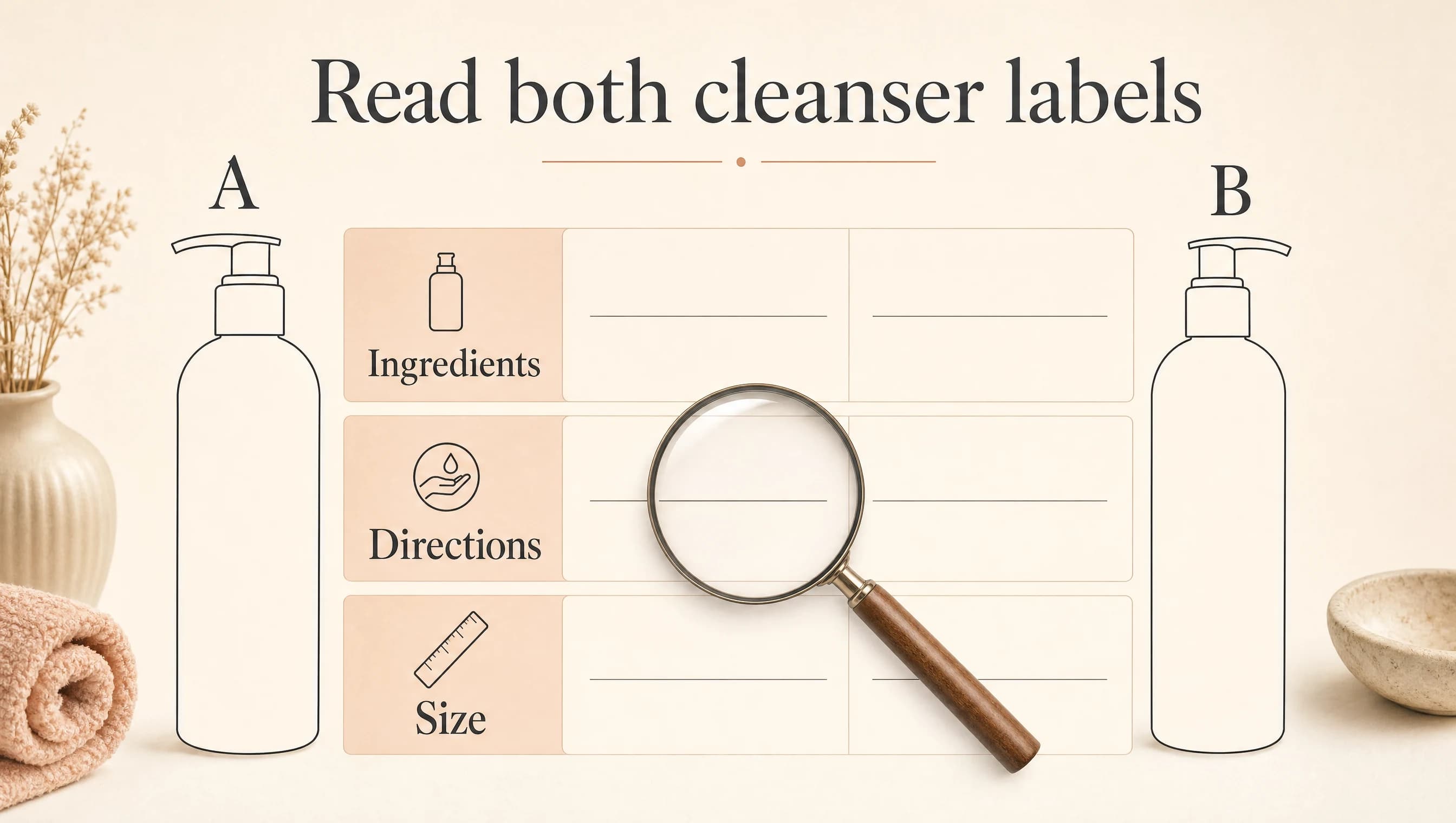
| Detail | Squalane Cleanser | Glucoside Foaming Cleanser |
|---|---|---|
| Manufacturer’s format | Balm | Foaming cleanser |
| Starting point | Dry face | Wet face |
| Preparation | Warm between the hands before applying | Dispense into hands |
| Finish | Rinse with warm water | Rinse with warm water |
| Described task | Removing makeup, dirt and impurities | Removing dirt and environmental impurities |
| Highlighted formula ingredients | Squalane and lipophilic esters | Decyl glucoside and coco-glucoside |
The current US Squalane page calls the product an oil-free cleansing balm and describes its transformation into an oil-like consistency. “Oil-like” is a texture description here; it is not evidence that the formula is water-free or interchangeable with every cleansing oil.
For the broader format decision, see our cleansing oil versus balm comparison. For these exact products, follow the directions rather than inferring the method from the name.
Pick the job before the ingredient
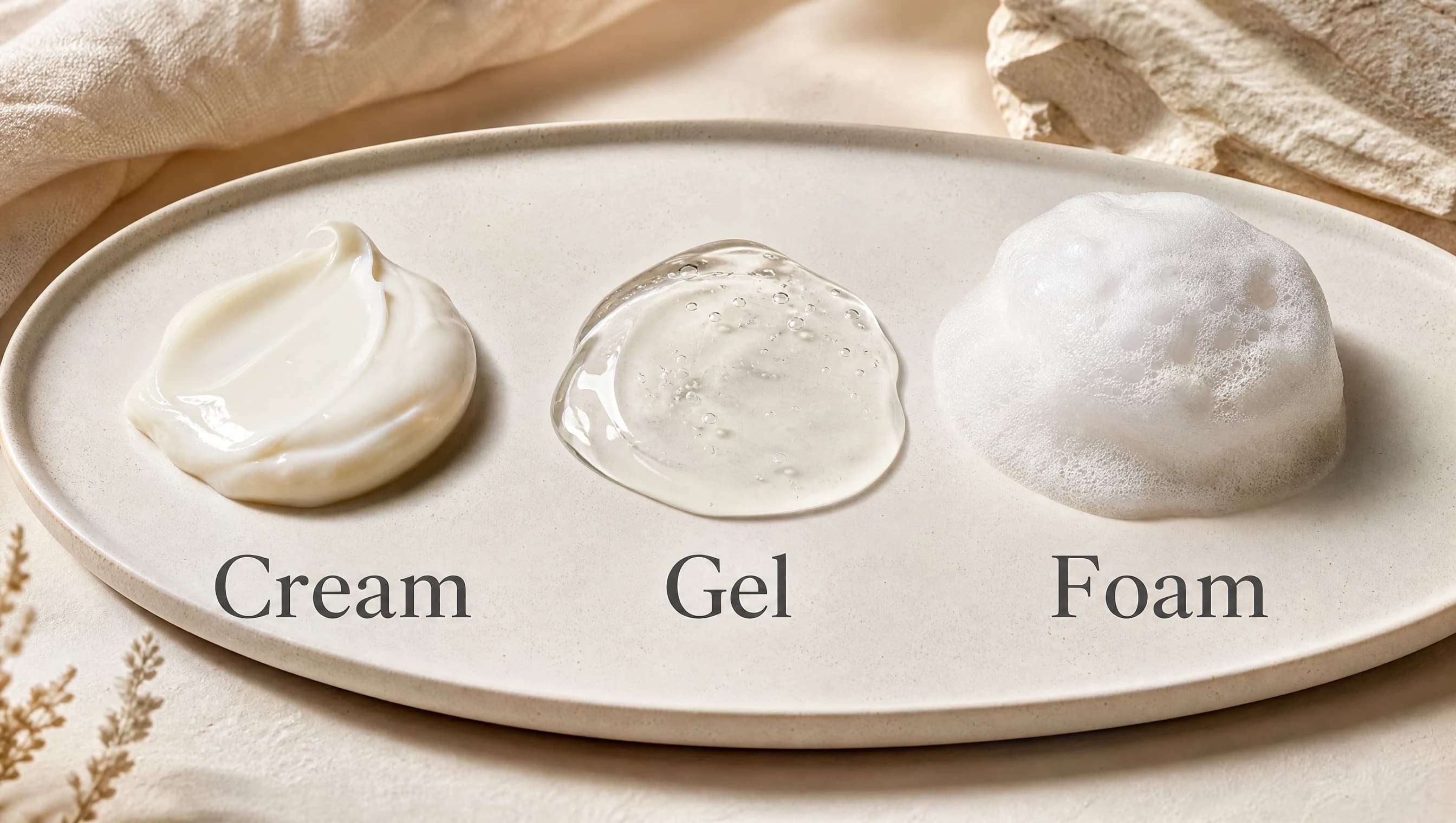
Makeup removal is your main priority: Squalane’s description explicitly identifies that job. Consider whether you like a balm that needs warming between your hands and application before wetting your face.
You want a familiar foaming wash: Glucoside’s wet-face method is the direct fit. The ingredient name does not require you to become a cosmetic chemist; the useful questions are how the product is applied and whether the format fits your routine.
You are shopping because your current cleanser feels wrong: describe what is wrong first. Is it the texture, a known ingredient exclusion, or a particular cosmetic left behind? Changing brands without naming the problem makes the choice harder to evaluate.
For a wider shortlist, our combination-skin cleanser guide compares options beyond these two.
Dry versus wet application is not optional guesswork

The first motion is different: warm Squalane Cleanser in your hands before applying it to a dry face; apply Glucoside to a wet face. Both methods finish with rinsing. Keep that starting condition attached to the name on your bottle.
That difference is useful when troubleshooting. If you wet your face before every cleanser out of habit, check whether you have been following the Squalane directions. If you use Glucoside dry because you have seen a balm demonstration, you have transferred another product’s method.
Our wet-or-dry cleanser application guide compares additional real labels. Neither dryness nor foam alone supplies a universal rule for all cleansing products.
Both reviewed labels advise stopping and rinsing off if irritation occurs. A more elaborate massage is not a sensible response to discomfort.
Do you need a two-cleanser routine?
Owning a balm and a foaming cleanser makes a two-step routine possible. It does not establish that your face needs two washes every evening.
Ask what the second step would solve. If the first product comfortably removes what you need it to remove, buying another cleanser may add cost and work without addressing a problem. If a specific cosmetic remains, check its removal instructions and the cleanser’s intended task.
The double-cleansing guide for sensitive skin can help you evaluate that separate choice. A two-step routine should not become a reason to keep rubbing until the skin feels tight.
The American Academy of Dermatology’s basic face-washing advice favors fingertips and avoiding scrubbing. That technique principle is useful regardless of whether you prefer a balm or a foaming wash.
What to check before replacing your cleanser
- Confirm the full name. The Ordinary sells other cleansers; a different product is not a reformulated version of either one by default.
- Read the current package ingredients, especially if you avoid a particular substance.
- Check whether the directions fit where and how you wash.
- Compare the actual product in your basket rather than transferring a review from another size, region or older formula.
If neither product sounds right, consult our sensitive-skin cleanser shortlist. A brand’s gentle positioning is useful information, but it cannot predict everyone’s tolerance.
Frequently asked questions
Is Squalane Cleanser a leave-on oil?
No. The directions finish with rinsing. Its oil-like texture during application does not turn it into a leave-on skin-care step.
Should Glucoside go on dry skin?
Its reviewed instructions specify a wet face. Follow that method rather than borrowing the Squalane instructions.
Is the foaming cleanser always the better option for oily skin?
The current page positions Glucoside toward oily skin, but that does not guarantee an individual preference. The format and the job you want it to do still matter.
Sources
The Ordinary Squalane Cleanser: current formula description and directions (theordinary.com) — https://theordinary.com/en-us/squalane-face-cleanser-100446.html
The Ordinary Glucoside Foaming Cleanser: current formula and directions (theordinary.com) — https://theordinary.com/en-us/glucoside-foaming-face-cleanser-100616.html
American Academy of Dermatology: Face washing 101 (aad.org) — https://www.aad.org/public/everyday-care/skin-care-basics/care/face-washing-101
Clear guidance, checked before publication.
Solvi articles are structured by our editorial team and reviewed for clarity, consistency, and responsible health language. We update pages when guidance or product information changes.