The Best Skincare Routine for Dry Skin Starts With Better Layering



Dry skin does best with a short, consistent routine: cleanse gently, add water-binding hydration if you want it, seal it in with a lipid-rich moisturizer, and wear broad-spectrum SPF 30 or higher every morning. At night, repeat the gentle cleanse and prioritize barrier repair; introduce a low-strength retinoid only as slowly as your skin comfortably tolerates.
The most useful way to shop is not to chase a crowded shelf of “hydrating” labels. Build a moisture system instead: a cleanser that does not leave skin feeling stripped, a cream that supplies humectants and skin-identical lipids, and an optional protective final layer when weather or flaking calls for it. That approach can flex for dry sensitive skin, mature skin, or dry skin that also breaks out.
The dry-skin rulebook: hydrate, replenish, protect
Dryness is not solved by one hero serum. Think of your routine as three jobs: bring water toward the skin with humectants such as glycerin and hyaluronic acid; replenish with ceramides, cholesterol, and fatty acids; then reduce water loss with a cream, ointment, or another occlusive finish when needed.
A light gel can feel refreshing, but it may not carry enough cushioning for skin that feels tight, looks scaly, or becomes uncomfortable after washing. Conversely, the richest balm is not automatically the best daily choice if you dislike the finish or if your acne-prone areas need a less heavy texture. The winning routine is the one you will use morning and night—and pair with sunscreen.
Use these signals to decide how much richness you need:
- Tight but not visibly flaky: Start with a glycerin- or hyaluronic-acid serum underneath a ceramide cream.
- Rough, scaly, or weather-stressed: Choose a richer cream or ointment and consider an occlusive layer at night.
- Dry and sensitive: Keep the routine spare, use gentle formulas, and delay stronger actives until the basics feel comfortable.
- Dry and acne-prone: Use a barrier-focused moisturizer, but review the formula and your own breakout pattern before adding very heavy occlusives across the face.
- Dry, mature skin: A thicker cream can provide more cushion; peptides may be an optional add-on rather than a replacement for moisturizer and sunscreen.
Morning routine: the four-step baseline

Morning skincare for dry skin should make your face feel soft, not coated, beneath sunscreen. If you cleansed thoroughly the night before and do not wake up sweaty or oily, a rinse can be enough for some people; otherwise, choose a gentle hydrating cleanser rather than a harsh soap.
How to use
- Cleanse gently or rinse. Use lukewarm—not hot—water. If you use cleanser, favor a sulfate-free hydrating format that rinses without a squeaky-clean after-feel.
- Apply an optional hydration or support serum. A hyaluronic acid serum can add a water-binding layer, while niacinamide is another optional choice. Apply before cream, ideally while skin is not fully dry.
- Moisturize with intent. Choose a lotion for mild dryness or a cream for more persistent tightness. Prioritize glycerin plus ceramides, cholesterol, and fatty acids when barrier support is the priority.
- Finish with broad-spectrum SPF 30+. This is the non-negotiable final step for daytime. Give yourself a sunscreen texture you can comfortably reapply, whether that means a moisturizing cream formula or a lighter fluid over a richer moisturizer.
A serum is helpful only if it makes the routine more comfortable or helps you reach a texture balance you enjoy. It is not a requirement. For many dry sensitive skin routines, cleanser, moisturizer, and sunscreen are the most dependable starting three.
Morning texture map
| If your skin feels like... | Start with | Follow with | Tradeoff to consider |
|---|---|---|---|
| Mildly tight | Hydrating cleanser or water rinse | Lotion plus SPF | Lightweight lotions may be insufficient in cold, dry weather. |
| Dehydrated under makeup | Hyaluronic acid serum on slightly damp skin | Cream plus SPF | Too many fluid layers can pill if they are rushed. |
| Rough around cheeks and nose | Gentle cleanser | Ceramide-rich cream plus SPF | A richer cream may look shinier on the T-zone. |
| Comfortable but reactive | Water rinse or minimal cleanser | Simple moisturizer plus SPF | Adding several actives at once makes it harder to identify irritation. |
Evening routine: repair, not overcorrection

Night is where dry skin benefits from a more substantial finish. But more steps do not automatically equal more comfort: an aggressive exfoliant, a high-frequency retinoid, and an occlusive layer all at once can be more than a compromised barrier wants to manage.
The core PM routine
- Remove sunscreen and cleanse gently. Use a mild cleanser and lukewarm water. Avoid lingering under hot water, which can leave dry skin feeling even more depleted.
- Use one targeted treatment only if your skin tolerates it. A gentle, low-strength retinoid is an option for people pursuing a mature-skin routine, but it should be introduced slowly rather than used nightly from day one.
- Apply barrier-repair moisturizer. Look for a cream with ceramides, cholesterol, fatty acids, and humectants such as glycerin. Press it over the face and neck rather than rubbing briskly.
- Add an occlusive layer where needed. For severe dryness, petrolatum or squalane over moisturizer can help create a more protective finish. Apply selectively to the driest areas if an all-over layer feels too heavy.
Retinoid nights
Retinoids need a low-drama introduction, especially when dryness or sensitivity is already part of the picture. Start slowly, keep the rest of the routine bland and moisturizing, and avoid treating every evening like an active-treatment night.
- Choose a low-strength, gentle retinoid format.
- Begin with spaced-out use rather than consecutive nightly application.
- Buffer with moisturizer if that is more comfortable for your skin.
- Pause or scale back when dryness, stinging, or flaking becomes persistent.
- Do not stack a new retinoid with multiple other potentially irritating steps just because each one has a place elsewhere in a routine.
Shop by texture, not by hype
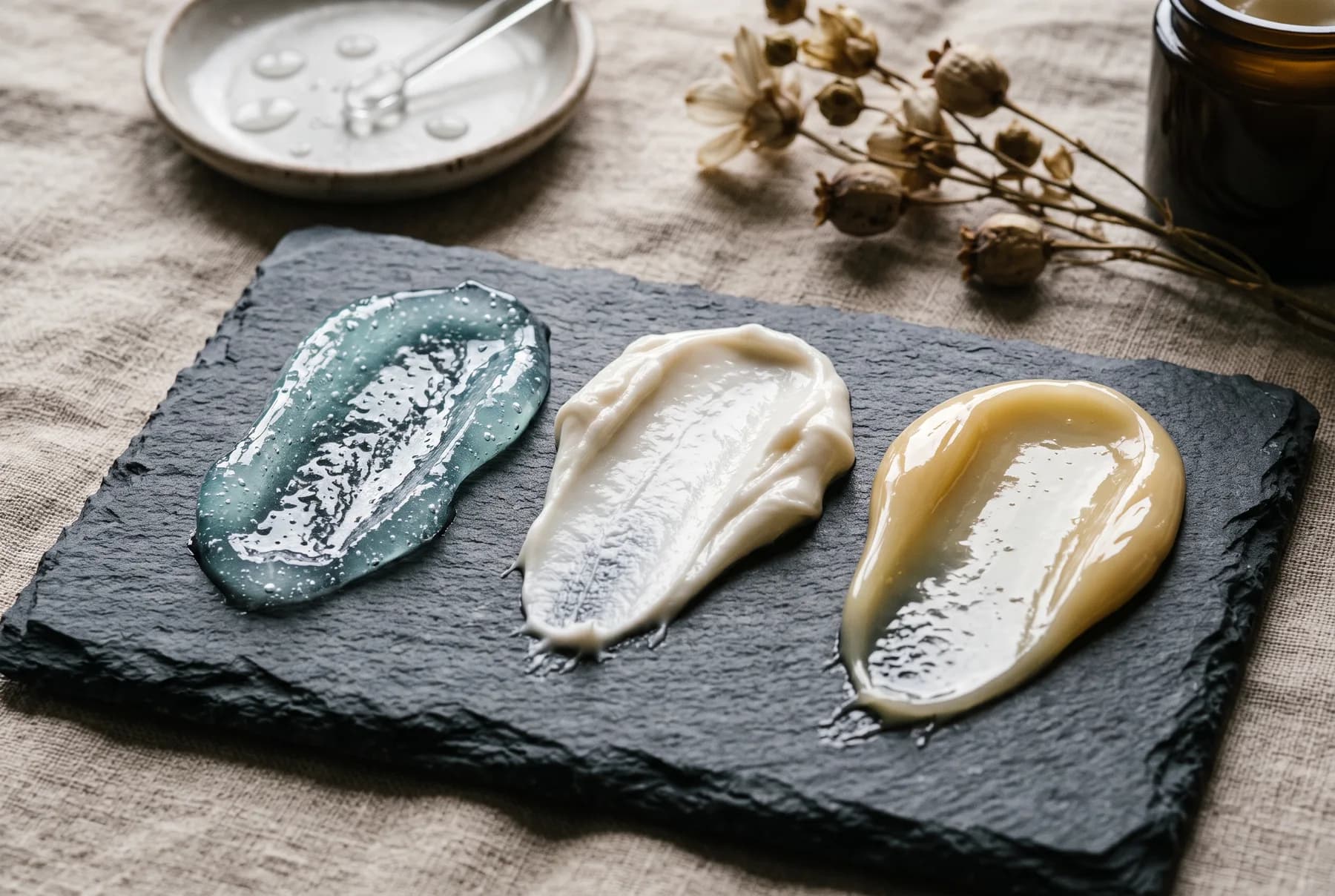
The format on the shelf matters as much as the ingredient list. A dry-skin routine can be streamlined by selecting formulas that each perform a separate role, instead of collecting several products with the same watery, fleeting feel.
Cleansers
A hydrating, sulfate-free cleanser is the practical default for dry skin because it is intended to clean without the harshness associated with traditional soaps. Creamy cleansers can suit skin that feels fragile after washing, while low-foam gel cleansers may suit someone who wants a fresher rinse without a stripped finish.
Serums
A hyaluronic acid serum is best viewed as a hydration amplifier, not a standalone moisturizer. Its thin, slip-heavy texture goes under cream; on its own, it does not supply the lipid-rich cushion that a dry barrier may need. Niacinamide is another optional serum category for those who want it, but simplicity takes priority when sensitivity is high.
Moisturizers
Cream is the workhorse format for moderate to pronounced dryness. Look past splashy front-label language and review whether the formula includes glycerin and barrier lipids such as ceramides, cholesterol, and fatty acids. A lotion may be enough in humid weather or for mild dryness, but a cream is often the better value if you otherwise compensate by applying multiple layers of lighter products.
Occlusives
Ointments and rich protective finishes are most strategic at night, during cold or arid weather, or on particularly rough patches. Petrolatum is the classic occlusive option in the research brief; squalane is a lighter-feeling alternative for those seeking a facial oil texture. Acne-prone shoppers should assess how a heavy finish performs on their own skin and avoid assuming that richer is universally better.
Make the routine fit sensitive, mature, or acne-prone dry skin
The core routine stays stable across these concerns, but the emphasis shifts. Sensitive dry skin calls for restraint; mature skin often benefits from creamier textures and carefully paced retinoid use; acne-prone dry skin requires resisting the urge to dry out blemishes at the expense of the barrier.
Dry sensitive skin
Keep the lineup short enough that you can tell what agrees with you. Choose gentle cleansing, barrier-repair cream, and sunscreen first; add a serum or retinoid only after those steps feel consistently comfortable. Persistent flaking or eczema-like symptoms deserve evaluation by a dermatologist rather than endless product switching.
Dry mature skin
A mature-skin routine still rests on daily sunscreen and a dependable moisturizer. If you are interested in a retinoid, low strength and gradual frequency are more compatible with a dry-skin approach than a rapid escalation. A thicker cream and optional peptides can round out the routine, but neither replaces diligent moisturizing or SPF.
Dry acne-prone skin
A breakout does not mean your skin needs punishing cleanser or frequent hot-water washing. Keep the basic barrier routine in place, introduce treatments deliberately, and check richer formulas for ingredients that have been problematic for you personally. Reserve a dense occlusive finish for dry zones or nighttime if applying it everywhere feels like too much.
Seasonal swaps that keep the routine usable
You do not need a new routine every month. Think in switches: change the cleanser frequency, cream weight, or final occlusive step according to how your skin feels and the climate around you.
- Cold or arid weather: Move from lotion to cream, and add petrolatum or squalane over moisturizer at night if dryness is severe.
- Humid weather: Keep the same barrier-focused formula family but consider a lighter lotion or use less of a rich cream in the morning.
- When wearing makeup: Let serum and moisturizer settle before sunscreen to reduce pilling; do not skip moisturizer simply to create a matte finish.
- During a sensitivity flare: Pare back optional actives and focus on gentle cleansing, moisturizer, and daytime sunscreen.
- When beginning a retinoid: Do not simultaneously change cleanser, serum, moisturizer, and exfoliation habits; controlled changes make tolerance easier to gauge.
Related reading
- Hyaluronic Acid Serum for Sensitive Skin
- Signs of a Damaged Skin Barrier: Clear Checklist
- Best Moisturizers for Mature Skin: Formula Guide
Frequently asked questions
What is the best simple skincare routine for dry skin?
Use a gentle cleanser or morning rinse, an optional hydrating serum, a ceramide- and glycerin-containing moisturizer, and broad-spectrum SPF 30+ during the day. At night, cleanse gently and use the moisturizer again, adding a protective occlusive layer only when dryness calls for it.
Should I use hyaluronic acid if I have dry skin?
It can be useful under moisturizer as an extra hydration layer. It works best as part of a system: apply it before a cream that provides humectants, lipids, and a more protective finish.
Can dry sensitive skin use retinoids?
A low-strength retinoid may be an option when introduced slowly and buffered with moisturizer, but it is not the first priority when the barrier is already uncomfortable. Scale back if irritation or persistent flaking develops, and seek dermatologic guidance for ongoing concerns.
Is an ointment too heavy for acne-prone dry skin?
It can be, depending on the formula and your individual breakout pattern. Consider using a dense occlusive only on the driest areas or at night, and review richer ingredients carefully if you are prone to clogged pores.
Sources
- American Academy of Dermatology — Dry skin relief tips
- American Academy of Dermatology — How to pick a moisturizer
- Skin Cancer Foundation — Sun protection and skincare guidance
Clear guidance, checked before publication.
Solvi articles are structured by our editorial team and reviewed for clarity, consistency, and responsible health language. We update pages when guidance or product information changes.

Sofia Marin
Skincare Routine Editor. Sofia refines the order, timing, and purpose of skincare routines so they stay practical and easy to adjust.