Step-by-step skincare: the essential steps in a routine


The short answer: the core steps in a skincare routine are cleanse; an optional hydrating toner or essence; treatment serums and actives (vitamin C in the morning; retinoids or acids at night, not on the same night); eye cream; moisturizer; and sunscreen in the morning. Layer products from thinnest to thickest, introduce strong actives slowly, and tailor frequency to your skin’s tolerance.
This article breaks each step down with practical trade-offs, textures to seek by skin type, and the exact conflicts to avoid when combining actives. If you want a compact checklist you can use today, read the routine summary and the short AM/PM templates below.
A clean start: cleansing and double cleanse
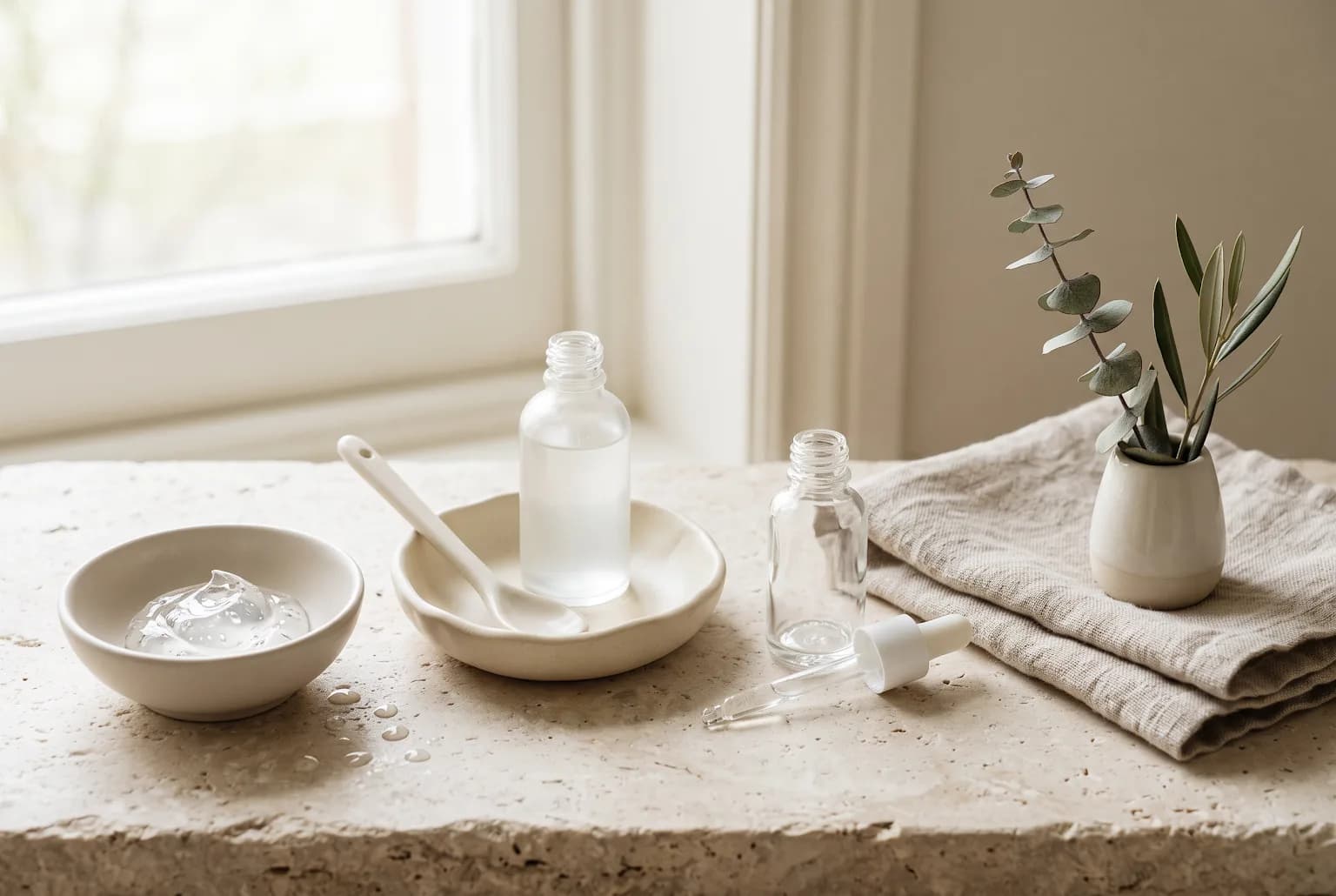
Cleansing is the foundation: remove makeup, sunscreen, and environmental grime so treatments can absorb. For most people the choice is between a single gentle cleanser (gel, cream, or micellar) and a double cleanse when wearing heavier makeup or SPF—an oil-based balm or cleansing oil first, followed by a water-based cleanser.
Texture matters. Cream cleansers suit dry or barrier‐compromised skin because they leave lipids behind; gel or foam cleansers suit oilier skin for a deeper, squeak-free finish. If you double cleanse, use a smooth, emollient balm or oil as the first step and a gentle low‐pH cleanser as the second.
When should you double cleanse?
Double cleansing is useful in the evening when you’ve worn makeup, heavy sunscreen, or long‐wear formulas. It’s optional for light makeup or a simple day. If you’re unsure, start with a balm-cleansing night once or twice a week and increase as needed.
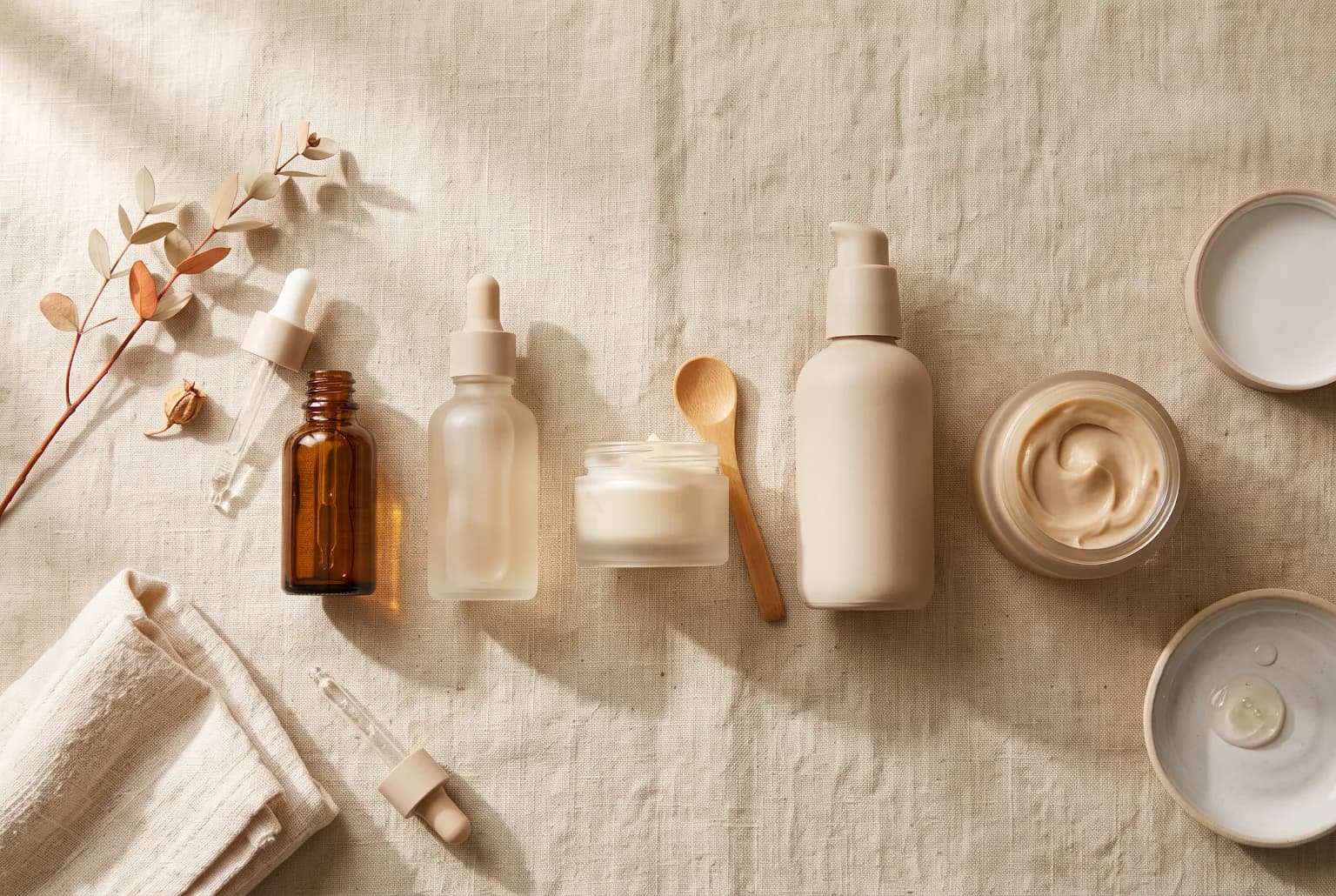
!Cleansers: pump bottle and balm tin on cool-toned surface with cloth
A hydration base: toners, essences and hydrating layers
Hydrating toners and essences are optional but helpful when your skin needs an immediate moisture boost. These products are typically thin liquids or watery gels and should be applied immediately after cleansing while the skin is still slightly damp to lock in hydration.
Essences and hydrators are not actives in the sense of acids or retinoids; they’re building blocks that help serums and moisturizers sit nicely on the skin. Look for hyaluronic acid, glycerin, or panthenol for hydration. If you’re following a minimal routine, you can skip this step and apply serums directly after cleansing.
Active application: serums, acids and retinoids
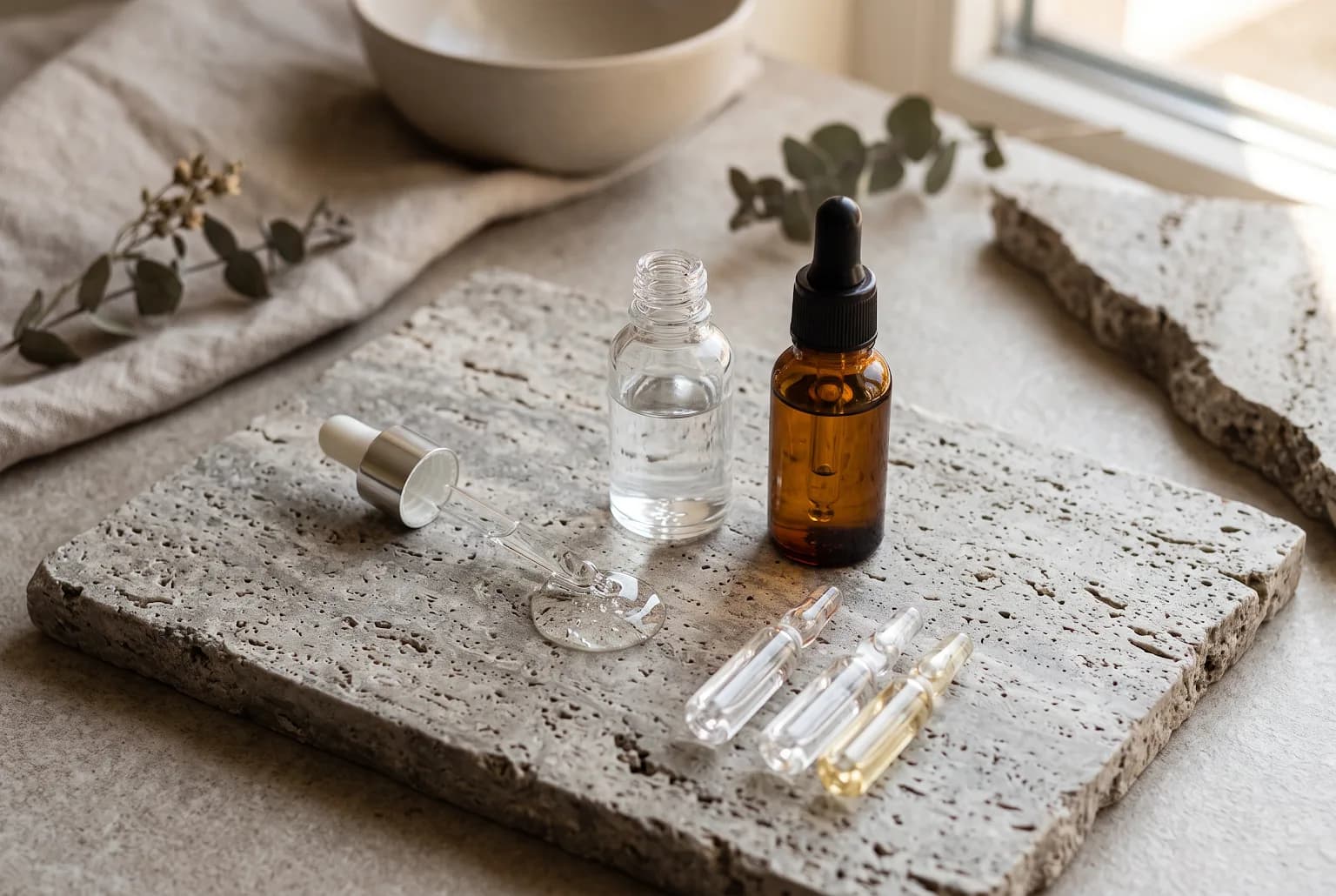
Serums and treatment actives are where routines become transformative—and where mistakes are most likely. The guiding rule: thin formulations before thicker ones, and avoid layering strong actives together on the same night. In practice that means:
- AM: antioxidant serum (vitamin C) after a hydrating toner, before moisturizer and SPF.
- PM: exfoliating acids (AHAs/BHAs) or a retinoid, but not both on the same night.
Texture guides choice. Water‐light vitamin C serums with a low-viscosity base layer easily and sit under moisturizer. Retinoids often come in creams or lotions; if you’re new to retinoids, start with a lower concentration and fewer nights per week.
| Active | Typical texture | Best time to use | Why it matters |
|---|---|---|---|
| Vitamin C (L‐ascorbic acid or stable derivatives) | Lightweight serum | AM | Antioxidant boost under SPF |
| AHA/BHA | Thin liquid or gel | PM (when not using retinoid) | Chemical exfoliation—avoid same-night retinoids |
| Retinoids | Cream or lotion | PM | Cellular turnover—start slowly to reduce irritation |
Layering trade-offs are practical: if you want multiple actives, alternate them across nights (for example, acid one night, retinoid the next) or use a structured plan like skin cycling. If irritation occurs, simplify—skip acids and use a gentle moisturizer or barrier-repair formula until the skin calms.
When evaluating products, review the serum’s pH (for acids), the concentration (for retinoids), and the vehicle (oil vs water) because these influence both efficacy and irritation risk. For a deeper primer on cycling retinoids gently, consider our guide to the retinol sandwich method for gradual introduction.
!Serum bottles and ampoules on a stone slab with a drop of serum
A focused finish: eye cream, moisturizer and sunscreen

Eye cream sits before or after your treatment serums depending on texture. If it’s a very lightweight peptide serum, apply it before; if it’s a thicker cream, apply after lighter serums. Moisturizer locks in actives and restores lipids—pick a texture that suits your skin: lotion for normal to oily, cream for dry, gel-cream for combination.
Sunscreen is non-negotiable in the morning. Any brightening treatment (like vitamin C) or nighttime retinoid work increases the need for daily SPF. Choose a broad‐spectrum SPF 30+ and apply as the last step of your AM routine, reapplying every two hours when in direct sun.
| Moisturizer format | Best for | Layering note |
|---|---|---|
| Gel-cream | Combination, oily | Sits well under sunscreen; light finish |
| Lotion | Normal skin | Versatile as AM/PM base |
| Rich cream | Dry or barrier repair | Use at night or as needed under makeup |
A weekly plan: exfoliants and masks
Weekly treatments—chemical exfoliants, clay masks, or hydrating masks—are complementary, not mandatory. Use chemical exfoliants on nights you are not using a retinoid. Masks that provide hydration or clay-based oil control can be scheduled mid-week to maintain balance.
A simple weekly plan looks like this:
- Two nights of retinoid (alternate nights if you’re new).
- One night of AHA/BHA chemical exfoliant, not the same as retinoid nights.
- One hydrating mask or barrier-repair mask on a rest night.
Trade-offs: frequent physical scrubs increase irritation risk when combined with acids or retinoids. If you have reactive skin, prefer gentle chemical exfoliants at lower frequency and prioritize barrier repair.
Daily AM routine (concise checklist)
- Cleanse (or rinse if skin is dry).
- Optional hydrating toner/essence while damp.
- Vitamin C or antioxidant serum.
- Lightweight eye cream (optional).
- Moisturizer suitable for your skin type.
- Broad‐spectrum sunscreen SPF 30+.
Daily PM routine (concise checklist)
- Remove makeup/sunscreen; double cleanse if needed.
- Hydrating toner/essence (optional).
- Targeted treatment: retinoid or acid (alternate nights as your tolerance allows).
- Eye cream if used.
- Moisturizer or barrier-repair cream.
How to introduce strong actives without backtracking
Start slow. Patch-test new actives and allow 4–12 weeks to evaluate changes—that’s the window many topical treatments need to show meaningful improvement. Begin retinoids twice a week and increase frequency as tolerated. If irritation appears, reduce frequency and incorporate a barrier-repair moisturizer.
If layering feels confusing, simplify: pick one active goal (brightening vs. texture vs. pigmentation) and select one primary active—use it consistently before adding another.
Frequently asked questions
How many steps should my routine have?
There’s no universal number; the right count depends on skin needs and lifestyle. A minimal effective routine has three steps (cleanse, treat if necessary, moisturize + SPF in AM). Many people expand to 5–7 steps to add hydration layers and targeted serums.
Can I use vitamin C and retinol together?
It’s best to use vitamin C in the morning and retinol at night. Using both at once can increase irritation for some people; separating them by time of day gets the benefits while reducing overlap.
How do I avoid irritation when using acids and retinoids?
Avoid applying AHA/BHA chemical exfoliants and retinoids on the same night. Alternate nights or reduce frequency. If irritation occurs, stop the active and focus on moisturizing and barrier repair until the skin calms.
Do I need eye cream in my routine?
Eye cream is optional. If you have specific concerns like dryness, puffiness, or visible fine lines, choose an eye product formulated for the delicate orbital area. Otherwise, a gentle moisturizer applied sparingly can suffice.
Related Reading
- The nighttime skincare routine that actually works: steps, textures, and tradeoffs
- Fine Lines Treatment: A Smart, Layered Routine That Makes Sense
- The Retinol Sandwich Method Is the Slow-Burn Route to a Calmer Retinoid Routine
Sources
- American Academy of Dermatology — product application order advice (https://www.aad.org/public/everyday-care/skin-care-basics/care/apply-skin-care-certain-order)
- Healthline — stepwise skincare and timing (https://www.healthline.com/health/beauty-skin-care/order-of-skin-care)
- Healthline — daily/weekly/monthly routine guide (https://www.healthline.com/health/beauty-skin-care/routine-daily-monthly-weekly)
Internal links:
- For balanced routines that help oily zones, see our guide on the best skin care routine for oily skin:
- To keep things simple and flexible, read about the normal skincare routine:
- If you want a gentler path into retinoids, consider the retinol sandwich method:
- For zone-first product choices for combination skin, consult:
Clear guidance, checked before publication.
Solvi articles are structured by our editorial team and reviewed for clarity, consistency, and responsible health language. We update pages when guidance or product information changes.

Naomi Chen
Skincare Ingredients Writer. Naomi reads ingredient lists for fun and loves translating formulation language into advice that makes sense at the bathroom mirror. Hydration, barrier care, and sensitive-skin formulas are her favorite rabbit holes.