The nighttime skincare routine that actually works: steps, textures, and tradeoffs


A good nighttime skincare routine should first remove the day (cleanse), then treat targeted concerns with a single strong active, and finally lock in hydration with serums and a richer moisturizer or sleeping mask. Prioritize: cleanse → treat (one active) → hydrate → occlude; weekly exfoliation or peels are an add-on but never on the same night as retinoids or strong acids.
A simple beginner nighttime routine
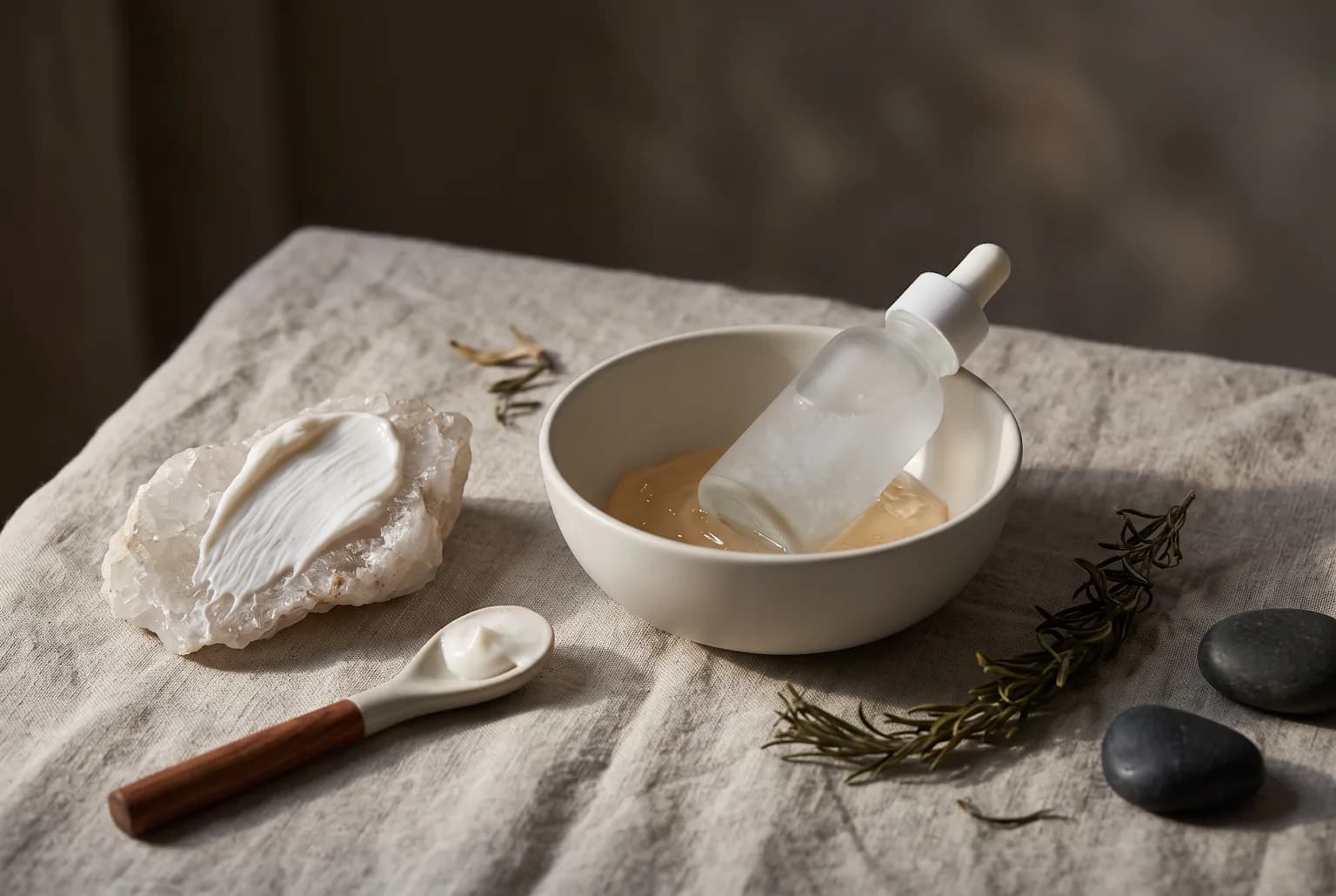
Start by removing sunscreen and makeup with a gentle cleanser that does not strip. The priority for every PM is a clean canvas: if SPF or makeup remains, active ingredients won’t absorb evenly and can cause buildup.
After cleansing, a straightforward beginner order is a hydrating serum (hyaluronic acid is a common choice) followed by a moisturizer suited to your skin type—lighter lotions for oilier skin, creamier textures for dry or mature skin. Apply thinnest-to-thickest: serums first, targeted treatments next, then creams or balms. For most beginners this keeps routine short and reduces the chance of irritation.
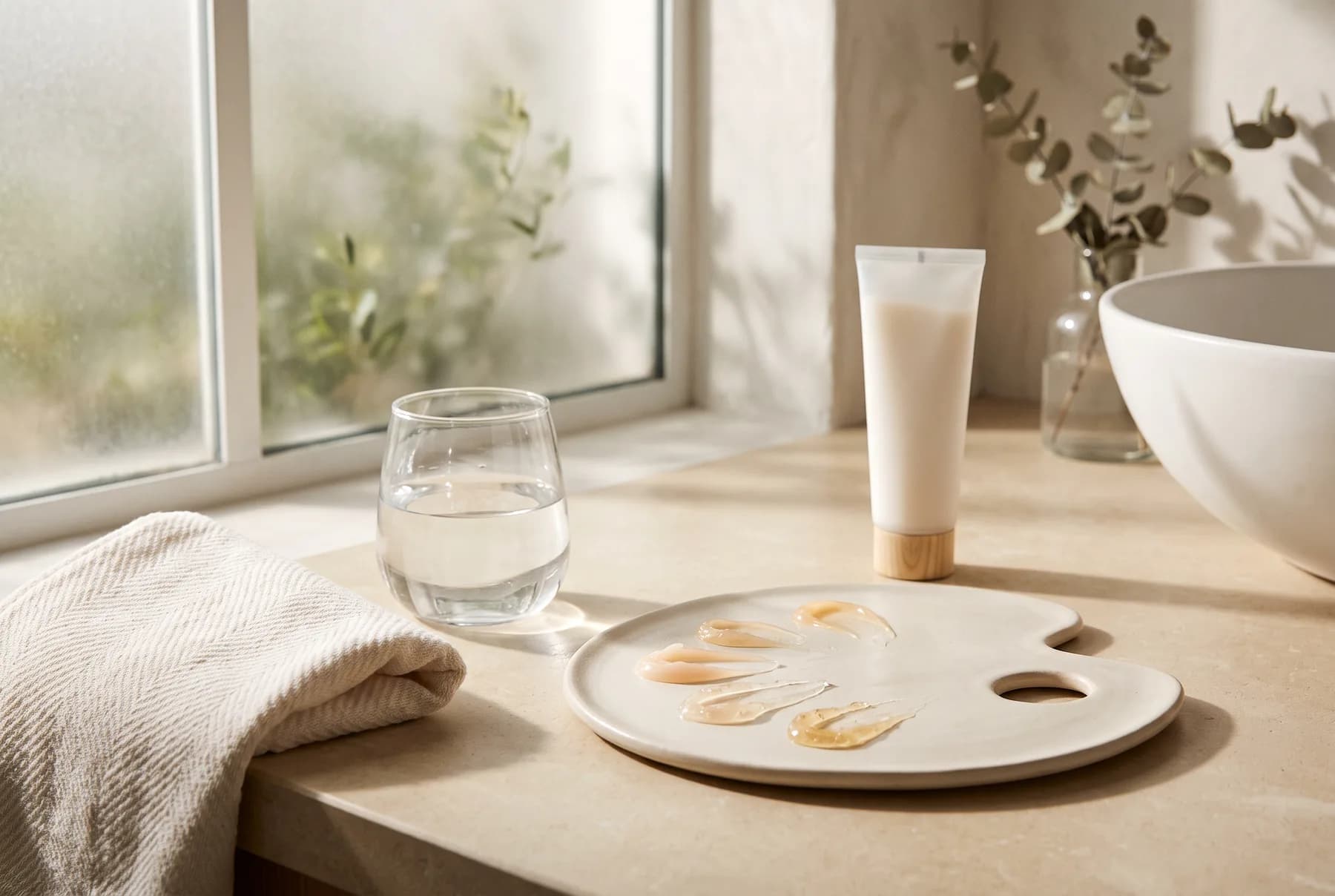
For texture and format decisions, consider tradeoffs: gels and lightweight serums absorb quickly and layer well under other products but may feel inadequate for dry or cold-weather skin. Creams and balms provide occlusion and comfort but can pill if applied too soon after silicones or thick actives. The rule of thumb is to wait 10–20 minutes after certain active treatments if you notice pilling before adding an occlusive layer.
![Gentle cleanser, hyaluronic serum, and night cream arranged on a wooden surface]
How to add actives without irritation
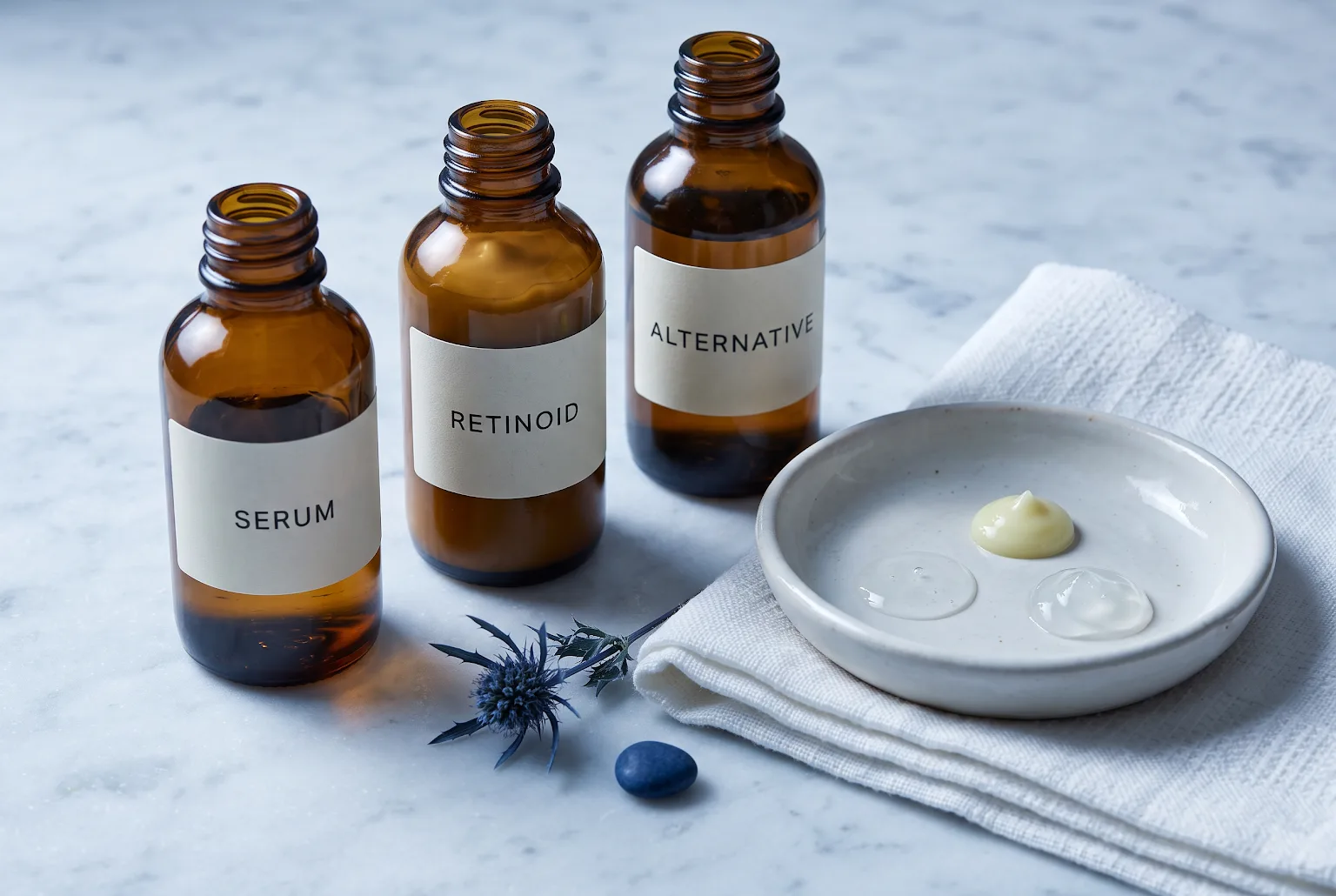
Introduce actives slowly and choose one strong active per night. That decision criterion reduces overlap that often causes redness and flaking. If you’re new to retinoids, start with a low frequency (every other night or 2–3 times per week) and build tolerance before increasing frequency. If a retinoid or acid causes visible irritation, pause and prioritize barrier repair with ceramide-rich creams.
If your skin reacts to conventional retinoids, consider gentler alternatives such as bakuchiol or low-strength retinol options as intermediate formats; they’re often better tolerated. For exfoliating acids (AHAs/BHAs), reserve them for separate nights—never pair the same night as a retinoid. Weekly AHA peels are a useful texture treatment but should be scheduled on nights away from retinoids.
Consistent daytime SPF is non-negotiable after nights with retinoids or acids; these actives can increase photosensitivity, so apply broad-spectrum SPF the next day every time.
![Three amber bottles with sample amounts of serum and treatment on a ceramic dish]
Layering, textures and timing
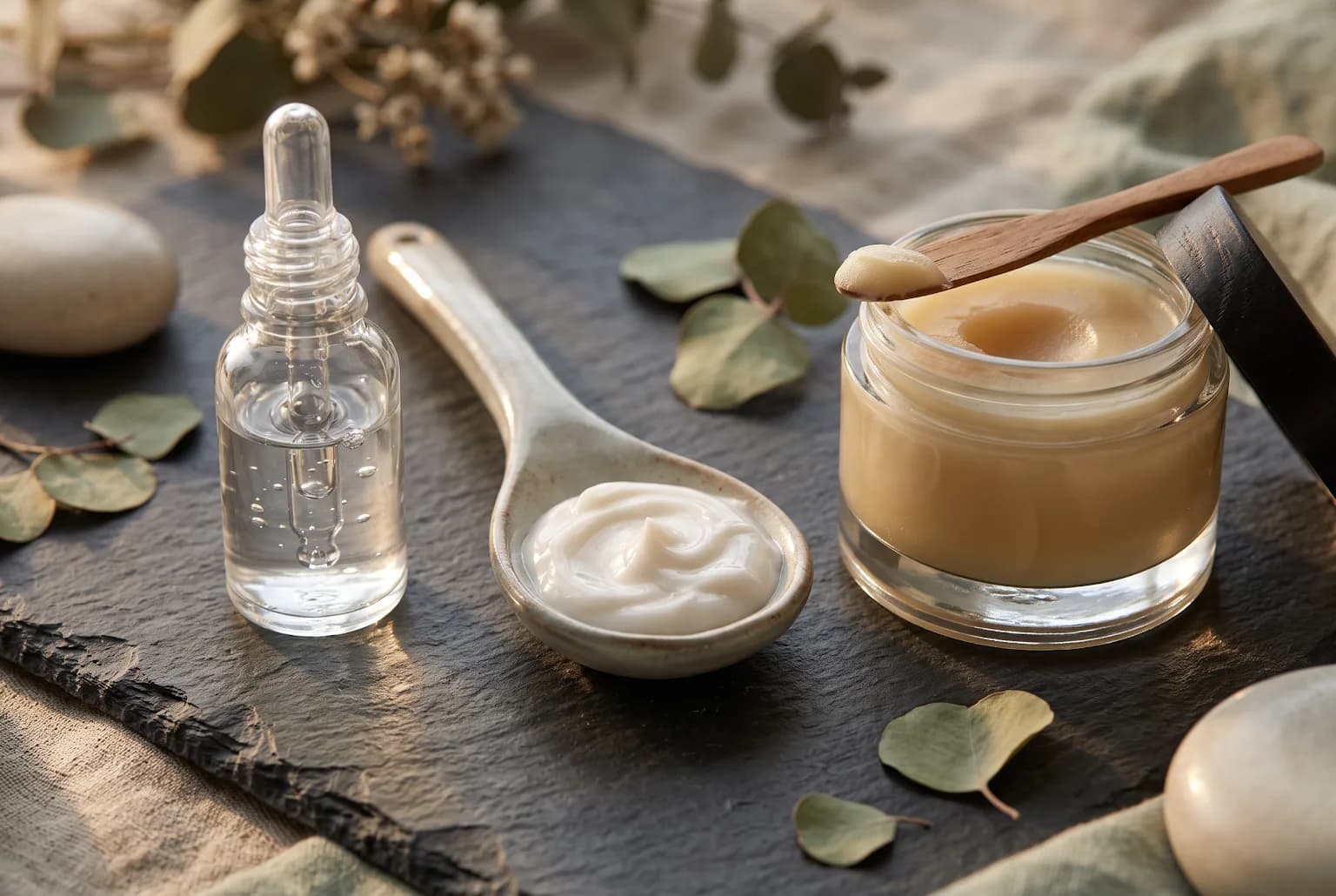
Apply products in order from thinnest to thickest: watery or lightweight serums first (for example hyaluronic acid), then targeted treatments (retinoid, peptide ampoule), then moisturizer, and finally any heavier occlusives or sleeping masks. This order helps penetration and minimizes pilling. If you notice product drag, allow 10–20 minutes after treatments before occluding to let actives settle.
Decision criteria for formats:
- Choose one strong active (retinoid or acid) per night to limit irritation.
- Let skin type determine moisturizer weight: creams for dry/mature skin, lighter lotions or gels for oily/combination.
- Serums are the vehicle for concentrated actives; creams provide barrier repair and occlusion.
Texture tradeoffs matter. Lightweight serums layer well and suit humid climates; richer creams and balms protect in dry climates or during flare-ups. Peptide creams often come with a slightly thicker, emollient texture to carry actives that benefit repair overnight.
![Vial of hyaluronic acid, a spoon with peptide cream, and a jar of rich balm on a slate tile]
Weekly and troubleshooting rules
Treat weekly rituals as separate steps: pick one evening for a stronger exfoliation or mask and make sure it’s not the same night as a retinoid. Weekly AHA or BHA sessions help texture and brightness but are best used sparingly—typically once per week for most routines.
If your skin becomes irritated (redness, stinging, peeling), scale back frequency and focus on barrier repair. Ingredients and product choices for calming include ceramide-rich creams and simple hydrating serums. If irritation is persistent, pause actives and consult a dermatologist about prescription options or slower-introduction strategies.
A practical maintenance checklist:
| Step | Purpose | Frequency | Who it suits |
|---|---|---|---|
| Cleanse | Remove SPF and makeup | Every night | Everyone |
| Hydrating serum (HA) | Replenish moisture | Every night | All skin types |
| Targeted active (retinoid/acid) | Anti-aging, acne, texture | 2–3×/week to nightly (gradual) | Intermediate/advanced users |
| Moisturizer / sleeping mask | Barrier repair and occlusion | Every night (mask 1–2×/week) | Dry, mature, barrier-repair needs |
Intermediate and advanced sequences (who should add what)
Intermediate routines introduce a single targeted active most nights while keeping hydration consistent. A common intermediate example is: gentle cleanser → hyaluronic serum → retinol (2–3×/week to start) → richer night cream. This sequence balances treatment frequency with recovery.
Advanced routines can layer more sophisticated approaches: alternate nights with a prescription retinoid or stronger acid while using peptide-rich serums on recovery nights to support barrier repair. The editorial decision criteria here are explicit: never mix strong acids and retinoids the same night; schedule recovery nights with barrier-repair creams or peptide serums.
Consider the "retinol sandwich"––a slow-burn method that places moisturizer before and after a small retinol dose to reduce irritation. It’s useful for those sensitive to retinoids and is discussed in more depth in our piece on the retinol sandwich method.
Product format tradeoffs and shopping checklist
When you evaluate a product for your PM routine, review these tradeoffs and how they match your goals:
- Format: gel/serum (fast absorption) vs. cream/balm (occlusion and repair).
- Active strength and concentration: stronger is not always better—match to tolerance and frequency.
- Ingredient compatibility: pick one strong active per night and pair with hydrating, non-irritating vehicles.
- Cost per use: concentrated serums typically yield more value when used correctly; occlusives are used more sparingly but are essential for barrier repair.
If you need shopping guidance on night moisturizers for sensitive or mature skin, our guide to the best night moisturizer for sensitive skin walks textures and ingredient priorities.
- Start with a gentle cleanser and second-step hydrating serum.
- Add one active at low frequency and increase slowly.
- Use richer texture at night if your skin needs more barrier support.
Frequently asked questions
How often should I use retinol at night?
Introduce retinol gradually: start with every other night or 2–3 times per week and increase frequency only as tolerance allows. If visible irritation appears, reduce frequency and prioritize barrier repair with ceramide-rich moisturizers.
Can I use an acid and a retinoid in the same routine?
No. The guidance is to avoid combining exfoliating acids and retinoids the same night. Use them on separate nights to reduce the risk of irritation and over-exfoliation.
What’s the order to apply night products?
Apply in order from thinnest to thickest: cleanse, hydrating serum, targeted treatment (retinoid/acid), moisturizer, and then any occlusive or sleeping mask. Allow up to 10–20 minutes after strong actives if pilling occurs.
Do I need a different routine in winter?
Adjust textures rather than steps. In colder months switch to richer creams or balms for occlusion while keeping the same cleanse → treat → hydrate sequence. Increase barrier-repair products if skin shows dryness or flaking.
Related Reading
- Step-by-step skincare: the essential steps in a routine
- Fine Lines Treatment: A Smart, Layered Routine That Makes Sense
- The Retinol Sandwich Method Is the Slow-Burn Route to a Calmer Retinoid Routine
Sources
- Healthline — morning vs night routine and product order
- American Academy of Dermatology — retinoid guidance and product order
- Healthline — daily/weekly/monthly routine guide
Clear guidance, checked before publication.
Solvi articles are structured by our editorial team and reviewed for clarity, consistency, and responsible health language. We update pages when guidance or product information changes.

Naomi Chen
Skincare Ingredients Writer. Naomi reads ingredient lists for fun and loves translating formulation language into advice that makes sense at the bathroom mirror. Hydration, barrier care, and sensitive-skin formulas are her favorite rabbit holes.