A short, repeatable men's skincare routine that actually fits your life



Answer first: A functional men's skincare routine is short—cleanse, treat with targeted actives, moisturize, and apply daily broad-spectrum SPF. Keep it to 3–5 steps so you’ll do it consistently; match textures and actives to your skin type and shaving habits.
Core 4-step routine for most men

Start with a reliable, gentle framework you actually use. The core routine below fits the most common male concerns—oil, shaving irritation, and early signs of aging—while keeping the daily commitment under five minutes.
Cleanse gently morning and night. A low-foaming or cream cleanser removes sweat, excess oil, and product build-up without stripping the barrier. For oily or acne-prone skin choose a gel cleanser with salicylic acid; for dry skin pick a cream or lotion cleanser that leaves some slip.
Treat with a targeted serum or simple active. In the morning a vitamin C or niacinamide serum gives antioxidant protection and evens tone; at night introduce a retinoid gradually for fine lines and cellular turnover. If acne is the concern, a salicylic or benzoyl peroxide spot or leave-on product is appropriate; consult a dermatologist for prescription acne regimens.
Moisturize every time you cleanse. Lightweight, oil-free gels or lotions are best for oily complexions; creams or emollient-rich lotions suit dry skin. Even oily skin needs hydration to prevent rebound oil production.
Finish every morning with a broad-spectrum SPF 30 or higher. Daily sun protection is the single most effective step to slow visible aging and reduce pigment. Make SPF the non-negotiable.
How to match steps to skin type and concerns
A short routine is only useful if the products suit your skin. The decision criteria are simple: texture (how it feels), active purpose (what it treats), and shaving compatibility. The table below summarizes staples and tradeoffs so you can shop with confidence.
| Skin type / concern | Cleanser format | Key actives to consider | Moisturizer texture | Tradeoffs to expect |
|---|---|---|---|---|
| Oily / acne-prone | Gel / foaming with salicylic acid | Salicylic acid, niacinamide, benzoyl peroxide (spot) | Lightweight gel or oil-free lotion | May need mattifying primer or blotting; avoid heavy creams |
| Dry / flaky | Cream or balm cleanser | Hyaluronic acid, ceramides, gentle exfoliant like lactic acid | Rich cream or emollient lotion | Heavier textures can pill under SPF; layer sparingly |
| Combination | Gel cleanser, zone-targeted products | Niacinamide, lightweight exfoliant | Zone-based: gel in T-zone, light cream elsewhere | Requires zone management; fewer all-in-one products |
| Sensitive / rosacea-prone | Fragrance-free cream cleanser | Niacinamide, azelaic acid (derm consult) | Fragrance-free balm or lightweight cream | Avoid strong physical exfoliants and high-strength actives without medical advice |
Refer back to your main goals—control oil, reduce irritation from shaving, or treat early lines—and prioritize one active at a time so you can assess tolerance.
Shaving, irritation and when to apply products
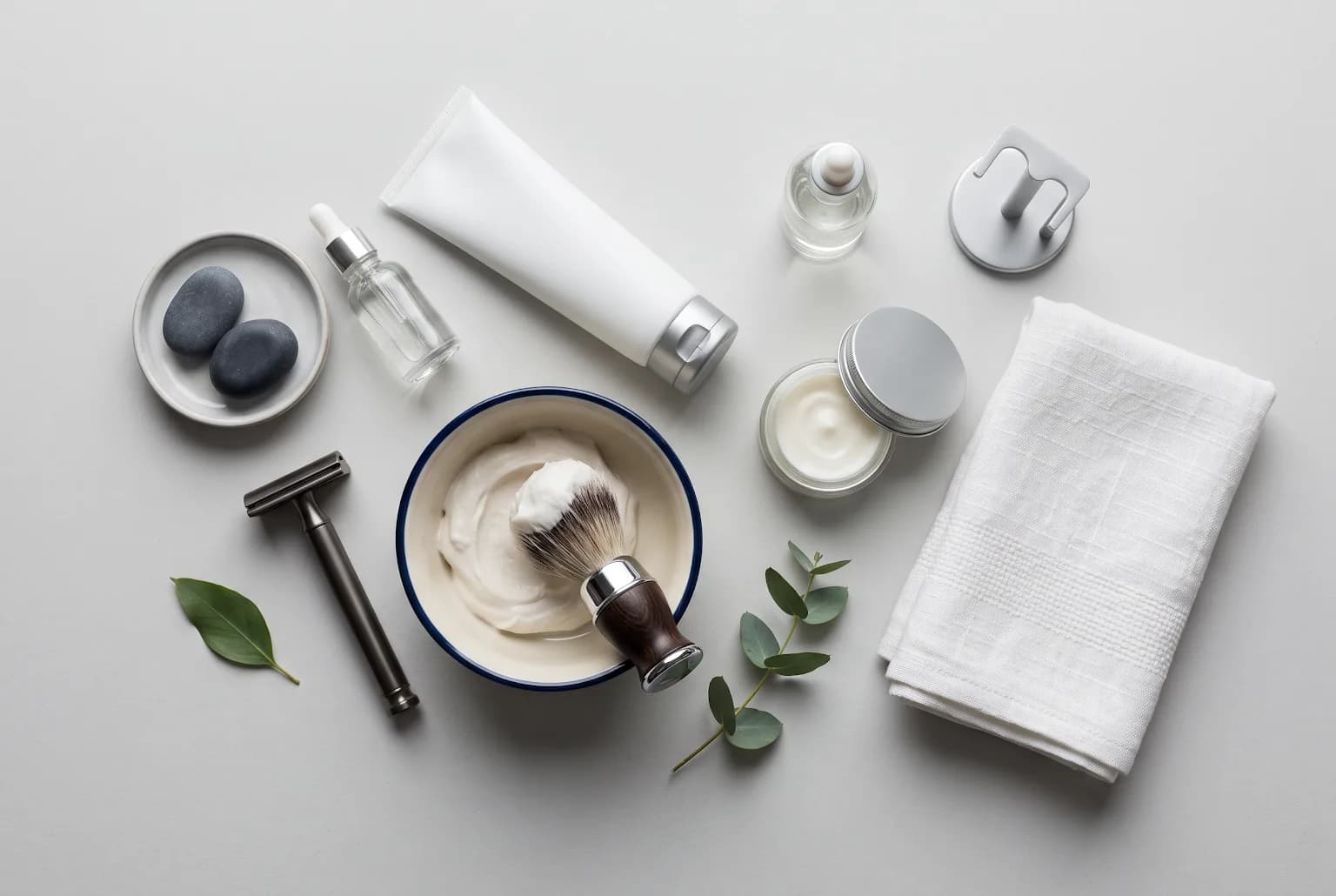
Shaving changes how you should layer and choose products. If you shave daily, treat the face like an active zone: hydrate before, protect during, and calm after.
Prep with warm water and a lubricating shave cream or gel. Shave with the grain to reduce trauma where possible, using short strokes and a sharp blade. After shaving, rinse with cool water to close pores and apply a fragrance-free balm or lightweight moisturizer to soothe.
When to use actives around shaving: avoid applying strong exfoliants or freshly started retinoids immediately after shaving—wait at least 24 hours. If you use a chemical exfoliant, schedule it on non-shave days or on evenings far from a morning shave. Consistency matters more than aggressive frequency: limit exfoliation to 1–2 times per week if you’re also using nightly retinoids.
Morning vs evening — layering, textures and actives

The simplest way to think about AM vs PM is protection first, repair second. Morning is about defense (antioxidants + SPF). Night is where you can introduce stronger actives like retinoids for cellular turnover.
Morning layering: cleanse, lightweight antioxidant (optional), moisturizer, SPF. A vitamin C or niacinamide serum can reduce environmental stressors; follow with a non-greasy SPF. If you have oily skin, pick mattifying or gel moisturizers so the SPF applies evenly.
Night layering: cleanse, targeted treatment (retinoid or benzoyl peroxide), moisturizer. If you use a prescription or over-the-counter retinoid, start 2–3 times a week and increase frequency only as tolerated. Avoid layering multiple strong actives at once (e.g., retinoid + strong AHA/BHA on the same night) to lower irritation risk.
When evaluating textures, consider shaving: light creams that sit under SPF in the morning and slightly richer lotions at night are a pragmatic balance. If you use topical medication for acne, layer it as directed and keep the rest of the routine basic.
A sample 3-step routine that stays simple
Below are compact, repeatable plans that hit the decision criteria: simplicity, match to skin type, shaving needs, and SPF.
- Minimalist daily (normal skin, infrequent shaving)
- Gentle cleanser
- Lightweight moisturizer with niacinamide
- Broad-spectrum SPF 30+ (AM only)
- Oily or acne-prone (shaves 2–3× a week)
- Gel cleanser with salicylic acid
- Lightweight niacinamide serum (AM) and spot benzoyl peroxide as needed
- Oil-free moisturizer
- Broad-spectrum SPF 30+ (AM)
- Dry or sensitive (daily shaver)
- Cream cleanser
- Repairing moisturizer with ceramides (AM/PM)
- Fragrance-free post-shave balm after shaving
- Broad-spectrum SPF 30+ (AM)
These plans mirror the concise approach in our longer guides, like the best men skincare routine and the good morning skincare routine, which explain texture choices and adherence strategies in more depth ( and ). If you want to build a regimen you actually follow, our short audit guide is a practical next step ().
Shopping checklist and what to review before you buy
When you’re comparing products, review these concrete points: texture (gel, lotion, cream), active concentration (low to start), fragrance or essential oils (avoid if sensitive), and SPF type (chemical vs mineral). For value, pick multi-tasking formulas—a moisturizer with niacinamide can reduce an extra serum step—but beware of over-layering incompatible actives.
A quick shopping checklist:
- Is the cleanser suited to my skin type (gel vs cream)?
- Does the moisturizer contain ceramides or humectants for barrier repair?
- Is the sunscreen broad-spectrum and at least SPF 30?
- Which active will I introduce first (vitamin C, niacinamide, or retinoid)?
If you have persistent acne, rosacea, or unusual irritation, consult a dermatologist. Forefront Dermatology and major academic sources recommend tailored medical advice when over-the-counter options don’t work.
Frequently asked questions
How many steps should a men's skincare routine have?
Aim for 3–5 steps you’ll do every day. The essential steps are cleanse, treat, moisturize, and SPF in the morning. Keep the number low to improve adherence and add actives slowly.
Can I use retinol if I shave daily?
Yes, but cautiously. Retinoids can increase sensitivity; avoid applying them on the same day as aggressive shaving or immediately post-shave. Start with every-other-night application and reduce frequency if irritation appears.
What SPF should I use and how much do I apply?
Use a broad-spectrum SPF of at least 30 every morning. Apply approximately a nickel-sized amount for the face and reapply throughout the day if you’re outdoors for extended periods.
Should I exfoliate if I have acne-prone skin?
Gentle chemical exfoliation (salicylic acid 1–2%) can help unclog pores, but limit exfoliation to 1–2 times per week if you also use nightly retinoids to avoid over-exfoliation and irritation.
Are men’s skincare products different from women’s?
Not inherently. Formulations differ by texture and scent, but active ingredients and core functions are the same. Choose by skin type, texture preference, and how the product layers with shaving routines.
Related Reading
- Create a skincare routine you’ll actually follow: a short audit and simple AM/PM plan
- How to build a custom skincare routine that actually works
- The nighttime skincare routine that actually works: steps, textures, and tradeoffs
Sources
- American Academy of Dermatology – Skin care tips for men (https://www.aad.org/public/everyday-care/skin-care-basics/care/skin-care-for-men)
- Cleveland Clinic – Skin care for men guide (https://health.clevelandclinic.org/skin-care-for-men)
- Forefront Dermatology – Men’s routine guidance (https://forefrontdermatology.com)
Clear guidance, checked before publication.
Solvi articles are structured by our editorial team and reviewed for clarity, consistency, and responsible health language. We update pages when guidance or product information changes.

Sofia Marin
Skincare Routine Editor. Sofia is always refining the order, timing, and purpose of a skincare routine. She likes practical systems that are easy to repeat and quick to adjust when skin changes.