Cetaphil Moisturizing Cream vs Lotion: Face-Use Guide
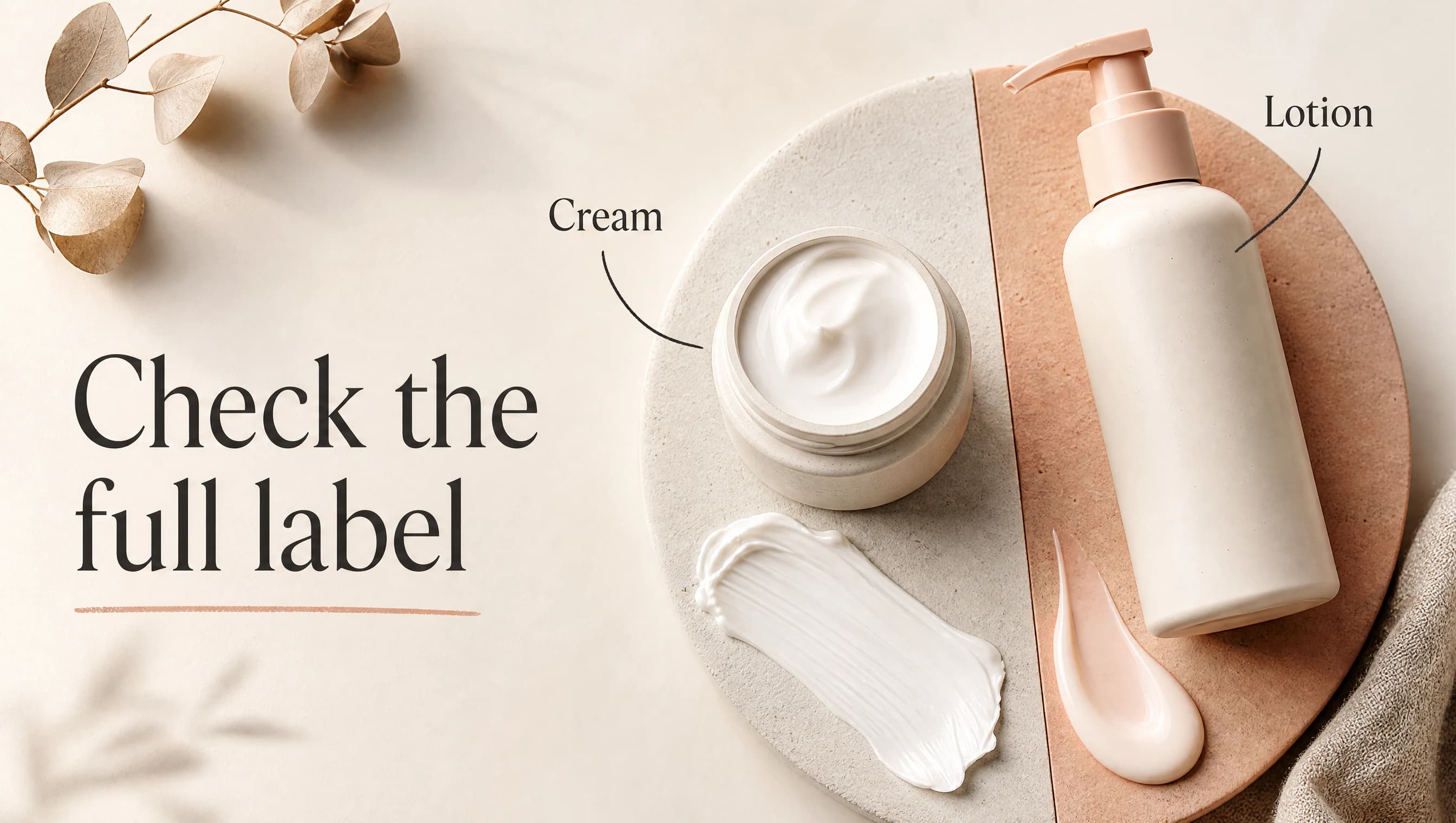
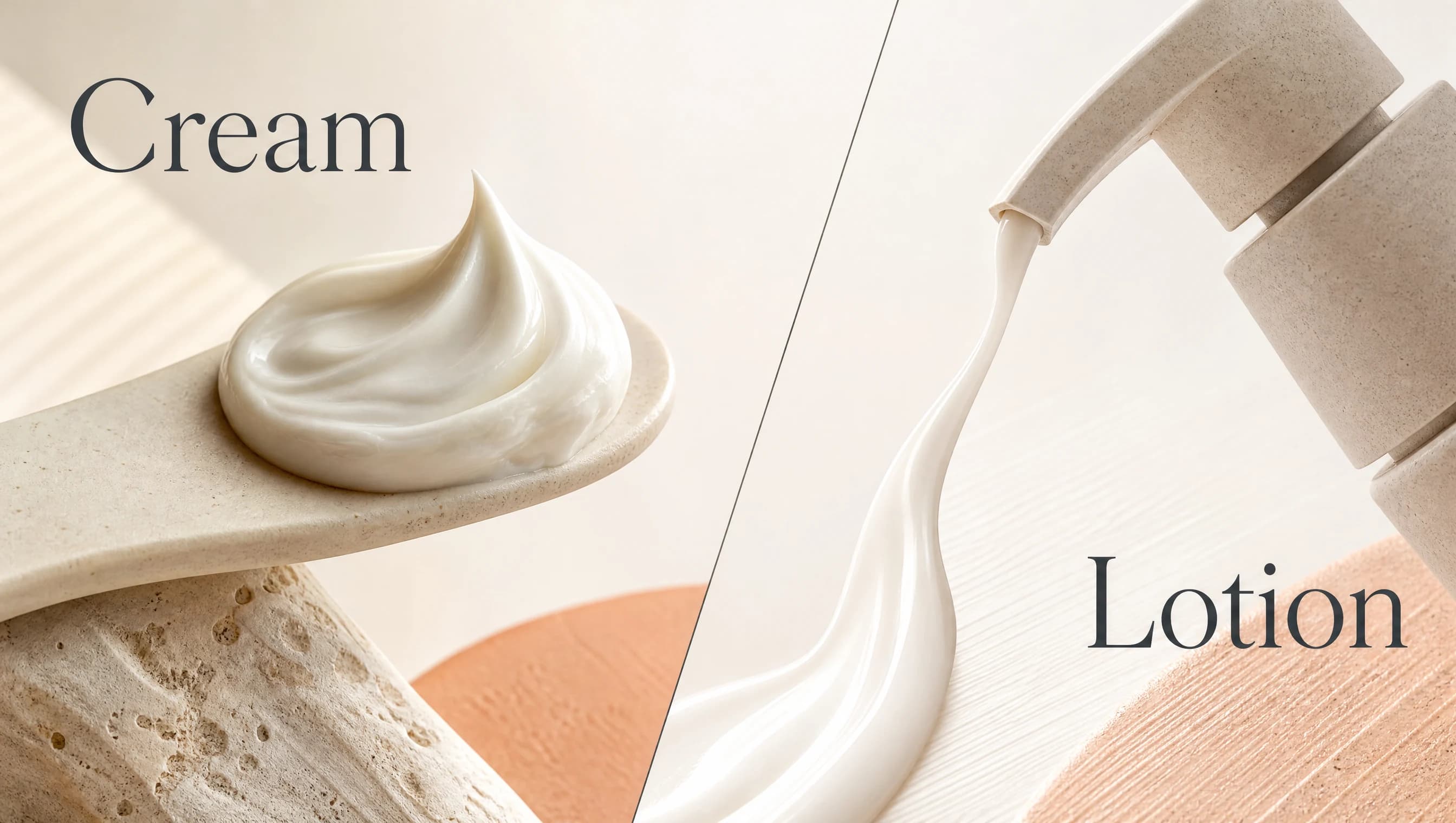
Both current US Cetaphil Moisturizing Cream and Moisturizing Lotion pages permit facial use. The cream is the richer-format candidate; the lotion is the lighter-format candidate. Choose by the role, ingredient list and finish you want rather than assuming the larger body-care package cannot be used on a face.
This comparison is about the plain Moisturizing Cream and Moisturizing Lotion, not Daily Hydrating Lotion, Rich Hydrating Cream, sunscreen moisturizers or other similarly named products.
Compare the current US labels
| Label question | Moisturizing Cream | Moisturizing Lotion |
|---|---|---|
| Facial use included in FAQ? | Yes | Yes |
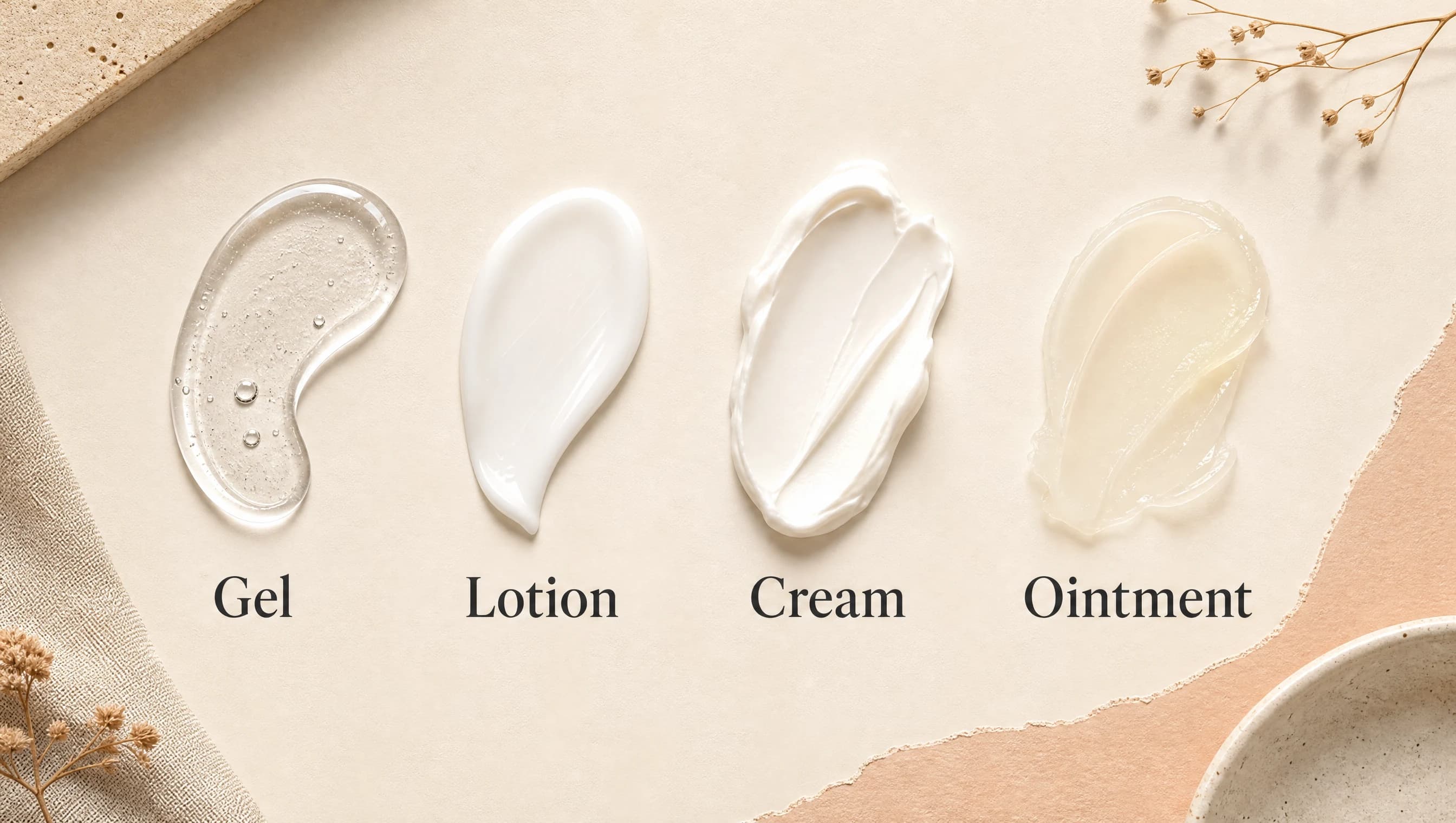
| Described format | Rich cream | Lightweight lotion |
| Shared listed examples | Glycerin, panthenol, niacinamide, dimethicone | Glycerin, panthenol, niacinamide, dimethicone |
| Other listed examples | Petrolatum and sweet almond oil | Avocado oil and sunflower seed oil |
| Fragrance positioning | Fragrance-free | Fragrance-free |
These are facts from the Cream page and Lotion page, not results of a head-to-head trial. Check the regional package you intend to buy. A similar name sold elsewhere may not carry an identical list.
Choose a format for a concrete situation
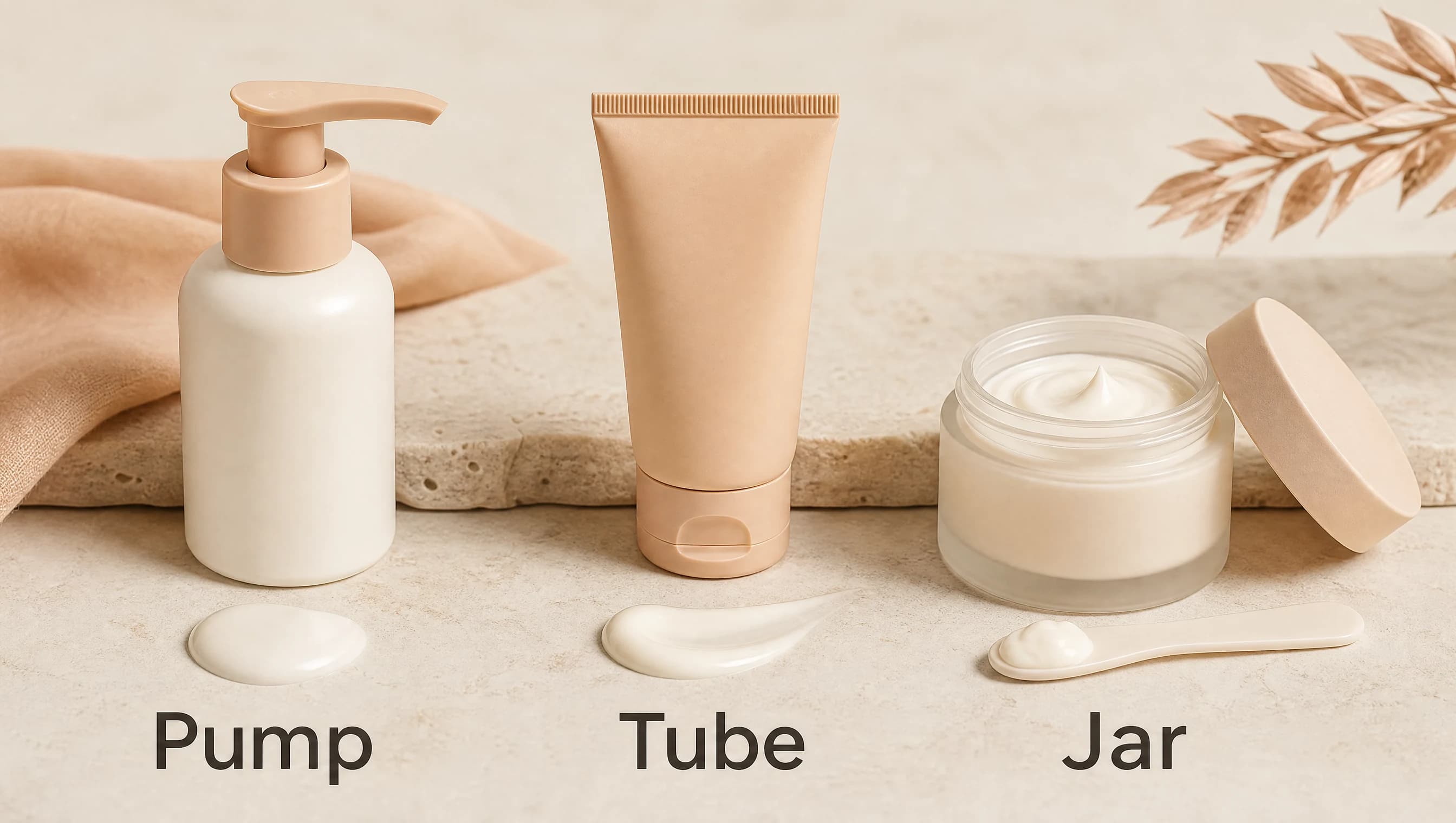
If a rich finish is what you dislike about your current product, shortlist the lotion. If a light lotion leaves you wanting a richer format, shortlist the cream. Both reviewed labels allow facial use, so “body-sized package” is not a reason to exclude either before you inspect the actual formula.
For someone buying one product for face and body, package convenience may matter as much as the product name. For a facial-only user, a smaller package may be easier to use up and store. Avoid assuming that a dedicated facial label always means higher quality or that a body-sized bottle always means better value.
Our combination-skin moisturizer guide helps when cheeks and T-zone need different consideration. The separate guide to using body lotion on the face explains why the exact area-of-use label matters more than where a retailer places the bottle.
Use ingredient differences carefully
The two products share several ingredients but are not identical formulas in different packages. A listed oil or petrolatum can help identify a difference; it cannot predict whether you will experience breakouts or establish that one formula is universally gentler.
If you have a known ingredient restriction, check the exact names on the label rather than interpreting a whole ingredient category as safe or unsafe. Do not diagnose an allergy from this table. A recurrent reaction needs a more reliable assessment than guessing from a handful of familiar names.
The FDA advises consumers to read cosmetic directions and warnings. It also cautions that hypoallergenic wording is not a guarantee against reactions. Our sensitive-skin moisturizer guide can organize alternatives when that is the real decision you are making.
Calculate value from a matched size and price
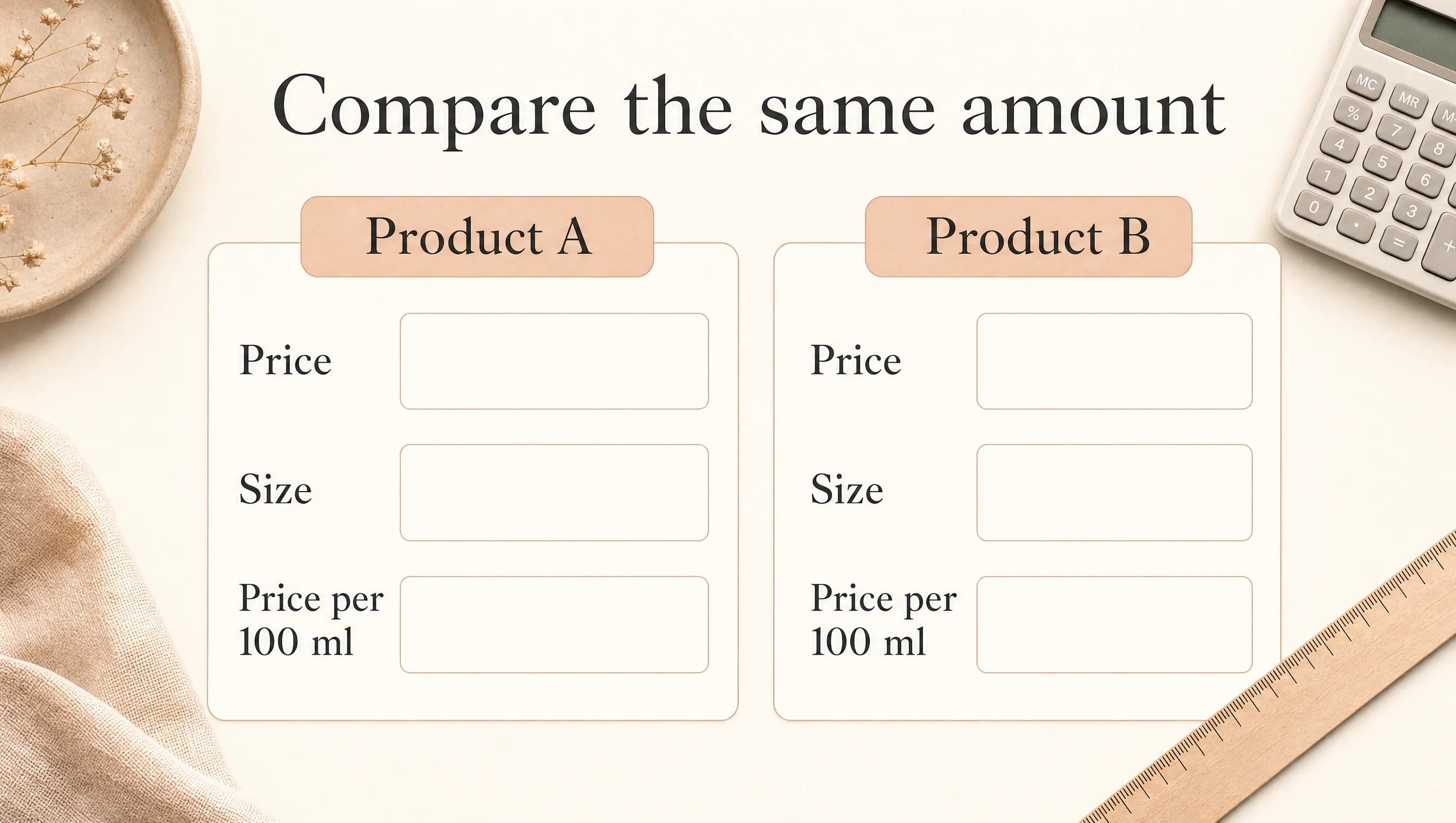
Write down the full product name, quantity and checkout price for each option. Compare the same units. If both labels give mL, price divided by mL and multiplied by 100 gives cost per 100 mL. If one listing gives weight and another gives volume, do not treat them as identical units.
A fictional example shows why units matter: $10 for 100 mL is $10 per 100 mL; $16 for 200 mL is $8 per 100 mL. The second costs less by volume but requires a larger purchase. These numbers illustrate the method and are not current Cetaphil prices.
For face-only use, consider how much you expect to use and where the package will live. For face and body, the same formula may serve more areas. Let that use pattern decide whether a larger pack is useful.
Keep the rest of the decision separate
A moisturizer comparison does not decide which cleanser you need. If you are shopping for that step too, read Cetaphil Gentle Skin Cleanser versus Daily Facial Cleanser and evaluate it independently. A matching brand can be convenient without being a requirement.
Likewise, persistent tightness may involve more than the moisturizer format. Our guide to moisturizers for dehydrated-feeling skin offers a wider review. Record the problem you want to change before replacing several products at once; otherwise, you lose a clear basis for understanding your preference.
Frequently asked questions
Can I put the classic cream on my face?
The reviewed US FAQ permits it. Whether its richer format feels right is a separate personal-use question.
Is the lotion oil-free because it feels lighter?
Do not infer oil-free status from a texture description. The reviewed list includes named oils, so read the actual formula rather than assuming.
Are these the same as Cetaphil sunscreen moisturizers?
No. Sunscreen-containing products have separate labels and directions. This comparison concerns the two plain moisturizers identified above.
Sources
Cetaphil: Moisturizing Cream (cetaphil.com) — https://www.cetaphil.com/products/product-categories/all-moisturizers/moisturizing-cream/302993917564.html
Cetaphil: Moisturizing Lotion (cetaphil.com) — https://www.cetaphil.com/us/products/product-categories/body-moisturizers/moisturizing-lotion/302990241334.html
FDA: Using Cosmetics Safely (fda.gov) — https://www.fda.gov/cosmetics/resources-consumers-cosmetics/using-cosmetics-safely
Clear guidance, checked before publication.
Solvi articles are structured by our editorial team and reviewed for clarity, consistency, and responsible health language. We update pages when guidance or product information changes.