Best moisturizer for sensitive skin: four formulas and their tradeoffs

For sensitive skin, the best moisturizer is one that supplies comfortable moisture while avoiding your known triggers. Four useful options to compare are Vanicream Moisturizing Cream for a richer, petrolatum-containing formula; Vanicream Daily Facial Moisturizer for a lighter lotion; Avène Tolérance Control Cream for a fragrance-free option without niacinamide; and La Roche-Posay Toleriane Double Repair for those who tolerate niacinamide.
There is no single winner for every person who describes their skin as sensitive. Tightness after cleansing, a diagnosed contact allergy and recurrent eczema can all lead to that description, but they are different reasons to reject or choose a product.
Four exact products to compare
This comparison uses official US product information checked in October 2026. It separates formulations that are often mistakenly grouped under a brand or range name. These products have not undergone a Solvi comparison trial.
| Product | Formula detail that matters | Consider it for | Main limitation |
|---|---|---|---|
| Vanicream Moisturizing Cream | Petrolatum-containing cream; no fragrance or botanical extracts | Dryness and a preference for a richer cream | May feel more substantial than you want under makeup |
| Vanicream Daily Facial Moisturizer | Squalane, glycerin, hyaluronic acid and five ceramides; lightweight lotion | A facial moisturizer with a lighter feel | Different formula from the original Vanicream cream |
| Avène Tolérance Control Soothing Skin Recovery Cream | Fragrance-free; glycerin, squalane and a sterile-packaging system | Someone avoiding niacinamide who prefers a cream | Check the full formula, including beeswax, against personal requirements |
| La Roche-Posay Toleriane Double Repair Face Moisturizer | Glycerin, niacinamide and ceramide NP; non-SPF version | Someone who already tolerates niacinamide | Do not confuse it with Double Repair UV or other variants |
All four remain subject to individual tolerance. A brand's sensitive-skin positioning is useful information, not a guarantee that a particular ingredient cannot cause you trouble.
Vanicream cream versus facial lotion
The original Vanicream Moisturizing Cream contains petrolatum and does not contain ceramides. Vanicream Daily Facial Moisturizer is a separate formula containing ceramides, hyaluronic acid and squalane. The distinction is more useful than saying “Vanicream is good for sensitive skin.”
Choose which one to try based on the experience you need. If a lightweight lotion leaves you wanting more comfort, the cream is a reasonable comparison. If you dislike a substantial layer on your face, the Daily Facial Moisturizer is more relevant to that preference.
Do not assume success with one means every product in the range will suit you. Save the full name and a photograph of the ingredient list of something that works. That gives you a reference when packaging changes or a retailer suggests a similarly named replacement.
Avène when you prefer a different formula profile
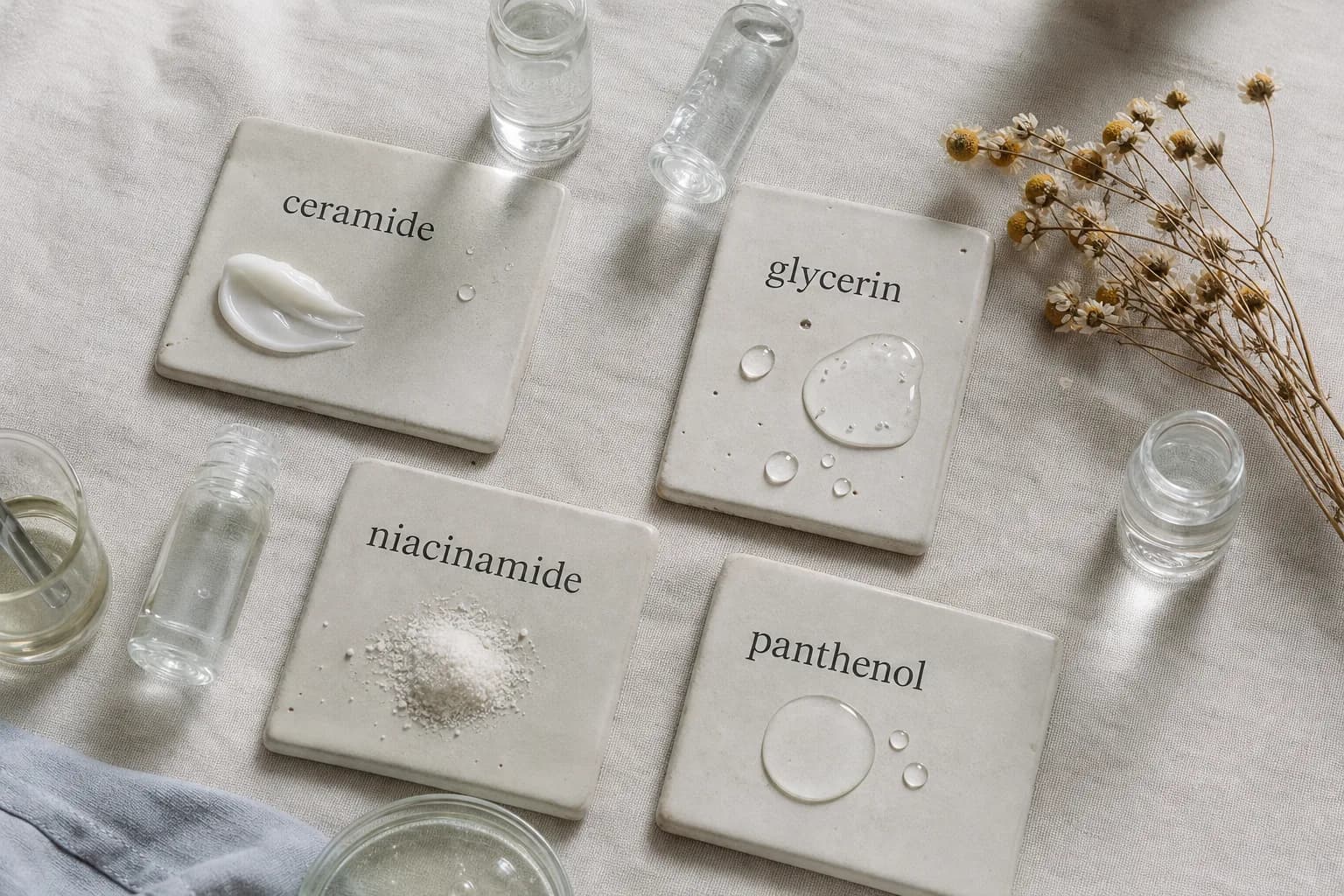
Avène Tolérance Control Cream lists glycerin and squalane, and its official US formula does not list niacinamide. The brand uses a sterile packaging system and identifies the product as fragrance-free. These are concrete product distinctions; they do not prove that every other cream is more irritating.
It is worth comparing if you want a cream and have already decided to avoid niacinamide because of a personal reaction history. Conversely, there is no need to exclude niacinamide just because you have sensitive skin if a product containing it already works well for you.
Check the exact name: Tolérance Control Cream and other Avène moisturizers can differ. Buying by “thermal water cream” is too broad to ensure you are evaluating the same formula. If a specific allergy matters, read the complete list rather than relying on the key-ingredient panel.
Toleriane Double Repair when niacinamide suits you
The non-SPF Toleriane Double Repair Face Moisturizer includes glycerin, niacinamide and ceramide NP. The official range contains several versions, so confirm that the product in your cart is the one you compared.
It is a reasonable candidate when you like this formula profile and do not need to avoid niacinamide. It is less useful as a trial if you already know that the ingredient is associated with a reaction for you and you have alternatives that avoid it.
Buying a moisturizer for sensitive skin does not require choosing the most heavily promoted ingredient. A comfortable formula you use regularly has a clearer role than a more elaborate one you apply inconsistently because you dislike its feel. Consider the routine it will join, including daytime sunscreen and any prescribed treatment.
Read your triggers before reading the claims
The FDA explains that “hypoallergenic” has no federal definition or standard for cosmetics in the United States. It should not override a known allergy or an ingredient list that conflicts with medical advice you have received.
Likewise, a short ingredient list is easier to inspect, but is not inherently safe for everyone. Avoid simple rules such as “ceramides must be near the top,” “niacinamide must be near the bottom” or “only pumps are safe.” These shortcuts cannot determine how a finished formula behaves on your skin.
If you have a documented contact allergy, use the allergen name supplied by your clinician and check the whole list. If you merely suspect a trigger, keep the product details rather than converting one bad experience into a ban on an entire ingredient category. A dermatologist can help when the pattern remains unclear.
Introduce one product without changing everything
For an ordinary new moisturizer, the AAD recommends trying it on a small area twice daily for seven to ten days, using the usual amount. Stop if a reaction develops. This screening approach does not guarantee future tolerance or replace medical patch testing for suspected allergy.
Keep the cleanser and other familiar products steady while you introduce it. Do not automatically stop and restart prescribed treatment according to a generic moisturizer schedule; follow the prescriber's guidance.
A simple record is enough: product name, date introduced, areas used and any persistent discomfort. If your skin is already inflamed, introducing several “calming” products can make the cause harder to identify. Persistent or worsening inflammation deserves assessment rather than a longer shopping list.
Decide whether the texture fits your day
A moisturizer can feel comfortable at night yet be inconvenient under your usual sunscreen and makeup. Evaluate those situations separately. If pilling occurs, consider the amount and number of layers before deciding that an ingredient is incompatible.
For a practical comparison, use the same morning routine and observe whether the skin feels comfortable and whether products apply evenly. At night, ask whether the amount you use is sufficient for comfort without repeatedly adding more. These observations are more actionable than waiting for a vague “barrier reset.”
You do not need to assign the same quantity to every area of the face. If cheeks are dry but the center is comfortable, adjust application to the areas that need it. That is often easier than buying a second full routine.
Frequently asked questions
Is a cream always better than a lotion for sensitive skin?
No. Choose the texture that provides comfortable moisture and fits your preferences. Sensitivity does not automatically mean extreme dryness. A lighter facial lotion may suit some people better than a richer cream.
Should a sensitive-skin moisturizer sting at first?
Do not treat persistent stinging as a necessary stage or proof of repair. Stop the new product if it causes a reaction. Seek advice if symptoms persist or are severe, especially when the skin was already inflamed.
How quickly should it repair my barrier?
There is no universal deadline that applies to every formula or cause of irritation. Judge comfort and tolerance while addressing the underlying trigger. A fixed promise of repair in a few days or weeks is not a reliable way to compare products.
Related reading
- Best Moisturizer for Dry, Sensitive, Acne-Prone Skin: A Barrier-First Guide
- Moisturizer for oily acne skin: a practical texture-first guide
- Vanicream Moisturizing Cream for sensitive skin: a simple barrier-first pick
Sources
- Vanicream: Moisturizing Cream
- Vanicream: Daily Facial Moisturizer
- Avène: Tolérance Control Soothing Skin Recovery Cream
- La Roche-Posay: Toleriane Double Repair Face Moisturizer
- FDA: Hypoallergenic cosmetics
- American Academy of Dermatology: Testing skin care products
Clear guidance, checked before publication.
Solvi articles are structured by our editorial team and reviewed for clarity, consistency, and responsible health language. We update pages when guidance or product information changes.

Zoe Mitchell
Beauty Trends Editor. Zoe keeps a close eye on viral routines, new launches, and the skincare conversations moving fastest online. She asks which trends are useful, which need context, and which can be skipped.