Hyperpigmentation Serum: Four Formulas, Clear Tradeoffs


A useful hyperpigmentation serum has to do two jobs: address the type of mark you have and fit a routine your skin can tolerate. A bigger percentage, longer ingredient list or higher price does not establish that a product will work faster. Start with one targeted formula and dependable sun protection, then judge the change over time.
The four products below offer different approaches: tranexamic acid, a tranexamic-acid derivative with niacinamide, a multi-ingredient serum, and an azelaic-acid cream alternative. These comparisons use current manufacturer labels and published medical sources. They are not results from testing the products against one another.
Start with the kind of mark you are treating
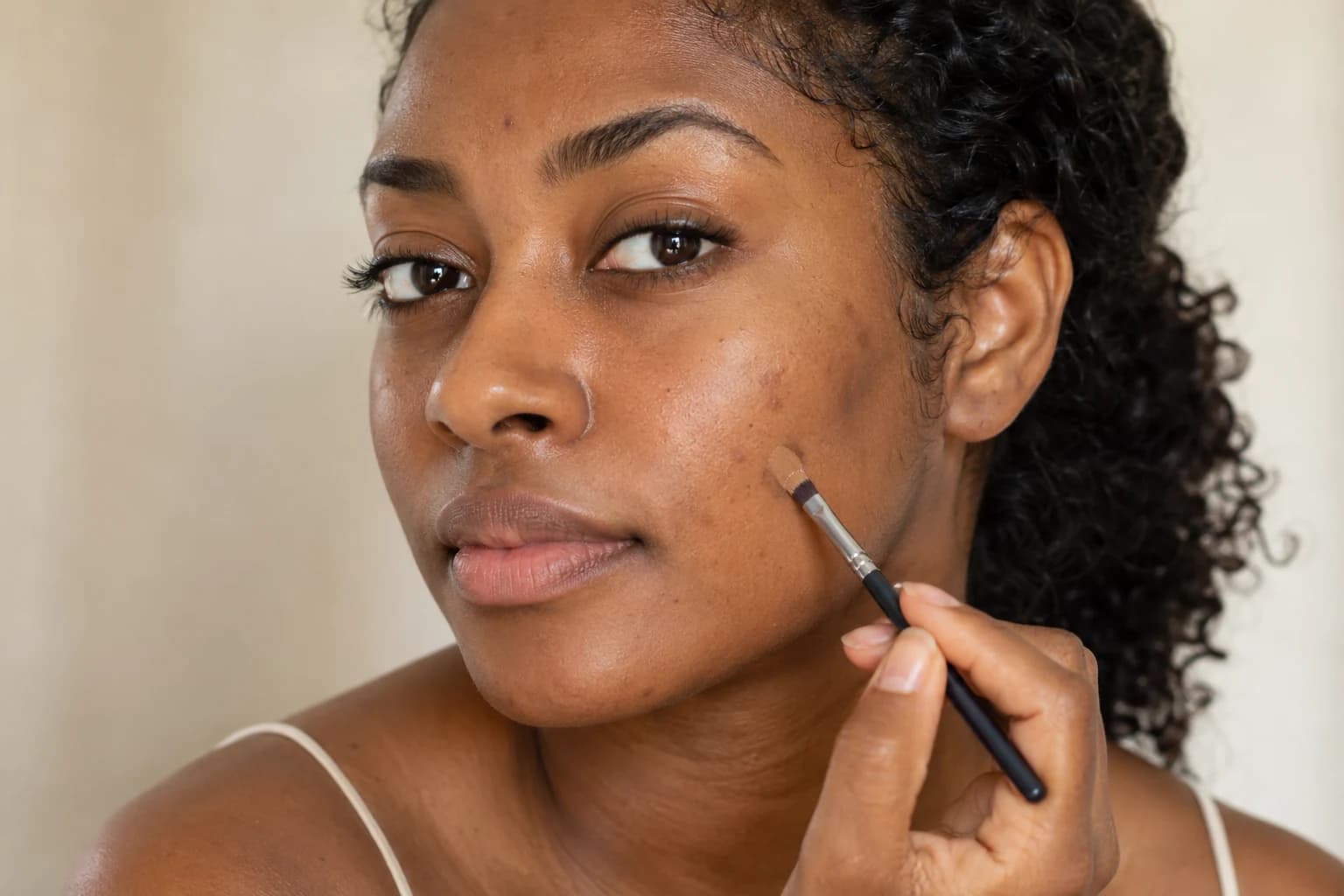
A flat brown mark left after a breakout is a different problem from a depressed acne scar. A serum may improve uneven color; it will not fill a pit. New acne can also keep leaving new marks while older ones fade, so pigment care should not replace an effective acne plan.
Symmetrical, recurring patches on the cheeks, forehead or upper lip may be melasma. Persistent or uncertain pigmentation deserves a diagnosis rather than a sequence of stronger online purchases. The AAD’s melasma treatment guidance describes a combination of sun protection and individualized treatment, with improvement commonly taking months. A cosmetic serum is one possible part of that plan, not a diagnosis or a guaranteed substitute for prescription care.
Four formulas with different reasons to buy

| Formula | What the manufacturer lists | A reason to choose it | A reason to skip it |
|---|---|---|---|
| The INKEY List Tranexamic Acid Serum | 2% tranexamic acid; vitamin C derivative | You want a gel with a disclosed TXA concentration | You already use a similar TXA blend |
| Good Molecules Discoloration Correcting Serum | 4% niacinamide; 3% cetyl tranexamate mesylate | You want a fragrance-free niacinamide combination | Niacinamide has irritated your skin before |
| SkinCeuticals Discoloration Defense | 3% TXA; 1% kojic acid; 5% niacinamide; 5% HEPES | You want those actives in one product | You are trying to identify which ingredient irritates you |
| The Ordinary Azelaic Acid Suspension 10% | 10% azelaic acid in a cream-like suspension | You prefer a cream treatment to a watery serum | You need a formula compatible with every step you already use |
The INKEY List Tranexamic Acid Serum
The current label discloses 2% tranexamic acid and a vitamin C derivative in a gel. It is a practical shortlist option if you want a disclosed TXA concentration without buying a separate vitamin C product. That combination does not make it automatically more effective than another serum. Choose it for the format and ingredient combination; skip it if it simply duplicates your existing treatment.
Good Molecules Discoloration Correcting Serum
The manufacturer’s percentage list identifies 4% niacinamide and 3% cetyl tranexamate mesylate. The second ingredient is a tranexamic-acid derivative: do not read “3%” as 3% pure tranexamic acid or assume identical clinical evidence. The fragrance-free formula is worth comparing if niacinamide already agrees with your skin. Skip it if you are specifically seeking the same ingredient and concentration used in a pure-TXA study.
SkinCeuticals Discoloration Defense
This combines TXA, kojic acid, niacinamide and HEPES, with concentrations listed in the table. Choose it if you deliberately want a multi-ingredient formula in one step. Skip it if you are simplifying an irritated routine: a blend makes it harder to identify the cause of a reaction. The brand reports studies of its finished formula, but those findings do not establish that its price buys faster improvement than every less expensive serum.
The Ordinary Azelaic Acid Suspension 10%
This is a cream-like suspension containing silicones, rather than a liquid serum. It is an alternative when uneven tone and texture are your main concerns and you prefer that format. Check compatibility before adding it: the brand advises against combining this product with strong acids, retinoids or peptides. Skip it if those steps are essential to your current routine and you do not want to reorganize them.
What tranexamic-acid evidence can and cannot tell you
Topical and oral tranexamic acid are different treatments. Evidence for prescription tablets cannot be transferred directly to a cosmetic serum. Oral TXA for melasma requires medical assessment, including clotting-risk considerations; it is not a home escalation step when a serum seems slow. DermNet explains the distinction and medical risks.
Topical research is encouraging in places but not uniform. A small 12-week split-face trial of 5% TXA did not find a significant advantage over its vehicle. A separate randomized study of 100 patients found similar reductions in melasma scores with 5% TXA and 3% hydroquinone over 12 weeks. Different vehicles, comparisons and participants matter. Neither study proves that all TXA serums are equivalent. Placebo-controlled trial, hydroquinone-comparator trial.
The shopping conclusion is modest: look for a clearly identified ingredient and a tolerable finished formula. There is no useful reason to chase a double-digit TXA percentage on the assumption that more must work better.
Build the simplest routine you can assess
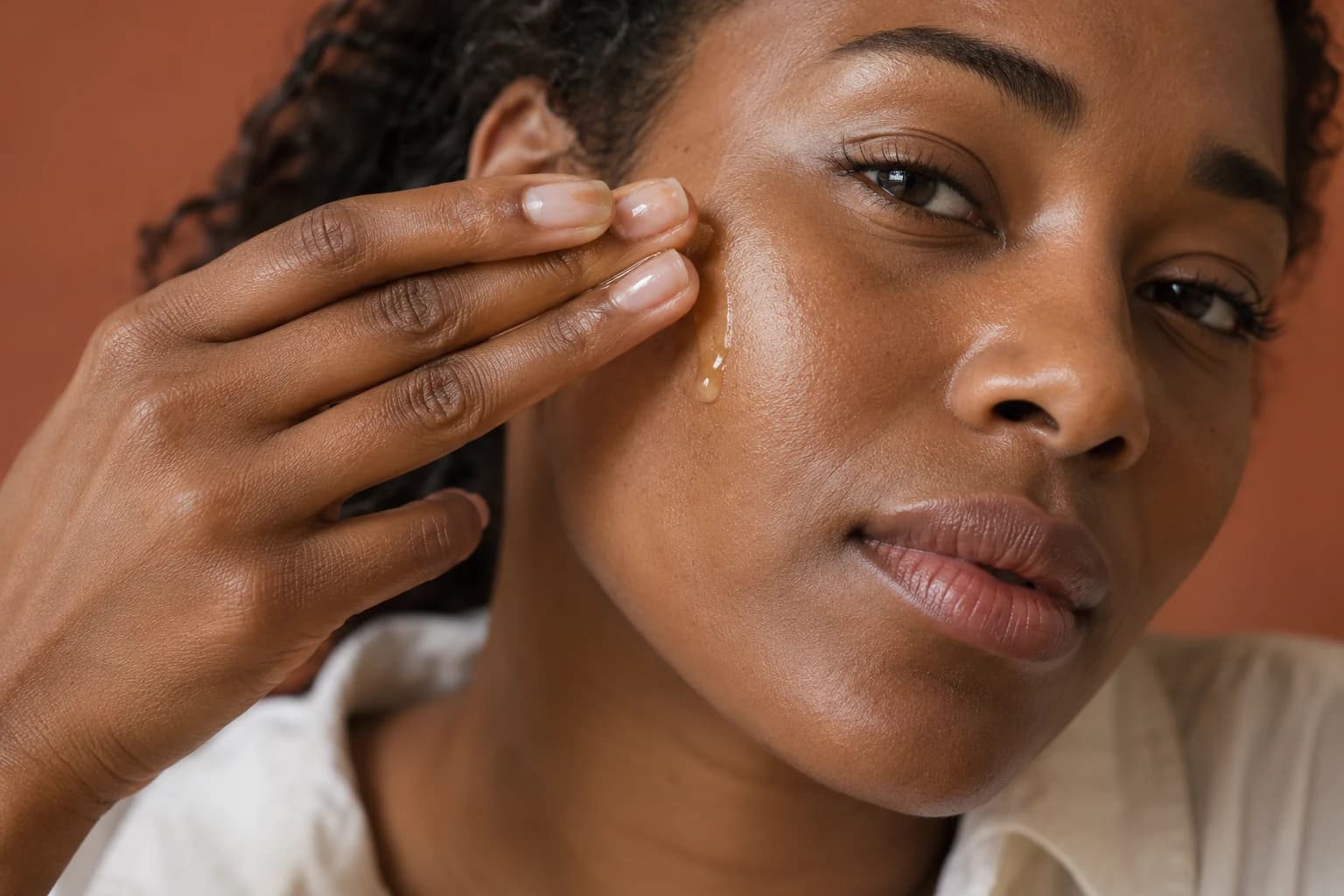
Introduce one new treatment at a time. Follow that product’s directions and test a small area before full-face use. A less frequent start can help you assess tolerance, but there is no universal schedule that makes every active combination suitable.
- Morning: gentle cleansing as needed, your chosen serum if its directions allow morning use, moisturizer if needed, then sunscreen.
- Evening: cleanse, use the treatment according to its instructions, and moisturize.
- If you already use a prescription: follow the prescriber’s plan before adding another pigment product.
Sun protection matters because ultraviolet and visible light can maintain pigmentation, not because every brightening ingredient automatically causes photosensitivity. The AAD recommends broad-spectrum SPF 30 or higher and highlights iron-oxide tinted sunscreen for dark spots in darker skin tones. Follow sunscreen reapplication directions when outdoors.
Let tolerance decide what stays
Stinging is not proof that pigment is being treated. If a product causes persistent burning, redness or peeling, stop and simplify your routine. Irritation itself can worsen discoloration, particularly in melasma. Use products that feel comfortable rather than trying to push through a reaction. The AAD’s melasma self-care advice explains why gentle skincare matters.
For a narrower niacinamide comparison, see our niacinamide guide for hyperpigmentation. If a serum leaves your skin uncomfortable despite moisturizer, our guide to dark-spot creams covers another format. Avoid buying both at once just to increase the number of “brightening” ingredients.
Decide whether to continue before buying the next bottle
Take a baseline photo in consistent lighting and compare periodically using the same setup. Record irritation and new breakouts as well as pigment changes. Treat eight to twelve weeks as a useful review point, not a promised deadline for clear skin. Melasma and longstanding marks can take substantially longer.
Use that review point to make a specific decision:
- Keep the same routine if it is comfortable and the photos show gradual progress.
- Stop the new treatment if irritation keeps returning; more frequent use is not the next step.
- Seek a diagnosis or treatment review if patches persist or you are unsure what they are.
Our dark-spots serum guide can help you compare alternatives without layering several new products together.
Frequently asked questions
Can I combine tranexamic acid with vitamin C?
Some finished formulas already contain both. For separate products, check their individual instructions and your tolerance. A successful combination inside one tested formula does not prove that any two bottles will behave the same way.
Can I add one of these to a retinoid routine?
Check the specific product and your prescriber’s advice. Do not assume every brightening serum is compatible: The Ordinary lists retinoids among the combinations it advises avoiding with its azelaic suspension. Introduce changes separately so a reaction is easier to trace.
Does a more expensive serum fade spots faster?
Price alone cannot answer that. Compare the finished formula, relevant evidence, tolerability and whether you can afford to use it consistently. A product you stop because it irritates your skin is not a useful upgrade.
Sources
- The INKEY List: Tranexamic Acid Serum
- Good Molecules: Discoloration Correcting Serum
- SkinCeuticals: Discoloration Defense
- The Ordinary: Azelaic Acid Suspension 10%
- American Academy of Dermatology: How to fade dark spots
Clear guidance, checked before publication.
Solvi articles are structured by our editorial team and reviewed for clarity, consistency, and responsible health language. We update pages when guidance or product information changes.

Maya Bennett
Senior Beauty Editor. Maya is the skincare obsessive who turns big beauty questions into clear, grounded guidance. She is especially interested in routines that respect real skin, real schedules, and realistic budgets.