The smart buyer’s guide to creams for dark spots on the face


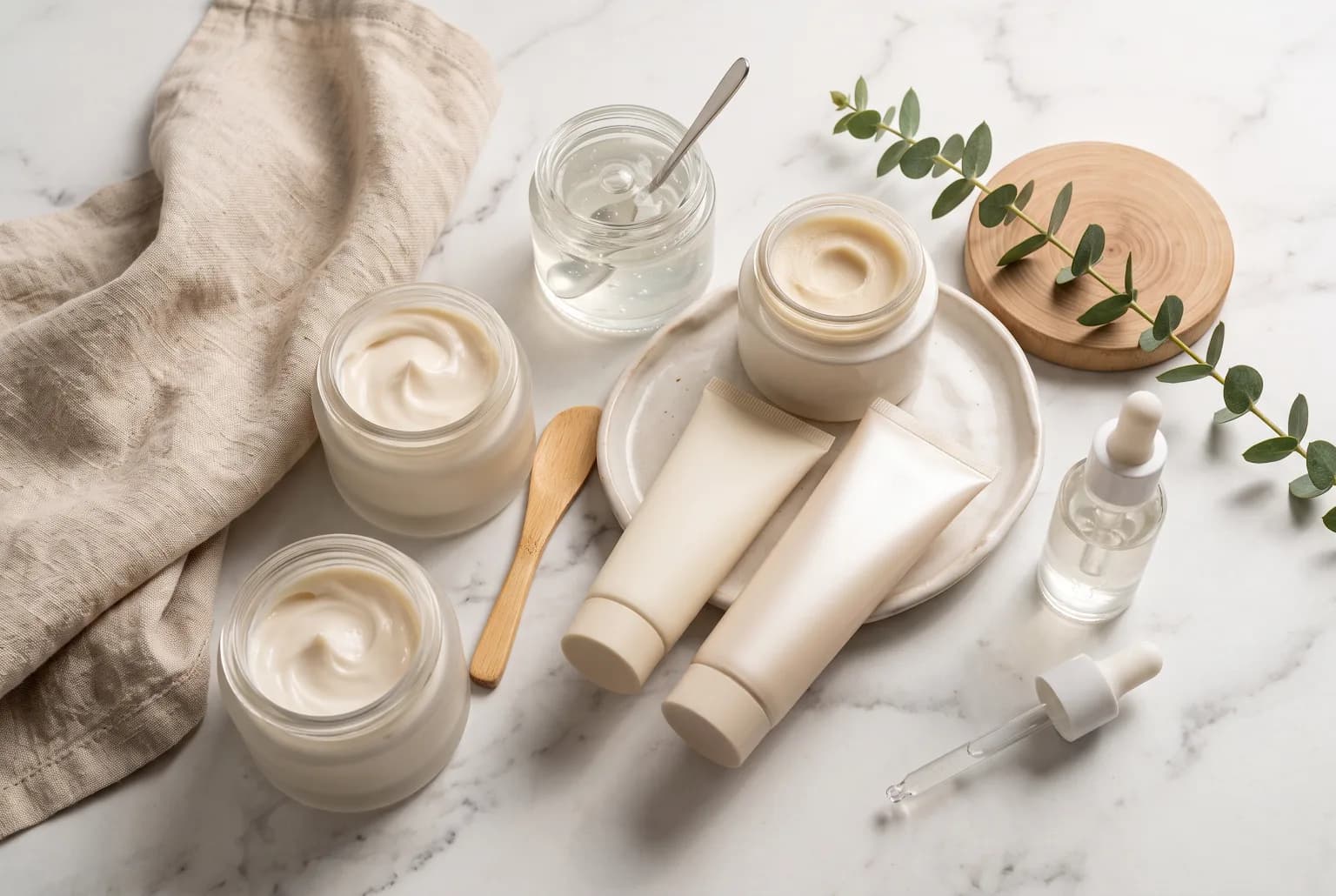
Topical creams for dark spots on the face work by slowing or interrupting melanogenesis (how pigment is made) or by speeding exfoliation to remove pigmented cells. Key clinically supported ingredients include hydroquinone, azelaic acid, tranexamic acid, niacinamide, kojic acid, and vitamin C; pair any active plan with daily SPF 30+ and expect at least 8–12 weeks of consistent use before you can judge progress.
!Flat lay of skincare tubes and jars on marble with soft shadows
How OTC vs prescription differ
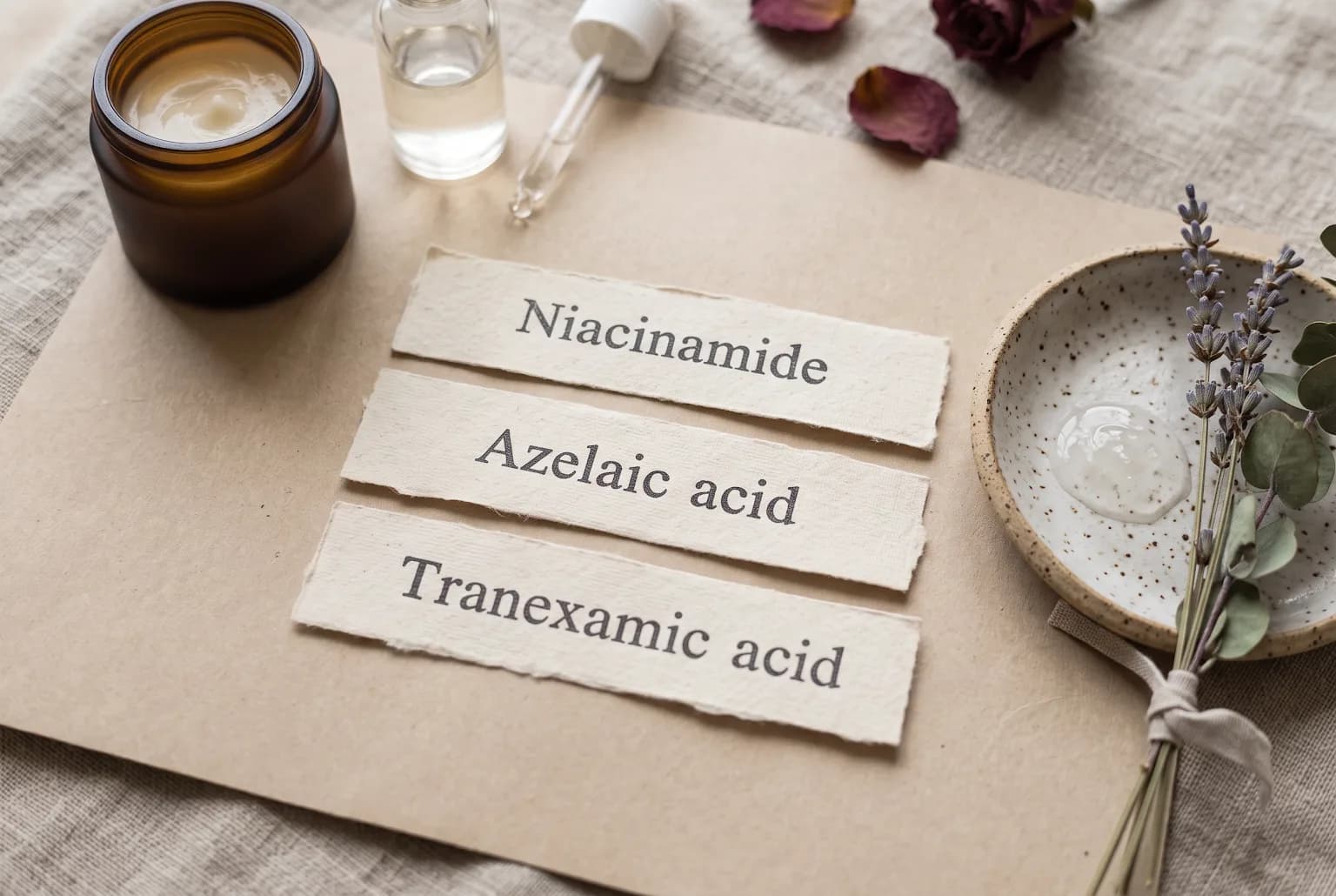
The dividing line between over-the-counter and prescription creams comes down to concentration and formulation strategy. OTC options typically use gentler concentrations or non-hydroquinone actives—niacinamide, vitamin C, kojic acid, azelaic acid and tranexamic acid—to reduce pigment formation and lighten marks over time with lower irritation risk.
Prescription creams are reserved for stubborn or extensive hyperpigmentation and often include higher-concentration hydroquinone or combination formulas that pair hydroquinone with topical retinoids or mild corticosteroids under clinician supervision. The research brief notes that hydroquinone OTC concentrations can be 2% (and 4% in some markets), with stronger regimens available only by prescription; these are effective but require dermatology guidance for prolonged use.
Different actives target different parts of the pigment pathway: hydroquinone is a direct melanogenesis inhibitor, azelaic acid has anti-inflammatory and pigment-reducing activity (available in higher percentages under dermatology care), tranexamic acid interrupts pigment-stimulating pathways, and exfoliants (AHAs) remove pigmented keratinocytes. Choose the mechanism that matches the root cause—post-acne PIH, sunspots, or melasma—because mismatched choices increase irritation risk and may worsen marks, especially on deeper skin tones.
!Paper strips naming niacinamide, azelaic acid, tranexamic acid on beige background
Layering with active serums and textures
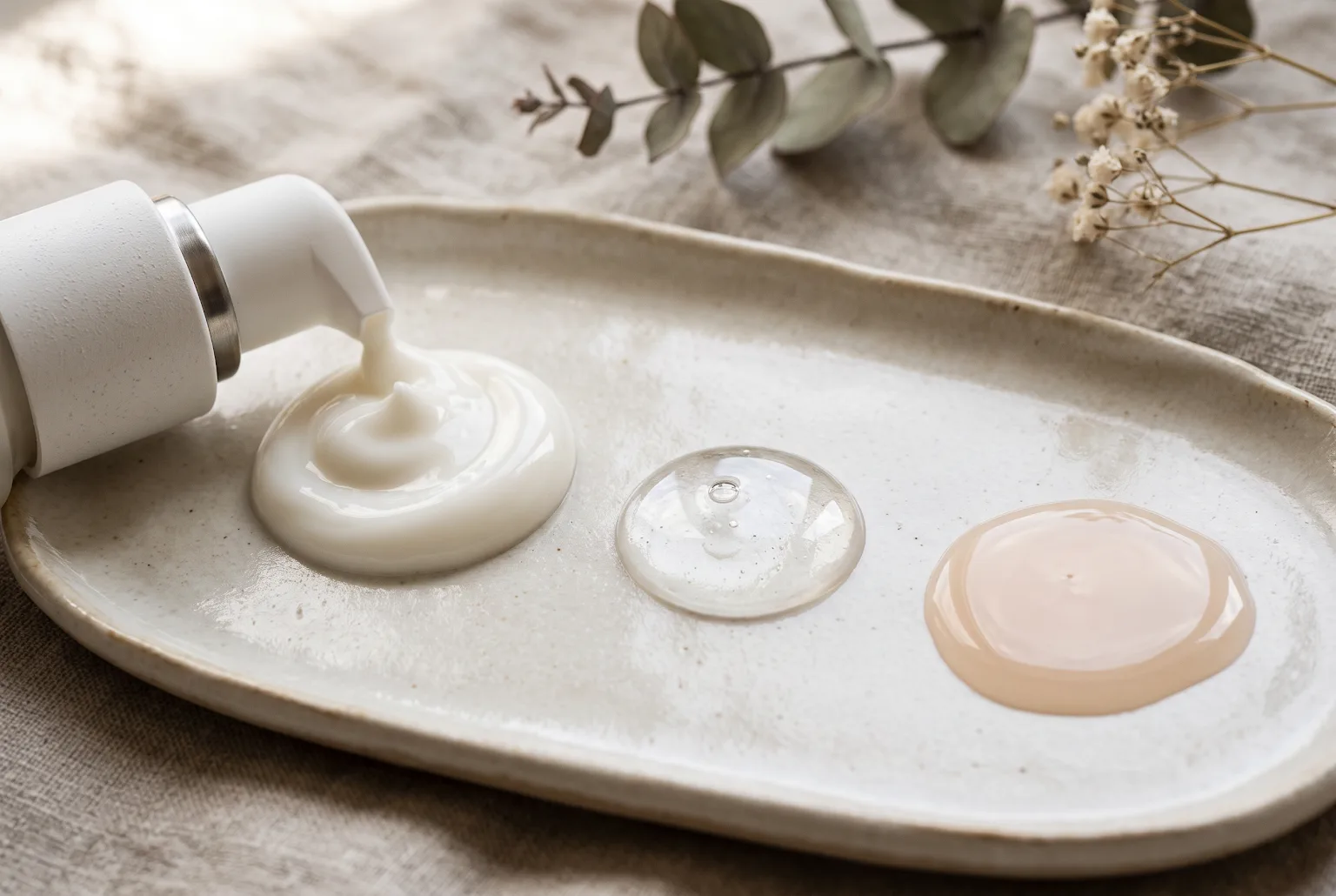
Texture matters as much as the active. Creams are emollient, better for dry or mature skin and for locking in barrier repair ingredients; gels and lightweight serums suit oilier skin and layer more comfortably under sunscreen. If you prefer a single product, a cream formulated around an effective brightening active is the simplest route. If you like targeted treatment, serums let you concentrate actives without risk of pore-clogging.
When combining brightening creams with other actives, prioritize tolerability: apply acidic serums (vitamin C, AHAs) in a separate step from potent inhibitors like hydroquinone or high-strength azelaic acid, or alternate nights. Retinoids accelerate cell turnover and improve penetration but increase photosensitivity; use them in a measured schedule to lower irritation. The tradeoff is clear: faster visible change often comes with more barrier stress and a higher chance of post-inflammatory hyperpigmentation if overused.
- Creams: richer, better for dry or sensitive skin that needs barrier support.
- Serums: concentrated, fast-absorbing; good for targeted pigment control in oilier skin.
- Gels: lightweight, non-greasy, good for combination and acne-prone skin.
!Three skincare textures: cream, gel, serum droplets on porcelain tray
What to review when shopping: a practical checklist
Before you buy a cream for facial dark spots, scan the label for active, concentration, texture, and recommended frequency. Confirm whether the product emphasizes melanogenesis inhibition (hydroquinone, tranexamic, azelaic) or exfoliation (AHA, retinoid), because those pathways demand different usage patterns and sun protection habits. Check packaging for pH and stability notes when vitamin C is listed; unstable vitamin C forms can degrade before you see benefit.
Here’s a short buyer checklist you can use when comparing options:
- Primary active and its mechanism (inhibitor vs exfoliant).
- Concentration or guidance for professional supervision (e.g., hydroquinone strength).
- Texture and comedogenic risk for your skin type.
- Recommended frequency and expected timeline (8–12+ weeks).
- Clear cautions about sun exposure and patch testing.
Maintenance and sun protection
Sunscreen is non-negotiable. If pigment returns, it’s usually because UV exposure re-stimulated melanogenesis. Use a broad-spectrum SPF 30+ every day as the cornerstone of any fading plan, reapplying when you’re outdoors. Sun avoidance measures—hats, shade, UV-protective clothing—multiply the benefit of topical treatments and reduce the need for escalating actives.
Maintenance is also about barrier health: over-exfoliating to hasten fading can strip lipids and provoke new PIH. Many clinicians recommend a low-irritation maintenance cream with niacinamide or a low-dose retinoid after the initial active phase to maintain results without constant high-strength intervention.
!Sunscreen tube with hat and sunglasses on sand-colored fabric
How to match formula to skin tone and sensitivity
Darker skin tones carry a higher risk of post-inflammatory hyperpigmentation from irritation; that makes low-irritation strategies essential. Start with gentle inhibitors like niacinamide or tranexamic acid and introduce more aggressive agents only with dermatology input. If acne-based marks are the cause, azelaic acid (often recommended in 10–20% ranges by clinicians) balances anti-inflammatory benefits with pigment reduction.
Patch testing and slow introduction are vital across all skin tones, but especially on melanin-rich skin. If a product provokes redness, flakiness, or increased darkness at the site, stop and consult a dermatologist. And seek immediate medical evaluation for any spot that changes shape, color, bleeds, or grows rapidly—topical brighteners are for stable, benign hyperpigmentation, not suspicious lesions.
A realist’s routine: morning and evening steps
A repeatable routine reduces variables and protects results. Below is a conservative, tiered routine you can adapt to your chosen cream and skin type.
Morning routine (basic):
- Gentle cleanser—remove overnight oils without stripping.
- Brightening cream or serum with your chosen active (if the product labels AM use).
- Broad-spectrum SPF 30+ and physical barriers (hat, shade) when outside.
Evening routine (basic):
- Double-cleanse if you wear sunscreen/makeup; otherwise a single gentle cleanse.
- Treatment cream (hydroquinone/azelaic/targeted actives) as directed—avoid mixing in the same layer with strong exfoliants unless instructed.
- Moisturizer to support the barrier and reduce irritation risk.
Routine tradeoffs: using an active every night accelerates change but raises irritation risk; alternating nights extends the timeline but preserves barrier integrity. If your plan includes a retinoid, place it in the evening and adjust other exfoliants accordingly.
Ingredients table: mechanism, texture, who it fits
| Ingredient | Mechanism | Typical texture/form | Best for | Tradeoffs |
|---|---|---|---|---|
| Hydroquinone | Directly inhibits melanin production | Cream/ointment | Stubborn melasma or deep pigment (derm supervised) | Effective but needs supervision for long courses |
| Azelaic acid | Reduces inflammation and pigment; anti-acne | Gel/cream | Post-acne PIH and sensitive acne-prone skin | May require higher % under dermatologist care |
| Tranexamic acid | Reduces pigment-stimulating signals | Serum/cream | Melasma and diffuse discoloration | Emerging evidence, well-tolerated but slower acting |
| Niacinamide | Reduces pigment transfer; barrier-friendly | Serum/cream | Mild discoloration; maintenance | Gentler, slower results but low irritation |
| Vitamin C (stable forms) | Antioxidant, interferes with pigment pathway | Serum | Early brightening; pairs with SPF | Stability and pH considerations |
| AHA (glycolic/lactic) | Exfoliates pigmented surface cells | Toner/peel/cream | Surface sunspots and textured skin | Can irritate; avoid overuse to prevent PIH |
When to see a dermatologist
If marks are longstanding, rapidly changing, or unresponsive after 3 months of consistent topical therapy, a specialist consult is appropriate. A dermatologist can prescribe higher-strength inhibitors, supervised combination creams, or procedural options if topical routes stall. They also help differentiate benign hyperpigmentation from lesions requiring medical evaluation.
Frequently asked questions
How long does a cream for dark spots on the face take to work?
Expect at least 8–12 weeks of consistent use before assessing visible change. Some actives work faster than others, but most topical regimens require months to show reliable fading.
Can I use sunscreen with my brightening cream?
Yes. Daily broad-spectrum SPF 30+ is essential when treating hyperpigmentation; many treatments increase photosensitivity, and sunscreen prevents re-darkening of treated spots.
Is hydroquinone safe to use on the face?
Hydroquinone is effective but should be used under dermatology guidance for prolonged courses. OTC strengths are lower (commonly 2%, 4% in some regions), and prescription regimens offer higher potency with clinical oversight.
Which ingredients are best for post-acne dark spots?
Azelaic acid is often recommended for inflammatory post-acne hyperpigmentation, and niacinamide provides a low-irritation maintenance option. Strong exfoliants can help but should be introduced slowly to avoid PIH.
Will exfoliating speed up fading?
Exfoliation removes pigmented surface cells and can accelerate improvement, but overuse increases irritation and the risk of post-inflammatory hyperpigmentation—introduce AHA or retinoid steps slowly and monitor skin response.
Related Reading
- Treatment for Dark Spots on Face: A Smart, Stepwise Plan That Starts With SPF
- Laser Treatment for Dark Spots: The Smart Way to Match the Laser to the Pigment
- Tretinoin Cream Before and After Dark Spots: The Realistic 6-Month Guide
Sources
- Healthline — ingredients for hyperpigmentation and cream options (https://www.healthline.com/health/beauty-skin-care/dark-spot-remover)
- American Academy of Dermatology — treatments for hyperpigmentation guidance (https://www.aad.org)
- Dermatology literature summaries — tranexamic/azelaic acid efficacy (https://www.dermrefoundation.org)
Additional reading: For a stepwise plan that starts with SPF, see Treatment for Dark Spots on Face: A Smart, Stepwise Plan That Starts With SPF. If you’re considering retinoids as part of a long course, the Tretinoin Cream Before and After Dark Spots: The Realistic 6-Month Guide explains timelines. For procedural options when topicals plateau, read Laser Treatment for Dark Spots: The Smart Way to Match the Laser to the Pigment. For a layered, low-irritation plan perspective, see The Best Treatment for Hyperpigmentation on the Face Is a Layered, Low-Irritation Plan.
Clear guidance, checked before publication.
Solvi articles are structured by our editorial team and reviewed for clarity, consistency, and responsible health language. We update pages when guidance or product information changes.

Maya Bennett
Senior Beauty Editor. Maya is the skincare obsessive who turns big beauty questions into clear, grounded guidance. She is especially interested in routines that respect real skin, real schedules, and realistic budgets.