Faded cream for dark spots: what to know about Topicals Faded


If you are searching for “Faded cream for dark spots,” the product you probably mean is Topicals Faded Brightening & Clearing Serum. It is a specific multi-ingredient product, not a general category of tranexamic-acid creams. It may be worth considering for uneven pigmentation, provided the formula fits your routine and you can use it without irritation.
The important question is not whether it contains the longest list of brightening ingredients. It is whether you have the kind of marks it is intended to address, whether another treatment already occupies that role, and whether the manufacturer's directions fit what you currently use.
What Topicals Faded actually contains
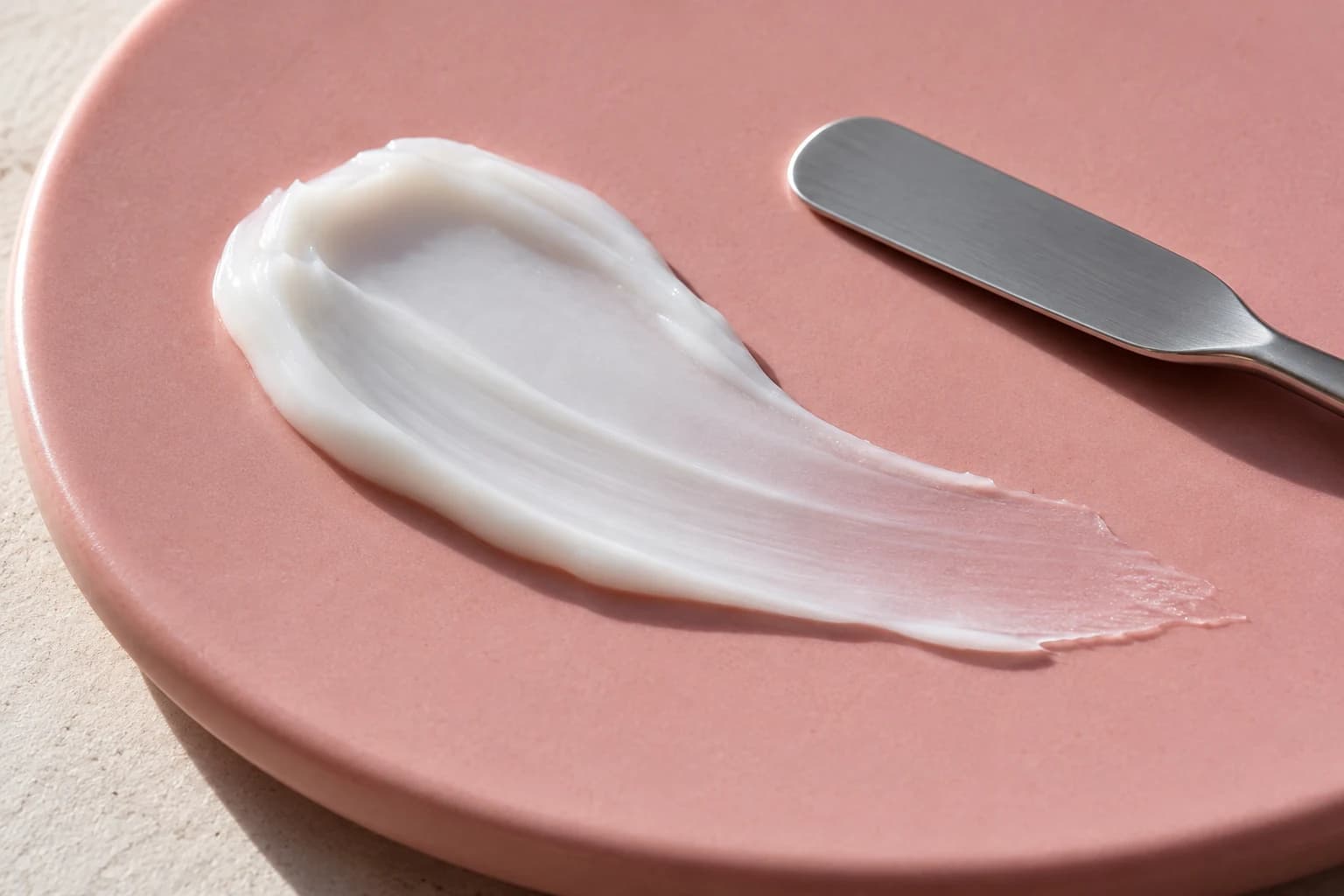
The official US product page highlights tranexamic acid, niacinamide, azelaic acid, kojic acid and melatonin. That gives the serum several ingredient stories, but it does not tell you which ingredient accounts for an individual result or how it compares with a prescription treatment.
“Serum” also does not promise a watery texture. Product categories are loose descriptions; examine the actual formula and application guidance. Check the complete list on your package, particularly if you have known ingredient allergies. Do not assume a review of an older version describes the tube you are buying today.
A key distinction: buying Faded means choosing the complete blend. You cannot separately reduce one ingredient if it disagrees with your skin. Someone who already knows they react to a component should look for a different formula rather than hoping the other ingredients compensate.
Match the product to the mark
“Dark spot” can mean very different things in a shopping search. Start by describing the concern before choosing a product.
| What you are seeing | What to clarify first | How that changes the decision |
|---|---|---|
| Flat discoloration left after a breakout | Is the breakout settled, and are new marks still appearing? | Managing ongoing acne matters alongside the marks |
| Patches that return with sun exposure | Could this be melasma or another pigment condition? | A diagnosis can be more useful than rotating serums |
| A dent or raised scar | Is the concern shape, color, or both? | A pigment product does not establish a treatment for scar structure |
| An unfamiliar or changing spot | Has the spot been assessed? | Get it checked rather than trying to fade it first |
This is a decision aid, not a diagnosis from appearance. If you cannot tell what you are treating, a clinician can help you avoid spending months on the wrong problem. A product marketed for discoloration should not become the default answer to every new mark.
Follow the current directions, especially around retinoids
Topicals' US directions at the time of review say to apply Faded after cleansing, once or twice daily, and follow with SPF for daytime use. The same page advises against direct layering with AHAs, BHAs or retinoids. Read your own package in case the formulation or directions differ.
That warning is particularly relevant if your evening routine already includes tretinoin, adapalene, retinol or an exfoliating acid. Do not stop, restart or reschedule a prescription simply to make room for a cosmetic serum. Ask the prescriber how, or whether, the addition fits.
For someone using no other treatment, the practical task is simpler: introduce one new product, follow its directions and keep the rest of the routine familiar. If discomfort appears, avoid treating it as proof that the product is working. More products and more frequent application make it harder to understand the cause.
Sunscreen matters even when a serum is not photosensitizing
Sun protection is central to a pigmentation routine because light exposure can maintain or worsen discoloration. It is inaccurate to say that all fading ingredients make skin more sensitive to sunlight.
The AAD recommends tinted sunscreen containing iron oxide for dark spots, along with broad-spectrum SPF 30 or higher and water resistance. Iron oxides can contribute protection against visible light. Choose a tint you can comfortably wear in the amount directed, rather than buying a shade you end up applying too thinly.
Think about the whole day. An application before a morning commute does not answer what happens during a long outdoor lunch or afternoon exercise. Follow the sunscreen's reapplication directions and use shade and clothing as additional protection. A fading serum does not compensate for inconsistent protection.
What progress should look like
Choose a few existing marks to follow and take photographs in the same lighting, angle and distance. Avoid comparing a daylight photo with a warm bathroom selfie, or a bare face with one photographed after moisturizer and makeup.
Record two separate questions: are the original marks changing, and are new marks appearing? If acne continues to leave new discoloration, the total number of spots may stay similar even if some older ones fade. Conversely, lighting changes can make a routine seem dramatically better without a clear change in the marks themselves.
There is no responsible guarantee that Faded will clear your spots within a fixed number of weeks. The AAD notes that some post-inflammatory dark marks fade slowly even after their trigger is controlled. If you are uncertain about progress, bring comparable photographs and your actual product list to a dermatologist rather than escalating several actives at once.
When buying Faded makes sense
Consider it when you want one combined cosmetic product for discoloration, have checked its ingredients, and can accommodate the label directions. It is a less compelling purchase if your routine already contains a well-tolerated treatment addressing the same concern and you cannot identify what the extra serum would add.
Before checkout, answer these practical questions:
- Is this the face serum I intended to buy, rather than another product in the Faded range?
- Do I have a sunscreen I actually use comfortably?
- Does the formula contain an ingredient I already know I should avoid?
- Can I introduce it without changing prescribed treatment on my own?
- Is persistent acne, inflammation or an uncertain diagnosis the more immediate issue?
Compare the full cost of the routine, not just the tube. Buying a second brightening product while skipping a comfortable moisturizer or sunscreen may make the routine harder to sustain. The simplest useful addition is the one you can identify a clear role for.
Read concentration claims carefully
A prominent ingredient on a product page is not necessarily present at a disclosed percentage. The order of a cosmetic ingredient list also cannot reliably tell you whether a particular product matches a published clinical dose. US labeling rules allow ingredients at 1% or less to appear in any order after ingredients present above that level.
If a comparison claims one serum is “stronger,” ask what was actually measured: an ingredient percentage, a finished-product trial or simply marketing language. These are different kinds of evidence. A larger ingredient count does not establish a better outcome for your skin.
Frequently asked questions
Can I use Faded with tretinoin?
The current brand directions advise against direct layering with retinoids. Ask your prescriber about compatibility and scheduling. Do not replace the prescription schedule with a generic alternating-night plan from a product article.
Is Faded a cream or a serum?
Topicals names the product Faded Brightening & Clearing Serum. The search phrase “Faded cream” usually points to that product, but confirm the full name and packaging. Other products in the range can have different directions.
Should I add separate azelaic acid or kojic acid?
Not automatically. Faded already combines several ingredients. Adding another treatment can complicate tolerance and make it harder to judge benefit. First decide whether the existing routine is suitable and consistently used; seek tailored advice for persistent pigmentation.
Related reading
- The best retinol for dark spots: a clinical-first guide
- The smart buyer’s guide to creams for dark spots on the face
- Dark spots serum: choose the right brightening formula
Sources
- Topicals: Faded Brightening & Clearing Serum and directions
- American Academy of Dermatology: How to fade dark spots
- American Academy of Dermatology: Melasma self-care
- FDA: Cosmetics labeling guide
Clear guidance, checked before publication.
Solvi articles are structured by our editorial team and reviewed for clarity, consistency, and responsible health language. We update pages when guidance or product information changes.

Maya Bennett
Senior Beauty Editor. Maya is the skincare obsessive who turns big beauty questions into clear, grounded guidance. She is especially interested in routines that respect real skin, real schedules, and realistic budgets.