Best collagen type for skin: what the evidence can actually tell you


There is no well-established “best collagen type” to buy for skin aging. Type I is important in skin structure, but that fact does not prove that a Type I supplement outperforms a Type I/III blend, marine collagen or another peptide preparation. Research on oral collagen is mixed, and a product's source or type label cannot promise firmer skin.
If you still want to compare supplements, focus on the exact product, source, serving information, extra ingredients and cost. Treat the purchase as optional, with uncertain cosmetic benefit. A confident ranking based only on which collagen is abundant in skin skips the question that matters: what happened when people took the actual preparation?
Collagen type and supplement form are different questions
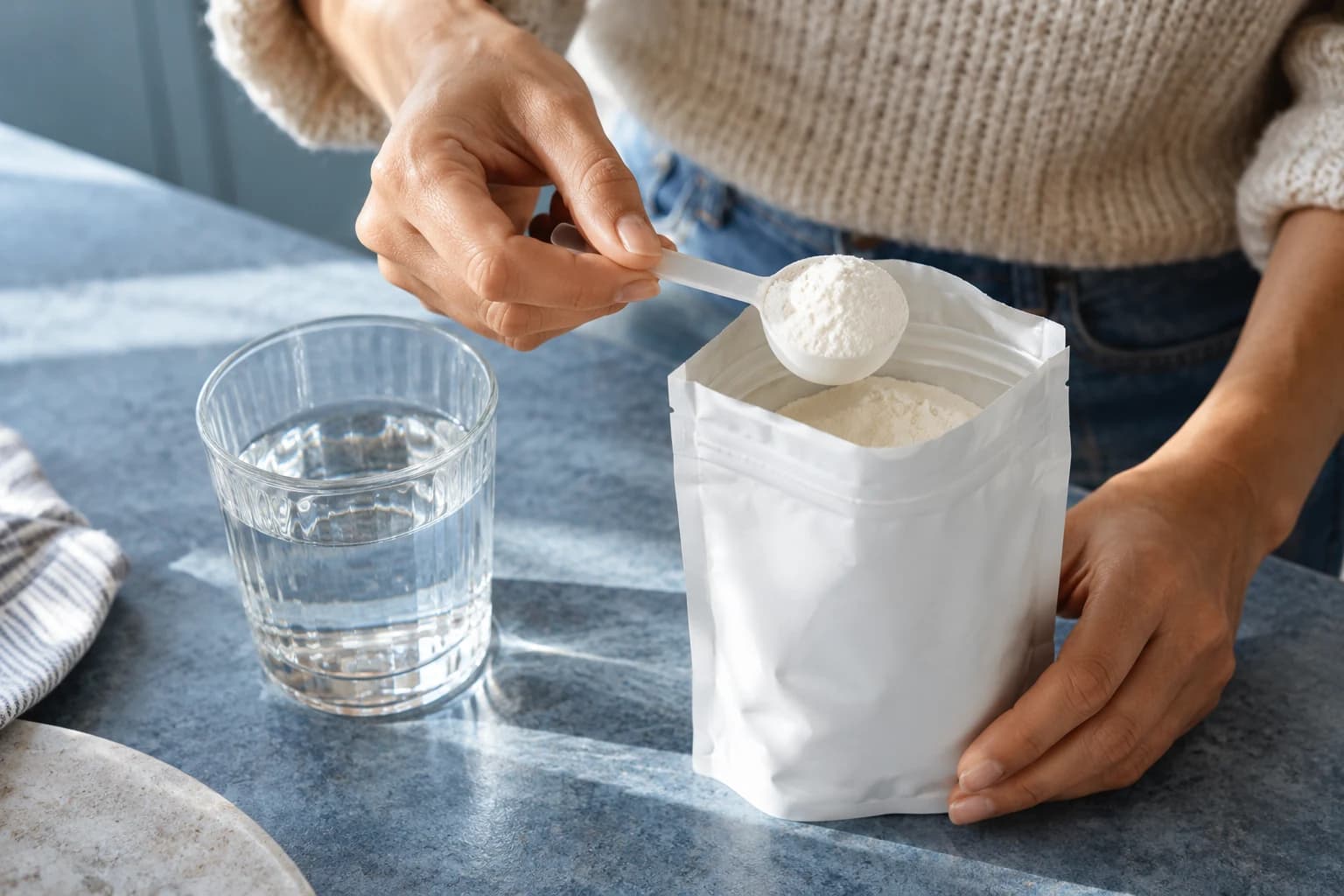
A type label describes a kind of collagen in the source material. “Hydrolyzed” or “collagen peptides” describes processing into smaller fragments. Neither label is a clinical result.
This matters because supplement research often concerns a particular peptide preparation. A positive result for one preparation cannot automatically be transferred to every powder that shares a source or a Roman numeral on the tub. “Contains Type I” is not the same claim as “shown to improve this outcome at this serving.”
Likewise, adding more types does not automatically create broader skin benefits. A blend may be convenient for the manufacturer or appealing to the shopper, but the number of types is a poor substitute for relevant human evidence. There is no sound basis here for assigning Type I to older skin and Type III blends to younger skin or post-procedure recovery.
Why the research gives conflicting answers
Some randomized trials have reported improvements. For example, a 2018 placebo-controlled study of 64 participants tested a specific low-molecular-weight peptide preparation for 12 weeks and reported changes in hydration and some wrinkle and elasticity measures. That establishes a result for the studied intervention, not a universal ranking of collagen types.
A 2025 meta-analysis combined 23 trials and found favorable pooled results, but its analyses of higher-quality studies and studies without pharmaceutical-company funding did not find significant benefits. A later updated review of 35 trials reported improvements in hydration and elasticity while finding the apparent structural effects on wrinkles less robust after sensitivity analyses.
The sensible conclusion is narrower than either “collagen never works” or “Type I restores youthful skin.” Some measured outcomes look promising, but study quality, preparation and analysis affect the answer. The evidence does not justify a reliable promise about lifting sagging cheeks, rebuilding scars or improving recovery after a procedure.
Three products illustrate what labels can tell you

These are label comparisons, not a ranking of clinical effectiveness. Official manufacturer listings were checked in October 2026. Follow the serving directions on the product you actually buy; versions and package sizes can change.
| Product | Verified distinction | Useful shopping question | What it does not establish |
|---|---|---|---|
| Vital Proteins Collagen Peptides, Unflavored | Plain bovine-source collagen product | Do you prefer a straightforward powder without a broader beauty blend? | That bovine collagen is best for your skin |
| Vital Proteins Marine Collagen | Fish-source product; manufacturer lists 12 g collagen per serving | Does a fish source fit your diet and allergy history? | That marine collagen is more effective than bovine |
| Great Lakes Wellness 20ct Collagen Peptides Stick Packs | Bovine source; 12 g per unflavored packet | Is single-serving convenience worth the package cost? | That a packet provides superior cosmetic results |
The table deliberately separates convenience from effectiveness. A travel packet can solve a packing problem without being a better skin treatment. A marine source can suit a dietary preference without making it a scientifically superior choice.
Compare cost without mistaking grams for results
Calculate cost per labeled serving from the size you intend to purchase. A large tub can look expensive but contain more servings; a low headline price can describe a small package. Check whether the displayed price requires a recurring subscription.
If you compare cost per gram, use it only as a purchasing metric. A larger serving does not necessarily produce a larger skin improvement. Studies use different preparations, so the highest gram number is not a simple shortcut to the strongest evidence.
Also look for extra vitamins, sweeteners and other supplements. An “advanced” version may differ from the plain product even when the packaging looks similar. If you already take supplements, check whether the additions duplicate something you use. A clinician or pharmacist can help when medications, pregnancy or a medical condition complicate the decision.
Vitamin C is necessary, but an extra pill is not automatic
Vitamin C is required for normal collagen production. That does not establish that everyone taking collagen powder needs an additional vitamin C supplement. Adequate intake can come from food; the NIH lists fruits and vegetables among the main sources.
Avoid turning a single optional purchase into an unexamined stack of powders, boosters and pills. The practical first question is whether your overall diet meets your needs. The answer cannot be determined from whether a collagen tub includes a vitamin C badge.
If a product combines collagen with other ingredients, improvements reported for the combination may not reveal which component mattered. That is another reason to read beyond a general “clinically studied” claim.
Allergies and dietary choices can rule a product out
Read the source and allergen statement before comparing beauty claims. Fish and shellfish allergies are distinct; neither should be casually converted into the other. Someone with a known fish allergy should not self-test a fish-derived supplement to see whether processing made it tolerable.
Ask the manufacturer about source and cross-contact when the label leaves a relevant question unanswered, and discuss uncertain choices with your allergist. A different animal source is not automatically safe for every person with an allergy history.
Animal-source collagen also does not fit a vegan diet. A product called a vegan collagen “builder” may contain nutrients rather than collagen itself. Compare what is actually present instead of treating those categories as interchangeable.
Decide what would justify continuing
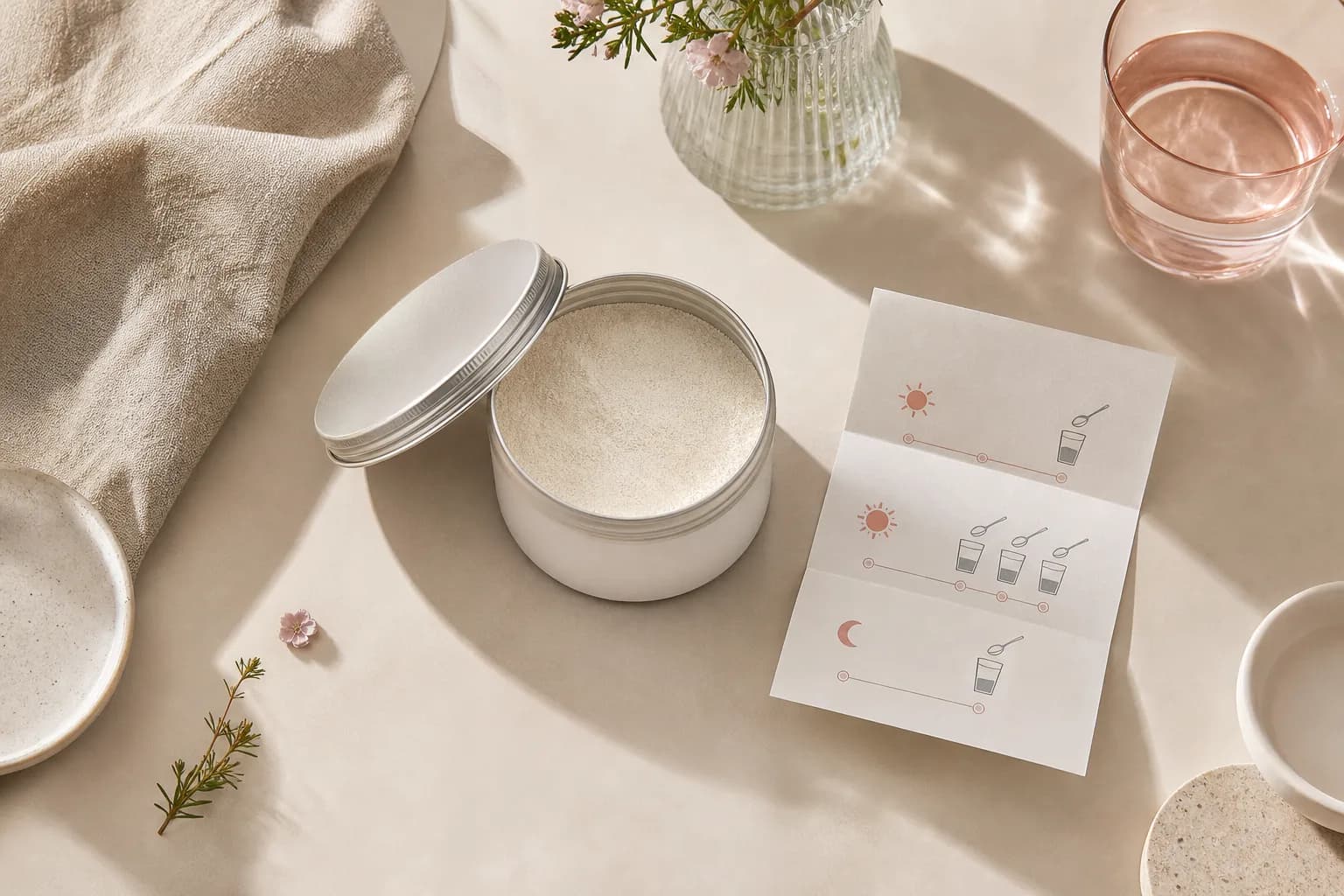
Write down the goal before starting: perceived dryness, appearance of fine lines or another specific concern. Keep photographs and skincare conditions reasonably consistent if you choose to observe changes. A personal before-and-after observation can guide whether you value a purchase, but it cannot prove causation.
Set a budget and a reassessment point rather than renewing indefinitely because benefits might appear later. If your priority is an established skin concern, seek advice on options suited to that concern. Do not postpone treatment or a post-procedure care plan while trying to identify the perfect collagen type.
Frequently asked questions
Is Type I better than a Type I and III blend?
The evidence reviewed here does not establish that ranking. A type label alone does not tell you whether a supplement will meaningfully improve your skin. Look for research on the actual preparation and outcome.
Is marine collagen more effective?
A marine source does not by itself demonstrate superior skin results. Source is useful for dietary and allergy decisions. It should not be treated as a reliable effectiveness score.
What dose should I take for wrinkles?
There is no universally established collagen dose that reliably treats wrinkles. Trial servings vary with the preparation. Follow the product label and seek individual advice when appropriate; do not assume that increasing the amount will improve results.
Related reading
- Best treatments for forehead wrinkles
- Best face makeup for mature skin
- Best makeup primer for mature skin
Sources
- Myung and Park, 2025: Systematic review of collagen supplements
- Updated meta-analysis: Oral collagen peptides and skin rejuvenation
- Kim and colleagues, 2018: Randomized collagen-peptide trial
- Vital Proteins: Collagen Peptides, Unflavored
- Vital Proteins: Marine Collagen
- Great Lakes Wellness: Collagen Peptides Stick Packs
- NIH Office of Dietary Supplements: Vitamin C
- American College of Allergy, Asthma and Immunology: Fish allergy
Clear guidance, checked before publication.
Solvi articles are structured by our editorial team and reviewed for clarity, consistency, and responsible health language. We update pages when guidance or product information changes.

Maya Bennett
Senior Beauty Editor. Maya is the skincare obsessive who turns big beauty questions into clear, grounded guidance. She is especially interested in routines that respect real skin, real schedules, and realistic budgets.