Best face shape for curtain bangs: choose the cut, not a category


There is no single best face shape for curtain bangs. Round, oval, heart, square, diamond, and longer faces can all wear them. What changes the result is the shortest point of the fringe, how much forehead it covers, and where the sides blend into your haircut. Your natural part, texture, and willingness to style it matter at least as much as a face-shape label.
If you are unsure, ask for a longer, lighter version that can be adjusted after you see it dry. A photo of the finish you like is a better starting point than asking a stylist to make your face look like a different shape.
What makes a fringe a curtain fringe
Curtain bangs open near the center and sweep toward both sides of the face. They are usually shorter in the middle and longer toward the temples. A deep side-swept fringe or long face-framing layer may create a related effect, but it is useful to distinguish them when describing a cut.
Hair.com's professional guide illustrates several versions, including curly and wispy styles. Treat those images as a vocabulary for discussing the cut, not a rule that one face shape deserves one version.
At your appointment, point to three things in a reference photo: where the shortest section ends, how wide the opening is, and how much hair forms the fringe. Two photos both labeled “curtain bangs” can differ on every one of those details.
Choose the effect you actually want
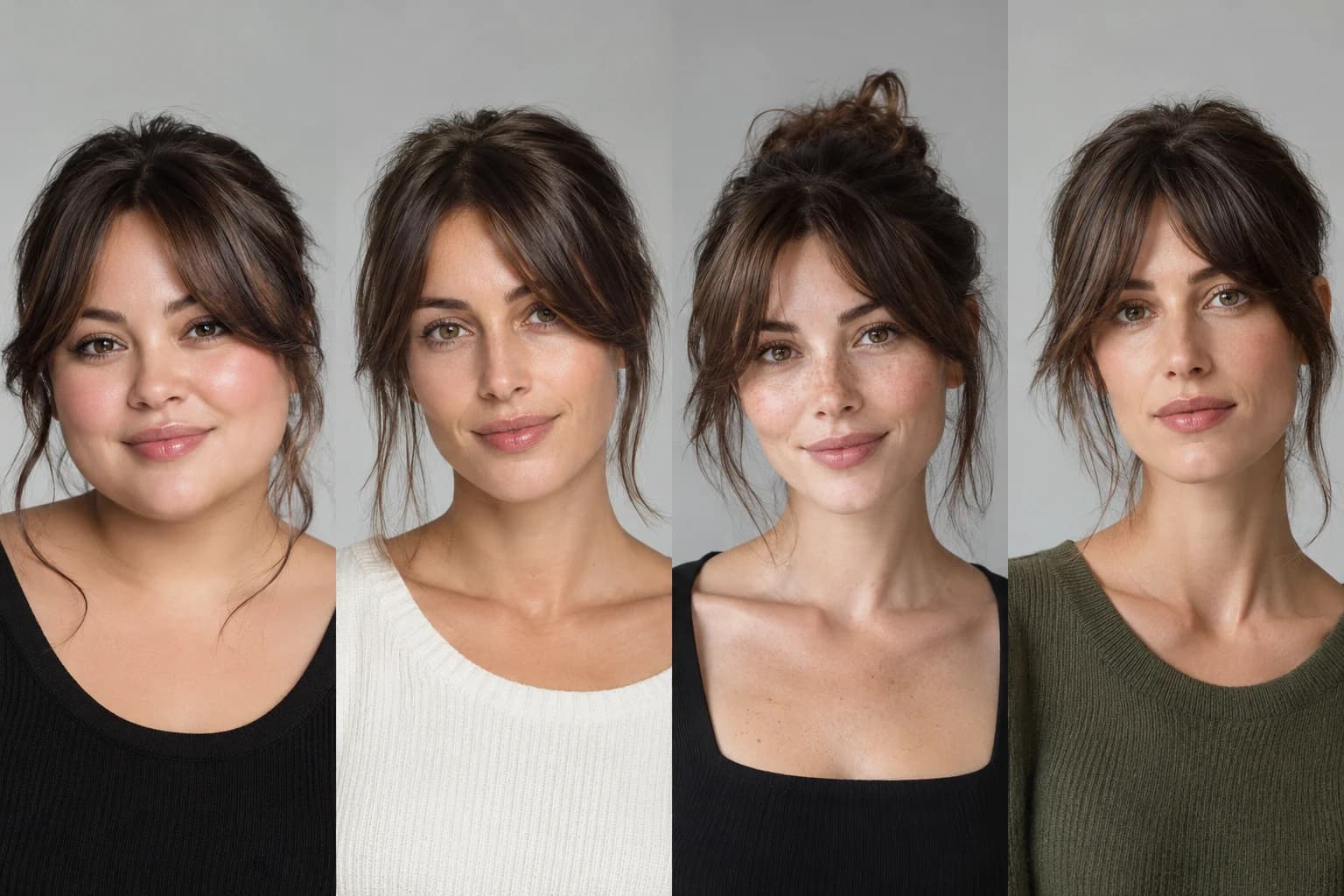
Face-shape advice becomes more useful when it describes a choice rather than a correction. You may want more forehead coverage, a pronounced outward sweep, or long pieces that tuck away. None of those preferences requires disliking your existing proportions.
| Your preference | Ask the stylist to explore | Check before cutting |
|---|---|---|
| More forehead coverage | A smaller center opening and a fuller central section | Will the shortest pieces sit comfortably around your eyes? |
| An open, airy frame | A longer center and a wider opening | Does it still read as fringe when your hair dries naturally? |
| Emphasis around the cheekbones | A bend or transition near that area | Where does your natural wave place the bend? |
| Easy ear-tucking | Longer pieces with a gradual blend | Can the shortest part actually reach behind the ear? |
| A soft fringe with limited daily styling | A light section shaped around your natural part | What does it do without a round brush? |
These are consultation prompts, not fixed cutting measurements. The stylist needs to see density, growth direction, and the rest of your haircut before choosing a precise line.
Use face shape as a description, not a verdict
If you describe your face as round, decide whether you like a compact, cheek-framing shape or a longer diagonal sweep. Both are valid. There is no need to avoid volume or softness simply because a chart says to create angles.
For a longer face, you might prefer more coverage across the forehead, or you might enjoy an open fringe that shows it. For a heart-shaped face, compare the amount of fullness at the temples with the haircut below the chin. For a square face, decide whether you want the fringe to echo its structure or introduce a more curved outline.
Oval and diamond are not permission slips for every fringe, either. A cut that looks attractive in a photograph may still be annoying if it drops onto your glasses or requires styling you do not enjoy. Our broader face-shape hairstyle guide can help you describe the full haircut alongside the fringe.
Check texture and growth direction first

Look at your hair after an ordinary wash, before styling it into a new position. Note the natural part, whether one side lifts, and whether the front curls more tightly than the lengths. Show that behavior to your stylist.
For curls, agree on the desired finished length when dry. For fine hair, discuss how much hair can join the fringe without taking more density from the sides than you want. With dense hair, discuss the shape and weight of the section rather than simply requesting “thinning.”
Redken's pre-cut consultation advice emphasizes texture, cowlicks, daily habits, and maintenance. The practical implication is to arrive with a realistic account of your routine, including the days when you do very little.
Bring a brief your stylist can use
Try this wording: “I want a parted fringe with the shortest point around here. I want these side pieces to blend into my existing layers. I usually air-dry, and I need to tuck the front away for exercise.” Point to the desired lengths instead of relying on terms such as short, long, or wispy.
Bring one photo for the shape and another for a texture close to yours. Explain which detail you like in each. If the reference involves a smooth blowout but you wear curls, ask to see how the same idea would look in your everyday finish.
Also show what you do not want: a very dense center, a short disconnected section, or a fringe that only falls correctly after heat styling. For more fringe vocabulary, see our guide to choosing bangs.
Plan a routine before the first cut
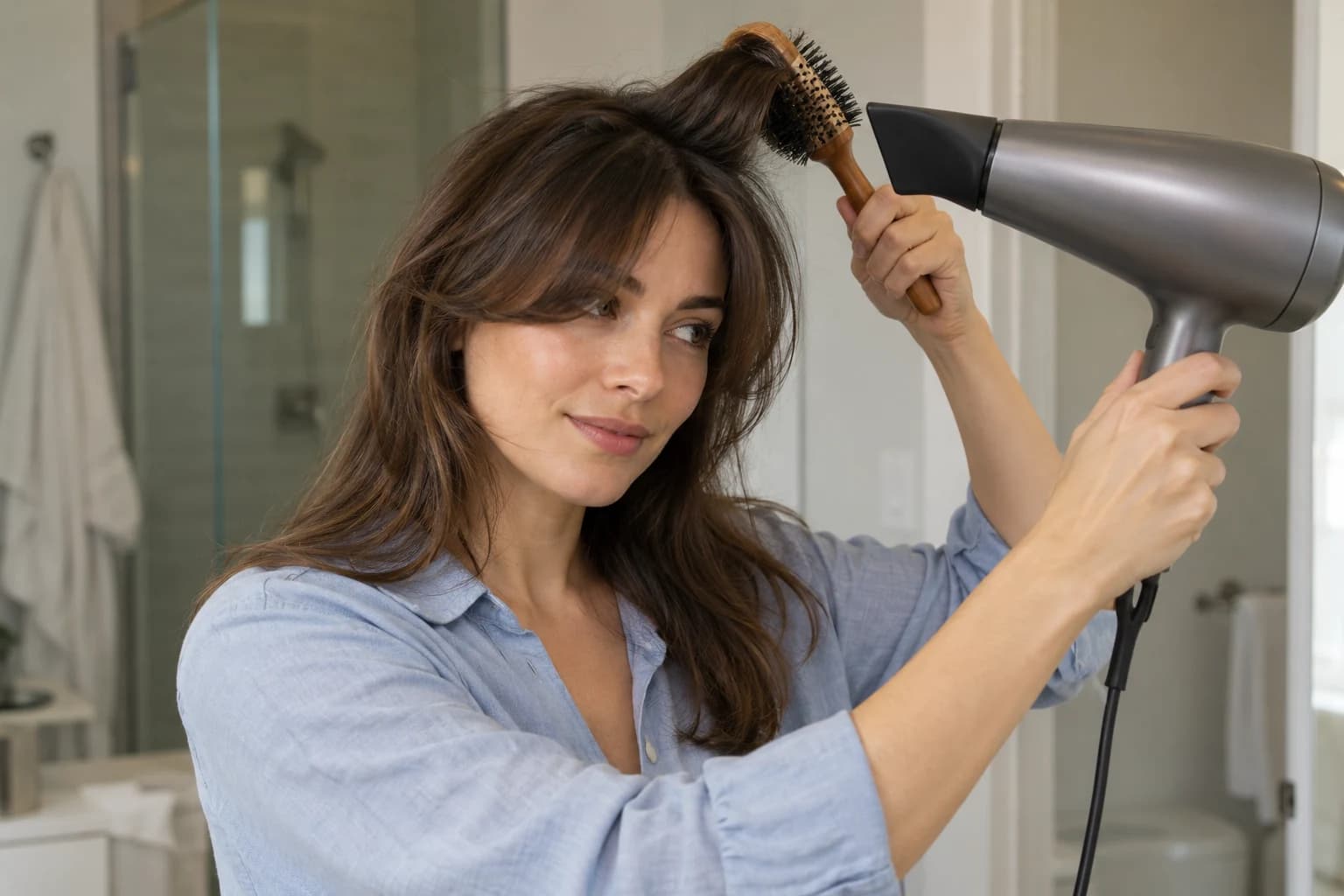
Ask the stylist to demonstrate one ordinary-day finish and one quick recovery when the fringe dries in an awkward direction. Take notes on the technique, not just the product name. A brush size or drying direction may matter more than adding another styling spray.
Keep heat use proportionate to the result you want. The AAD's hair-styling guidance recommends limiting heat exposure and using low or medium settings for flat irons. A high-maintenance reference is not a reason to repeatedly overheat the front sections.
Agree on when to reassess the shape and what happens during grow-out. If frequent trims are inconvenient, tell the stylist before deciding how short to start.
Three realistic appointment decisions
You wear glasses all day: bring the actual pair. Check where the fringe meets the upper rim when you look down, and decide whether you want it above, beside, or behind the frame.
You exercise most mornings: demonstrate how you tie back your hair. A longer front section may suit your routine better than a shorter fringe requiring clips every day.
You want cheek-framing movement throughout the haircut: plan the side layers with the bangs. Our diamond-face haircut examples offer another way to compare where layers begin, even if you do not use that face-shape label.
Frequently asked questions
Can a round face wear curtain bangs?
Yes. Choose the opening, length, and fullness you enjoy. Roundness is a facial characteristic, not a problem the fringe has to hide.
Can I have curtain bangs with a side part?
Often, yes, although a strong side part changes the balance between the two sides. Show your usual part so the stylist can decide whether a curtain fringe or a side-swept version better matches the result you want.
Are curtain bangs always low maintenance?
No. A long, relaxed version may grow out easily, but a specific polished curve can require regular styling. Judge maintenance against your hair's natural behavior and the finish you expect.
Clear guidance, checked before publication.
Solvi articles are structured by our editorial team and reviewed for clarity, consistency, and responsible health language. We update pages when guidance or product information changes.
Amara Lewis
Sensitive Skin Writer. Amara is fascinated by calm, barrier-first skincare and the small details that make a routine easier to tolerate. She favors thoughtful formulas, slow introductions, and less guesswork.