Face Scrub vs Chemical Exfoliant: Which Method Makes Sense?
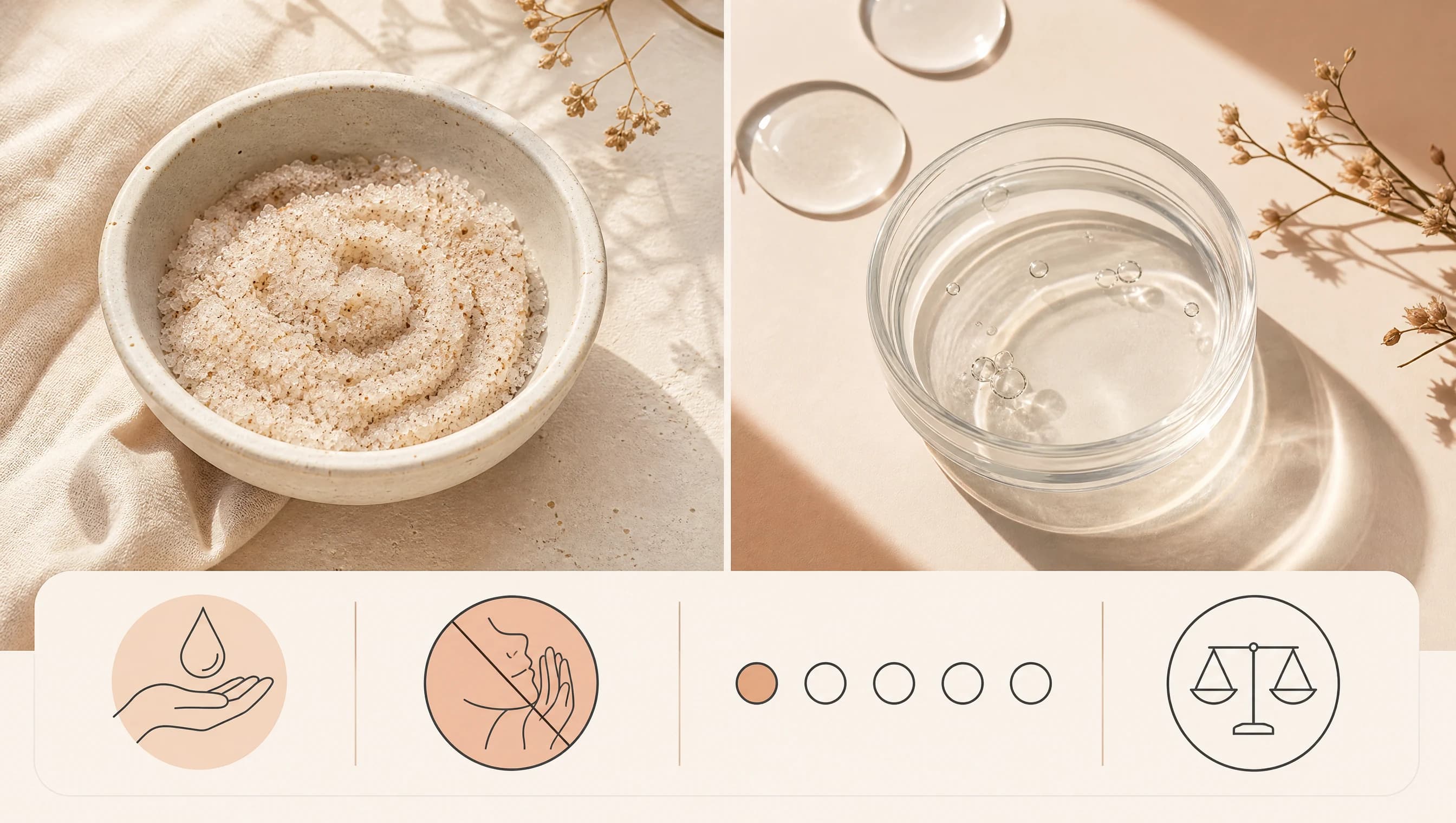
A face scrub removes surface cells through physical action; a chemical exfoliant uses ingredients such as hydroxy acids. The better choice depends on the actual product and how you use it, not a universal rule that one method is gentle and the other harmful. If your skin is already irritated, neither is a sensible new experiment.
Start with a specific reason to exfoliate. Buying an exfoliant because a routine diagram has an empty slot creates a different problem from choosing one for a clearly identified cosmetic concern.
Compare what you control with each method
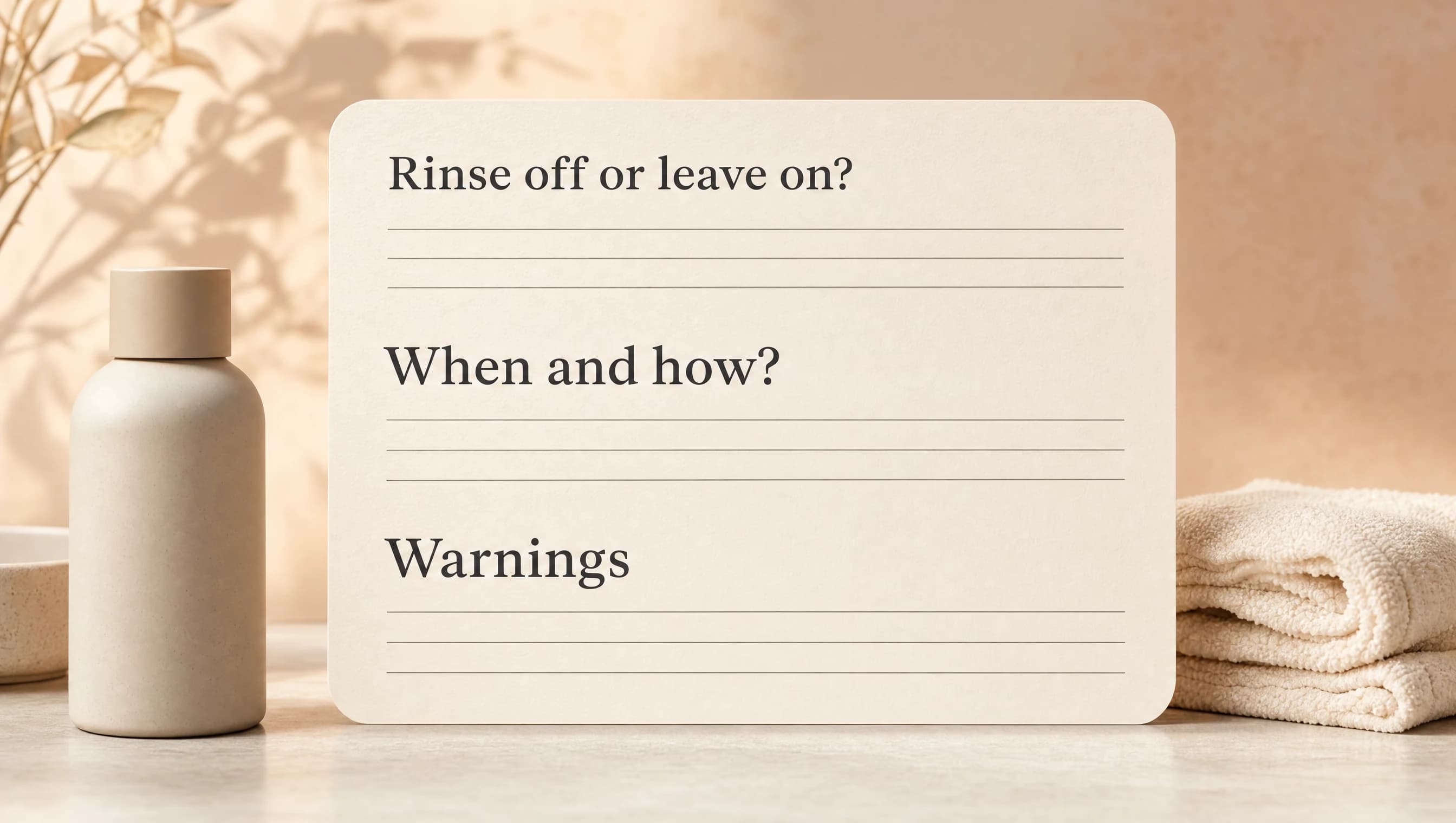
| Decision point | Facial scrub | Chemical exfoliant |
|---|---|---|
| Main application variable | Pressure, rubbing and repeated passes | Amount, contact time and frequency in the directions |
| Common product format | Usually a rinse-off step | May be rinse-off or leave-on |
| Easy mistake | Scrubbing harder to chase smoothness | Keeping a rinse-off product on longer or adding more acids |
| Relevant comparison | Exact texture and application instructions | Exact ingredient, formula and warnings |
| Necessary routine step? | No | No |
The AAD describes both mechanical and chemical methods and notes that exfoliation is not suitable for everyone. That gives you permission to assess the step rather than treating smooth skin as a daily task to complete.
Decide whether the product solves your actual problem
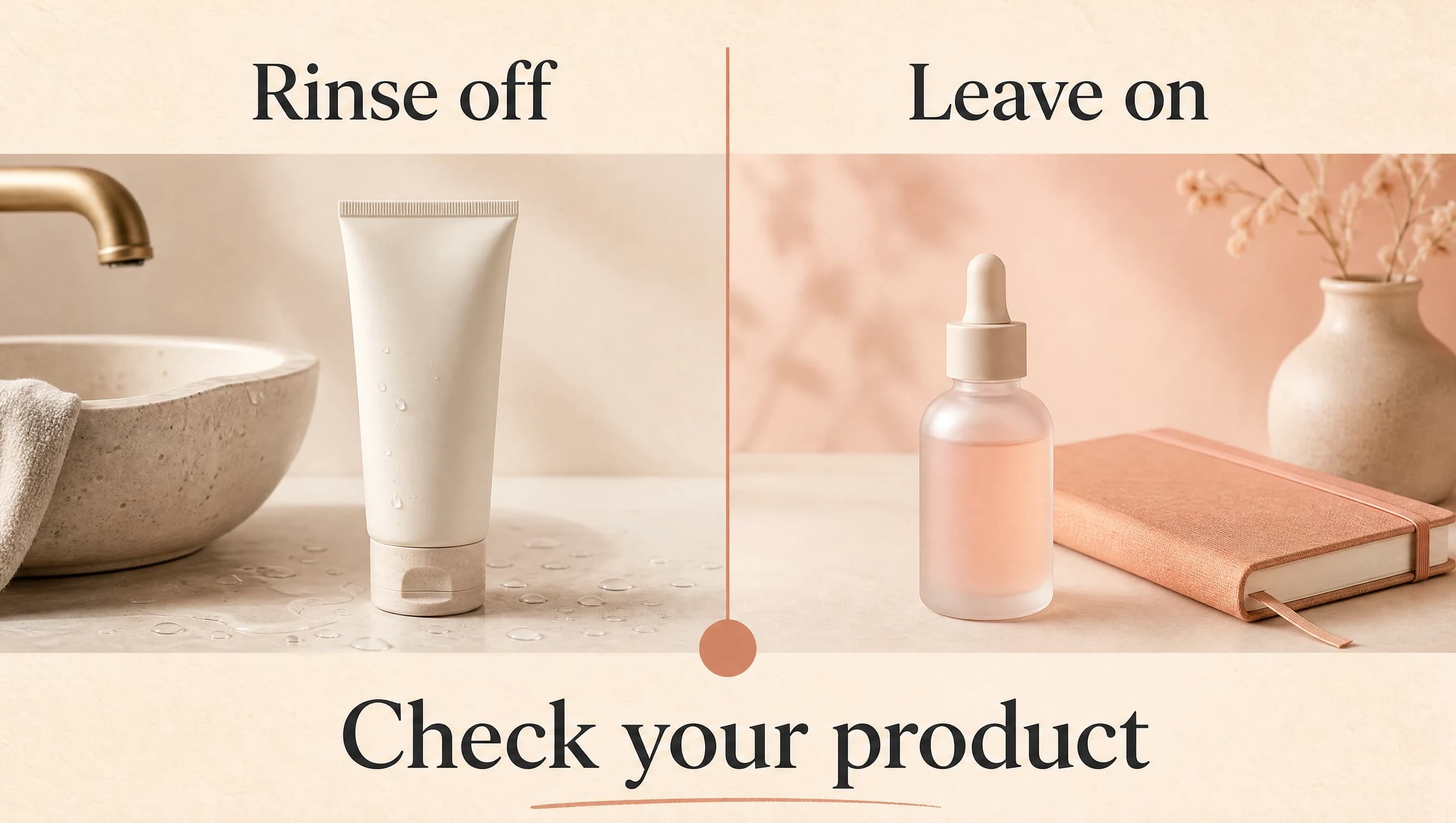
Separate a texture preference from a diagnosis. “My face feels uncomfortable after washing” is not the same concern as “I enjoy an occasional polishing step.” If discomfort is the issue, adding a second form of exfoliation may answer a question you did not need to ask.
Write down what you want to change, then check whether the proposed product is actually intended for that use. A facial scrub is not a tool for scraping away every visible bump. A cosmetic acid is not automatically an acne treatment because the ingredient appears in some acne products.
A completed decision might read: “I already use an acid toner. I am considering a scrub because makeup looks uneven. I have not established what the scrub would add.” First review the existing routine and the specific cosmetic problem. A second exfoliating format is an optional change to justify, not the automatic next step after an uneven makeup day.
Audit the routine before choosing a method
Put every exfoliating step on one list. Include cleansers, toners, pads, masks and tools, even when they sit in different parts of the bathroom. Product categories can hide overlap: a toner plus a scrub is still two exfoliation methods.
Then ask:
- Is there already an exfoliating product I like?
- What exactly would this new product replace?
- Can I follow its directions without improvising a longer treatment?
- Would I recognize a worsening reaction and stop?
- Am I trying to add this while another treatment is already causing dryness?
For products containing AHAs, the FDA says the exfoliating effect depends on the acid, concentration, pH and the rest of the formulation. That is why a product's detailed instructions matter more than its place in a “scrub versus acid” debate.
Keep technique separate from ambition
More pressure is not a meaningful way to customize a scrub. Nor is doubling an acid's application time. Use the chosen product as directed and resist changing several variables because the first use did not produce a dramatic photograph.
The AAD advises against exfoliating sunburned or wounded skin. FDA BHA guidance also tells users to stop when irritation or prolonged stinging develops. These are practical boundaries, not a challenge to find a stronger product that feels more intense.
A useful record can be very simple: product used, other products that day, comfort afterward and whether the step seems worthwhile. Avoid treating every change in texture as a reason to escalate. If a problem persists or you are unsure what you are treating, obtain professional advice before continuing to experiment.
Frequently asked questions
Is chemical exfoliation always safer than scrubbing?
No. A chemical product can be unsuitable or misused, just as a scrub can be applied too aggressively. Compare the exact formula and instructions rather than assigning safety to the category.
Can I use a scrub after an exfoliating toner?
Do not add the second method simply to intensify the first. Review the directions and routine overlap; using more methods does not itself establish a better result.
Do I need either method if my skin feels fine?
No. A comfortable routine does not need an exfoliant added for completeness. Keeping a working routine is a reasonable decision, even when a product is popular.
Related decisions
- Best Facial Exfoliator for Sensitive Skin: A Smarter Way to Choose
- Best face wash for blackheads: a practical salicylic guide
- Skin Cycling Routine for Beginners: A Calm, Customizable Four-Night Plan
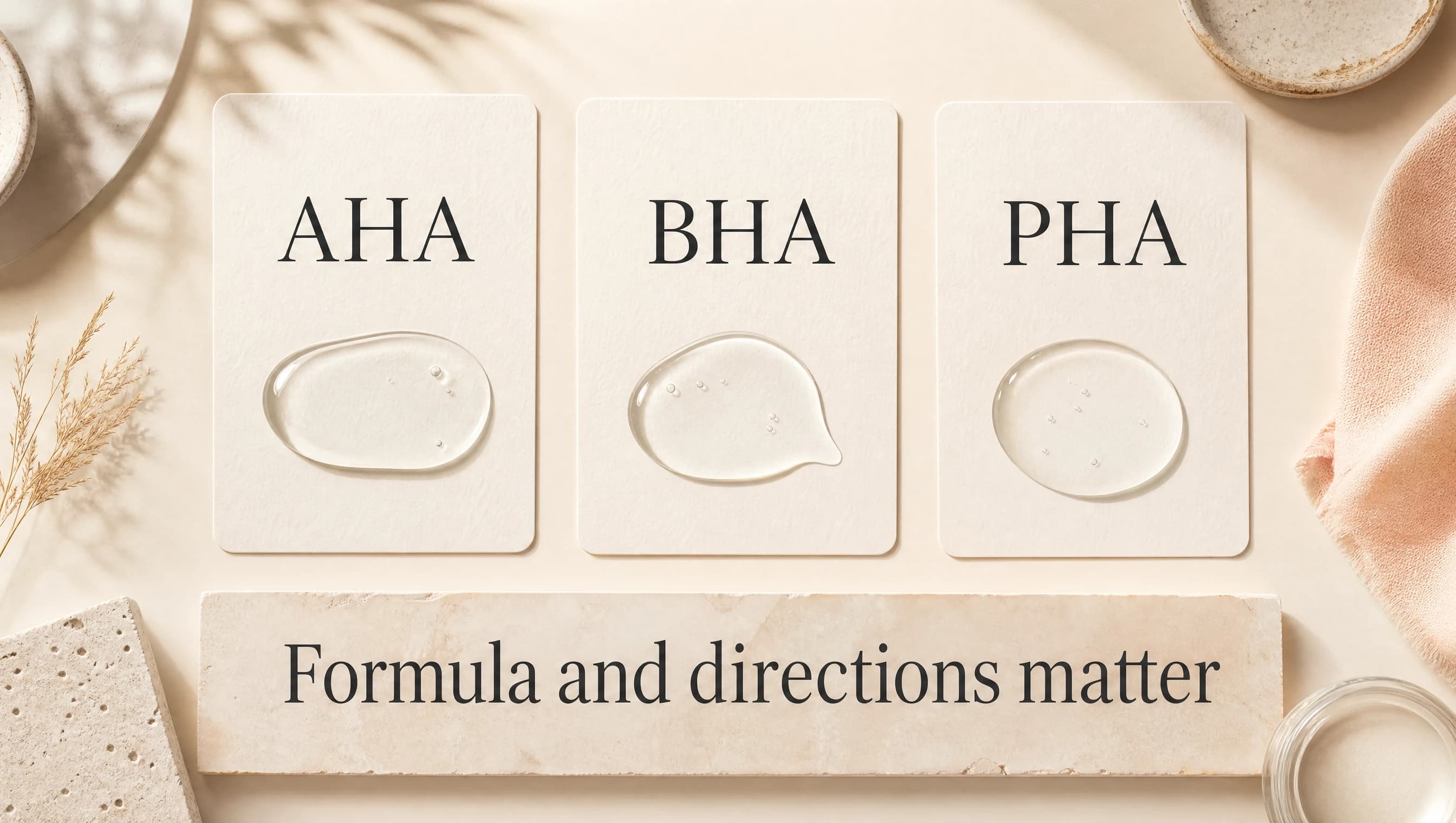
- Aha vs bha vs pha — Compare chemical exfoliant families if choosing to avoid a physical scrub.
- Facial cleansing brush vs hands — Distinguish cleansing brushes from a deliberate exfoliation step.
Sources
AAD: How to safely exfoliate at home (aad.org) — https://www.aad.org/public/everyday-care/skin-care-secrets/routine/safely-exfoliate-at-home
FDA: Alpha hydroxy acids (fda.gov) — https://www.fda.gov/cosmetics/cosmetic-ingredients/alpha-hydroxy-acids
FDA: Beta hydroxy acids (fda.gov) — https://www.fda.gov/cosmetics/cosmetic-ingredients/beta-hydroxy-acids
Clear guidance, checked before publication.
Solvi articles are structured by our editorial team and reviewed for clarity, consistency, and responsible health language. We update pages when guidance or product information changes.