Best Facial Exfoliator for Sensitive Skin: A Smarter Way to Choose


The best facial exfoliator for sensitive skin is typically a non-grainy chemical exfoliant featuring PHAs, low-strength lactic acid, or mandelic acid in a hydrating formula. Skip rough face scrubs, start just once weekly, and judge a formula by how calmly your skin feels in the days after—not by an immediate tingle or squeaky-clean finish.
Sensitive skin does not have to sit out exfoliation altogether. The better shopping strategy is to choose a forgiving acid family, a texture you can use consistently, and a formula that leaves room in your routine for moisturizer and sunscreen.
The short list: what to buy
For a shopper who wants the clearest answer, start with a PHA tonic or serum containing gluconolactone or lactobionic acid. If your skin has handled mild acids before and you want a little more surface smoothing, a low-strength lactic acid or mandelic acid formula is the next lane to consider.
The goal is not to build the strongest exfoliating routine. It is to find a product that fits between cleansing and moisturizing without turning your face hot, tight, flaky, or persistently red.
| If your skin is... | Start by shopping for... | Texture to consider | Main tradeoff |
|---|---|---|---|
| Easily reactive, dry, or new to acids | PHA with gluconolactone or lactobionic acid | Watery tonic, light serum, or lotion | Results tend to be gradual rather than dramatic |
| Dull with mild roughness | Low-strength lactic acid | Hydrating serum, essence, or cream | Can be too much if used alongside other active treatments |
| Congested-looking but sensitive | Mandelic acid formula | Thin serum or gentle leave-on liquid | Still needs a slow introduction despite its generally gentler reputation |
| Sensitive and routine-minimalist | Enzyme cleanser or low-strength exfoliating cleanser | Cream, gel, or soft-foaming wash-off formula | Short contact time may be preferable, but can feel less targeted than a leave-on |
Choose the acid family first
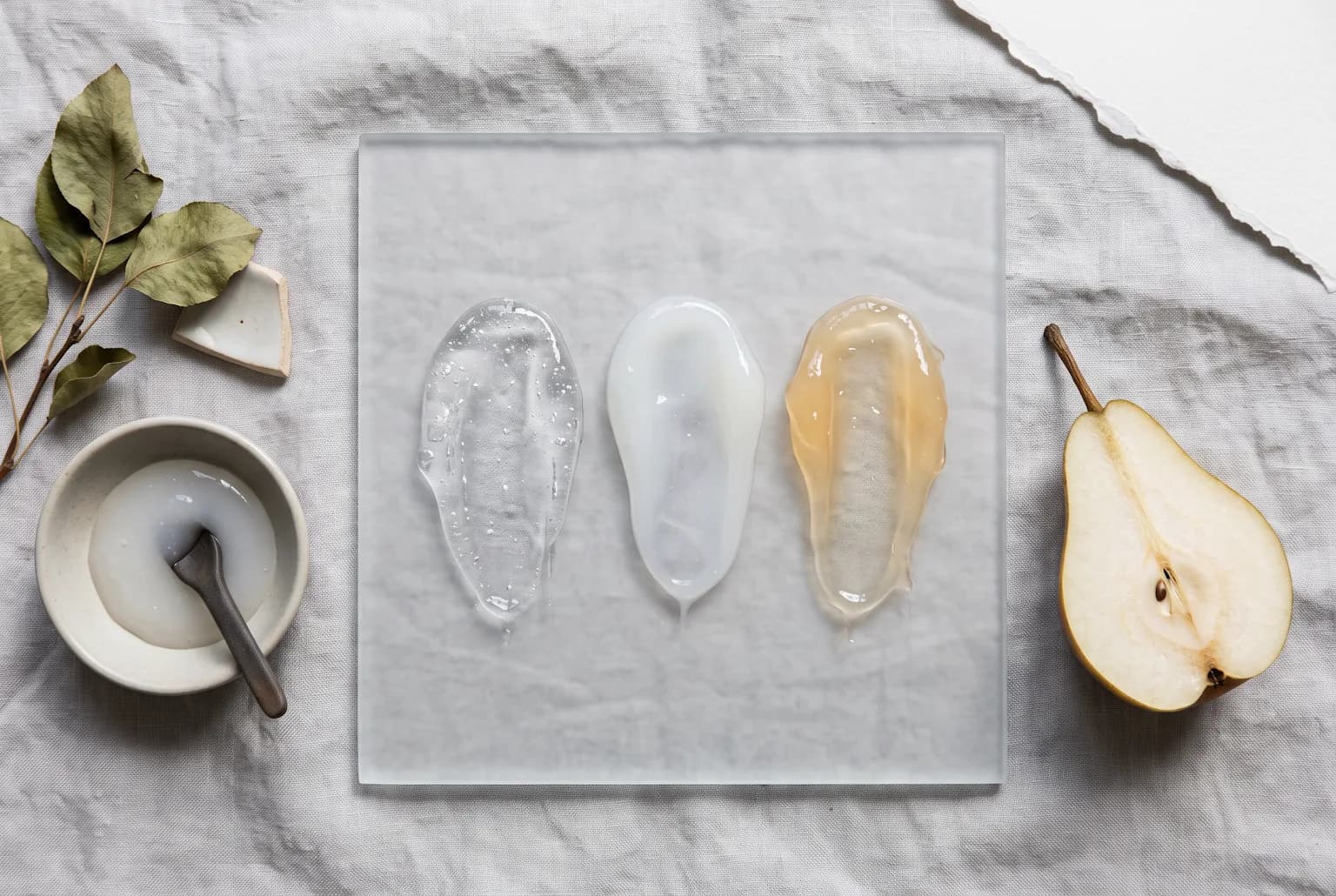
Acid family is the most useful filter on the shelf. A product name may spotlight glow, refining, resurfacing, or radiance, but the ingredient list tells you whether it is built around the gentler routes most relevant to sensitive skin.
PHAs are the first category to seek out. Gluconolactone and lactobionic acid are common PHA names; they offer gradual exfoliation and are often positioned for more sensitive complexions. Low-strength lactic acid is another softer-edged option within the AHA family, while mandelic acid is often chosen when a shopper wants an AHA option that may feel more manageable for reactive skin.
- PHA: Prioritize this category when you are prone to discomfort, dryness, or visible irritation after experimenting with acids.
- Lactic acid: Consider it for mild dullness or surface roughness when you want an AHA but do not want to begin with a more aggressive approach.
- Mandelic acid: Consider it for an acid-forward leave-on formula with a reputation for being better tolerated by many sensitive-skin users.
- Glycolic acid: Treat it with more caution if sensitivity is your central concern; it is not the first family to reach for in a gentle-first routine.
A percentage on the front or back of a package can be helpful, but it is not the only decision point. A sensitive-skin shopper should favor a low-strength formula or a thoughtfully balanced consumer formula, then assess the complete ingredient list and the product’s intended frequency. When concentration is not disclosed, that does not automatically make a product unsuitable; it does mean you should be especially conservative with frequency.
Match the format to your routine
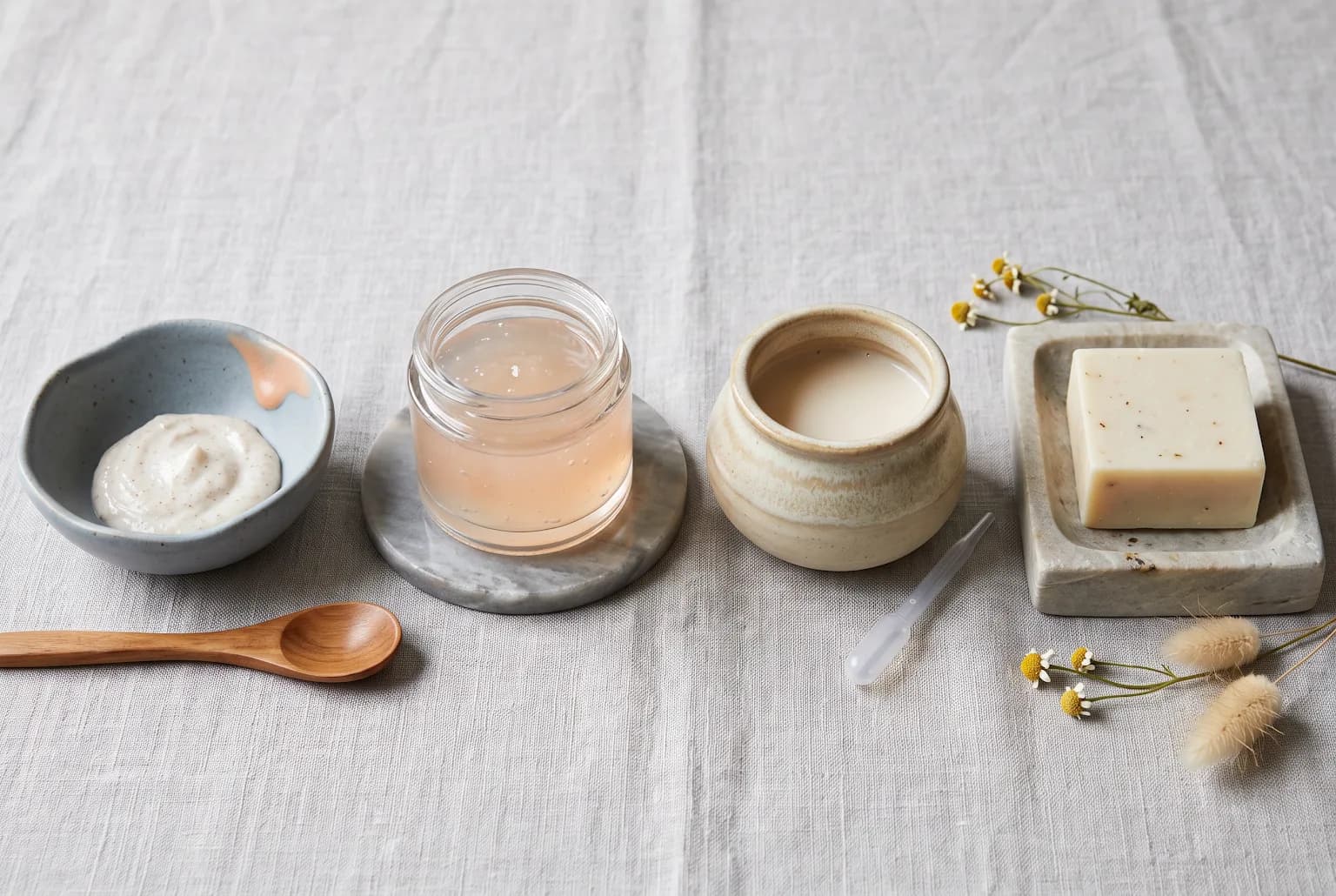
Texture is not just a sensorial preference. It changes contact time, layering, and how easy it is to use a formula only as often as your skin can handle. Leave-on products offer longer contact, while wash-off products can make sense for someone who wants a more contained introduction.
Leave-on toners and essences
A PHA or low-strength acid tonic is a sensible match for someone who likes a fluid, quick-drying layer after cleansing. Apply it with clean hands or a soft cotton pad if friction from repeated wiping does not bother your skin, then follow with a plain moisturizer.
These formulas are useful when you want a gradual, controlled exfoliation step. The tradeoff is that leave-on acid should not be casually stacked with every other active in your cabinet.
Serums and lightweight gels
Serums are often the easiest format for ingredient-focused shoppers because they fit neatly into a simple cleanse, treat, moisturize sequence. A thin, hydrating serum can be especially practical if your regular moisturizer already contains ceramides or if you prefer to keep your final layer richer.
Look for a formula that also includes humectants such as glycerin, or supportive ingredients such as niacinamide and ceramides. Their presence does not cancel out an acid’s potential to irritate, but a cushioning formula is generally a more sensible place to begin than a stark, alcohol-heavy-feeling liquid.
Wash-off cleansers and enzyme options
An enzyme cleanser with papain or bromelain, or a low-strength exfoliating cleanser, is a viable wash-off route for the person who does not want another leave-on layer. Think of a creamy gel or low-lather cleanser rather than a scrub packed with visible grains.
Wash-off formats can be convenient for a crowded routine, but follow the label’s directions closely. Do not compensate for brief contact time by scrubbing harder, leaving it on longer than directed, or using it every day from the start.
The formats to leave behind
Avoid physical scrubs that rely on grainy particles, large pieces, or vigorous polishing. “Natural” on a label is not a measure of gentleness: a plant-derived particle can still create more friction than sensitive skin needs.
- Avoid products that ask you to massage rough particles across already reactive areas.
- Avoid pairing a scrub with an acid toner in the same routine in pursuit of extra smoothness.
- Avoid buying a formula solely because it promises a strong immediate sensation or a visibly polished finish.
A sensitive-skin shopping checklist
Before adding a product to cart, read beyond the front-label promise. The strongest purchase is one that makes sense for your current routine, your tolerance history, and the time you can realistically give to introducing it slowly.
Use this checklist to compare two otherwise similar formulas:
- Choose the gentler acid lane first. Favor PHA, then low-strength mandelic or lactic acid, before considering glycolic-focused options.
- Look for a supportive base. Glycerin, ceramides, and niacinamide are useful signals that a formula is designed with hydration or barrier support in mind.
- Check the delivery system. A simple leave-on serum or tonic can suit controlled use; a wash-off enzyme or exfoliating cleanser can suit those who prefer less contact time.
- Inspect the exfoliation mechanism. If the product relies on grains, shells, seeds, crystals, or large particles, move on.
- Audit your existing actives. Retinoids, benzoyl peroxide, and other exfoliating acids affect whether this new product has a safe place in your week.
- Consider cost per use. A smaller bottle used once weekly may last longer than expected. There is little value in a large-format exfoliator that is too aggressive to finish comfortably.
Combination skin can make this decision feel complicated: perhaps the forehead looks oily while the cheeks feel tight. Do not assume that combination skin needs a scrub or a stronger acid. A gentle, whole-face PHA can be the more coherent starting point; if you later choose to treat only an oilier zone, introduce that approach carefully rather than escalating across the entire face.
Introduce it with a slow routine
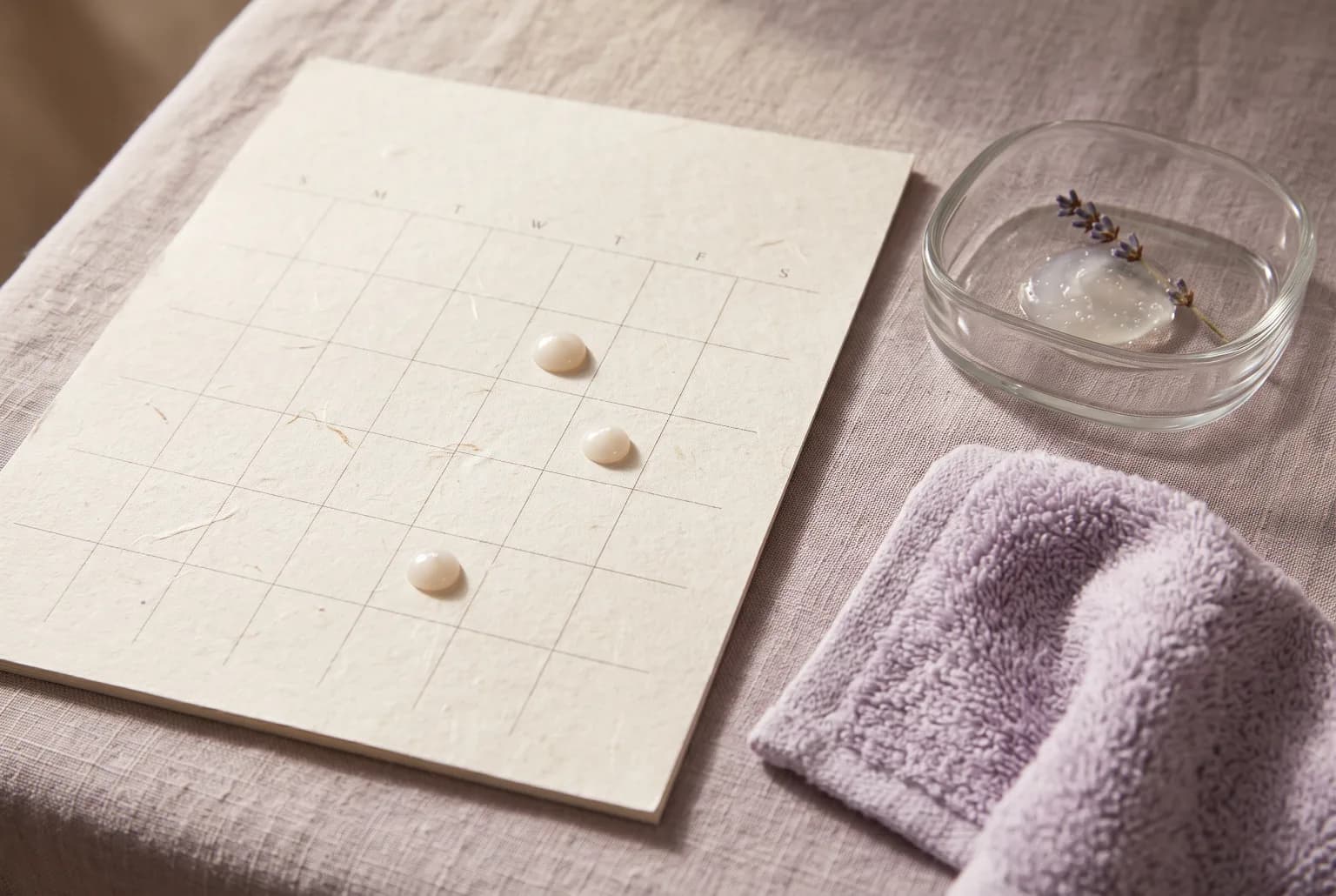
Frequency is where sensitive-skin exfoliation succeeds or fails. Begin once a week, then consider moving to twice weekly—and no more than two to three times weekly—only if your skin remains comfortable and your broader routine is calm.
First four weeks
- Week one: Patch test for 48 hours. If there is no concerning reaction, use the exfoliator one evening on clean, dry skin as directed by the label.
- Weeks two and three: Continue once weekly. Follow with a bland, familiar moisturizer and resist adding a mask, scrub, or other acid that night.
- Week four: If there is no persistent burning, redness, dryness, or peeling, consider a second weekly use on nonconsecutive nights.
- Afterward: Stay at the lowest frequency that gives you the level of smoothness you want. More frequent use is not automatically better.
On exfoliation nights
Keep the rest of the routine deliberately uneventful. This is the time to make your acid product legible: if your face gets irritated, you want to be able to identify what changed.
- Cleanse with a gentle cleanser and pat skin dry unless your product directions say otherwise.
- Apply the exfoliator in its intended amount; do not layer extra passes for a stronger effect.
- Follow with a hydrating moisturizer, ideally one you already know your skin tolerates.
- Save retinoids, benzoyl peroxide, and additional exfoliating acids for a different routine unless a dermatologist has advised otherwise.
The following morning
Use a gentle cleanse if needed, moisturizer, and broad-spectrum sunscreen. Exfoliation can leave skin more vulnerable to feeling stressed by the rest of your environment, so sun protection is an essential partner rather than an optional finishing step.
If you experience persistent burning, redness, or signs that your barrier is struggling, stop the product and consult a dermatologist. A pause is more useful than attempting to “push through” discomfort.
Related reading
- Best Face Wash for Sensitive Skin: Gentle Guide
- Signs of a Damaged Skin Barrier: Clear Checklist
- Double Cleansing for Sensitive Skin: Gentle Guide
Frequently asked questions
Is a face scrub ever the best exfoliant for sensitive skin?
Usually, no. Grainy physical scrubs and large particles create friction that sensitive skin often does not need; a gentle PHA, lactic, mandelic, or wash-off enzyme format is generally the more considered starting point.
Is lactic acid gentle enough for sensitive skin?
Low-strength lactic acid is often considered a gentler AHA option. Tolerance remains individual, so begin once weekly, patch test first, and avoid combining it with other potent actives in the same routine.
Should I choose a toner, serum, or cleanser?
Choose a leave-on tonic or serum if you want a focused treatment step and can keep the rest of your routine simple. Choose a wash-off enzyme or exfoliating cleanser if you prefer shorter contact time and fewer layers.
Can I exfoliate if I use retinol or benzoyl peroxide?
Do not combine multiple exfoliating acids with retinoids or benzoyl peroxide without spacing them out. A conservative approach is to use them on separate nights and reduce frequency if your skin becomes uncomfortable.
Sources
- Allure — Gentle exfoliators for sensitive skin
- Cosmopolitan — Best exfoliators for sensitive skin
- Glamour — Lactic acid products and guidance
- RAHN Group / Evonik — AHA ingredient guide
Clear guidance, checked before publication.
Solvi articles are structured by our editorial team and reviewed for clarity, consistency, and responsible health language. We update pages when guidance or product information changes.

Amara Lewis
Sensitive Skin Writer. Amara is fascinated by calm, barrier-first skincare and the small details that make a routine easier to tolerate. She favors thoughtful formulas, slow introductions, and less guesswork.