The best face cream for mature skin: an ingredient-first buyers’ guide


Answer up front: the best face cream for mature skin is one that prioritizes barrier repair (ceramides + cholesterol), sustained hydration (hyaluronic acid or glycerin), and the right active for your visible concerns—peptides or antioxidants in the day, and a retinoid or peptide at night. For dry, 50+ skin choose a richer cream base; for sensitive mature skin favor fragrance-free, minimal-preservative formulas and peptide-based alternatives to retinoids.
Mature skin needs both water and structural support: humectants attract moisture while lipids rebuild the barrier. Texture matters as much as the ingredient deck—if a cream sinks in and leaves skin supple, it’s doing the basic job. Keep sunscreen daily (SPF 30+) to protect gains from actives like vitamin C and retinoids.
![Editorial still life of jars and droppers on marble, soft morning light]
How to pick the best face cream for mature skin
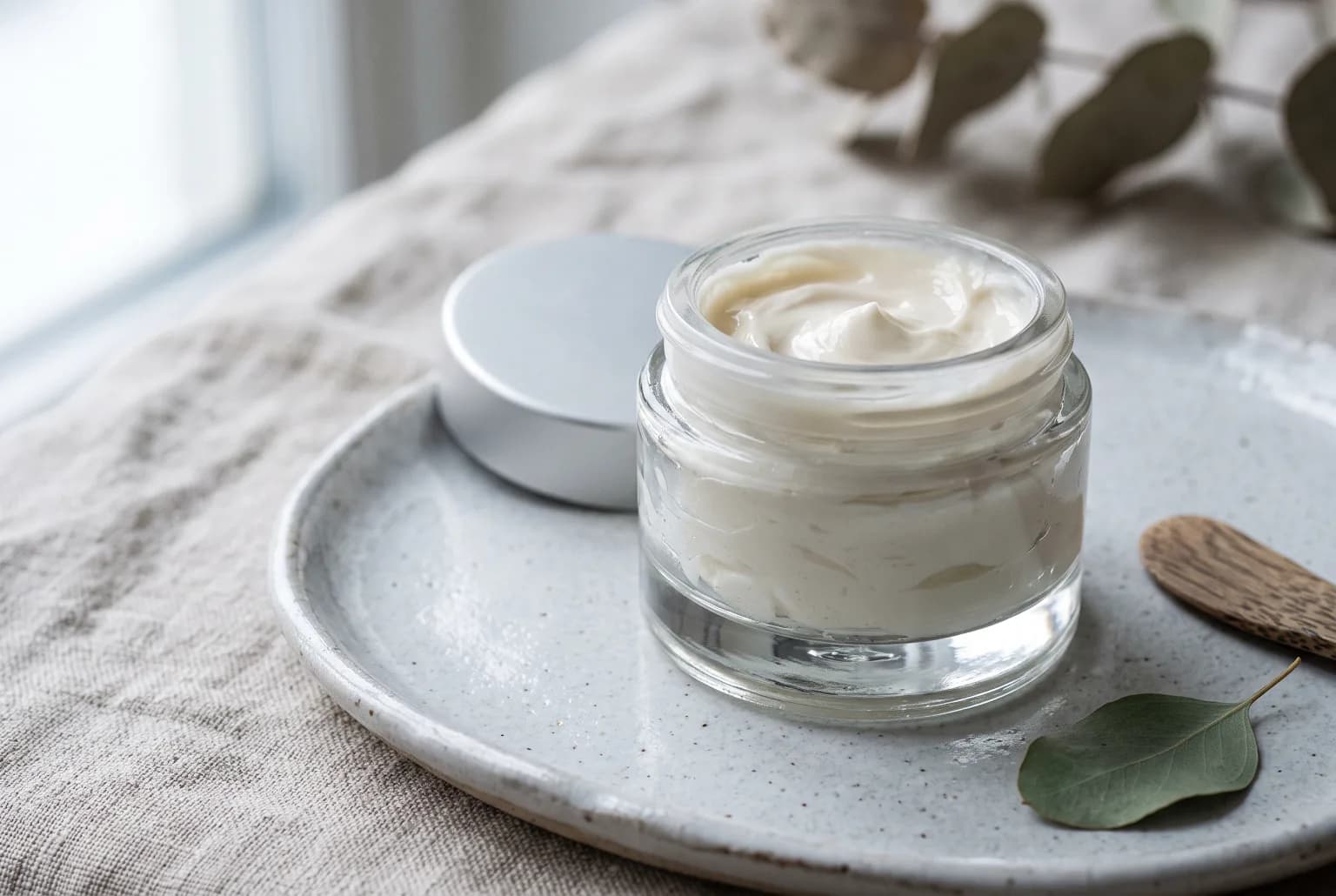
Start by identifying your primary goal: hydration and barrier repair, visible wrinkle reduction, or brightening and evening tone. The decision criteria used throughout this guide are simple and practical: primary goal, key ingredients, retinoid presence (for night only), texture preference (cream vs lotion), and fragrance sensitivity.
A decision checklist helps narrow the field before you read labels:
- Choose barrier-repair if skin is flaky, tight, or reactive.
- Choose peptide/retinoid options if the priority is wrinkle reduction.
- Choose antioxidant-rich daytime creams (or serums underneath) for brightening and environmental defense.
| Ingredient group | What it does | Who should prioritize it |
|---|---|---|
| Ceramides + cholesterol | Rebuilds the lipid barrier, reduces transepidermal water loss | Mature, dry, or barrier‐compromised skin |
| Humectants (Hyaluronic acid, glycerin) | Attracts and holds water in the stratum corneum | Everyone with mature skin; especially dehydrated skin |
| Peptides | Signal-support for collagen pathways; supportive for firmness | Sensitive skin or those easing in from retinoids |
| Retinoids (topical retinol or prescription tretinoin) | Increases cell turnover and reduces fine lines over time | Those targeting wrinkles; introduce slowly and use at night |
| Antioxidants (vitamin C, vitamin E) | Protects against photo-oxidative damage and helps brighten | Daytime use under sunscreen for tone improvement |
Aim for a moisturizer whose base is predominantly emollients (for smoothing) and occlusives (for sealing)—examples include squalane, petrolatum, dimethicone, and fatty esters—combined with at least one humectant and ceramides. Brands frequently recommended by dermatologists in the barrier-first category include La Roche‐Posay Toleriane and CeraVe; these are useful everyday examples if barrier repair is the priority.
Texture tradeoffs: thick cream vs lotion or gel?
Thicker creams provide occlusion, which is often preferable after age 50 because the skin’s natural lipid production declines. Rich creams can reduce the need for frequent reapplication but feel heavier under makeup. Lighter lotions and gel-creams work well for combination mature skin or for warmer climates, and they layer more easily with serums.
![Close-up of open cream jar showing thick cream texture on ceramic tray]
Morning versus night: what to use when
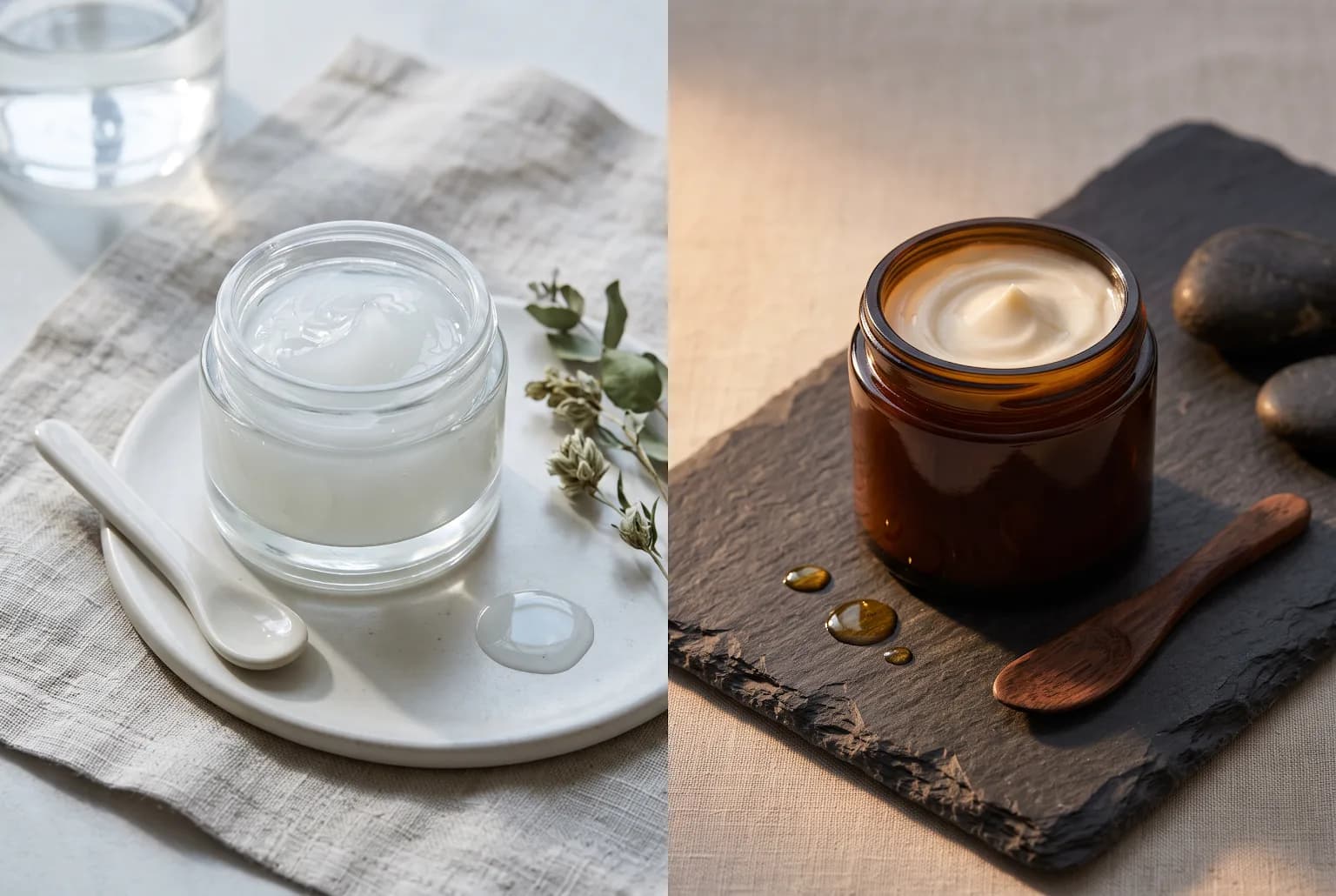
Morning products should prioritize antioxidants and hydration and always end with sunscreen SPF 30+. Day creams that include vitamin C, vitamin E, and adequate humectants deliver protective benefits without conflicting with sun protection.
Night routines are where active remodeling happens. If you use a retinoid—over-the-counter retinol or a prescription like tretinoin—reserve it for the evening and be prepared to introduce it slowly to reduce transient dryness or irritation. For sensitive mature skin, peptide-based night creams provide a gentler alternative to retinoids while still supporting firmness.
- Start retinoids at once or twice weekly and increase based on tolerance.
- Always follow retinoid use with daytime SPF 30+.
- If irritation occurs, scale back frequency or swap to a peptide formula.
![Top-down of sunscreen tube, light cream jar, and cotton cloth in bright daylight]
Best ingredient-first options and who they suit
Match the formula to the skin’s current condition rather than age alone. Below are practical pairings and well-known product examples that align with the research brief’s barrier-first recommendation.
- Barrier repair focus: If your skin is dry, tight, or reactive, look for ceramides and hyaluronic acid in a cream base. CeraVe Moisturizing Cream is a representative barrier repair example noted for ceramides and hyaluronic acid.
- Everyday hydrating cream: For daily use that supports the barrier without strong actives, La Roche‐Posay Toleriane Double Repair contains ceramides and hyaluronic acid and works as an everyday moisturizer suitable for many mature skin routines.
- Night active: For targeted wrinkle reduction, retinoids are the evidence-backed choice. SkinCeuticals retinol products (0.3–1.0) or a prescription tretinoin are listed as nighttime options; remember the tradeoff of potential initial irritation and the need for sunscreen the following day.
- Sensitive-skin alternative: If your skin reacts to retinoids, choose a peptide-rich cream and consider layering a hydrating hyaluronic serum underneath a richer cream. Peptides offer supportive signaling without the same irritation profile as retinoids for many users.
See our broader picks for time-of-day formulas and sensitive options in this companion guide to the best night moisturizer for sensitive skin: Best Night Moisturizer for Sensitive Skin: A Barrier-First Guide for Mature, Dry, and Combination Skin.
Tradeoffs to accept
Most over-the-counter topical creams produce incremental improvement; they are supportive rather than restorative. If you want stronger remodeling, retinoids (especially prescription forms) deliver greater clinical results but require tolerance-building and strict sun protection.
How to layer and troubleshoot for sensitive mature skin
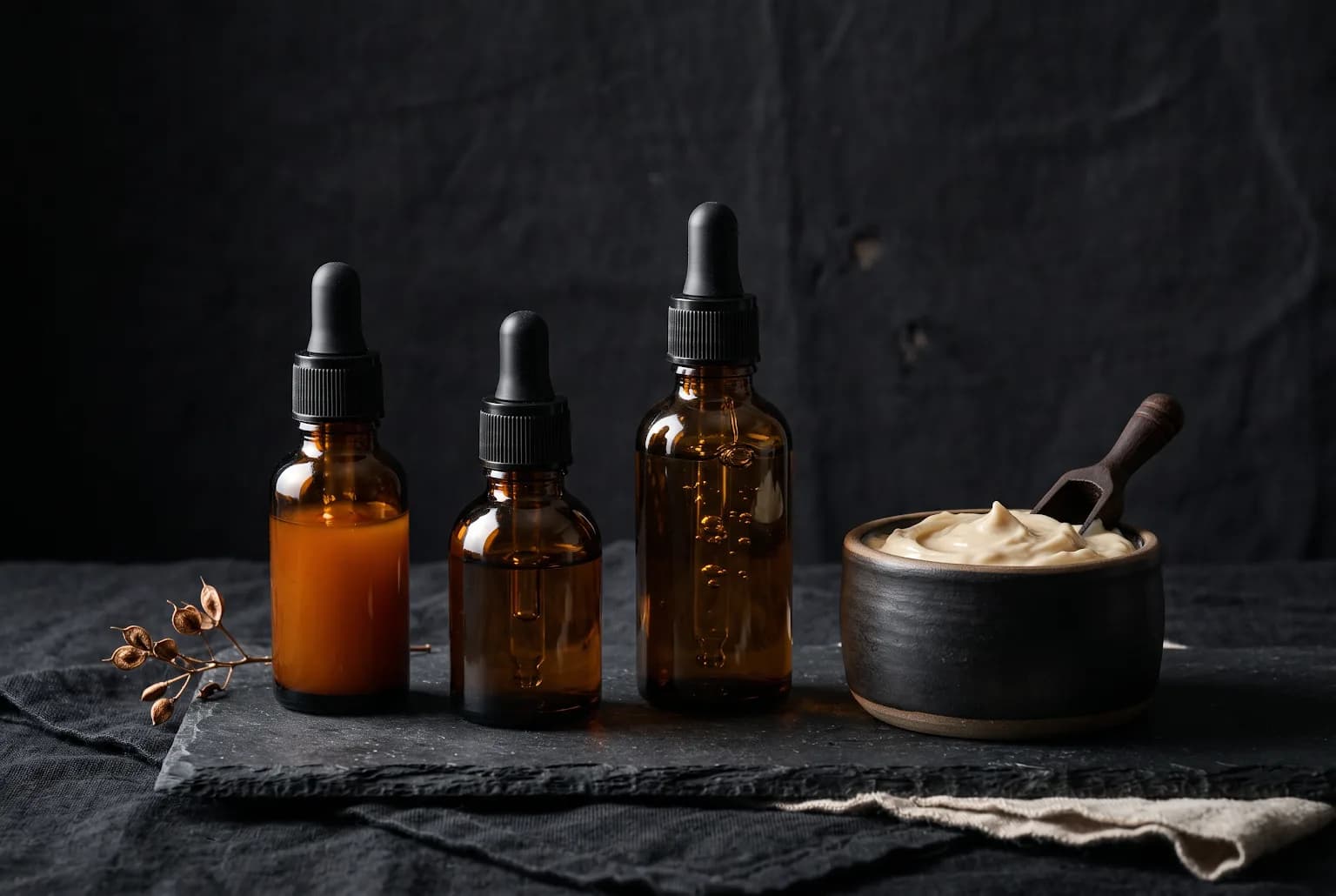
Layering matters: apply thin, active serums (antioxidants, peptides) first, then heavier creams, and finish with sunscreen in the morning. If using a retinoid at night, avoid mixing it simultaneously with an active exfoliant (AHA/BHA) to reduce irritation risk.
A simple sensitive-skin layering routine:
- Gently cleanse with a non‐stripping cleanser.
- Apply a hydrating serum (hyaluronic acid or glycerin-based).
- Apply a peptide or retinoid product per your tolerance schedule (night only for retinoids).
- Seal with a thicker, ceramide-forward cream.
If irritation appears when introducing a retinoid, revert to peptides and barrier repair for two weeks, then reintroduce the retinoid at a lower frequency. Avoid fragranced formulas and “natural” claims that aren’t backed by the ingredient deck; those can be sources of hidden irritants. For a broader view on choosing creams by visible concerns and time of day, consult our primer on the best cream for fine lines: Best Cream for Fine Lines: A Smart Buyer’s Guide to Day, Night, and Sensitive-Skin Formulas.
![Amber glass serums beside a rich cream pot on a dark background]
Common layering mistakes
Using too many active serums at once, skipping a hydrating seal (the cream), or neglecting daily SPF are the most common errors. Make simplicity your ally: a humectant serum, a ceramide-rich cream, and sunscreen will improve hydration and protect results.
Practical shopping checklist and routine examples
When you compare labels, prioritize the following checklist:
- Ceramides listed in the top five ingredients.
- At least one humectant (glycerin or hyaluronic acid).
- If targeting wrinkles, a peptide or retinoid strategy with instructions for night use.
- No fragrance for sensitive mature skin.
- Non‐comedogenic if pore congestion is a concern.
Routine examples (kept intentionally simple):
Morning routine for dry mature skin:
- Gentle cream cleanser.
- Vitamin C serum (optional) or hydrating serum with hyaluronic acid.
- Rich ceramide moisturizer.
- Broad-spectrum SPF 30+.
Night routine for wrinkle‐focused mature skin:
- Gentle cleanser.
- Hydrating serum (hyaluronic acid).
- Retinoid (start 1–2x/week, increase as tolerated) or peptide alternative.
- Sealing ceramide-rich cream.
If you want a shorter primer on choosing moisturizers for mature skin by texture and time of day, our related guide walks that through step-by-step: Best Moisturizers for Mature Skin: Choose by Barrier, Texture, and Time of Day.
Frequently asked questions
What is the best moisturizer for mature skin with sensitivity?
If sensitivity is the main issue, choose a fragrance‐free, ceramide-forward cream with hyaluronic acid and avoid active exfoliants and fragrance. Peptide-based night creams can offer supportive firmness without the irritation potential of retinoids.
Can I use retinol with a hydrating cream?
Yes—retinol is a night‐only active and is often best tolerated when layered over or under hydrating products. Apply a hyaluronic serum first, then a hydrating cream to seal; if irritation occurs, reduce retinol frequency and emphasize barrier repair.
Are richer creams always better after 50?
Richer creams are usually preferable for dry mature skin because they provide occlusion that helps retain moisture. However, if you have combination skin or live in a warm climate, a lighter gel‐cream may be more comfortable while still including ceramides and humectants.
How should I pair vitamin C with my face cream?
Use vitamin C in the morning under your moisturizer and sunscreen to protect against photo-oxidative damage and help even tone. Ensure the vitamin C product is formulated for topical use and follow the brand’s guidance for concentration and stability.
Related Reading
- Best Facial Toner for Mature Skin: A Barrier-First Buyer’s Guide
- Best Night Moisturizer for Sensitive Skin: A Barrier-First Guide for Mature, Dry, and Combination Skin
- Best Eye Cream for Dry Skin and Wrinkles: The Formula-First Guide
Sources
- American Academy of Dermatology — selecting anti‐aging products & moisturizers (https://www.aad.org/public/everyday-care/skin-care-secrets/anti-aging/selecting-anti-aging-products)
- Allure — best moisturizers for mature skin (editorial roundup) (https://www.allure.com/gallery/best-creams-serums-mature-skin-dermatologist-recommendations)
- NBC Select — best moisturizers for mature skin (derm picks) (https://www.nbcnews.com/select/shopping/best-moisturizers-mature-skin-rcna347410)
Clear guidance, checked before publication.
Solvi articles are structured by our editorial team and reviewed for clarity, consistency, and responsible health language. We update pages when guidance or product information changes.

Iris Kim
Advanced Skincare Writer. Iris happily gets lost in retinoids, peptides, face oils, and emerging actives. Her goal is to make advanced skincare feel considered and understandable instead of intimidating.