When to reapply sunscreen after swimming: follow every trigger
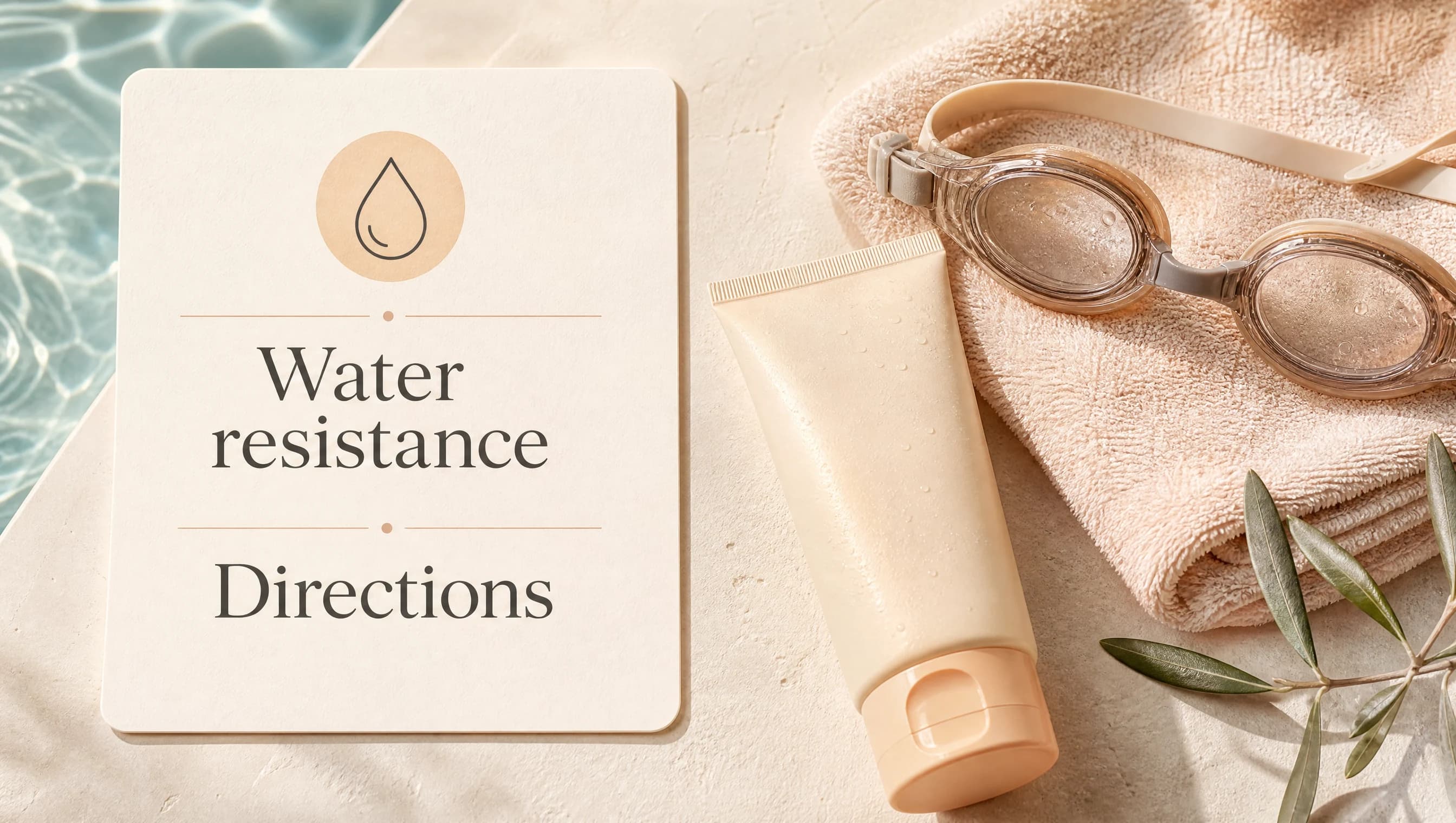
Reapply sunscreen after swimming according to its label, and immediately after towel drying when directed. A water-resistance claim is limited; it does not mean waterproof or protected for the entire afternoon. The stated swimming interval and the regular reapplication interval are separate instructions, and either can require action first.
Read the water-resistance line

US water-resistant sunscreens identify a tested duration of 40 or 80 minutes. AAD's label guide distinguishes that claim from waterproof protection. Do not infer water resistance from a high SPF, a sports-themed name or a thick texture.
Check this information before packing. If your usual daily sunscreen does not have the relevant claim, choose a product intended for the activity rather than discovering the limitation after getting into the water.
| Label or activity | What it means for your plan |
|---|---|
| Water resistant, 40 minutes | Follow the specified swimming or sweating interval |
| Water resistant, 80 minutes | A longer tested water interval, not all-day wear |
| Towel drying | Can trigger immediate reapplication |
| No water-resistance claim | Do not assume it is suitable for swimming |
Use an actual label as the worked example
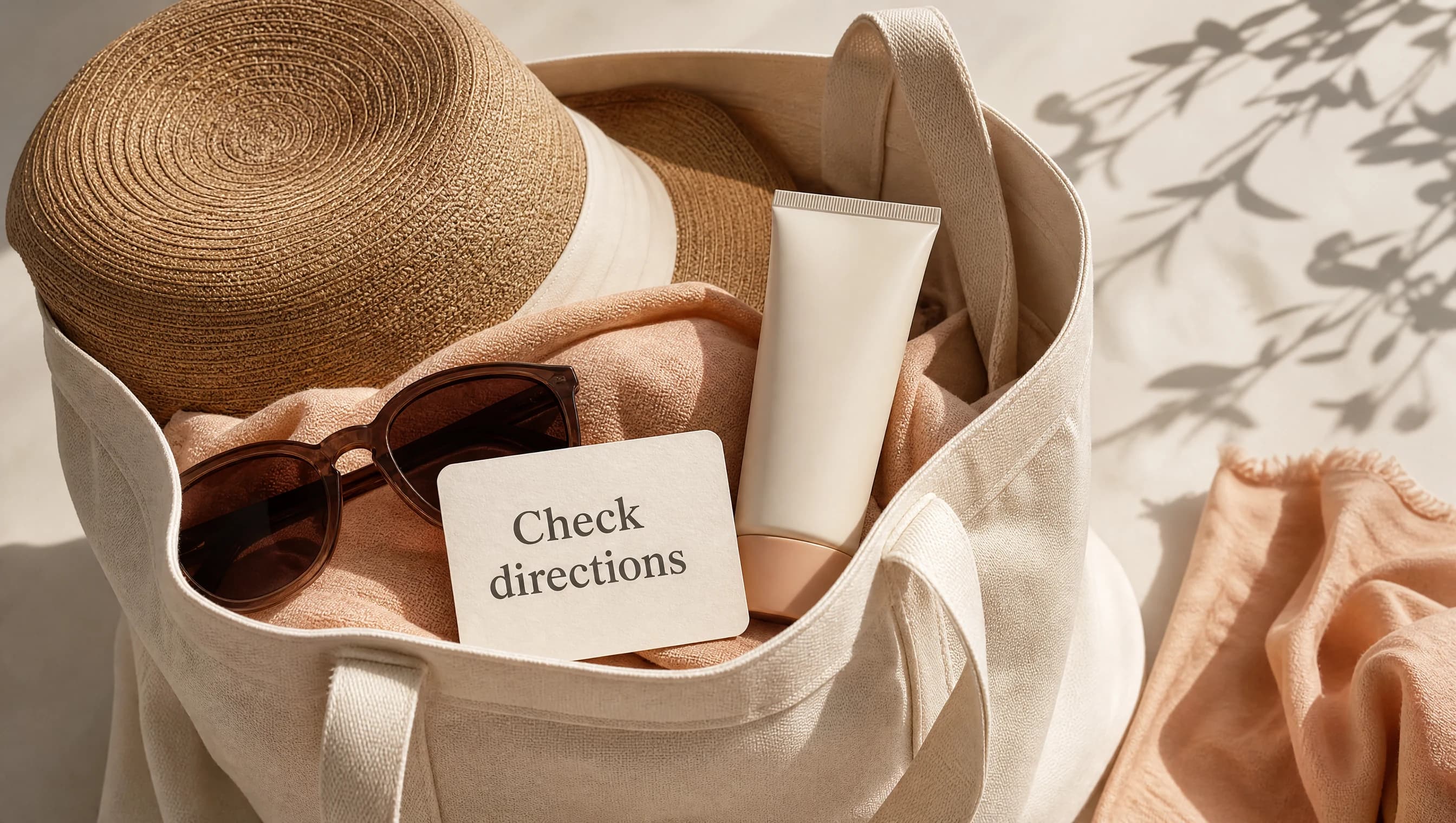
La Roche-Posay's US Anthelios Melt-In Milk SPF 60 page states reapplication after 80 minutes of swimming or sweating, immediately after towel drying and at least every two hours. These are distinct triggers on the same product.
Imagine applying that product, taking a short swim and then drying with a towel. The towel instruction matters even though 80 minutes have not passed. Waiting for the water-resistance number to run out would ignore another part of the directions.
This example illustrates how to read a label; it is not a recommendation that everyone needs this brand or SPF. A different product may have different instructions.
Make the break easy to carry out
Keep sunscreen where you can reach it during the activity, together with whatever you need to apply it properly. A bottle left in the car is not useful when the next pool session starts immediately.
Plan the break around getting out of the water, checking the directions and reapplying carefully. Follow any instructions about skin condition and the interval before exposure or returning to the water. Do not invent a universal rule that every formula works identically on wet skin.
- Before leaving: read all reapplication triggers on the exact product and pack enough for the outing.
- After swimming or sweating: apply the relevant labeled trigger, while keeping any towel-drying instruction separate.
- After towel drying: do not wait for the water-resistance interval if the label says to reapply immediately.
- During the rest of the outing: continue to follow the other interval instructions and cover the intended exposed areas.
Consider the whole outing
The American Cancer Society identifies swimming, sweating and towel drying as ways sunscreen can be removed. That supports thinking beyond a timer alone. A busy beach day involves more than simply sitting still after a morning application.
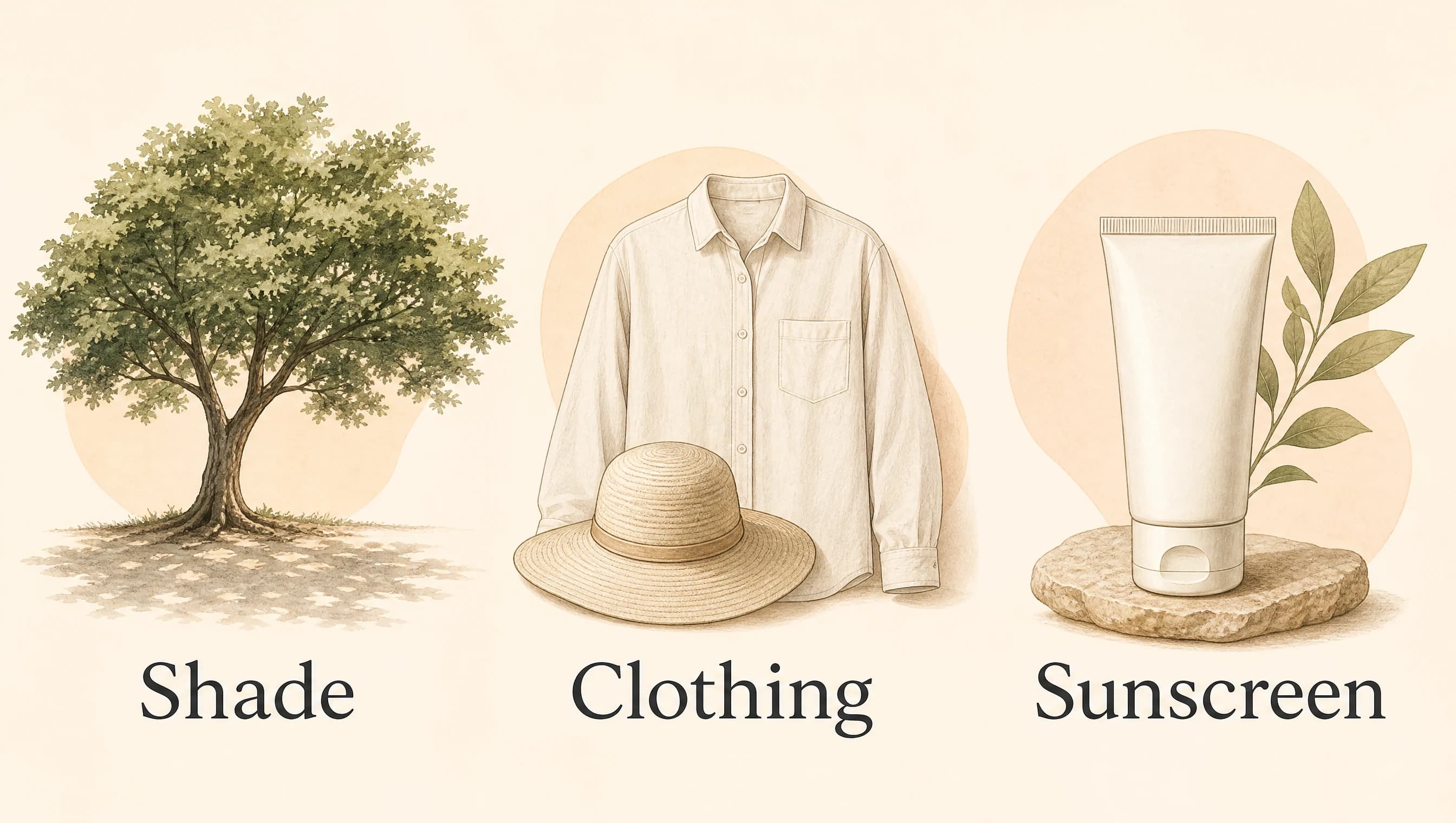
Clothing, a hat and shade can reduce how much you rely on sunscreen alone. If your activity repeatedly makes proper application difficult, consider how to change the setting or clothing rather than searching for an imaginary waterproof formula.
Do not use the absence of immediate redness to decide that your plan worked. A pleasant afternoon is not a measurement of the protective layer remaining on your skin.
Frequently asked questions
Does SPF 50 last longer in water than SPF 30?
The SPF number does not establish water resistance. Compare the separate water-resistance statement and directions on each bottle.
Must I wait until 40 or 80 minutes have passed?
No. Other label instructions, such as reapplying after towel drying, can apply sooner. Read the complete directions together.
Can I use my ordinary face sunscreen for the pool?
Check its label. A face product can be suitable if it has the required water-resistance claim and directions, but the word face does not establish that.
Related decisions
- Water-resistant vs waterproof sunscreen — Understand what the water-resistance statement does and does not establish.
- How long before going outside should you apply sunscreen — Keep initial timing separate from later reapplication.
Sources
AAD: How to decode a sunscreen label (aad.org) — https://www.aad.org/public/everyday-care/sun-protection/shade-clothing-sunscreen/understand-sunscreen-labels
La Roche-Posay US: Anthelios Melt-In Milk SPF 60 directions (laroche-posay.us) — https://www.laroche-posay.us/our-products/sun/body-sunscreen/anthelios-melt-in-milk-sunscreen-spf-60-antheliosmeltinmilk.html
American Cancer Society: How to use sunscreen (cancer.org) — https://www.cancer.org/cancer/risk-prevention/sun-and-uv/how-to-use-sunscreen.html
Clear guidance, checked before publication.
Solvi articles are structured by our editorial team and reviewed for clarity, consistency, and responsible health language. We update pages when guidance or product information changes.